
Foreign player limits shape how many local players reach elite minutes, which positions they occupy, and how Turkish clubs plan squads, academies, and transfers. If the quota is applied strategically, then it can accelerate Turkish footballer development; if it is treated as a box‑ticking rule, then it can block talent.
Core Impacts on Turkish Player Pathways
- If clubs plan early around quotas, then Turkish players gain clearer pathways and more stable playing time.
- If limits are positional (for example, encouraging local goalkeepers), then specific Turkish profiles develop faster.
- If foreign signings are short‑term fixes, then young Turkish players face blocked pathways and more loans.
- If lower‑tier clubs coordinate with Süper Lig sides, then loan spells become real development steps, not exile.
- If the federation aligns quotas with academy standards, then investment in coaching and youth structures increases.
Regulatory Evolution and Current Foreign-Player Rules in Türkiye
The foreign‑player quota in Türkiye defines how many non‑Turkish players a club may register and field in league and cup matches. The exact Turkish Super Lig foreign player rule 2024 has changed several times over the last decade, but the constant idea is to protect local opportunities while preserving competitiveness in UEFA competitions.
Historically, regulations shifted between stricter and looser limits. Periods with heavy restrictions pushed clubs to rely on domestic players and naturalisations. More flexible periods allowed larger foreign squads, which raised internal competition but also led to concerns about the impact of foreign player limits on Turkish football development, especially for late‑blooming local talents.
Today, the quota affects not only the Süper Lig but also how 1. Lig and 2. Lig clubs think about recruitment and academy promotion. When the federation adjusts the rules, clubs must redesign multi‑year roster strategies, because one change in foreign slots can alter contract values, positional depth charts, and the pace at which academy graduates move up.
In practice, any analysis of foreign player quota in Turkish football must treat the rule as a moving framework rather than a fixed number. For coaches and sporting directors, the question is less “how many foreigners are allowed?” and more “if we use each foreign slot deliberately, then which Turkish player profiles are we committing to develop around them?”
How Limits Reshape Matchday Selection and Competitive Exposure

- Squad registration balance
If foreign registration spots are limited, then clubs must decide which positions justify a foreign specialist and which roles should be locked for Turkish players. This directly determines how many locals can realistically reach starting‑XI level in each zone. - Matchday roster decisions
If a coach has more quality foreigners than usable quota slots, then at least one strong player sits out every week. This can push coaches to prefer versatile foreigners and restrict risk‑taking on Turkish youngsters in rotation roles. - In‑game substitutions and timing
If the quota is tied to players on the pitch, then substitution choices are tactical plus regulatory. A coach may delay introducing a foreign winger because it would force a Turkish defender off, affecting how late Turkish youngsters get minutes. - Positional bottlenecks
If foreign players dominate attacking and playmaking roles, then Turkish players are pushed into less glamorous positions. Over time, this shapes the national pool, with fewer Turkish creative midfielders or goal‑scorers getting extended top‑level exposure. - Injury and suspension cover
If a club uses all foreign slots on starters, then injuries can force unready Turkish backups into high‑pressure games. That can accelerate development for some, but also expose others too early without a gradual minutes build‑up.
Youth Academies, Playing Time and Transition to First Team
Before moving to pros and cons, it helps to see how the same rule plays out in different real‑world patterns. These scenarios show the link between Turkish football academy development vs foreign players at senior level.
- Süper Lig contender with title ambitions
If a top‑four club fills most foreign slots with ready‑made starters, then academy graduates usually debut late and in low‑risk matches. The pathway depends on cup games, late substitutions, and loan moves to mid‑table or 1. Lig sides. - Mid‑table Süper Lig club targeting stability
If a mid‑table club plans for survival with a mixed squad, then it can ring‑fence certain roles for Turkish youngsters (for example, full‑backs or box‑to‑box midfielders). The quota nudges them to develop and sell these players as future transfer assets. - PROMOTION‑seeking 1. Lig club
If a 1. Lig club aims for promotion, then it may over‑rely on experienced foreigners in key roles. That can secure short‑term results but leave the club with few saleable Turkish players when it arrives in the Süper Lig and faces stricter expectations on local content. - Academy‑driven lower‑tier club
If a 2. Lig or 3. Lig club has a strong local scouting network but limited budget, then it often treats quotas as a competitive advantage. Foreign signings are minimal; Turkish youngsters get early minutes, build match toughness, and become attractive to bigger clubs. - Big‑club B‑team and loan network
If a major club sends multiple Turkish youngsters on loan every season to work around blocked positions, then the effectiveness depends on destination. Productive loans involve clear role, guaranteed minutes, and alignment with the parent club’s playing style, not just any available foreign‑light squad.
Coaching, Tactical Roles and Skill Development Under Quotas
The same foreign‑player rules can either boost or limit coaching outcomes. Much depends on how clubs translate policy into training and tactical planning.
Development advantages created by smart use of quotas
- If foreign players occupy the most tactically complex positions, then Turkish players can learn directly in training, copying decision‑making and professionalism from higher‑level teammates.
- If coaches deliberately assign key squad roles to Turks (for example, central defenders or holding midfielders), then locals gain leadership experience and responsibility in match management.
- If academy and first‑team tactical models are aligned, then youngsters step into quota‑protected roles with existing familiarity, reducing the adaptation gap and injury risk.
- If the staff uses video and data to prove that well‑coached Turkish players can match foreigners in specific metrics, then the club’s bias toward foreign “ready‑made” solutions decreases over time.
Constraints and risks in player development
- If the club assumes foreigners are automatically better in creative roles, then Turkish players receive fewer repetitions in final‑third decision‑making and set‑piece responsibility.
- If coaches feel job pressure and treat young Turks only as “quota fillers”, then they will not invest training time in refining their technical weaknesses.
- If quotas change frequently, then long‑term positional planning in academies becomes harder, because nobody knows which roles will be foreign‑dominated in three or four seasons.
- If training methodology does not upgrade in parallel with policy, then limits on foreigners simply reduce quality without guaranteeing that Turkish players become tactically smarter.
Transfer Market Mechanics: Loans, Valuation and Homegrown Assets
Foreign‑player rules also reshape contract strategy, domestic valuations, and trading patterns. Misunderstandings here can lock clubs into expensive, inflexible squads.
- Myth: “Any Turkish player is valuable because of the quota”
If clubs overpay average local players just to meet homegrown requirements, then wage bills inflate without guaranteed performance. Value should follow quality and scarcity by position, not nationality alone. - Mistake: Panic buying before a rule change
If a rule adjustment is announced and clubs react with last‑minute deals, then they often sign ill‑fitting players who block academy graduates for several seasons. - Myth: Loans are always positive for youngsters
If a Turkish youngster goes on loan to a club that does not really need him to meet quotas, then he may sit on the bench. Development requires a clear “if fit, then you play” understanding written into the loan plan. - Mistake: Ignoring resale planning
If a club fills foreign slots with older players on long contracts, then there is little resale value and no room to sign emerging foreigners who could both help sporting results and fund the next cycle. - Myth: Quota rules alone will fix national team quality
If policy is not backed by better scouting, analytics, and coaching, then the national talent pool will not improve just because the number of foreigners on the pitch goes down.
Policy Scenarios and Practical Reform Options for Sustainable Growth
Comparisons with other leagues help contextualise Turkish debates. A thoughtful UEFA comparison of foreign player limits and local talent development shows that simply copying another country’s numbers rarely works. The structure of academies, club finances, and competitive targets in Europe differs from Türkiye’s environment.
One practical way to think about reform is as conditional logic:
If the federation wants more Turkish players in attacking roles,
then:
  - reduce foreign slots specifically in those positions, and
  - tie extra foreign registrations to proven investment in youth coaching.

If clubs want to keep European competitiveness,
then:
  - use foreign slots on skill sets hard to find domestically, and
  - commit at least one Turkish player per line (defence, midfield, attack)
    to a defined minutes target each season.

If lower tiers are expected to supply ready Süper Lig players,
then:
  - structure solidarity payments and bonuses for minutes played,
  - encourage shared tactical models between partner clubs, and
  - monitor outcomes via federation data, not anecdotes.
In practice, if federation rules stay stable for several seasons and clubs respond with clear internal “if…, then…” development plans, then foreign‑player limits can become a tool that accelerates Turkish player growth rather than a constraint that clubs work around.
Practical Clarifications for Clubs and Coaches
How should we plan our squad under the Turkish Super Lig foreign player rule 2024?

Start by mapping each foreign slot to a specific role and profile, not just a name. If a foreign player does not clearly upgrade a position or mentor a Turkish understudy, then prioritise a local option and keep flexibility for future windows.
What is the most effective way to balance Turkish football academy development vs foreign players?
Design a clear positional strategy. If foreigners occupy certain positions, then commit to developing Turkish depth in other zones. Align academy training, recruitment, and loans with this map so every youth player knows their realistic route to minutes.
How can we evaluate the real impact of foreign player limits on Turkish football development in our club?
Track minutes and roles, not just squad lists. If rule changes do not increase meaningful minutes for Turks in key positions, then your strategy is not exploiting the quota. Review data each season and adjust recruitment and promotion plans.
What should we look for when sending a Turkish youngster on loan?
Prioritise guaranteed role over league level. If a loan club needs the player to help meet its own quota and has a defined position for him, then development is more likely. Include playing‑time expectations and feedback routines in the loan agreement.
Do stricter quotas automatically improve the national team?
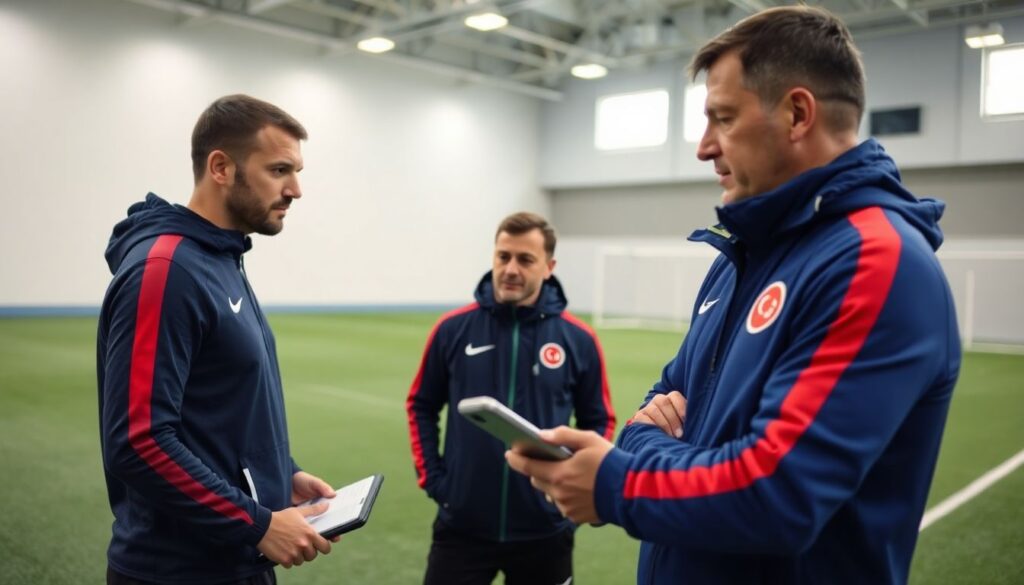
No. If stricter quotas are not matched with better coaching, scouting, and sports science, then they may lower overall league quality without producing smarter, more complete Turkish players. Policy must support, not replace, development work.
How can lower‑tier Turkish clubs use quotas as an advantage?
If budgets are limited, then build an identity around local talent and early debuts. Offer Süper Lig clubs a clear development pathway for their loanees and become known as a place where Turkish players actually play and improve, not just sit on the bench.
What is a simple checklist to ensure our foreign signings do not block local talent?
Ask three questions: if we sign this foreigner, then which Turkish player’s minutes drop; if that player’s ceiling is higher, then why are we blocking him; and if the foreigner leaves in a year, then will we have a local replacement ready?
Комментарии