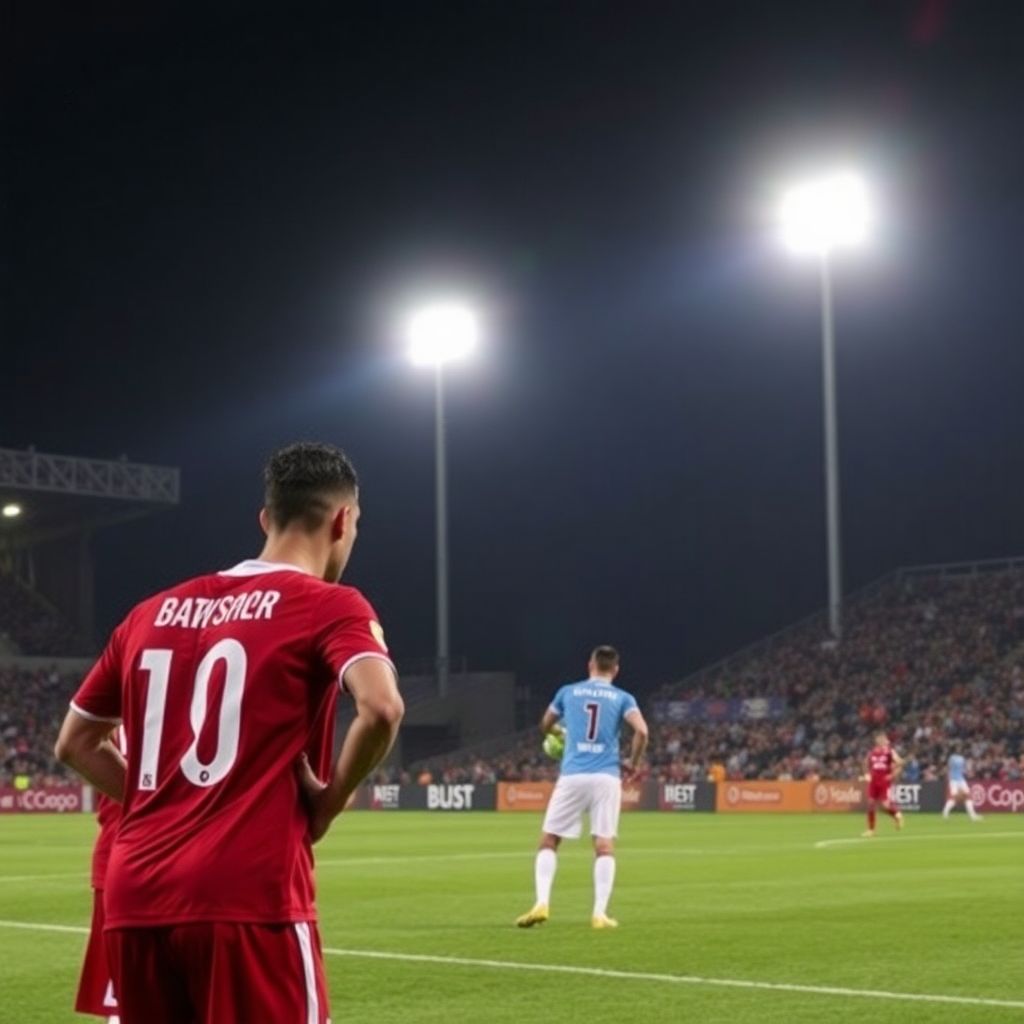
Sports columnists dissect Trabzonspor’s tense cup night in Samsun, focusing not only on the dramatic penalty shootout but also on the worrying signals in the team’s overall play and structure. The victory brings a valuable semi-final ticket, yet almost every analyst underlines the same contrast: weak performance, strong result.
Olcay Çakır – Fanatik: A night rescued by Onana
According to Olcay Çakır, Trabzonspor survived “a long and draining night” in Samsun and escaped with qualification thanks to penalties. If we start from the end, the hero of the story is clear: Onana. His saves in the shootout opened the door towards the Turkish Cup final, while Samsunspor’s keeper Okan Kocuk stood on the other side of the duel with equally decisive interventions in open play. In this huge battle of nerves, the side that remained standing was Trabzonspor.
Yet when the full 120 minutes are examined, Çakır stresses that even against a rival reduced to ten men, Trabzonspor almost never projected the feeling to their supporters that “this game is in the bag.” Both the coaching staff and the on-field organization fell short in terms of game control and offensive coherence. From a tactical perspective, Trabzonspor were graded as “fail”.
Still, Çakır warns against getting lost in another loop of criticism already familiar from this season. In his view, it is more sensible, at least for now, to focus on the fact that the team has advanced. The single-leg, knockout nature of the tie and the psychological weight of a de facto final pushed both teams into a cautious mindset. Fear of making a mistake overshadowed ambition.
Trabzonspor, unwilling to take big risks, could not use either the flanks or the central corridors effectively, despite deploying two tall strikers. What emerged was not a well-structured tactical battle, but a game where physical resistance, chaos, and scattered moments dictated the storyline. When the referee’s inconsistent control was added to the rising tension, the match became even more tangled and hard to manage.
The shadow of the team’s league slump was visible in almost every phase. Yet, despite the fragile form, securing a semi-final place in the cup deserves applause. For Çakır, the performance invites criticism, but the outcome demands respect. Football does not always reward the better-playing side; sometimes it favors the one that manages to stay upright under pressure. In this sense, Onana was the towering figure who remained on his feet when others wobbled.
Çakır even suggests that Onana might not be around next season, but before he departs, it looks like he wants to gift Trabzonspor supporters one more “final recital.” In his eyes, Onana is much more than a mere goalkeeper; he is a leader, a personality, and a game-changer rolled into one.
Zeki Uzundurukan – Fotomaç: Courage, missed chances and an “Onana miracle”
Zeki Uzundurukan emphasizes the bravery of both teams, describing the tie as a clash in which neither side shied away from duels or intensity. Samsunspor, backed by their home crowd, started the encounter more energetic and sharper. In the first half it was the hosts who came closer to scoring, thanks to an aggressive high press that suffocated Trabzonspor’s attempts to build attacks and forced the visitors into mistakes.
After the break, the pendulum swung. Trabzonspor began the second half with far more intent. Through Ozan and Zubkov they approached goal several times, looking much more threatening in transition and in the final third. The real turning point, however, came in the 69th minute when Ndiaye saw a second yellow card and was sent off. From that moment, Uzundurukan describes a one-sided game: Trabzonspor camped in Samsunspor’s half and turned the match almost into an attack-versus-defense drill.
Okan Kocuk, though, repeatedly denied them. Attempts by Onuachu and Felipe met a goalkeeper in top form, preventing Trabzonspor from ending the tie in normal time. Samsunspor, under heavy pressure in the final stages, survived with an organized and gritty defensive display. They managed to absorb wave after wave of attacks, taking the match into extra time.
In games decided on a single leg, Uzundurukan underlines how crucial it is to “play the moments” well. Trabzonspor, in his view, lacked composure and precision in the decisive actions: the final pass, the final touch. An emblematic scene came in the 97th minute when Onuachu’s thunderous shot crashed against the woodwork. Furthermore, Samsunspor’s defenders hardly allowed him any breathing space for the entire match, neutralizing one of Trabzonspor’s main offensive weapons.
During the second half of extra time, Samsunspor consciously slowed the game down and clearly aimed to drag the tie to penalties. Fatigue pushed them back into a deep block, focusing solely on protecting their box. Trabzonspor piled up chances in this stretch, facing what Uzundurukan calls an “almost literal wall of flesh” in front of the goal. Despite generating a long list of goal opportunities, the decisive strike never came. The tie, inevitably, went to the spot.
There, the story turned into an “Onana miracle.” Transforming into a flying panther, he saved the first three penalties (from Satka, Mouandilmadji and Yunus Emre), effectively ending the contest before it truly began. On the other side, Trabzonspor’s penalty takers – Onuachu, Nwakaeme and Muçi – converted their attempts, sending the team into the semi-finals. Uzundurukan also reserves praise for Samsunspor: they “fought like lions” and left with their heads held high.
İskender Günen – Sabah: Result over performance, and the cost of wrong choices
İskender Günen approaches the tie from a more pragmatic angle: in his eyes, the only real priority was reaching the semi-final, no matter how. Even if it came via penalties, Trabzonspor obtained that ticket. However, he does not hide that the performance fell well below expectations, especially considering that Samsunspor played the last 40 minutes with ten men.
In the first half, Trabzonspor tried to answer Samsunspor’s pressure mostly through attacks down the left flank. In midfield, Oulai stood out as almost the only player actively trying to build something productive. Folcarelli and Ozan Tufan remained largely ineffective, which broke the rhythm of the team and caused the “storm” to lose its usual intensity. The insufficient quality and frequency of wing attacks left Onuachu isolated up front, often battling alone against multiple defenders.
Günen notes that while Trabzonspor managed to grab the initiative in the second half, this possession dominance did not translate into genuine creativity in the final third. What truly puzzled him was the choice made after Samsunspor went down to ten men in the 70th minute. Instead of playing with patience and maintaining the passing connections through Oulai, the coaching staff opted to withdraw him. That change, he argues, was a wrong decision that hurt Trabzonspor’s attacking flow.
Without players capable of beating opponents one-on-one, Trabzonspor struggled to break down Samsunspor’s low block. They circulated the ball, but rarely managed to pierce the compact defensive lines. Despite the disappointing overall level of football, Onana’s extraordinary saves in the penalty shootout eventually carried the team through.
For Günen, reaching the semi-finals of the Turkish Cup – which he calls the shortest route to European competition – is one of the most critical achievements of this season. The performance may have been fragile, but the strategic value of the qualification is immense.
—
Tactical undercurrents: A team between identity and pragmatism
Looking collectively at the three columnists, a consistent picture emerges: Trabzonspor is navigating an identity crisis on the pitch. The team struggles to combine possession with penetration, especially when faced with organized, deep-lying opponents. The Samsunspor game once again revealed that when rivals lock themselves in a low block, Trabzonspor finds it hard to create clear chances through structured attacks rather than chaos.
The decision-making of the coaching staff lies at the center of this debate. Substituting Oulai, who acted as a link between defense and attack, removed one of the few players capable of connecting the thirds. At the same time, deploying two tall forwards without consistently delivering quality crosses or creating overloads on the wings raises questions about the use of available strengths.
Defensively, Trabzonspor was not catastrophic, but they allowed Samsunspor too many promising moments in the first half because of pressing issues and weak resistance to high pressure. When they tried to build from the back, they often got stuck or lost the ball in dangerous areas, feeding the opponent’s transitions. That vulnerability was somewhat overshadowed by Onana’s authority, yet it remains a structural concern.
Psychological dimension: Fear of losing versus will to win
The match also highlighted a psychological tension. With the season’s trajectory in the league far from ideal, the cup has turned into a lifeline. That weight seems to be affecting the players’ risk appetite. Instead of playing with the confidence of a big club, Trabzonspor often appears trapped between the fear of conceding and the obligation to attack.
The columnists indirectly touch on this aspect: both teams played “afraid to make mistakes” rather than “determined to dominate.” This mentality influences everything from pressing intensity to passing choices and the readiness to attempt individual actions. The lack of players willing, or allowed, to take creative risks makes it easier for disciplined defenses to hold on.
Onana, in this psychological context, becomes not just a technical asset but a mental pillar. His presence in goal, his exuberant reactions and his success in the penalty shootout give teammates a reference point – someone who can bail them out when things go wrong. This kind of figure is often decisive in knockout competitions.
Onuachu and the attacking puzzle
Another key theme in the commentators’ analyses is Paul Onuachu’s role. As a towering striker, he naturally attracts defensive attention. Samsunspor doubled and sometimes tripled him, cutting off passing lanes and winning aerial duels. Yet Trabzonspor did not sufficiently exploit the spaces this focus created elsewhere on the field.
When a striker like Onuachu is denied space, the solution is rarely to just throw more crosses; instead, smart positional rotations, underlapping runs from midfield and quick combinations around the box become vital. The absence of such coordinated patterns made Onuachu look more isolated and ineffective than he might have been with better support.
His near-goal off the crossbar in extra time encapsulates the paradox: even in a game where he was largely neutralized, he still came inches from deciding the tie. But relying on sporadic moments rather than a consistent attacking plan is a risky strategy for a team with Trabzonspor’s ambitions.
Midfield balance and creativity gap
The trio of Oulai, Folcarelli and Ozan Tufan did not provide the desired balance. Oulai tried to dictate tempo and connect lines, but often found himself lacking companions on his wavelength. Folcarelli and Ozan remained on the periphery of the game, which reduced both defensive compactness and offensive sharpness.
This points to a broader issue: the lack of a clear playmaker profile in central areas. Without a midfielder consistently receiving between the lines, turning under pressure and feeding the forwards, the ball circulation becomes sterile. The team then resorts to long balls or predictable wide attacks, exactly what tight defensive blocks are built to neutralize.
For future cup and league matches, rediscovering a midfield structure that combines work rate with creativity will be one of the coaching staff’s main challenges. Otherwise, the team risks finding itself repeatedly stuck against well-organized opponents.
The cup as a strategic objective
All three writers agree on one thing: advancing in the Turkish Cup is crucial. With league performances fluctuating and European qualification through the league table in doubt, the cup emerges as a direct and realistic path to continental competition. From a club-planning perspective, that means financial benefits, increased visibility and a better platform for retaining or attracting quality players.
This is why, even though the football on show in Samsun was far from convincing, the victory carries disproportionate importance. Knockout tournaments often care more about resilience, timing and individual brilliance than about consistent dominance. Trabzonspor, for now, is surviving on exactly those ingredients.
However, relying solely on Onana’s heroics and occasional flashes from forwards is not a sustainable strategy. If the club truly wants to lift the trophy, they must use this semi-final qualification as a wake-up call, not a reason to relax. The gap between the current level of play and the standards required to win a final is still evident.
What needs to change before the semi-final?
From the columnists’ comments and the game’s flow, several priorities stand out:
1. Clearer attacking patterns: Trabzonspor must develop rehearsed mechanisms to break down low blocks: third-man combinations, overlapping and underlapping full-backs, and more purposeful occupation of half-spaces.
2. Smarter use of Onuachu: Instead of simply targeting him with long balls, the team should use his presence as a decoy to free teammates and create overloads in other zones.
3. Midfield reconstruction: At least one midfielder has to assume responsibility for creativity, receiving the ball under pressure and dictating the tempo in the opponent’s half.
4. Braver in-game management: Substitutions like Oulai’s removal need to be reconsidered. Maintaining or even increasing on-ball intelligence on the pitch, especially when the rival is down to ten men, is crucial.
5. Mental reset: The team must transition from playing not to lose to playing to win. That change of mindset is often what separates cup winners from merely resilient survivors.
A victory that warns as much as it celebrates
In summary, the Samsunspor-Trabzonspor clash will be remembered for Onana’s spectacular penalty heroics and the anxiously secured semi-final ticket. Yet beneath the surface, the game has triggered serious questions about the team’s tactical coherence, creativity and mental approach.
The columnists agree that while the result merits praise, the performance calls for a thorough internal review. If Trabzonspor can read this warning correctly and respond with structural improvements on the pitch, this troublesome night in Samsun might later be viewed as a turning point rather than just another nerve-racking chapter in a turbulent season.