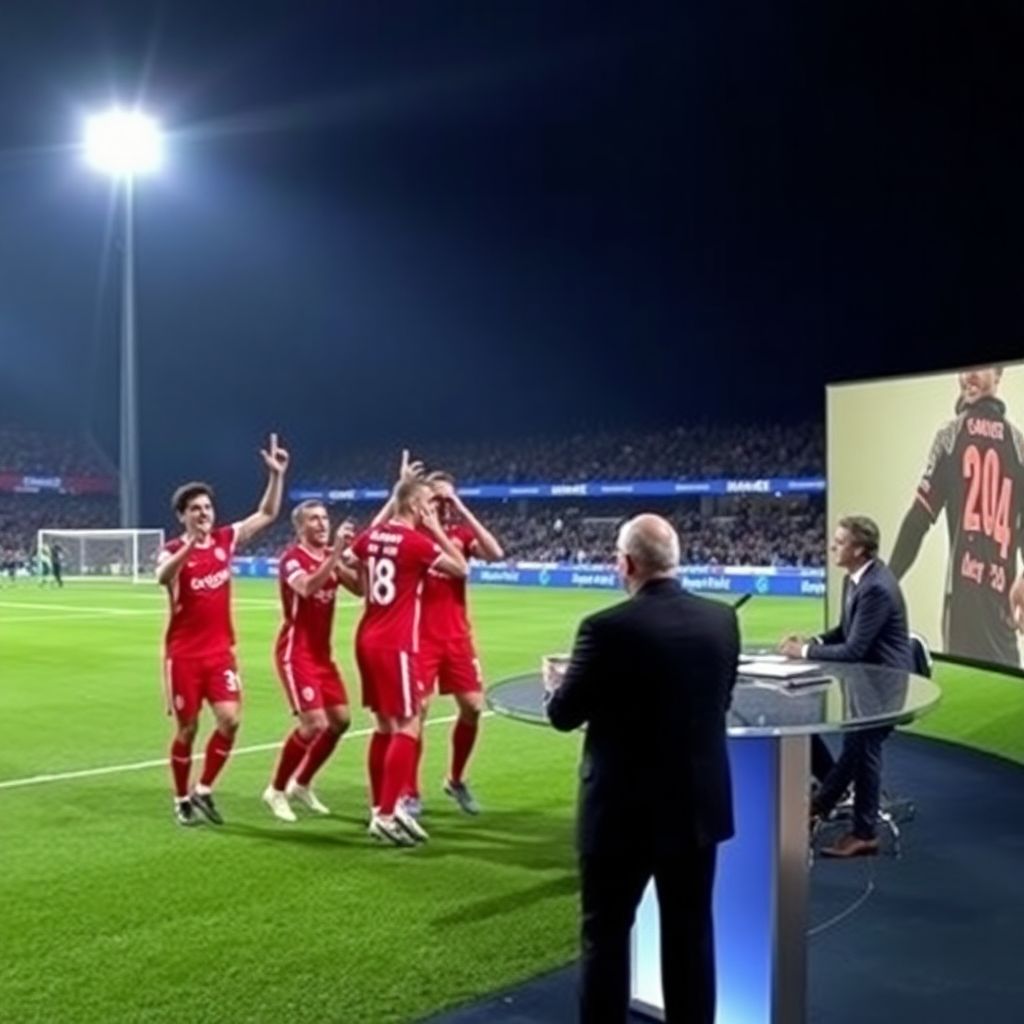
Sports columnists dissected Trabzonspor’s 2-1 home victory over Galatasaray from multiple angles: tactics, individual errors, mentality and the wider implications for the title race. Below is a synthesis of their views, reworked into a broader, more analytical look at the derby and what it reveals about both clubs.
—
A Derby of Low xG, High Drama
Despite producing three goals, the first half in particular did not mirror a match overflowing with clear-cut chances. As Cem Dizdar underlined, the opening period was notable for its modest expected-goals figures. Trabzonspor’s early strike emerged from a long, meticulously constructed move rather than a barrage of opportunities: a sequence of 14 passes, initiated on the right flank, recycled backwards and then returned to the same side, ended with a pinpoint cross that allowed Paul Onuachu to score with a header.
That passage of play embodied the potential sophistication in Trabzonspor’s build-up, yet Dizdar argued they failed to consistently hit that level. With Galatasaray’s back line disjointed and disorganized, a more polished passing performance from Trabzonspor might not only have yielded the opening goal but also significantly raised their overall goal threat.
Paradoxically, the team that spent more time on the ball during the first half was Galatasaray. Their longer spells of possession did not translate into sustained danger, but it did help them limit clear opportunities for the hosts. In essence, Galatasaray controlled the ball, Trabzonspor controlled the scoreboard.
—
Galatasaray’s Response – Then the Second Blow
Right after the break, Galatasaray seemed to drag the game back onto level terms both psychologically and tactically. The equalizer came via Wilfried Singo, who capped a flowing 12-pass move. For a brief period, it looked as if Okan Buruk’s side had reasserted themselves and steadied the ship.
The momentum, however, was short-lived. With a single, decisive action, Chibuike Nwaiwu restored Trabzonspor’s lead, again with a header. That goal did not just change the scoreline; it shattered the fragile sense of control Galatasaray had begun to build. Dizdar stressed that, afterward, despite all the substitutions and attempts at altering the script, Buruk and his players never truly regained a firm grip on the tempo or the pattern of the match.
Trabzonspor, whether by design or necessity, retreated into a more defense-first approach. Galatasaray had more of the ball again, but their territorial advantage lacked sharpness and penetration. Fatih Tekke’s game plan-balancing aggressive pressing at key moments with disciplined defending in deeper zones-held firm through the final whistle.
—
A Tactical Victory for Fatih Tekke
Multiple writers agreed that Fatih Tekke won the day on the tactical front. He sent his side out in what resembled a bold 4-2-4, especially early on, clearly aiming to harness the energy from the stands and strike before Galatasaray could settle. The plan worked: Trabzonspor pressed high, disrupted Galatasaray’s build-up and capitalized on defensive indecision.
Tekke entered this match without key figures like Batagov and Muçi, players central to the team’s usual defensive and attacking balance. The deputies, however, did not simply fill in; they shaped the match. The coach’s ability to prepare a patched-up squad to compete with intensity and clarity in a so-called six-point clash drew particular praise. In a contest of fine margins, his choices in structure, pressing triggers and set-piece emphasis were decisive.
Equally important was how Tekke managed the emotional temperature of both team and crowd. For long stretches, especially once Trabzonspor regained the lead, the supporters were fully engaged, pushing their side through transitional phases and defensive stands. The label of a “match-selecting” fan base, often accused of only turning up for big occasions, seemed to come alive again in this high-stakes meeting-but this time in a way that boosted the team instead of adding pressure.
—
A Right-Back Production Line in Trabzon
One of the standout individual performances on the night came from 23‑year‑old right-back Pina. Uğur Meleke highlighted him as arguably the most influential figure in the first half. Pina’s relentless forward runs repeatedly exposed the axis of Jakobs and Lang on Galatasaray’s left side, forcing them into awkward defensive positions and disrupting their rhythm.
It was Pina who delivered the cross that Onuachu turned into the opening goal, and he also created a clear scoring chance for Nwakaeme. Beyond tangible contributions, his energy and assertiveness seemed to convince his own teammates that victory was attainable and reminded Galatasaray they had walked into one of the league’s most demanding away grounds.
Meleke noted that Trabzonspor have, almost by accident yet with remarkable consistency, built a reputation for identifying strong right-backs. When they unexpectedly lost Meunier, they brought in Malheiro. When Malheiro departed, they unearthed Pina. For a position that many clubs struggle to fill adequately, Trabzonspor have turned a persistent problem area into a recurring success story.
—
The Midfield Battle: Expectations Versus Reality
Before kick-off, Meleke had anticipated that Trabzonspor’s central partnership of Ozan and Folcarelli might be too soft against the more combative Torreira-Lemina pairing. The match subverted that expectation. Ozan, in particular, delivered a robust and disciplined performance, helping shield the defense, closing passing lanes and providing balance in phase two of build-up.
The absence of Oulai, one of Trabzonspor’s key midfield anchors, was expected to be highly disruptive. Instead, the collective work rate meant that his absence was barely mentioned as a decisive factor. The double pivot held its ground, prevented Galatasaray from overrunning central zones and ensured that transitions-both defensive and offensive-were handled with maturity.
On the other side, Galatasaray never truly imposed their usual dominance in midfield. Phases of controlled possession did not come with the accompanying verticality and creativity that define their peak performances. When they did manage to gain control between the 45th and 55th minutes, they allowed that momentum to slip away again, especially by conceding yet another goal from a set piece.
—
Defensive Errors That Defined Galatasaray’s Night
Levent Tüzemen focused on the nature of the goals Galatasaray conceded, noting how unworthy they were of a team boasting such defensive pedigree. The first came when Davinson Sanchez misjudged a header, effectively whiffing at the ball and leaving it to Onuachu to convert. The second resulted from an unnecessary foul by Abdülkerim Bardakcı. From the ensuing free-kick, Nwakaeme’s delivery found Nwaiwu, who rose unmarked to head in.
These were not isolated mistakes. Tüzemen pointed out that Sanchez, a Colombian international, and Abdülkerim, a regular for the national team, have been repeating similar errors throughout the season. Ball-watching, poorly timed challenges and lapses in concentration have cost Galatasaray dearly in high-pressure matches.
Such recurring patterns raise deeper questions: Is it a structural issue with the defensive organization on set pieces? Are individual players failing to maintain mental sharpness in key phases? Or is the problem rooted in a lack of collective responsibility when defending the box? Whatever the answer, the match in Trabzon offered another chapter in an increasingly worrying trend for Okan Buruk.
—
A Questionable Starting XI and Dubious Changes
Buruk’s initial line-up drew criticism for its emotional, rather than strictly rational, basis. Choosing players seemingly out of loyalty or sentiment, instead of current form and fitness, backfired. Lang, still playing with his hand heavily bandaged, never found his rhythm. Jakobs, just back from international duty, looked physically and mentally drained.
Bülent Timurlenk questioned the wisdom of removing Torreira if the Uruguayan was not dealing with an injury. In a match where stability and aggression in midfield were essential, taking off one of the team’s primary anchors looked like a gamble that did not pay off. Turning again to Yunus, described as a kind of comfort choice, resembled clinging to a familiar solution even when evidence suggested it would not solve the problem.
Moreover, Galatasaray’s substitutes failed to inject the expected energy or clarity. Aside from Singo and the tireless effort of Barış, the team appeared unrecognizable compared with the version that had previously dominated the league. Timurlenk even hinted that the squad might have become too comfortable, perhaps metaphorically “over-rewarded” by recent successes, losing some of the hunger that defines champions in tough away fixtures.
—
Galatasaray’s Fragility in Big Matches
Another theme that emerged from the commentary was Galatasaray’s recurring instability in high-profile games. Comparisons were made to their away defeat at Juventus, where the team also collapsed in the first half. Once again, a strong opponent, a noisy stadium and early setbacks seemed enough to unsettle them emotionally and tactically.
Buruk now faces mounting pressure to show that his success is not purely dependent on his star striker Osimhen. When that key finisher is absent or neutralized, the team often looks bereft of alternative routes to goal and short of leaders who can drag the side through adversity. The Trabzon match did little to dispel the perception that Galatasaray struggle to find solutions once their initial plan is disrupted.
With a tricky trip to Göztepe on the horizon, this derby has become more than just a lost battle; it’s a test of Buruk’s capacity to reinvent, re-motivate and correct structural flaws. If he wants to erase the growing image of a “sated” coach satisfied with past titles, he needs to respond with clear tactical ideas and a more ruthless selection policy.
—
Set Pieces as a Decisive Weapon
One stark statistic underpins this game: Trabzonspor, one of the most dangerous sides in the league from dead-ball situations, once again made the difference through set pieces. Conceding a second goal from a set play, despite being well aware of Trabzonspor’s record in that department, reflects poorly on Galatasaray’s preparation.
Set pieces are often about repetitive work, detailed assignments and collective concentration. The fact that Galatasaray continue to be punished in this area suggests incomplete training-ground solutions or a lack of authority in organizing and commanding the defensive line. For a team with title ambitions, such weaknesses at this level are unsustainable.
—
Psychological Turning Points and Match Flow
Between minutes 45 and 55, the match briefly tilted in Galatasaray’s favor. Their equalizer, combined with Trabzonspor’s decision to defend deeper, handed the visitors control of possession and tempo. That phase, however, ended abruptly with Nwaiwu’s header, which acted as a psychological dagger.
From that moment, Galatasaray’s composure evaporated. Passes became slower and more predictable, body language grew increasingly tense and attacks turned into isolated, hopeful attempts rather than coordinated waves. The contrast with Trabzonspor, who largely maintained their structure and discipline after each major incident, was striking.
Such shifts underline how derby matches are managed not just tactically but emotionally. Tekke’s men responded to setbacks and pressure points with collective calm; Buruk’s side, in turn, reacted with frustration and structural looseness.
—
Title Race and the Broader Picture
Beyond the 90 minutes, columnists also underlined the match’s impact on the broader league narrative. With this win, Trabzonspor tightened their grip near the top of the table and, in a sense, validated the work and philosophy of Domenico Tedesco, whose broader footballing ideas have influenced aspects of the club’s direction.
The result does not merely add three points; it reshapes the momentum and psychology of the title race. Trabzonspor have positioned themselves as a central determinant of how the rest of the season will unfold, both through their own performance and by how they can affect rivals in direct confrontations.
For Galatasaray, the loss serves as a warning shot. Defensive lapses, hesitant tactical adjustments and an apparent mental vulnerability in high-intensity matches are not problems that fix themselves. Without a concerted response-on the training ground, in squad management and in match preparation-such issues can snowball in the decisive months of the season.
—
What Both Teams Must Take Away
Trabzonspor exit this derby with more than a statement win. They have confirmation that their “B plan” players can step up, that their right-back pipeline keeps producing key contributors and that their blend of set-piece threat and tactical discipline can beat even the league’s most stacked squads. Maintaining that intensity across less glamorous fixtures will be their biggest challenge.
Galatasaray, by contrast, must look hard at their defensive structure, their rotation logic and their mental resilience. The individual quality is not in doubt, but consistency in big matches is. Reorganizing set-piece defending, demanding more accountability from senior defenders and selecting based on fitness and form rather than sentiment will be crucial steps.
This derby, seen through the lens of the columnists, was not just a compelling 2-1 contest. It was a diagnostic tool, exposing exactly where Trabzonspor are growing stronger-and where Galatasaray, despite all their talent, are alarmingly vulnerable.