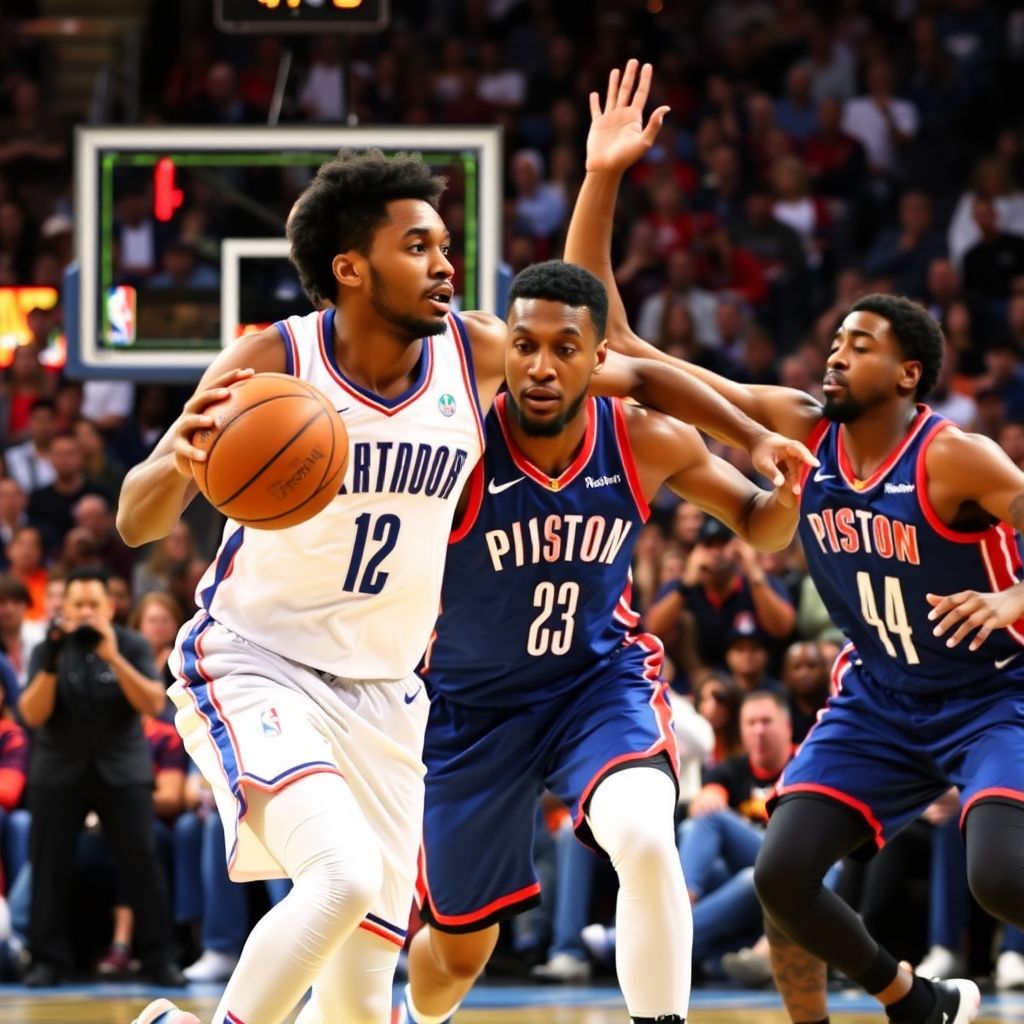
Thunder edge Pistons in overtime thriller, LeBron ties Abdul-Jabbar’s wins record
Oklahoma City survived a serious scare at home, needing overtime to put away the Detroit Pistons 114-110 in a tense NBA matchup. The Thunder, pushed to the limit by one of the league’s rebuilding teams, ultimately leaned on their superstar guard Shai Gilgeous-Alexander to secure the victory and add another milestone season to the franchise record book.
Gilgeous-Alexander delivered a dominant performance, pouring in 47 points to go with 5 rebounds and 3 assists. Every time Detroit threatened to take control, he responded with big shots and decisive drives, reaffirming his status as one of the most unstoppable scorers in the league. His efficiency and composure in clutch moments were the primary reasons Oklahoma City escaped with the win.
Around him, several Thunder players made timely contributions. Ajay Mitchell added 14 points, providing valuable scoring support from the perimeter, while Chet Holmgren came close to a double-double, finishing with 13 points and 9 rebounds. Holmgren’s presence at both ends of the floor – altering shots, battling on the glass and stretching the defense – helped keep Oklahoma City afloat when the offense stalled.
Beyond the result itself, the game carried historical significance for the Thunder. With this victory, Oklahoma City became the first team this season to reach 60 wins, underlining their consistency and dominance over the long grind of the regular season. Even more impressively, they achieved 60 wins in back-to-back seasons for the first time in franchise history, signaling that their current core is not just a one-year wonder but a sustainable contender.
Detroit, despite its struggles in the standings, refused to go quietly. The Pistons matched the Thunder’s energy for most of the night and forced overtime behind a balanced and aggressive offensive approach. Paul Reed led the way with a strong double-double, posting 21 points and 10 rebounds. He attacked the paint relentlessly, punished smaller defenders inside, and kept Detroit within striking distance on the boards.
Javonte Green chipped in 19 points, using his athleticism to score in transition and on cuts to the basket, while Kevin Huerter added 17 points with his perimeter shooting and off-ball movement. Their combined efforts gave Detroit multiple scoring options and kept Oklahoma City’s defense under constant pressure. For a young Pistons squad still searching for a clear identity, pushing one of the league’s top teams to overtime offered a glimpse of the potential they’re trying to build on.
The overtime period ultimately highlighted the difference between a mature contender and an emerging roster. While Detroit continued to fight, the Thunder executed more cleanly in half-court sets, relied on experienced decision-making and got key stops when it mattered most. Gilgeous-Alexander’s ability to create his own shot in isolation, draw fouls and control the tempo proved to be the separating factor in the extra five minutes.
This type of narrow win can be particularly valuable for Oklahoma City’s development heading into the postseason. Winning blowouts is one thing; closing out tight, physical games where every possession matters is another. The Thunder’s coaching staff will likely view this contest as a useful test of poise, execution and resilience – qualities that become indispensable in a playoff environment.
For Detroit, the narrow loss may sting, but the performance offers building blocks. Reed’s double-double and the scoring outputs from Green and Huerter suggest that the team is finding contributors beyond its headline prospects. If the Pistons can maintain this level of competitiveness, improve late-game decision-making and tighten their defense in critical moments, close defeats like this one could turn into future upsets.
While the Thunder and Pistons produced an overtime drama, another matchup on the West Coast delivered its own historic subplot. The Los Angeles Lakers comfortably defeated the Washington Wizards 120-101, but the real story centered on LeBron James and yet another major milestone in his legendary career.
James recorded a triple-double, finishing with 21 points, 12 assists and 10 rebounds. Far from empty numbers, his all-around production dictated the rhythm of the game. He orchestrated the offense, created quality looks for teammates and controlled the pace, helping the Lakers pull away and manage the game with authority.
Austin Reaves, Luke Kennard and Jaxson Hayes each contributed 19 points, underscoring how dangerous the Lakers can be when their role players capitalize on the attention LeBron attracts. Reaves attacked closeouts and excelled in pick-and-roll actions, Kennard spaced the floor with timely shooting, and Hayes provided energy, rim runs and finishes around the basket. Their combined scoring prevented Washington from loading up on James and forced the Wizards’ defense into difficult choices all night.
Washington, meanwhile, found a few bright spots despite the defeat. Will Riley led the Wizards with 20 points, showing a strong scoring touch and the ability to create shots against a solid Lakers defense. Justin Champagnie added 18 points, providing offensive spark and hustle. Yet, the Wizards lacked the depth and defensive resistance to contain a focused Lakers team that spread the floor and moved the ball efficiently.
The most significant note from the Lakers’ win came not from the box score but from the record books. By guiding his team to this victory, LeBron James reached the 1,228th win of his career, including playoff games. That figure allows him to tie Kareem Abdul-Jabbar for the most total wins by a player in NBA history. It is another remarkable benchmark in a career already filled with records, highlighting not just James’s individual brilliance but his longevity and sustained impact on winning across different eras and rosters.
This accomplishment further strengthens the argument about LeBron’s place among the greatest players ever. Matching Abdul-Jabbar, a symbol of excellence and consistency over two decades, reinforces how long James has operated at an elite level. From his teenage years as a top draft pick to his current status as a veteran leader, he has repeatedly adapted his game, evolved physically and mentally, and remained the centerpiece of successful teams.
For the Lakers, having James perform at this level so deep into his career is a major advantage as they navigate the playoff race. His ability to switch from scorer to facilitator, to dominate in transition or in half-court sets, and to elevate the performances of his teammates remains central to Los Angeles’s ambitions. The win over Washington, while routine in the standings, served as a reminder that as long as LeBron is on the floor, the Lakers are a threat.
Both games – the Thunder’s overtime escape and the Lakers’ milestone night – illustrate two different stages of contention in today’s NBA. Oklahoma City, behind a young superstar in Gilgeous-Alexander and a rising core, is carving out a new identity and racking up wins that signal a long window of competitiveness. Los Angeles, led by a veteran icon in James, is maximizing its remaining peak years with a clear urgency to contend right now.
Together, these storylines capture much of what defines the modern league: emerging powerhouses building toward the future and established legends continuing to reshape the record books, sometimes on the very same night.