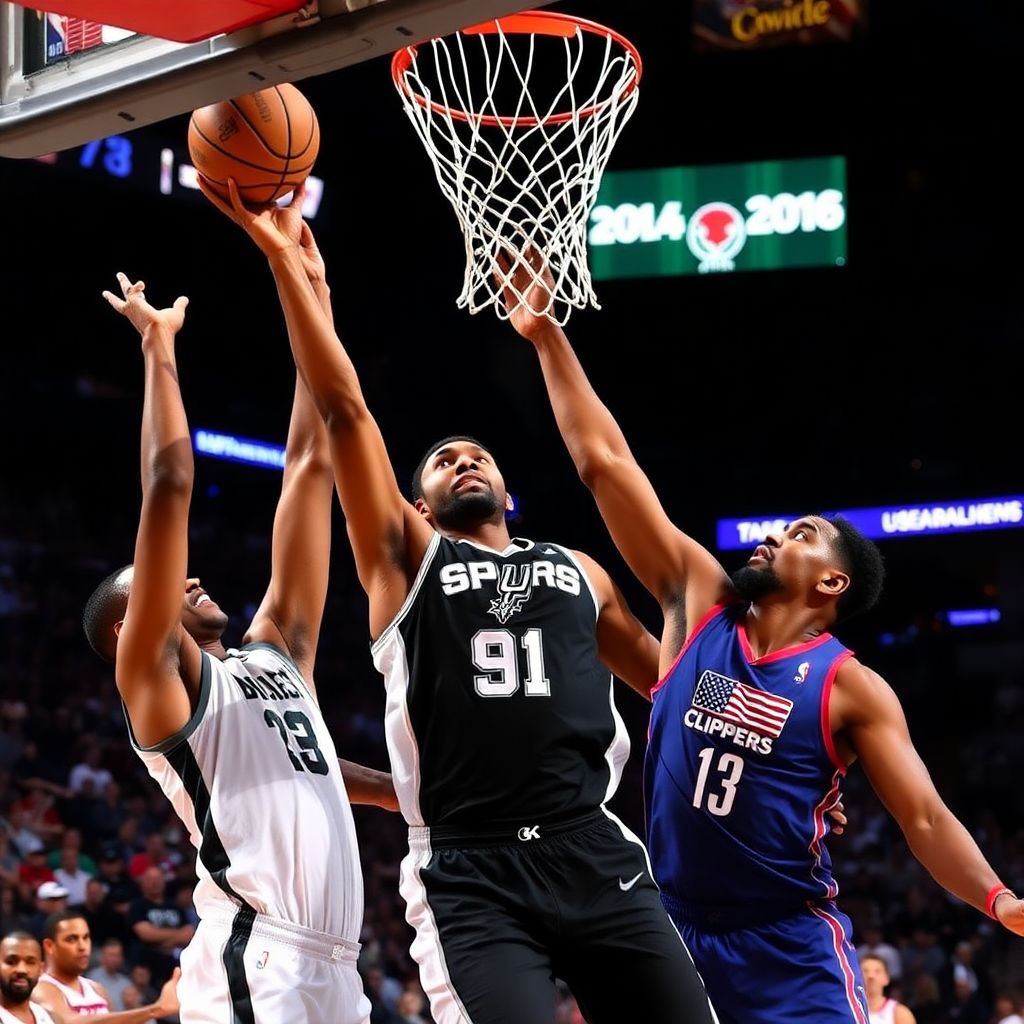
Spurs extend winning streak to 11 with dominant road victory over Clippers
San Antonio continued its remarkable run in the NBA, overpowering the Los Angeles Clippers 118-99 on the road and securing its 11th consecutive win. The visitors controlled the tempo for most of the night, pulling away in the second half and underlining their status as one of the league’s hottest teams.
Vassell leads balanced Spurs effort with double-double
Devin Vassell was one of the key figures in San Antonio’s victory. The versatile guard delivered a double-double, finishing with 14 points and 10 rebounds. Beyond the box score, he impacted the game with his activity on defense and his composure in half-court sets, often initiating the offense and helping the Spurs maintain their rhythm.
San Antonio once again relied on a balanced scoring approach. In what went down as the team’s 59th win of the season, De’Aaron Fox paced the attack with 22 points, using his speed in transition and his mid-range game to keep the Clippers’ defense off-balance. Rookie guard Stephon Castle added 20 points with aggressive drives to the basket, while Dylan Harper chipped in 19, showing poise well beyond his years.
What made this performance even more impressive was that the Spurs did it without Victor Wembanyama, who sat out due to injury. His absence could have left a major gap in rim protection and interior scoring, yet San Antonio’s collective effort and defensive discipline allowed them to continue their winning streak without their star big man.
Clippers’ stars can’t stop the slide
On the other side, the Clippers once again leaned heavily on Kawhi Leonard. The two-time Finals MVP finished with 24 points and was the top scorer of the game. Leonard hit tough contested jumpers and tried to spark a comeback in the third quarter, but the Spurs consistently answered with timely baskets and stops.
Bennedict Mathurin contributed 18 points, attacking the rim and getting to the line, while John Collins added 15 points, working effectively in pick-and-roll situations and on the offensive glass. Still, their efforts were not enough to prevent what became the Clippers’ 38th loss of the season. Defensive lapses, second-chance points allowed, and turnovers at crucial moments cost them any real shot at turning the game around.
The defeat highlighted a recurring issue for the Clippers: an over-reliance on individual brilliance rather than sustained team play. When Leonard sat or was neutralized, the offense often stagnated, while San Antonio continued to move the ball and involve multiple players in each possession.
How the Spurs controlled the game
From the opening tip, San Antonio dictated the pace at Intuit Dome. Defensively, they focused on crowding the paint and forcing the Clippers into tough perimeter looks. On offense, the Spurs mixed pick-and-roll actions with off-ball movement, creating open shots for their guards and wings.
Fox’s penetration repeatedly collapsed the defense, opening up kick-out opportunities for shooters. Castle’s attacking mindset put pressure on the Clippers’ backcourt, and Harper’s off-ball cutting punished defenders who lost focus. Vassell’s rebounding also limited the Clippers to one shot per possession, allowing the Spurs to build and protect their lead.
San Antonio’s bench added valuable minutes, maintaining the intensity when the starters rested. Even without Wembanyama, the frontcourt rotated effectively, contested shots in the lane, and boxed out consistently. That team-wide commitment on the glass was a major factor in the comfortable margin of victory.
Wembanyama’s absence and Spurs’ depth
With Wembanyama sidelined by injury, the matchup served as a test of San Antonio’s depth and adaptability. Rather than trying to mimic their usual inside-out approach, the Spurs leaned more heavily on guard play, spacing, and speed.
The result underscored how dangerous this roster can be even when not at full strength. Role players showed confidence in taking open shots, and the coaching staff adjusted rotations to minimize the impact of Wembanyama’s absence on defense. The ability to win convincingly without a franchise cornerstone is the kind of sign that often separates genuine contenders from teams simply on a hot streak.
For opponents, this presents a strategic dilemma: even game plans built around limiting Wembanyama may not be enough if San Antonio’s guards and wings continue producing at this level.
Clippers facing questions ahead of the stretch run
For the Clippers, the loss raised new questions about their consistency and readiness for the season’s most important stretch. With 38 defeats now on their record, they find themselves under pressure to stabilize both their defense and late-game execution.
The team continues to be anchored by Leonard’s two-way brilliance, but the supporting cast has struggled to deliver on a nightly basis. When Mathurin and Collins contribute, as they did in this game, Los Angeles remains competitive; however, lapses in team defense and a lack of ball movement often erase those positives.
If the Clippers are to reverse this trend, they will need more defined roles, better spacing around Leonard, and improved communication on the defensive end. Rotations on pick-and-roll coverage and transition defense, in particular, have to tighten, especially against playoff-caliber teams like San Antonio.
—
Doncic injured as Lakers suffer heavy defeat to Thunder
In another notable matchup of the night, the Los Angeles Lakers were thoroughly outplayed, falling 139-96 to the Oklahoma City Thunder at Paycom Center. The lopsided scoreline told only part of the story, as an injury to Luka Doncic compounded a difficult evening for the visitors.
Doncic finished the game with 12 points before having to leave due to an injury to his left hamstring. The playmaker was visibly uncomfortable and ultimately could not continue, forcing the Lakers to adjust their offense on the fly. Without his playmaking and shot creation, Los Angeles struggled to generate quality looks and maintain any rhythm.
Austin Reaves tried to pick up some of the slack, scoring 15 points with a mix of three-pointers and drives to the basket, while LeBron James added 13 points. However, the Lakers never found sustained momentum and were overwhelmed at both ends of the floor.
Thunder offense explodes behind Shai Gilgeous-Alexander
Oklahoma City put on a scoring clinic, powered by Shai Gilgeous-Alexander, who dropped 28 points and finished as the game’s leading scorer. His ability to break down defenders off the dribble, draw contact, and convert from mid-range made him almost impossible to contain.
Isaiah Joe added 20 points, stretching the floor with confident outside shooting, while Luguentz Dort contributed 14 points and his signature defensive intensity. The Thunder spread the floor effectively, moved the ball with purpose, and attacked mismatches whenever they appeared. The Lakers’ defense, already under strain, came under even more pressure once Doncic left the floor.
By the fourth quarter, the outcome was beyond doubt, allowing Oklahoma City to manage minutes and give their bench extended run, while the Lakers were left searching for answers.
Impact of Doncic’s injury on the Lakers
Doncic’s hamstring issue immediately raised concerns about his availability for the upcoming schedule. The Lakers’ offense is heavily built around his ability to control tempo, create for teammates, and hit big shots late in the clock. Without him, the burden on James, Reaves, and the rest of the rotation increases significantly.
Hamstring injuries are notoriously tricky, often requiring careful management to avoid re-aggravation. For Los Angeles, the challenge will be balancing the urgency of their playoff push with the long-term health of one of their key stars. A rushed return could carry major risks, while an extended absence might force a rethinking of offensive schemes and rotations.
In the short term, the coaching staff may need to emphasize more ball movement, off-ball screening, and quicker decision-making to compensate for the loss of a dominant on-ball creator. Players like Reaves and other secondary handlers will need to shoulder more responsibility bringing the ball up and initiating sets.
Thunder sending a message with statement win
For the Thunder, the blowout victory over a marquee opponent served as a statement of their growing ambitions. It was not just a win driven by Gilgeous-Alexander’s individual brilliance; it also showcased the team’s depth, spacing, and defensive versatility.
Their ability to punish defensive mistakes, space the floor with multiple shooters, and switch assignments on defense makes them a particularly tough matchup. The performance of role players such as Joe and Dort reflected a broader trend: Oklahoma City is no longer a team hoping to surprise opponents; it is one that expects to compete with the league’s best.
This kind of dominant home performance can build confidence in the locker room and send a clear signal to future opponents that underestimating the Thunder is no longer an option.
What these games reveal about the current NBA landscape
Taken together, the Spurs’ 11th consecutive victory and the Thunder’s rout of the Lakers illustrate two key themes of the current NBA season: the importance of depth and adaptability, and the impact of injuries to star players.
San Antonio’s ability to win convincingly without Wembanyama highlights the value of a well-constructed roster where multiple players can step up in any given game. Their mix of experienced guards and emerging young talents has allowed them to maintain a high level even when not fully healthy.
Conversely, the Lakers’ struggles after Doncic’s injury underscore how vulnerable teams can become when a primary creator is forced off the floor. Modern offenses often revolve so heavily around one or two stars that their absence can disrupt spacing, timing, and confidence.
Meanwhile, the Clippers’ inconsistent form shows that pure talent on paper is no guarantee of results. Cohesion, defined roles, and commitment on defense remain non-negotiable for teams with serious postseason aspirations.
As the season heads deeper into its decisive phase, the Spurs and Thunder appear to be peaking at the right time, whereas the Lakers and Clippers are searching for both health and stability. How quickly those issues are addressed could well determine their trajectories in the playoff race.