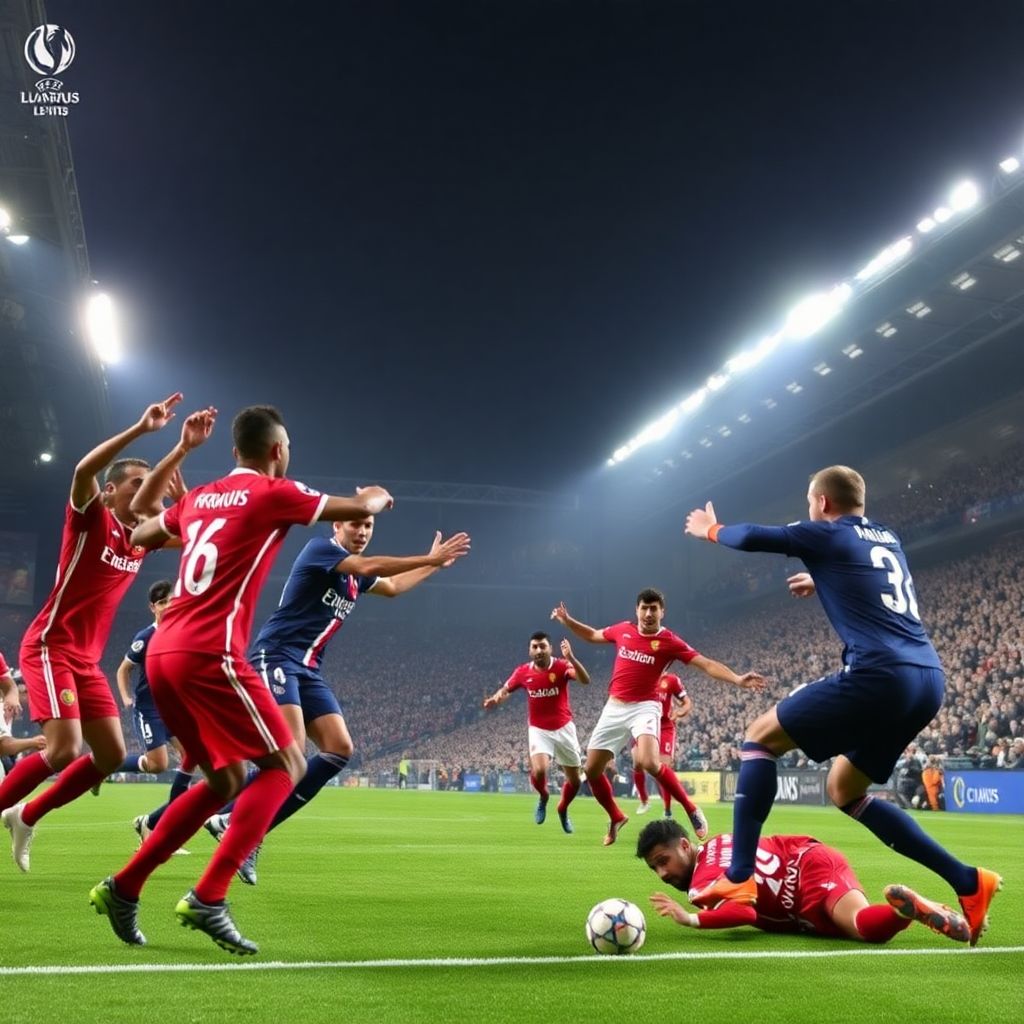
“PSG could have scored more than two”: Slot admits Liverpool were in “survival mode” in Paris
Liverpool head coach Arne Slot did not sugar-coat his assessment after his team’s 2-0 defeat to Paris Saint-Germain in the first leg of their UEFA Champions League quarter-final. Speaking after the match at Parc des Princes, the Dutch manager described the encounter as a “survival battle” and openly admitted that PSG were superior in every department.
Coming into the game, Liverpool were already carrying the weight of a bruising 4-0 loss to Manchester City in England. Slot underlined that this heavy setback shaped both the mood and the approach of his players in France, where they struggled to regain their usual composure and intensity under relentless pressure from the French champions.
From the opening minutes, PSG seized control of possession and territory, forcing Liverpool deep into their own half. Slot acknowledged that his team spent long spells pinned back near their penalty area, concentrating primarily on blocking shots, cutting passing lanes, and simply preventing further damage.
“PSG were clearly the better side today and could easily have scored more than two,” Slot admitted. “My players never stopped fighting, but we were in survival mode for most of the match. In almost every situation we defended our box with a lot of bodies. At this level, against players of this quality, that was necessary. If you give them space, they can really hurt you.”
His comments reflected the pattern of the game: Liverpool’s back line and midfield were constantly forced into last-ditch interventions, with the team rarely able to build sustained attacking moves. The usual pressing and quick transitions that have defined Liverpool in recent years were largely absent, replaced instead by reactive, emergency defending.
Yet Slot made sure to highlight the attitude of his squad. While he did not hide his disappointment with the overall performance, he praised his players’ resilience and work rate. According to him, the main issue was not commitment but the inability to cope with PSG’s technical quality and tempo, particularly in advanced areas of the pitch.
One of the key themes of Slot’s post-match analysis was the psychological state of the team. Arriving in Paris straight after a heavy domestic defeat, Liverpool looked hesitant and insecure at times. The coach suggested that this mental burden contributed to the team dropping deeper than planned and struggling to maintain composure in possession, which in turn allowed PSG to apply constant pressure.
Despite the sobering result, Slot was quick to remind everyone that this is only the first half of a two-legged tie. He pointed to the return fixture at Anfield as a crucial opportunity for Liverpool to rediscover their identity and turn the matchup around. In his view, the club’s own stadium could become the decisive factor.
“If you look at this club’s history, you can clearly see how much impact Anfield has on our performances,” Slot said. “Last season we played a completely different match there. In the first 10 minutes we could have gone 2-0 up, the intensity and energy were on another level. That is the kind of start we need again.”
For the second leg, Slot stressed that two elements will be vital: a significantly improved performance on the pitch and a powerful backing from the stands. “We must play better, that is obvious,” he stated. “But we also absolutely need the atmosphere our supporters can create. With their help, we have to raise our level.”
Tactical lessons from Paris
Beyond the raw result, the match offered clear tactical lessons for Liverpool’s coaching staff. PSG repeatedly exploited spaces between the lines and around the full-backs, forcing Liverpool’s defenders into difficult one-on-one situations. Slot and his analysts will likely spend the coming days reviewing how to compress the space more effectively and prevent PSG’s forwards from receiving the ball facing goal.
In possession, Liverpool were often rushed into long balls or risky passes due to PSG’s aggressive pressing. For the return game, a calmer, more structured build-up will be essential. That may mean adjusting the midfield setup to provide additional passing options for the centre-backs and goalkeeper, allowing Liverpool to bypass the first wave of pressure and progress the ball more reliably.
The mental reset before Anfield
Slot’s emphasis on Anfield is not just about the noise and colour in the stands; it is also about resetting the mindset of his squad. Two consecutive heavy defeats against elite opposition can dent the confidence of any team. The manager’s challenge will be to transform the narrative from one of damage control to one of belief and ambition.
In practical terms, that may involve rotating certain positions, giving opportunities to fresher players hungry to prove themselves. Training sessions before the second leg are likely to focus not only on tactical details, but also on aggression, tempo, and reinforcing the idea that Liverpool can still dictate terms on home soil.
What Liverpool must change in the second leg
To have a realistic chance of overturning the 2-0 deficit, several aspects of Liverpool’s game will need improvement:
1. Higher defensive line with coordinated pressing
At Anfield, Liverpool traditionally defend further from their own goal, pressing collectively rather than retreating. If they manage to squeeze the pitch and press PSG’s build-up more effectively, they can prevent the French side from calmly picking passes into dangerous areas.
2. Quicker transitions into attack
In Paris, counter-attacks either broke down early or lacked sufficient support. For the rematch, Liverpool must attack with more numbers when they win the ball, especially through fast combinations between midfielders and wide players.
3. Better use of set pieces
With the tie still open, corners and free kicks could prove decisive. A well-worked set-piece routine might be enough to unlock a tight game and energize both the team and the crowd.
4. Composure in the final third
Any chances that do appear will need to be taken ruthlessly. Slot knows that against a side like PSG, Liverpool may not create 10 or 15 clear opportunities, so their forwards must be clinical when the moment comes.
The role of the supporters
Slot’s repeated mention of the fans underlines how heavily he is counting on Anfield’s reputation. Historically, the stadium has been the stage for dramatic European comebacks, where early goals and roaring support have turned daunting deficits into famous victories.
The Dutch manager wants to tap into that tradition. By starting the game aggressively and involving the crowd from the very first minute, Liverpool hope to make PSG uncomfortable, both technically and emotionally. The atmosphere can influence the tempo, the intensity of pressing, and even the confidence of the opposition when they are on the ball.
A test of character for Slot’s Liverpool
Beyond the immediate objective of reaching the semi-finals, this tie has become an early test of character for Slot’s tenure. Consecutive losses to Manchester City and PSG have raised questions about how quickly Liverpool can adapt to his methods at the highest level. The response in the return leg will be closely watched as an indicator of the team’s resilience and capacity to learn from setbacks.
If Liverpool manage to deliver a strong performance at Anfield, even if the overall result does not bring qualification, it will restore some belief and show that the team can still compete with Europe’s elite. Conversely, another one-sided game would reinforce the impression that significant work lies ahead to close the gap.
PSG in control, but tie not over
For now, PSG hold a deserved and solid advantage. Their dominance in the first leg, which Slot freely acknowledged, puts them in pole position to advance. However, the coach’s comments about Anfield and about the need to “raise our level” are a reminder that European knockout football often defies simple predictions.
A 2-0 lead is comfortable, but not unassailable. An early Liverpool goal could completely change the emotional landscape of the second leg. Slot is betting on that possibility: a faster, braver Liverpool, fuelled by a ferocious home crowd, finally stepping out of “survival mode” and back into the proactive football that the club demands.
Until then, his candid admission in Paris – that PSG were “by far the better team” and “could have scored more than two” – stands as both a warning and a starting point. To stay alive in the Champions League, Liverpool must transform that harsh lesson into a performance worthy of Anfield’s history.