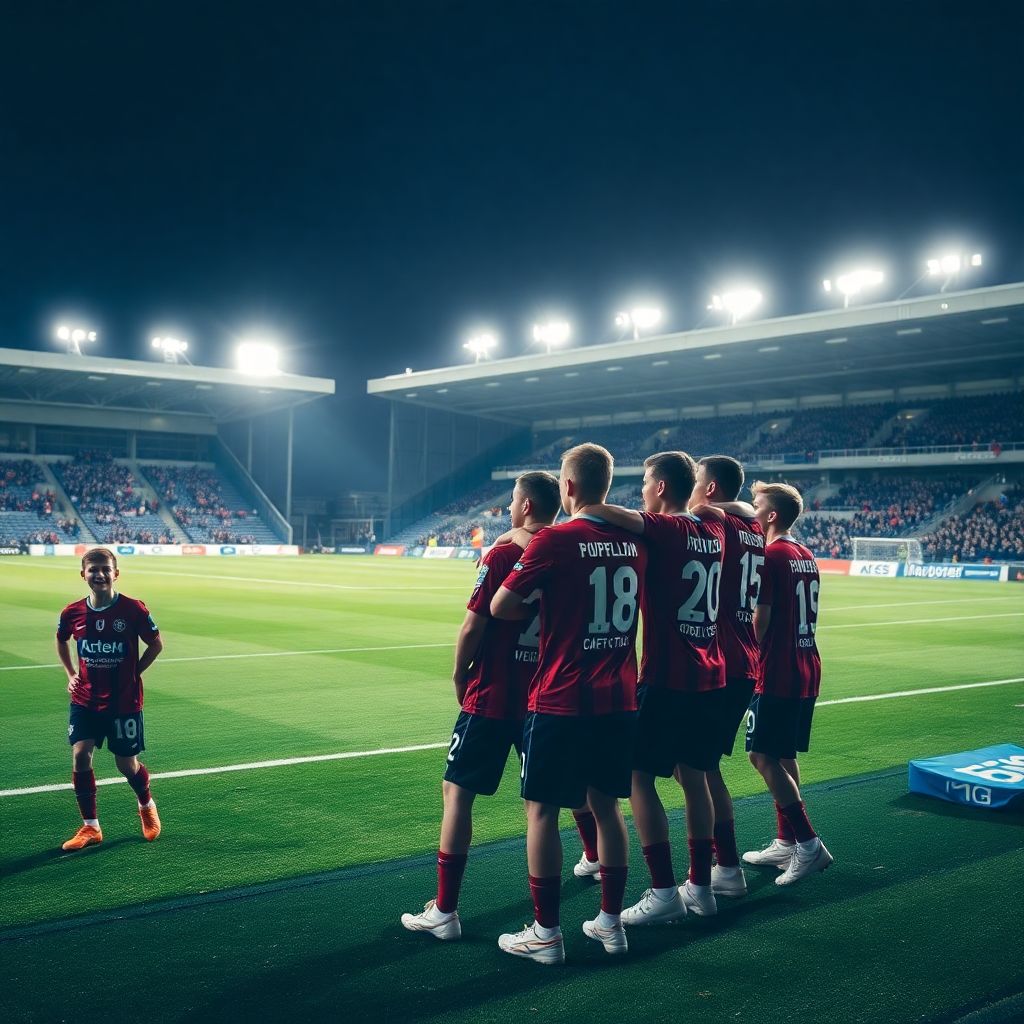
FC Nordsjaelland has emerged as the most youth-focused club in world football over the last five years, giving more playing time to under‑21 players than any other team. According to data from CIES Football Observatory, the Danish side tops the global ranking by allocating an impressive 44.7% of all league minutes to footballers aged 21 or younger. In other words, nearly half of Nordsjaelland’s playing time in domestic competition has gone to youngsters.
That figure does not just place Nordsjaelland first in Denmark, but at the very summit of world football when it comes to trusting young talent. No other club has been as consistent or as bold in giving real responsibility to emerging players in official league matches over such a long period.
Behind the Danish club, Slovak side MSK Zilina ranks second with 35.3% of its league minutes entrusted to under‑21 players. Close on their heels, Austrian powerhouse RB Salzburg occupies third place with a 35.0% share. Both clubs are already known for their strong academies and scouting networks, but even they fall clearly behind Nordsjaelland’s extraordinary commitment to youth.
The report does more than just highlight playing time. It also underlines the breadth of Nordsjaelland’s youth policy. Over the past five seasons, the Danish club has not only relied on a few standout prospects; instead, it has fielded a broad pool of young footballers. In total, Nordsjaelland has given minutes to 63 different under‑21 players in league matches, a figure that again puts them at number one globally in terms of the sheer number of youngsters used.
The data shows that Nordsjaelland’s strategy is not a short‑term experiment or a response to a specific generation of players. It reflects a structural model built on developing, promoting and trusting youth year after year. This is particularly notable in an era where many clubs hesitate to expose young players to sustained first‑team pressure, preferring experienced squads to maximise results in the short run.
In Turkey, the ranking paints a different picture, though some clubs still stand out. Beşiktaş leads the domestic list, having given 8.3% of league minutes to under‑21 players over the last five years. Göztepe follows closely with 8.1%, while Fatih Karagümrük takes third place at 6.5%. These numbers are well below the levels seen at Nordsjaelland, Zilina or Salzburg, but they still indicate a certain degree of trust in young footballers by Turkish clubs, especially in comparison with many others in the region.
Outside Europe, several teams from South America have built reputations as strong launching pads for young players, and the data confirms this. Clubs such as Defensor in Uruguay, Fortaleza CEIF in Colombia and Caracas in Venezuela stand out among non‑European sides for the high percentage of minutes they award to under‑21 players. For many of these teams, developing and selling young talent is not only a sporting philosophy but also a key economic strategy.
Within Europe’s traditional “big five” leagues (England, Spain, Germany, Italy and France), Barcelona leads the way in giving minutes to players under the age of 21. The Spanish giants, long associated with their famed youth academy, continue to integrate academy graduates directly into the first team. Behind Barcelona, Strasbourg from France and Sunderland from England emerge as the next most youth‑oriented clubs in these top competitions, further proving that even in elite, highly competitive environments, young players can play important roles.
The focus on youth at Nordsjaelland naturally raises the question: why are they able to do what so many other clubs only talk about? One key factor is a clear long‑term vision. Rather than treating academy products as backup options, Nordsjaelland appears to position them at the centre of the sporting project. Young players are not just filling gaps when injuries hit; they are part of the core rotation and are trusted in meaningful matches throughout the season.
Another element is the club’s willingness to accept the risks that come with youth. Younger squads may be more inconsistent, and mistakes can be more frequent. However, Nordsjaelland’s data suggests that the club prefers to absorb short‑term fluctuations in performance in exchange for long‑term growth, higher resale value of players and the creation of a recognisable identity based on opportunity and development.
For players, such an environment is highly attractive. Talented teenagers and their representatives increasingly look for clubs that can guarantee a real pathway to first‑team football, not just a place in an academy. Knowing that Nordsjaelland has given minutes to 63 different under‑21 players in just five years sends a powerful message: if you are good enough, you will play. This makes the club a strong destination for prospects both from Denmark and abroad.
The broader trend revealed by the report also hints at a growing divide in football. On one side, clubs like Nordsjaelland, Zilina and Salzburg lean heavily into youth, often acting as stepping stones for players who later move to bigger leagues and higher‑profile teams. On the other side, many clubs in wealthier competitions rely primarily on established stars and experienced professionals, giving limited room to prospects unless they are exceptional.
However, the case of Barcelona shows that even at the very top level, it is possible to compete while heavily involving young players in league matches. Their position at the top of the big‑five‑league ranking indicates that youth development and elite performance are not mutually exclusive when the structure, coaching and club philosophy are aligned.
For countries and leagues looking to improve their talent pipeline, the numbers in this report can serve as a benchmark. The gap between 44.7% at Nordsjaelland and figures around 6-8% in some other leagues points to untapped potential. If more clubs commit to integrating young players systematically-backed by a clear plan, strong coaching and patience-the overall standard of domestic talent could rise significantly over time.
Ultimately, Nordsjaelland’s position at the top of these rankings is not just a statistical curiosity. It illustrates a coherent model: heavy investment in youth, trust translated into real minutes on the pitch, and a wide platform that allows dozens of under‑21 players to experience senior professional football. As financial pressures increase and transfer fees continue to rise, this kind of sustainable, youth‑driven approach is likely to become even more valuable in the global football landscape.