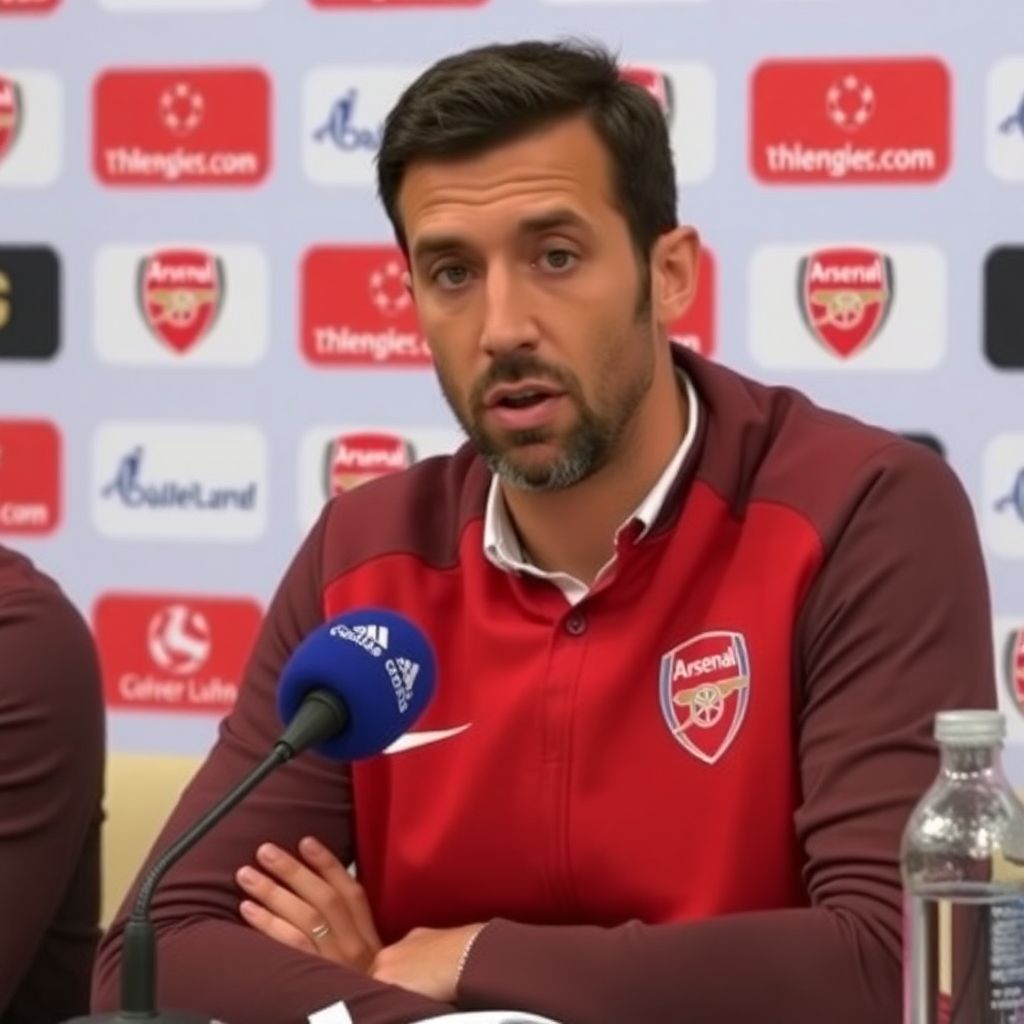
“Arsenal are like a wounded animal”: Rui Borges warns ahead of Champions League clash
Arsenal head into their Champions League quarter-final with Sporting CP in a fragile yet dangerous state. Back‑to‑back defeats have shaken Mikel Arteta’s side just as the season was reaching its decisive phase, and Sporting coach Rui Borges believes that makes the London club even more threatening. In his words, Arsenal now resemble “a wounded animal” – hurt, cornered, and therefore at their most unpredictable.
Under Arteta, Arsenal have spent the last three seasons living with the label of “almost there” – runners‑up in the Premier League, impressive in stretches, but ultimately falling short when it matters most. This year, however, the narrative seemed to be finally changing. Arsenal opened up a nine‑point lead at the top of the Premier League table, powered by intense pressing, fast transitions and a bold, attacking style that wore opponents down and won them admirers across Europe.
That momentum took a heavy blow in the space of a few days. Arsenal first fell to Manchester City in the League Cup final, a defeat that reopened old wounds from previous title battles. Before they could fully process that setback, they stumbled again, this time away to Southampton. The successive losses did more than dent their record; they reopened a familiar debate about the team’s psychological resilience and their ability to handle pressure in decisive moments.
Arteta did not hide from the emotional impact of these results. In the dressing room, his message to the players was brutally simple: “Feel the pain and use it to grow.” The Spanish coach argued that the defeat to Southampton did not reflect the true nature of his team, insisting it came down to details connected to Arsenal’s identity and concentration levels rather than a collapse in their overall game. For him, the challenge is to transform frustration into fuel.
Injuries have complicated that mission. Arsenal will be without key winger Bukayo Saka and versatile defender Jurrien Timber for the tie against Sporting. The status of central defender Gabriel Magalhães remains uncertain, leaving Arteta with potential gaps at the heart of his back line. Captain Martin Ødegaard, returning from a recent injury himself, is still searching for full rhythm and sharpness, trying to reconnect with the fluid, creative version of himself that drives Arsenal’s attacking play.
Inside the squad, there is no attempt to sugar‑coat the situation. Goalkeeper David Raya summed up the mood with stark clarity: “We have to use this pain as fuel.” His words echo Arteta’s mantra and underline the mental pivot Arsenal are trying to make – from disappointment and doubt to anger and determination. For a team that aspires to win major trophies, turning emotional setbacks into competitive edge is as important as tactics or formations.
On the other side of the touchline, Rui Borges is preparing Sporting CP for an Arsenal that may be more volatile, but also more dangerous than ever. By calling them “a wounded animal,” he was not mocking their struggles; he was issuing a warning to his own players. A side of Arsenal’s quality, stung by criticism and recent defeats, is unlikely to approach a Champions League quarter‑final passively. Borges expects intensity, aggression and a desire to make a statement – and he is planning accordingly.
From Sporting’s perspective, managing Arsenal’s emotional response will be as crucial as managing their technical qualities. Borges and his staff know that an early goal or a strong opening spell from Arsenal in Lisbon could unleash a wave of confidence that sweeps the tie away from them. Conversely, if Sporting can frustrate Arteta’s men, deny them space between the lines and force errors, those lingering doubts about “not getting over the line” could resurface and weigh heavily on the visitors.
The tie in Lisbon is therefore about much more than 90 minutes of football. For Arsenal, it is a psychological crossroads. A convincing reaction on European soil would not only keep their Champions League dream alive but also send a powerful message back to England that this season is different, that they no longer crumble when the pressure spikes. Another setback, however, would give new life to the narrative that this team, for all its talent and attractive football, still lacks the final layer of ruthlessness and composure.
Arteta’s approach in these situations has been consistent since he took over: lean into the emotion instead of hiding from it. He wants his squad to acknowledge the hurt, to accept that the standards were not met, and then to channel that feeling into their work on the training ground and into their intensity on matchday. His emphasis on “identity” – the way Arsenal press, the way they build possession, the way they react after losing the ball – suggests that he sees the Southampton defeat as a temporary deviation, not a structural failure.
Tactically, Arsenal may be forced into adjustments due to injuries. Without Saka, Arteta loses one of his most reliable outlets on the right flank, a player who stretches defenses, wins duels and offers a constant threat in behind. That could lead to a reshaped front line, with more responsibility falling on other creative players to carry the ball and break lines. If Gabriel is not fit, the defensive unit will have to rebuild its chemistry quickly against a Sporting side that likes to exploit spaces with quick combinations and movements between the lines.
For Sporting, this is also an opportunity. Facing a giant of English football in a Champions League quarter‑final, at home, with the opponent under pressure, offers the Portuguese club a chance to make a statement of their own. Borges will encourage his players to respect Arsenal’s quality but to recognise that fear and hesitation could be present beneath the surface of that wounded‑animal energy. If Sporting can stay calm while Arsenal burn with urgency, the balance of the tie might tilt unexpectedly.
Neutral observers will be watching not only for goals and chances, but for body language and reactions. How will Arsenal respond to the first mistake, the first missed opportunity, the first controversial refereeing decision? Will they show the emotional maturity of a team that has learned from previous seasons, or will anxiety creep into their game once more? In this sense, Lisbon becomes a stage for a broader examination of where this Arsenal project truly stands.
What is clear is that Arsenal cannot afford to tiptoe through this test. With ambitions alive both domestically and in Europe, they must emerge from this quarter‑final stronger – psychologically, tactically and collectively. The image of a “wounded animal” can be either a curse or a weapon. If they manage to control that energy and direct it into a focused, disciplined performance, it could become the turning point that finally pushes them beyond the “almost” label. If not, the scars from this period could linger far beyond one bad week.
As the spotlight turns to Lisbon, one thing is undeniable: this is more than a game for Arsenal. It is a chance to prove that pain has indeed become fuel – and that a wounded animal can still hunt at the very highest level.