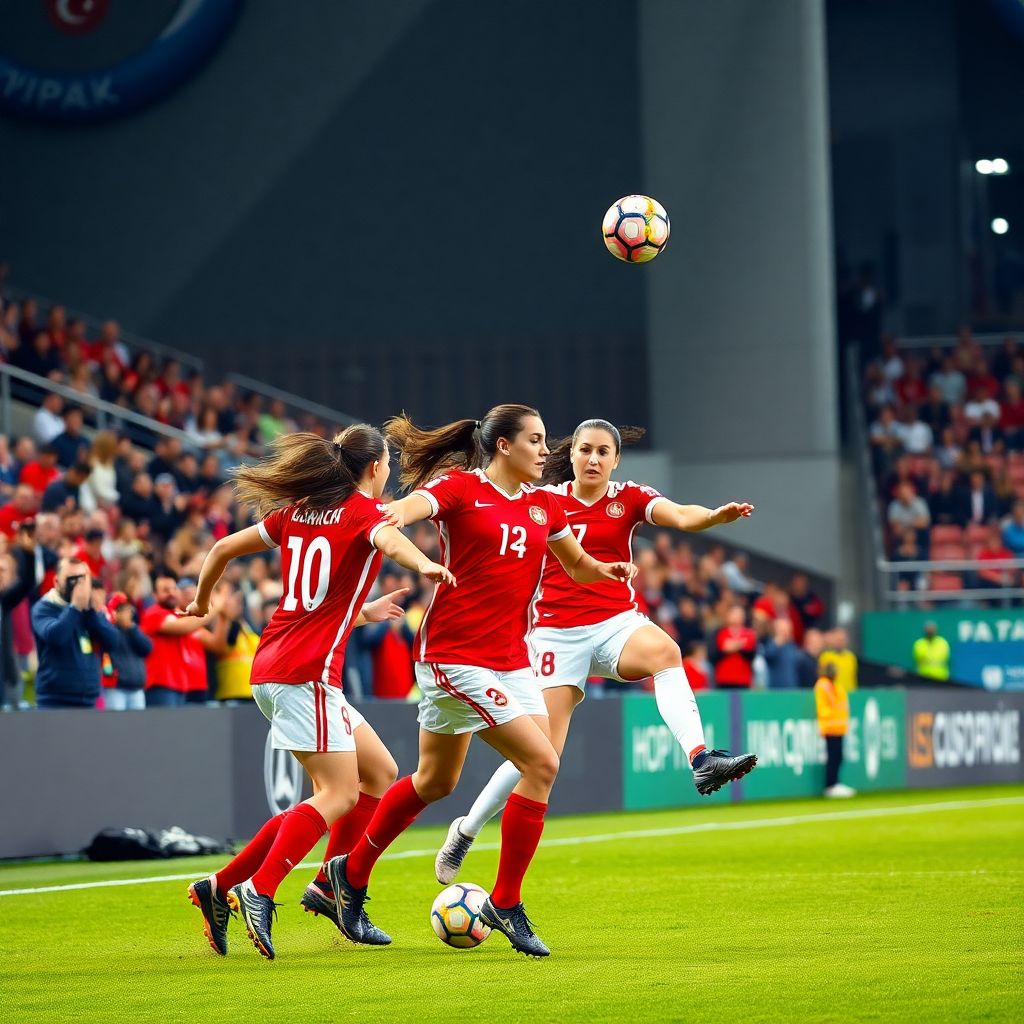
Women’s football in Turkey is the structured ecosystem of girls’ and women’s leagues, national teams, clubs, and commercial partners that has rapidly professionalised and connected to the global game. It now offers realistic career paths for players, coaches, scouts, and investors, while still facing structural, cultural, and financial barriers to sustainable growth.
Essential developments driving Turkey’s women’s football
- Formal league structures have shifted from semi‑amateur to increasingly professional environments.
- Big multi‑sport clubs now operate women’s teams, raising standards and visibility.
- Youth academies are slowly integrating girls and aligning with international best practice.
- European competitions showcase Turkish clubs and players to wider audiences.
- Media coverage and brands are beginning to treat the women’s game as a standalone product.
- Policy changes and targeted investment are crucial to close the gap with leading markets.
Evolution and milestones: from amateur roots to professionalization
Women’s football Turkey started as scattered amateur teams, often run by volunteers with minimal institutional backing. Over time, the national federation and municipalities began to sanction competitions, introduce basic regulations, and recognise women’s clubs within the broader football pyramid.
The next phase saw better integration with traditional powerhouses. Established men’s clubs created women’s sections, bringing access to training centres, medical teams, and fan bases. Professional contracts, dedicated technical staff, and more structured calendars emerged, even if conditions still lag behind the men’s game and top women’s leagues abroad.
This evolution placed Turkey on the global women’s football map. International friendlies, qualification campaigns, and club participation in European tournaments pushed standards upward. The women’s game is now a recognised pathway for aspiring professionals, analysts, and administrators who want to work in football rather than treat it purely as a hobby.
In practical terms, this professionalisation means clearer career ladders, more predictable competitions, and growing alignment with international regulations. For players and staff, this translates into more regular income opportunities, better-developed support services, and a greater chance of moving into stronger foreign leagues when ready.
- Clarify your role: player, coach, scout, investor, or policymaker, and map how the women’s ecosystem has opened pathways for you.
- Track federation regulations that directly affect contracts, licensing, and transfer rules in the women’s game.
- Benchmark club and league practices against one strong international women’s league to identify realistic improvement goals.
Domestic competition: structure, reforms and club ecosystem
The domestic women’s system in Turkey typically features a top division with promoted visibility, supported by lower tiers and regional competitions. Clubs gain entry through federation licensing, which covers financial stability, facilities, youth structures, and administrative capacity.
- League hierarchy and calendars are centrally managed by the national federation, which sets match days, player registration windows, and competition formats.
- Promotion and relegation link the top division with lower leagues, ensuring mobility for ambitious regional clubs while maintaining minimum infrastructure standards at elite level.
- Licensing criteria require access to proper pitches, medical support, coaching qualifications, and youth teams, even if compliance levels still vary widely.
- Domestic cups offer additional competition dates, opportunities for smaller clubs to face big names, and more chances for scouts to see players in high‑pressure settings.
- Multi‑sport giants and municipal clubs coexist with independent women’s clubs; each model has different strengths in funding, governance, and community connection.
- Matchday operations, including security, ticketing, and broadcasting logistics, increasingly follow the standards used in the men’s game, albeit on a smaller commercial scale.
From a fan and operator perspective, turkish women’s football league tickets are now easier to obtain through club websites, federation portals, and on‑site ticket booths, often at more accessible prices than men’s football. This creates a practical entry point for families, schools, and grassroots groups who want a live professional football experience.
- Map the domestic league ladder so you understand promotion, relegation, and cup opportunities relevant to your club or region.
- Audit your club’s licensing status: facilities, staffing, youth structures, and administrative processes against federation requirements.
- Improve matchday basics: clear ticket information, reliable schedules, and simple access routes for families and new fans.
Talent pipeline: youth programs, academies and scouting networks
The talent pipeline for women’s football in Turkey rests on school programs, local clubs, and the youth academies of professional teams. Entry points often start with school tournaments or municipal sports courses, where girls first engage in organised football and gain basic technical skills.
Professional clubs are gradually integrating girls into their academy structures, running age‑group teams and hiring specialised youth coaches. These academies provide regular training, sports science support, and exposure to competitive fixtures that mirror international player development models.
Scouting networks remain uneven but are growing. Some clubs use regional scout coordinators who attend tournament hubs, school events, or regional leagues to identify promising players. Others rely heavily on open trials, coach recommendations, or video footage submitted by players and families.
For players with clear elite potential, the domestic pipeline must connect to the global game. Trials abroad, exchange programmes, and agent representation offer routes into stronger foreign leagues, while national youth teams act as shop windows. However, coordination between schools, clubs, and national teams is still developing.
- For clubs: formalise relationships with local schools and municipalities to ensure a steady flow of female players into structured training.
- For coaches: define age‑specific technical and physical benchmarks that align with leading international academies.
- For scouts: build a simple database to track prospects across regional tournaments, trials, and school competitions.
International footprint: Turkish clubs and national team on the European stage
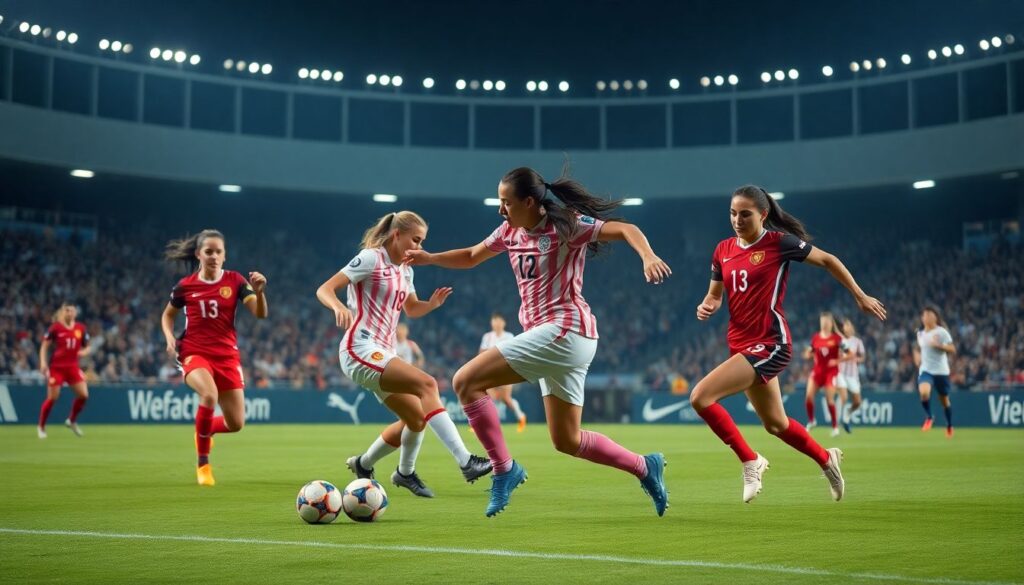
Turkey’s women’s clubs participate in European club competitions when they qualify through domestic success. These matches expose players and staff to different tactical cultures, higher intensity, and stronger physical demands, while giving clubs a chance to showcase their brand internationally.
The national team competes in regional and global qualification cycles, facing established women’s football nations. These encounters reveal gaps in technical quality, tactical cohesion, and depth, but they also demonstrate clear progress and generate pride that helps drive domestic interest.
Competitive advantages for the global stage
- Strong club brands from the men’s game can quickly attract attention when their women’s teams appear in European competitions.
- Geographic position enables varied friendly matches against both European and neighbouring countries, broadening tactical experience.
- Rapidly improving infrastructure and coaching education supports long‑term competitiveness if consistently resourced.
Structural limitations compared with leading markets
- Shorter history of high‑level women’s competition leads to less depth in elite talent compared with established European leagues.
- Lower commercial revenues restrict squad building, travel quality, support staff numbers, and investment in analytics or performance technology.
- Limited media narrative around women’s football reduces global recognition of Turkish clubs and players despite competitive progress.
- Schedule regular friendlies against higher‑ranked opponents to stress‑test tactical systems under pressure.
- Use European away trips as learning labs, documenting best practices in operations, support staff, and fan engagement.
- Develop clear individual development plans for players who might transfer abroad, including language and cultural preparation.
Commercial landscape: media coverage, sponsorship and fan engagement
The commercial dimension of women’s football in Turkey is still maturing. Media coverage has increased, with more matches broadcast or streamed, but visibility is far below the men’s game. Clubs and the federation are learning to package women’s football as a distinct product rather than an add‑on.
Sponsorship opportunities women’s football turkey now attract brands interested in authenticity, inclusion, and community impact. These partners can support kits, league naming rights, grassroots projects, or digital content, often at lower entry costs than in the men’s game. The challenge is building consistent, season‑long narratives that justify continued investment.
On the fan side, it is becoming easier to watch women’s football matches in Turkey via streaming platforms, social media highlights, and occasionally traditional broadcasters. In‑stadium experiences focus heavily on families and youth, with a more inclusive and accessible atmosphere than many high‑intensity men’s fixtures.
Merchandise for the women’s game is a practical growth area. Demand for turkey women’s national football team jerseys and club shirts associated with leading women’s players signals that fans want visible symbols of support. Aligning merchandising with matchdays, online shops, and social campaigns can create reliable revenue lines.
Common misconceptions holding the market back
- Assuming women’s football cannot attract paying fans or sponsors, rather than recognising it needs targeted marketing and better scheduling.
- Treating women’s matches only as family events, instead of also offering serious tactical analysis and storytelling for football‑savvy audiences.
- Believing that men’s club success automatically transfers to women’s teams without dedicated budgets and specialists.
- Underestimating digital audiences and over‑relying on traditional broadcasting to grow the fan base.
- Define a clear commercial identity for the women’s team, including brand values, tone, and target audiences.
- Bundle sponsorship assets across shirt space, content, community projects, and matchday activations to increase appeal.
- Invest in consistent digital storytelling around players, coaches, and fans to grow loyalty between matchdays.
Barriers and actionable policy recommendations for sustainable growth
Despite progress, significant barriers still limit the rise of women’s football in Turkey. These include cultural expectations around girls’ sport participation, inconsistent access to quality facilities, limited full‑time employment opportunities, and governance structures that treat women’s football as secondary to the men’s game.
Policy responses must be coordinated across federation, government, and clubs. Investment in school sports, safe local pitches, coaching education, and club licensing can raise the floor of quality. At the same time, clear targets for leadership representation and professional roles for women in coaching, refereeing, and administration can reshape organisational culture.
Below is a simple pseudo‑roadmap that stakeholders can adapt:
Illustrative three‑phase roadmap
Phase A: Access – guarantee that girls in every region have practical opportunities to play football, through school leagues, municipal programmes, and partnerships with nearby clubs.
Phase B: Quality – standardise coaching education, medical support, and competition formats, ensuring that every registered player experiences safe, structured, and development‑oriented environments.
Phase C: Professionalisation – increase the number of professional contracts, full‑time staff positions, and high‑standard facilities dedicated to the women’s game, with clear monitoring and accountability.
- As a policymaker: align education, sport, and local government policies to prioritise girls’ access to football space and time.
- As a club leader: commit specific budget lines, staff, and facility slots to women’s teams, not just shared leftovers.
- As a sponsor or investor: support multi‑year projects that combine elite teams with grassroots development and visibility campaigns.
Self‑assessment checklist for engaging with women’s football in Turkey
- Have you mapped the current league, club, and national team structures so you understand where you can contribute?
- Do you know the nearest women’s or girls’ club, and what support or partnership they most need?
- Are you treating the women’s game as a standalone product when planning media, sponsorship, or fan engagement?
- Have you identified at least one international benchmark league or programme to learn from and adapt locally?
- Do your plans include measurable goals for participation, quality, and professional opportunities over several seasons?
Practical queries about Turkey’s women’s football landscape
How can I start playing organised women’s football in Turkey as a beginner?
Begin by checking local clubs, municipal sports centres, and university teams that run women’s or mixed sessions. Many offer entry‑level training groups where you can learn fundamentals before joining competitive squads. School and workplace leagues can also serve as starting points.
What should clubs prioritise to build a successful women’s team quickly but sustainably?
Prioritise a qualified coach, safe and regular training facilities, and a clear pathway from youth to senior level. Communicate directly with local schools and community groups to recruit players, and ensure the women’s team has its own budget, schedule, and visibility in club media.
How can fans follow and support women’s football Turkey throughout the year?
Follow club and federation channels for fixtures and streaming information, attend local matches when possible, and engage with players’ and coaches’ social media to amplify their stories. Buying team merchandise and encouraging local media to cover women’s games adds further support.
Are there realistic professional career paths for women footballers in Turkey?
Yes, especially at clubs investing seriously in their women’s sections and through national team involvement. While conditions differ from leading leagues abroad, improving contracts, visibility, and transfer opportunities allow talented players to pursue full‑time or semi‑professional careers.
What should a brand consider before investing in sponsorship opportunities women’s football Turkey?
Clarify your objectives: community impact, brand awareness, or direct sales. Assess club or league values, audience profile, and digital reach, then co‑create campaigns that integrate grassroots activation, content, and matchday presence. Multi‑season commitments generally deliver stronger returns than one‑off deals.
How can I buy turkish women’s football league tickets from abroad?
Check club websites and official federation platforms, which often list fixtures and ticketing partners. Many clubs provide digital ticket purchase and e‑mail delivery, making it easier for international visitors. For smaller venues, contacting the club directly in advance is advisable.
Where can I find authentic turkey women’s national football team jerseys?
Look at official federation and major club online stores, as well as authorised sports retailers. Buying directly from licensed sellers ensures authenticity and supports continued investment in the women’s game. During major tournaments, additional limited‑edition designs may be released through official channels.