Golden Generation Reboot: Context After Euro 2024
The conversation about a “reboot” really starts with a sober Turkey national football team euro 2024 analysis. Turkey finally looked like a modern side again: brave on the ball, aggressive without it, and not intimidated by big names. Yet the same tournament exposed recurring issues — inconsistent game management, emotional swings, and a clear drop in quality once you move beyond the first XI. In other words, the ceiling is high, but the foundation is still fragile. If this group wants to stay relevant against Europe’s giants, the question isn’t “are the players good enough?” anymore, but “is the whole system built to maximise them every single window, every single tournament?”
What Went Right and Wrong with the 2020s Golden Generation
When people talk about Turkey golden generation football players 2020s, they mean more than just Arda Güler, Kenan Yıldız or Hakan Çalhanoğlu. They’re talking about a wave of technically refined, press-resistant midfielders and versatile attackers raised in top academies across Europe. The upside is obvious: tactical education, exposure to elite environments, and higher decision‑making speed. The downside is structural. The national setup has often lagged behind club standards in data use, physical preparation and tactical clarity. That gap shows on bad days: Turkey can look like a collection of high‑level individuals rather than a fully synchronised international machine. Rebooting means turning “golden” from a marketing term into a sustainable production line.
Two Competing Models: Copy the Elite or Double Down on Identity?
The central question is simple: how can Turkey compete with Europe football elite without losing what makes Turkish football unique? Broadly, there are two models. One is to imitate dominant European trends: high possession, heavy control, structured positional play. The other is to lean into traditional Turkish strengths: intensity, verticality, emotional momentum. Neither approach is perfect on its own. Pure imitation risks turning Turkey into a watered‑down version of Spain or Germany. Pure “passion football” collapses against well‑coached, patient opponents. The smart play is not choosing one ideology, but blending both into a recognisable yet modern national identity.
Model 1 – Possession-Heavy, Control-Oriented
This model treats the best Turkish national team tactics against top European teams as a control game: dominate the ball, slow the tempo, and suffocate transitions. With players like Çalhanoğlu dictating rhythm and ball‑secure full‑backs stepping inside, Turkey can in theory run matches from midfield. The upside is fewer chaotic moments, less exposure to counterattacks and a style that ages well as players gain experience. The risk is that Turkey still lacks the depth of press‑resistant defenders and world‑class build‑up keepers to copy Spain or England for 90 minutes. Against high‑pressing elites, a half‑finished possession model can quickly turn into sterile passing followed by costly turnovers in bad zones.
Model 2 – Vertical, Transition-Driven Turkish DNA
The second path weaponises what has historically made Turkey so dangerous: direct running, quick combinations and emotional surges. Players like Arda Güler, Kenan Yıldız and Barış Alper Yılmaz are natural transition threats, thriving when the game opens up. A vertical model asks Turkey to press in waves, win the ball high and attack the box within a few passes. This often suits tournament football, where intensity can shock supposedly superior sides. But living off chaos alone is risky: if the press is bypassed or energy drops, the team can get pinned back for long stretches. The real trick is using verticality as the main weapon without turning every match into a coin flip.
Hybrid Blueprint: Mixing Control and Chaos
For a realistic Golden Generation reboot, Turkey needs a hybrid game plan rather than a tactical religion. In practice, that means using control phases to stabilise matches and transition phases to kill them. For example, sit in a mid‑block against peak France or England, then explode forward through half‑spaces once the ball is won. Against mid‑tier sides, tilt more toward ball retention to protect legs and manage cards. This layered approach also helps squad rotation: not every player needs to be a pressing monster if certain match plans prioritise structure. Above all, the staff must communicate a clear hierarchy of principles so that style doesn’t swing wildly from window to window.
Key hybrid principles could include:
– Clear pressing and retreat triggers that all players recognise
– Set rotations to shift from possession to fast breaks within the same shape
– Defined roles for “control” players versus “chaos” specialists in the matchday squad
Technology, Data and Sports Science: Tools, Not Crutches
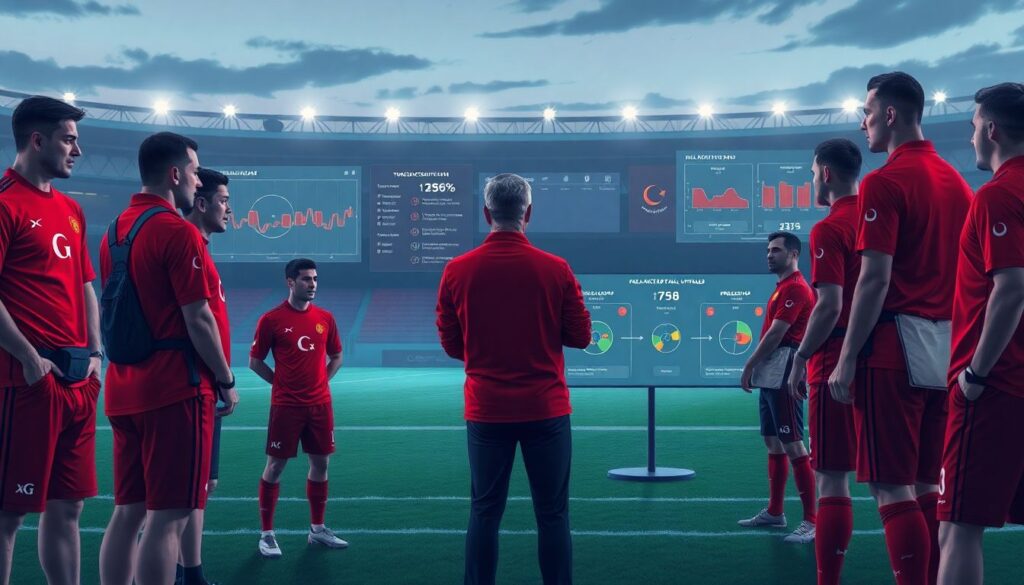
When people talk about “modernising” the Turkey national team, they often jump straight to buzzwords: analytics, GPS vests, xG models. These tools matter, but only if they’re anchored to football logic. Data can identify where pressing intensity drops after the 60th minute, or which full‑back pairings actually reduce crosses against elite rivals. Performance tech can fine‑tune individual workloads so your stars peak during major tournaments, not qualifiers. The upside of technology is objectivity: it cuts through emotion, which Turkish football has in abundance. The downside is the temptation to chase numbers instead of solving tactical problems, or to overload coaches and players with dashboards they can’t translate into behaviour on the pitch.
Pros and Cons of the Tech-Driven Approach
A technology‑heavy model gives the staff sharper tools to answer practical questions: who should start three days after a high‑intensity game, which set‑piece routines actually deliver, or where build‑up repeatedly collapses. For a national team that meets sporadically, this can shorten the learning curve dramatically. On the flip side, international windows are short, and not every player arrives from a data‑literate club. Overly complex analysis can alienate veterans or be ignored under pressure. The sweet spot is using tech to sharpen simple messages: two or three key metrics tied directly to the game plan, plus visual clips to show, not just tell. The goal is clarity, not a science fair.
Smart use of technology should aim to:
– Turn video and data into 2–3 non‑negotiable match objectives
– Monitor fatigue and adapt training loads during congested windows
– Refine set‑pieces, where small gains can swing knockout ties
Building the Pipeline: Youth, Diaspora and Mentality
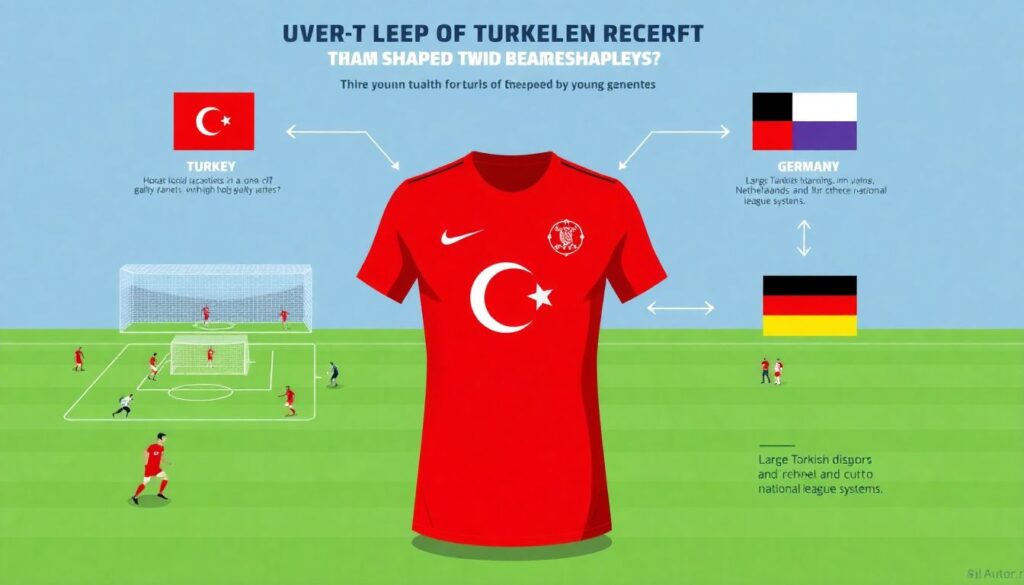
The future of Turkish national football team young talents will decide whether this is a one‑off wave or a sustained era. Turkey’s edge lies in having two talent pools: domestic academies and a huge diaspora in Germany, the Netherlands, France and beyond. One approach is to centralise everything: build stronger national youth camps, unified playing principles, and close ties with big clubs. Another is a more flexible scouting‑first model that simply picks the best, wherever they grew up, and adapts around them. Centralisation gives identity and continuity, while flexibility captures late bloomers and unconventional profiles. The optimal path blends both, anchored by a clear national playing idea from U‑15 to senior level.
Mentality, Leadership and Game Management
Tactically, Turkey is closer to the European elite than a decade ago. Psychologically, there’s still work to do. Turkey’s emotional energy can flip games in minutes, but it also leads to red cards, rushed shots and lapses in concentration. Here again, there are two basic philosophies. One is to “cool” the team: emphasise discipline, slower tempo, more controlled risk. The other is to better channel emotion instead of suppressing it — using it in specific phases, with leaders on the pitch managing the temperature. Strong internal leadership groups, clear hierarchy, and repetitive scenario training (10 men, defending a lead, chasing a deficit) can convert volatility into competitive edge.
Priority areas for a mentality reboot:
– Developing on‑field leaders beyond the captain’s armband
– Regularly rehearsing late‑game and underdog scenarios in camp
– Aligning public expectations so pressure becomes fuel, not panic
Recommendations and Trends Toward 2026
Looking ahead to the 2026 cycle, several European trends are clear: multifunctional defenders who can step into midfield, forwards who press like midfielders, and squads built around 16–18 “starters” rather than a fixed XI. For Turkey, the path forward is not mysterious. First, lock in a stable tactical identity that blends Turkish verticality with enough control to handle long tournaments. Second, invest in a lean but modern backroom structure: data analysts who speak “coach language”, sports scientists who protect the Golden Generation’s bodies, and psychologists who understand the unique pressure of Turkish football.
If Turkey embraces that mix of identity and innovation, the question will shift from “can they shock a big team?” to “why shouldn’t they be among Europe’s big teams every cycle?” The Golden Generation reboot isn’t about rewriting history; it’s about making performances like Euro 2024 the baseline instead of the exception.