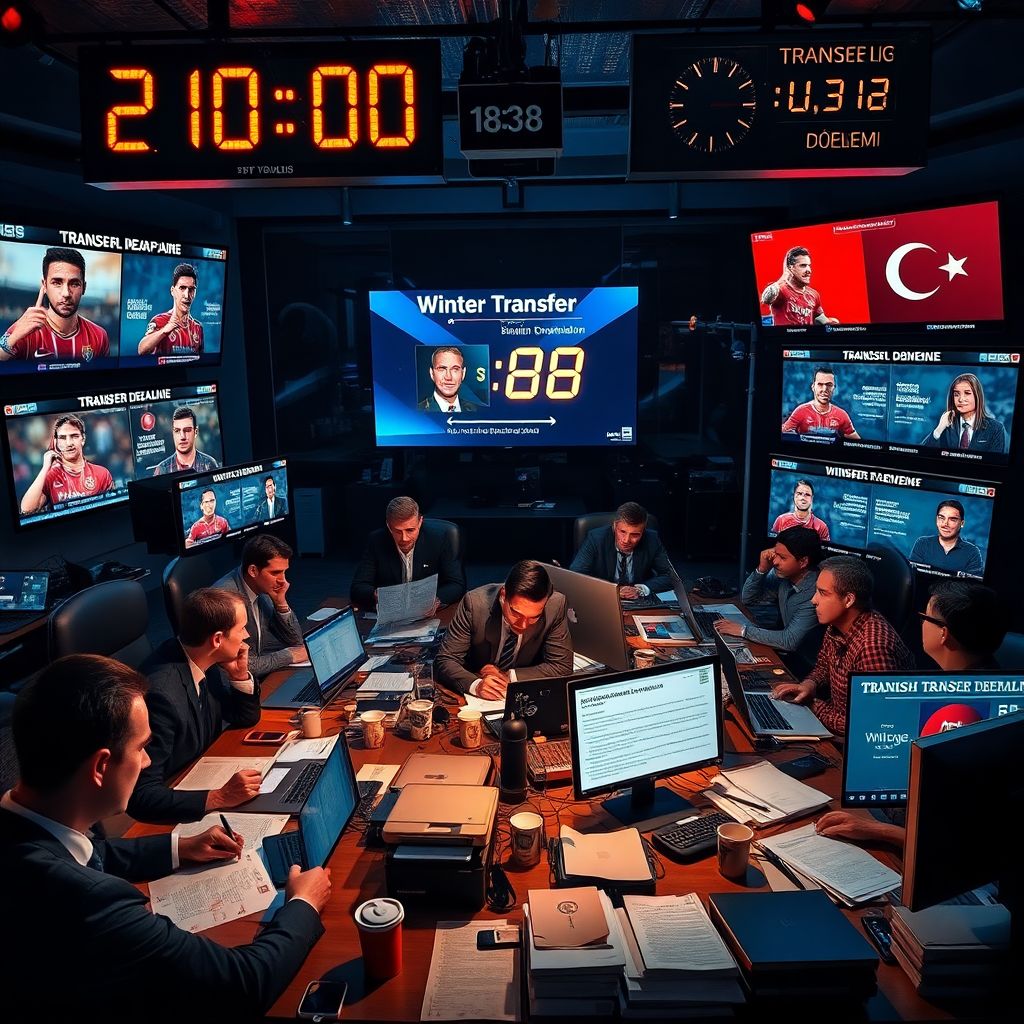
Winter transfer window in Turkish football draws to a close
The mid-season transfer window in Turkish football, commonly referred to as the “winter transfer period” or “ara transfer dönemi”, is entering its final hours. Clubs competing in the Turkish Süper Lig have until midnight tonight to complete their squad adjustments, submit contracts, and finalize registrations for new signings.
According to the official calendar set by the Turkish Football Federation, the second transfer and registration period of the season began on 2 January. After several weeks of intense negotiations, last-minute offers and strategic moves, this window will officially close at the stroke of midnight, marking the end of all incoming domestic and international registrations until the summer.
Earlier in the season, the primary transfer and registration period opened on 30 June and concluded on 12 September. During that longer summer window, clubs had the opportunity to overhaul their squads, bring in marquee names, and part ways with players who were not in their long-term plans. The winter window, in contrast, is traditionally shorter and more targeted, used mainly to address urgent needs revealed in the first half of the campaign.
The closing of the winter window is always a critical checkpoint in the football calendar. Once the deadline passes, teams must face the remainder of the season with the players currently registered. No new signings can be added to the squad list for league fixtures, with the exception of certain special cases such as free agents who have been unattached before the deadline, subject to federation regulations.
For Süper Lig clubs, this final day is often a race against time. Sporting directors, coaches, and club presidents push negotiations to the limit in order to secure a crucial striker, a stabilizing central midfielder, or defensive reinforcement. Paperwork must be completed, contracts signed, and player registrations submitted and approved before the federation’s electronic systems shut down at midnight. Any delay, even by a few minutes, can cause a deal to collapse.
The winter transfer period also has a direct impact on tactical plans. Coaches use the first half of the season to evaluate their squads: who fits the system, who struggles in the league’s physical and tactical demands, and where the team lacks depth. The January window then becomes a surgical operation rather than a large-scale rebuild. A single well-chosen addition can change the dynamics of a title race, a European qualification battle, or a relegation fight.
In Turkey, as in many major footballing nations, the structure of the transfer windows is aligned with international regulations. The summer period, stretching from late June to mid-September this season, is designed to give clubs ample time to negotiate transfers across different leagues, adapt to changing budgets, and integrate new players through pre-season camps. The winter window, although shorter, is strategically placed in the middle of the campaign so that teams can react to injuries, underperformance, or unexpected departures.
The timing of this particular winter window has also influenced market behavior. With the global football economy still adjusting to financial pressures, many Süper Lig clubs have approached January more cautiously. Loan deals with buy options, short-term contracts and performance-based agreements have become increasingly common. Rather than taking large financial risks, sporting directors often look for value signings, players out of favor at bigger clubs, or emerging talents who can contribute immediately.
As the deadline approaches, fans closely monitor every development. Rumors about last-minute deals, surprise departures, and unexpected arrivals intensify throughout the day. While some supporters hope for a blockbuster signing to transform their season, others simply want to see key players stay put amid interest from abroad. The closing of the transfer period therefore carries a mix of excitement, anxiety, and relief.
The end of the window also brings clarity to dressing rooms. Once the possibility of transfers is removed, players can focus fully on the competition ahead without the distraction of ongoing negotiations. Those who were linked with moves but stayed must re-establish their roles within the squad, while new arrivals face the challenge of adapting quickly to the Süper Lig’s tempo, culture, and expectations.
From a strategic perspective, the way a club manages the winter transfer period often reveals its ambitions. Title contenders may make decisive moves to strengthen weak spots, sending a message to both rivals and supporters that they are fully committed to the championship race. Clubs in the middle of the table might look for opportunistic deals—players who are undervalued now but could grow into key assets in future seasons. Teams battling relegation, on the other hand, tend to focus on experienced players capable of providing immediate impact and leadership in high-pressure situations.
Another important dimension of this period is squad balance and financial fair play. Clubs must not only think about the quality of incoming players, but also about wage structures, contract durations, and long-term sustainability. Offloading surplus players during the same window can be just as significant as signing new names. Reducing salary burdens or moving on footballers who are not in the coach’s plans helps create a more harmonious and competitive environment within the team.
As midnight approaches and the winter transfer window officially closes, every Süper Lig club will have effectively locked in its squad for the decisive months of the season. The decisions made between 2 January and tonight’s deadline—whether bold gambles, cautious tweaks, or the choice to maintain stability—will play a significant role in shaping the league table by the time the campaign concludes.
With the second registration period ending, attention now shifts fully back to the pitch. From the title race at the top to the intense struggle at the bottom, the remainder of the season will test how wisely clubs have used this narrow but crucial window of opportunity.
Комментарии