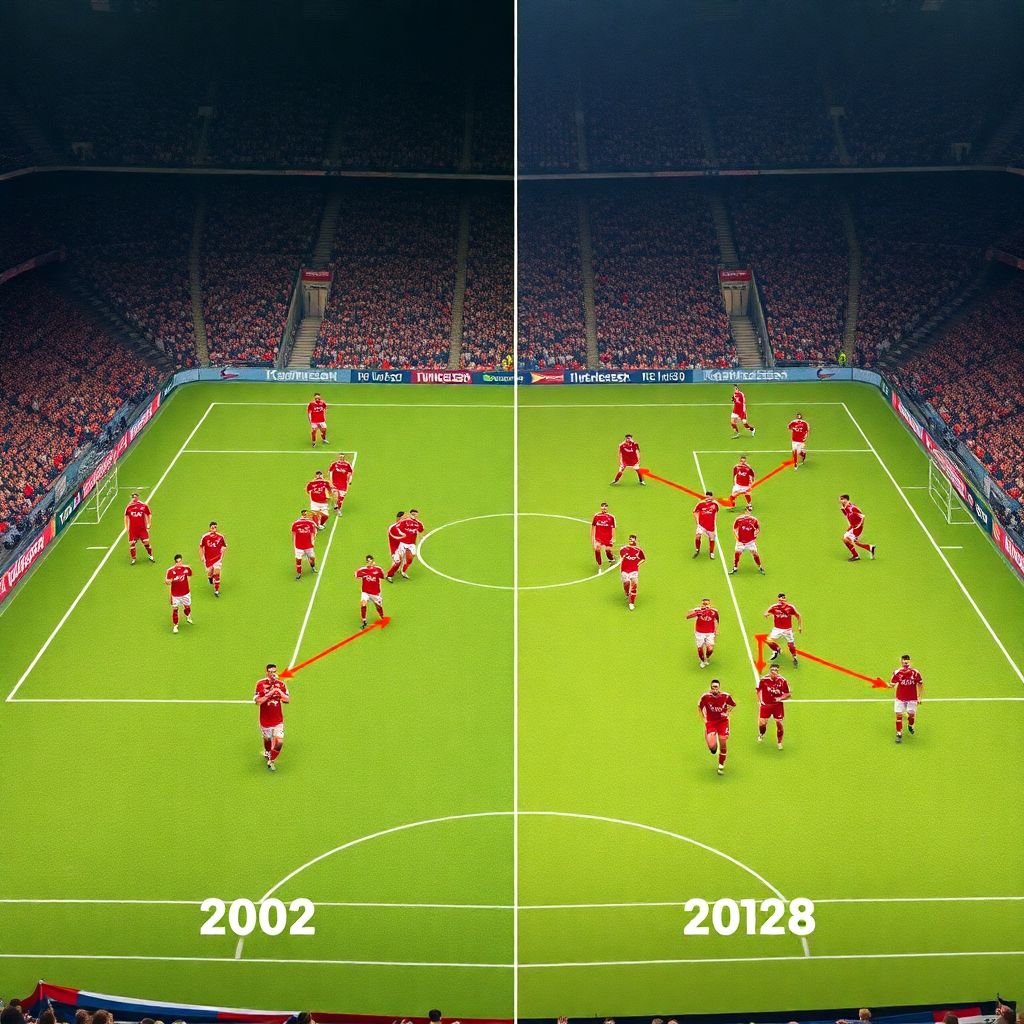
2002 as the Tactical Baseline: What Were Turkey Actually Doing?
If we strip away the nostalgia, the 2002 World Cup team was a very modern side for its time. Base shape was usually a 3‑5‑2 that morphed into a 5‑3‑2 without the ball, built around three clear ideas: compactness, direct attacks and intelligent pressing triggers. “Compactness” here means keeping vertical and horizontal distances between lines small, so Rivaldo or Ronaldo couldn’t receive and turn. Pressing wasn’t hyper-aggressive like today’s gegenpress, but it was well-timed: wing‑backs jumped when the ball went wide, and one striker curved his run to block the pass back to the centre-back, steering play into traps near the touchline.
Key Terms From 2002, Translated Into Today’s Language
Let’s decode a few buzzwords people throw around when talking about that era. “Mid‑block” describes how Turkey defended most of the time: not parking the bus, but also not chasing centre-backs near the opposition box. They waited roughly around the halfway line, then squeezed space as a unit. “Transition” is just the phase right after winning or losing the ball; Turkey were elite at attacking transitions, launching Hakan Şükür or İlhan Mansız quickly. Compared to today’s national teams, the structure was simpler, but the principles—control space, strike fast—are basically the same ideas you see in modern counter‑attacking sides like 2018–22 Croatia.
Text Diagram: 2002 Defensive Shape
If we draw their defensive 5‑3‑2, it looks roughly like this in text form:
[5-3-2 Block]
WB—LCB—CB—RCB—WB
LM——CM——RM
——ST——ST——
Wing‑backs stayed narrow, midfielders staggered slightly to block passing lanes. The two strikers split horizontally, one shading the defensive midfielder, one angling his run toward the ball‑side centre-back. This isn’t very different from how many underdog teams still defend at World Cups. The big difference today is that current analysts talk about “cover shadows” and “access to the pivot”; in 2002 it was mostly framed as “mark the playmaker and keep the lines tight.”
From Chaos to Concepts: The Wilderness Years After 2002
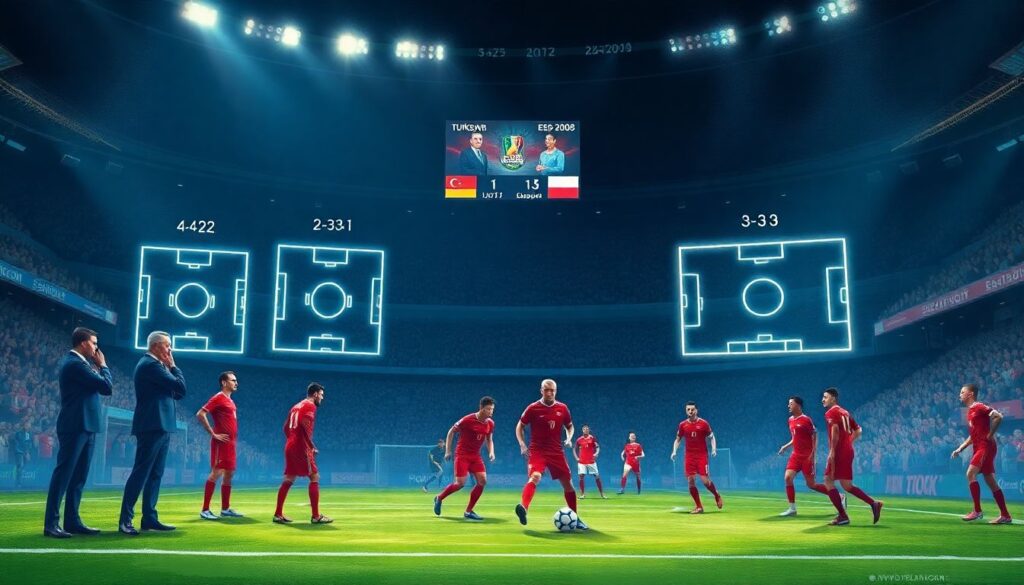
After the bronze medal high, Turkey spent years trying to work out what they wanted to be. Different coaches bounced between 4‑4‑2, 4‑2‑3‑1 and 4‑3‑3. The 2008 Euro run flirted with a possession game but still leaned on emotional comebacks more than control. Tactically, there was a constant tension: should Turkey be a pressing, vertical side or a slow, ball‑dominating one? Unlike countries with a very defined “school” (think Spain’s positional play or Italy’s defensive rigour), Turkey oscillated. That lack of identity showed up in inconsistent qualifying campaigns and a tendency to swing wildly between brilliant and disjointed within the same tournament.
How Recent Coaches Changed the Conversation
Fast‑forward to Şenol Güneş’s second spell, then Stefan Kuntz and Vincenzo Montella: the discussion finally shifted from “formation” to “principles.” Pressing height, rest‑defence and structured build‑up became regular talking points. “Rest‑defence” sounds fancy, but it just means how many and which players stay behind the ball when you attack, ready to stop counter‑attacks. Under Montella, for example, full‑backs are more cautious when both wingers stay high, so Turkey don’t get hit by the kind of transition goals that killed them at Euro 2020. The jersey number matters less now; what matters is how space is controlled in each phase.
The Modern Blueprint: Possession With a Counter‑Punch
In the last three competitive years we have full data for (roughly 2021–2024), Turkey shifted towards being a proactive possession side that still loves direct punches. In Euro 2024 qualifying they averaged above 55% possession, topping their group with 5 wins, 2 draws and 1 loss, scoring 14 and conceding 7. But this wasn’t sterile tiki‑taka. The idea was: attract pressure, then break lines quickly through the half‑spaces. “Half‑space” is simply the vertical channel between the wing and the centre; modern tens and inverted wingers love to receive there, because they can threaten both a through ball and a diagonal shot.
Build‑Up Structure: From Back Three to Back Four and Back Again
On paper, Turkey mostly line up in a 4‑2‑3‑1 or 4‑3‑3. In possession, it often morphs into a 3‑2‑5. Textually, that looks like:
[3-2-5 in Possession]
LB——LCB——RCB
——DM——8——
LW——10——RW
——ST dropping——
One full‑back tucks inside next to the centre-backs, forming a back three. The “DM” (defensive midfielder) stays central, the “8” drifts slightly to the ball side. Up front, wingers hug the last line, the “10” roams between them, and the striker alternates between pinning centre-backs and dropping short. This is a huge jump from 2002’s more rigid lanes, and it mirrors what mid‑tier Champions League clubs are doing week in, week out.
Pressing and Defensive Numbers, 2021–2024
Within the same 2021–2024 window, Turkey’s defensive evolution shows up in the numbers. In the 2022–23 Nations League they conceded only 3 goals in 6 games, keeping their block higher and more compact than in previous cycles. Instead of always pressing man‑to‑man, they increasingly used zonal principles: defend space first, then the man. That shift reduced the number of high‑risk 1v1 duels across the pitch, especially against technically superior opponents. You can roughly describe the approach as “situational high press, mostly mid‑block,” letting the front three jump aggressively only when a backward or square pass exposes a bad body shape from the opponent.
Key Tactical Principles of Today’s Turkey
To make all of this less abstract, it’s easier to zoom in on a few core ideas that tend to repeat from game to game. Think of them as a checklist rather than strict rules:
– Use a flexible back line that can become a back three in build‑up.
– Overload one side, then switch quickly to isolate the far winger.
– Keep a staggered double pivot for second‑ball control in midfield.
“Overload” simply means stacking more players than the opponent in a small area; Turkey often do this on the right before firing a diagonal ball to the left winger, who attacks space in behind while the defence is shifting across.
Attacking Transitions: Old DNA, New Packaging
While the team is more possession‑oriented than in 2002, the counter‑attacking DNA never went away. The key difference is how those counters are prepared. Instead of everyone sprinting forward on instinct, there’s more structure: one midfielder hangs back for rest‑defence, one drives with the ball, and wide players choose inside‑out or outside‑in runs based on where the full-back is. This is where stats from recent years are telling: even as possession share went up in qualifiers, Turkey still generated a big chunk of shots from fast breaks, not just long sterile spells. The balance between planned structure and improvisation is getting healthier.
How Turkey Compare to Other Contemporary National Teams
Relative to European peers, Turkey sit in an interesting tactical middle ground. They don’t go as extreme on pressing as Germany under Flick or Nagelsmann, but they are far more proactive than low‑block specialists like some Balkan or Nordic teams. In possession, they aren’t as systematic about positional play as Spain or Brighton‑style club sides, yet their use of half‑spaces and inverted full‑backs is clearly in that family. A good analogy is Croatia: comfortable on the ball, capable of controlling tempo, but still willing to play direct when the opportunity appears, especially against stronger favourites.
Comparisons With 2002 and 2008 Generations
If you put the 2002 side and the current one on a chalkboard, the differences jump out. The old team was more vertical, more man‑oriented and less concerned with constructing clean build‑up. Long balls to a target striker were a key release valve. Today’s group is more technically balanced and structurally reliant on short passing patterns. Yet some constants remain: emotionally charged comebacks, strong connection with supporters and an ability to ride momentum when the stadium turns into a cauldron. The 2008 team sat somewhere in between—better on the ball than 2002, less structured than 2020s Turkey, often surfing chaos rather than designing it.
Data Culture: From Intuition to Subscriptions and Dashboards
One big shift since the early 2000s is how fans and analysts talk about the game. xG, field tilt, PPDA (passes per defensive action) and pressing maps are now part of everyday conversation. A “PPDA” number, for example, tells you how many passes your opponent makes for each defensive action (tackle, interception, etc.) you perform in their half; lower means more intense pressing. Turkish supporters track these numbers closely, and it’s no accident that platforms offering a dedicated turkey national team tactical analysis subscription have found an audience that wants more than just final scores or highlight clips on social media.
Visualising Shape With Simple Text Diagrams
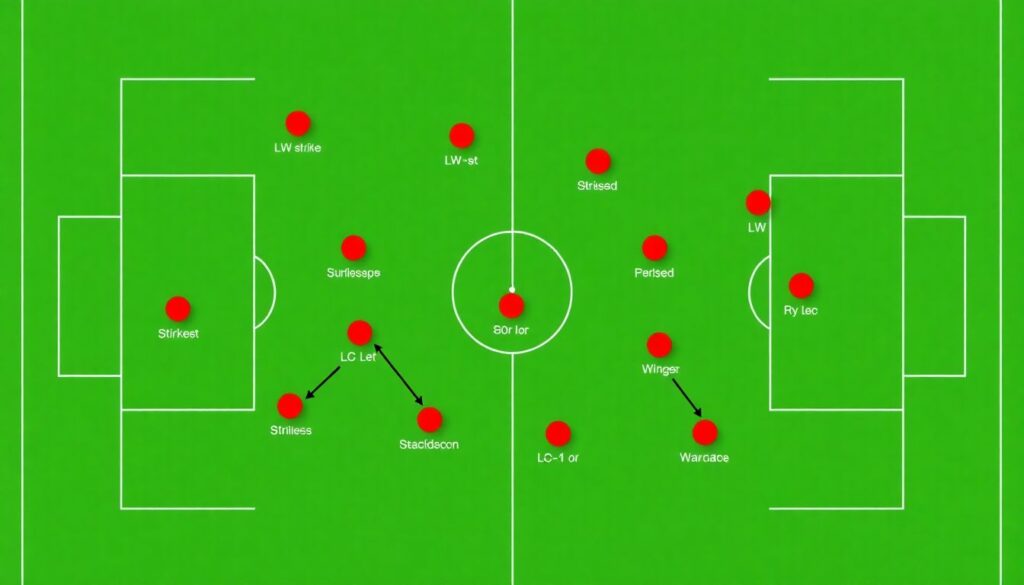
Because TV cameras often lie about spacing, it helps to think in diagrams. Here’s how a common 4‑2‑3‑1 press might look, simplifying roles:
[4-2-3-1 High Press]
LW——ST——RW
——10——
——8——6——
LB—LCB—RCB—RB
The striker presses the ball‑carrying centre-back, the “10” blocks the pass into the pivot, wingers jump on full‑backs, and one of the double pivot steps up onto the opposition 8. Turkey don’t always go this high, but in home qualifiers, especially when chasing a goal, you’ll often see a version of this picture, tailored to the strengths of whoever is playing as the 10 and the 8.
Fans, Identity and the Off‑Pitch Evolution
Tactical evolution doesn’t live in a vacuum; it’s wrapped in fan culture. When you walk into a stadium packed with the new turkey national football team jersey 2024 designs, you’re not just seeing colours—you’re seeing an identity that has shifted from plucky underdog to ambitious, data‑literate contender. Supporters planning away trips hunt down turkey national team tickets euro qualifiers months in advance, analysing schedules, opponent styles and even referee tendencies on forums. The discussion is less “play with two strikers” and more “can we break their 4‑4‑2 mid‑block by overloading the left half‑space and then switching?”
Memories, Merch and the Business of Nostalgia
The 2002 run still hangs over everything, of course. There’s a thriving cottage industry around turkey world cup 2002 memorabilia for sale, from retro shirts to signed photos of the semi‑final squad. At the same time, newer generations build their own rituals: ordering scarves and retro‑inspired hoodies from a turkey football fan merchandise online store, or screenshotting heat maps to argue about full‑back positioning. This blend of nostalgia and nerdiness is very 2020s: you can love the chaos of those old comebacks while also appreciating how much cleaner build‑up and rest‑defence are today compared with that wild, romantic era.
What the Next Step Might Look Like
Looking ahead, the next evolution probably isn’t about changing formation again but about refining details: faster automatisms in the final third, smarter pressing traps and more consistent control of game tempo against top‑tier opponents. If the current staff manage to keep the blend of structured possession and transition threat, while nurturing a deeper pool of technically secure defenders and midfielders, Turkey can move from “dangerous outsider” to genuine tournament contender. The journey from 2002 to now has been messy, but tactically the direction is clear: less reliance on emotion, more on repeatable, trainable behaviours that can survive bad days and high pressure.
Комментарии