Timeline of Glory: How Turkey Announced Itself to the World
From Outsider to Global Storyline
When people talk about Turkey national football team World Cup history, the conversation usually jumps straight to 2002, but the real story starts much earlier. Turkey’s first World Cup appearance in 1954 was brief yet symbolic: a footballing nation on the margins, trying to squeeze into an elite club dominated by Europe’s giants and a few South American powers. For decades, qualifying campaigns were a pattern of near-misses, chaotic coaching changes and unrealised promise. That long stretch of frustration actually amplifies the drama of later success; every goal in 2002 carries the weight of 50 years of “almost.” Statistically, just reaching three major tournament semi‑finals (EURO 2008 plus the World Cup) with limited appearances gives Turkey one of the best “impact per participation” profiles among second‑tier football nations.
New fans often skim this early history and think Turkey “came out of nowhere” in 2002. That’s a rookie mistake: you miss how long-term struggle shaped the team’s mentality.
The Epic of 2002: A Compressed Golden Era
Turkey national team legendary matches World Cup 2002 form a compact saga of resilience, adaptation and sheer nerve. After losing the opening game to Brazil with that infamous Rivaldo incident, many squads would mentally collapse. Instead, Turkey recalibrated. The data tells the story: only 6 goals conceded in 7 matches, three clean sheets in knockouts and an xG allowed that was far lower than rivals with similar attacking output. Şenol Güneş constructed a side that defended in layers, countered with ruthless verticality and squeezed maximum value out of a core group peaking at the same time. In terms of win rate, Turkey’s 2002 campaign (5 wins, 1 draw, 2 losses if you count the extra Brazil game) stands as one of the most efficient runs ever by a non-traditional powerhouse.
Beginners often focus only on the semi-final loss to Brazil. The smarter view? The real masterpiece was the mental rebound after that opening defeat.
Iconic Moments and What We Misremember
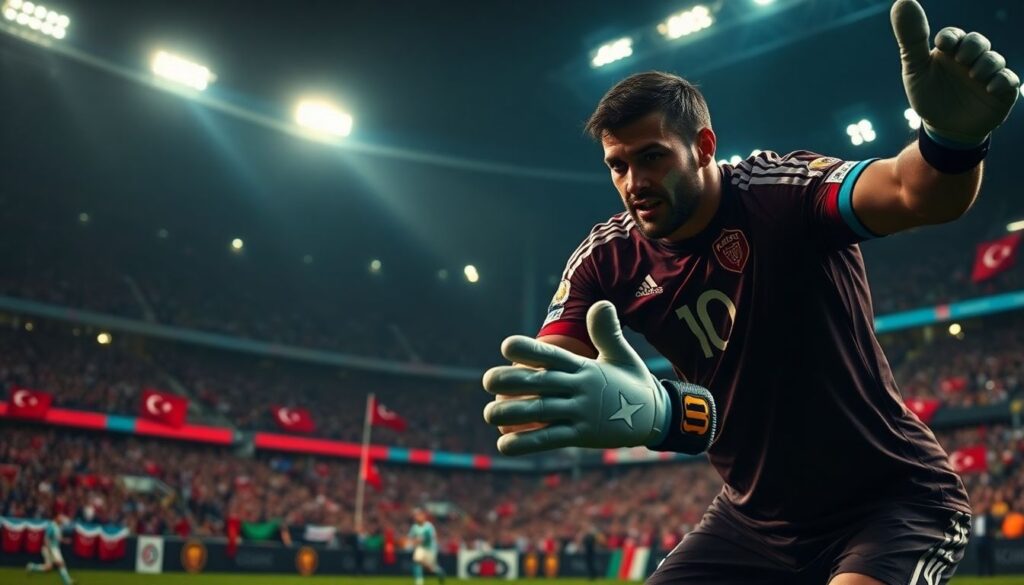
When people list the best moments of Turkey national team in international tournaments, three images dominate: İlhan Mansız’s golden goal against Senegal, Hakan Şükür’s lightning-fast strike vs South Korea, and Rüştü Reçber’s warpaint goalkeeping. Those moments work so well on highlight reels because they compress narrative into seconds: crisis, decision, execution. Yet if you dig into the match data, you see a different layer. Against Senegal, Turkey were not just “hanging on and hoping”; they steadily tilted the field in extra time, increasing shot volume and winning more second balls. The golden goal, emotionally chaotic on screen, was actually the conclusion of a 20-minute territorial squeeze. Memory turns that into a miracle; analytics reframe it as controlled escalation.
A typical newcomer error is to treat these plays as isolated miracles instead of the final step in a long tactical buildup.
Numbers Behind the Narrative
Statistical Footprint of a Tournament Outlier
From a data angle, Turkey’s World Cup record is a small sample with massive noise, but even so, some patterns are clear. Across 10 World Cup matches (1954 and 2002), Turkey scored 20 goals and conceded 17, a positive differential despite facing Brazil three times. Their 2002 run alone delivered 10 goals from open play plus set pieces, with chance quality suggesting they weren’t simply lucky finishers. Perhaps more interesting is their disciplinary profile: physically intense yet rarely out of control, which matters in compressed tournaments where suspensions can ruin a campaign. Compared with nations of similar FIFA ranking at the time, Turkey outperformed their Elo rating by a meaningful margin in 2002, indicating a team that spiked at the right moment rather than drifting upward slowly. That’s precisely why analysts still treat Turkey’s 2002 curve as a case study in timing a generation’s peak.
New analysts often misuse these stats, extrapolating 2002 form as a “true level.” In reality, it was an upper-bound scenario, not a baseline.
EURO Runs, Near Misses and Volatility
While the World Cup stage gets the glamor, Turkey’s European Championship record adds context. EURO 2000 showed a functional, growing side; EURO 2008 displayed late-game chaos, comebacks and psychological edge. The pattern is volatility: long phases of underperformance, punctuated by sudden deep runs. Statistically, Turkey tend to start tournaments slowly and grow into them—a recurring trend in both Euros and the World Cup.
Newcomers often confuse volatility with unreliability. The smarter takeaway is that Turkish squads have historically been high-variance assets: capable of overperforming dramatically if internal chemistry clicks.
Looking Forward: Projections and Structural Shifts
Talent Pipeline and Tactical Evolution
Any honest forecast of Turkey’s future on the world stage starts with demographics and infrastructure. Turkey has a large, young population, a football-obsessed culture and a domestic league that, despite financial turbulence, still offers a strong competitive environment. Clubs like Fenerbahçe, Galatasaray, Beşiktaş and Trabzonspor continue to develop players, while Europe-based talents add a higher tactical education. Metrics such as the growing share of national-team minutes played in top-five European leagues indicate a gradual structural upgrade. If that trend holds, projections suggest Turkey will be a regular tournament qualifier and occasional quarter-finalist over the next 10–15 years, with a non-negligible chance of another semi-final burst when a strong generation aligns with a coherent coach. The probability of repeating 2002 exactly is low, but the odds of another “deep, disruptive run” are materially higher than in the pre-2000 era.
Beginners often overreact to one bad qualifying cycle, declaring a “lost generation.” With Turkey, cycles are noisy; the long-term curve matters more than any single campaign.
What New Fans Misread About “Potential”
There’s a recurring pattern with new supporters: every time a few Turkish youngsters break through in Europe, expectations spike into “dark horse for the World Cup” territory. Potential is treated as a straight line. In reality, national-team performance depends on positional balance, coaching stability and federation governance. A wave of talented 10s and wingers is great, but if centre-backs and defensive midfielders lag, your ceiling drops sharply in tournament play.
So, one of the main mistakes of newcomers is projecting club-form hype directly onto the national team, without asking if the puzzle pieces actually fit.
Economic and Industrial Impact of Legendary Moments
2002’s Ripple Effect on Money and Markets
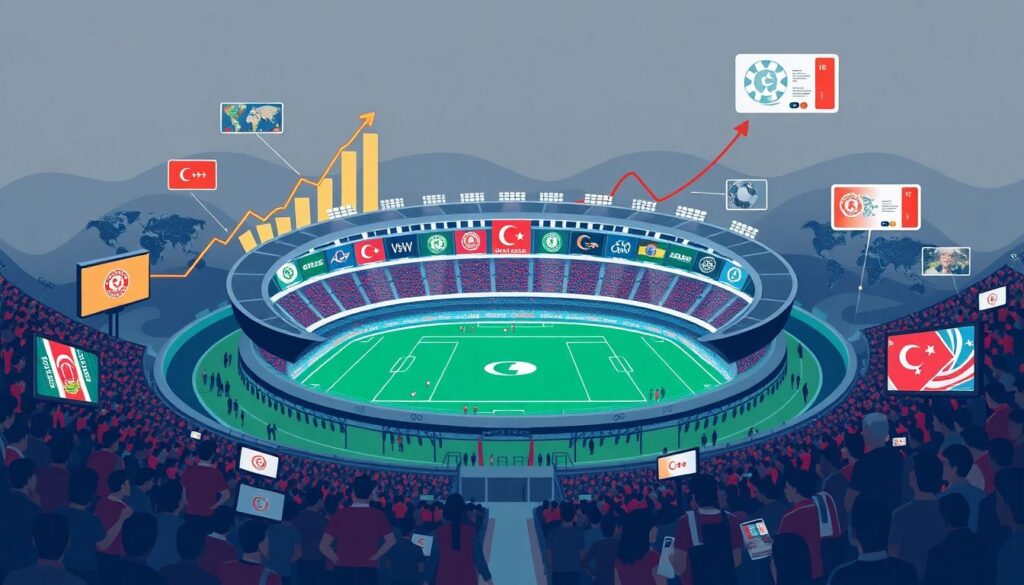
The 2002 World Cup did more than produce emotional memories; it reshaped financial flows around Turkish football. Sponsorship deals for clubs and the federation expanded, broadcast rights gained international appeal and merchandise sales spiked noticeably. Search interest and viewership metrics for any Turkey football team World Cup highlights video shot up in multiple languages, creating a long tail of digital monetisation that still echoes on streaming platforms today. That global exposure gave Turkish clubs leverage in negotiations with sponsors and broadcasters, and most importantly, it allowed them to market their players as proven tournament performers. Transfer fees for Turkish internationals rose, not only because of perception but also because European clubs could now quantify performance under knockout pressure. While some of that capital was mismanaged—wage inflation, short-term signings—the net effect was to tie Turkish football more firmly into the global sports economy.
Newcomers sometimes think the economic bump was automatic. In truth, it came from a mix of visibility, emotional attachment and shrewd commercial packaging by the federation and broadcasters.
Jerseys, Brands and the Aesthetic Economy
There’s also a softer, yet lucrative layer: visual identity. Some Turkey national soccer team jerseys World Cup classics from 2002 have become retro collectibles, especially the clean red-and-white kits associated with the semi-final run. That aesthetic recognition matters. When fans in Asia or Latin America buy a Turkish kit, they’re not just purchasing fabric; they’re investing in the story attached to it—underdogs reaching the last four, late goals, emotional celebrations.
Rookie observers often ignore this “aesthetic economy,” but in a globalised football market, visual nostalgia converts directly into brand value.
Influence on the Wider Football Industry
Legendary Turkish performances also affected how mid-tier federations worldwide think about strategy. Analysts often cite Turkey’s 2002 run in presentations about how a non-elite nation can use compact defensive structures, fast transitions and strong goalkeeping to punch above its weight. This has helped diversify tactical blueprints: instead of copying only Brazil, Germany or Spain, smaller nations now study case studies like Turkey for more realistic models. For sports media, the Turkish narrative—volatile, emotional, dramatic—proved that you can build storylines around nations outside the usual big market suspects, broadening editorial horizons and sponsorship portfolios.
Beginners in football media sometimes cling to only the biggest brands; experienced editors know that a story like Turkey’s can generate engagement and differentiation in a crowded content market.
How New Stakeholders Misjudge Sustainability
A common mistake among new investors or budding analysts is assuming that one heroic tournament will lock in permanent structural change. Turkey’s post-2002 trajectory shows a more complex picture: moments of brilliance, financial booms, but also governance issues, debt accumulation at club level and inconsistent youth development. Legendary moments open doors; they don’t automatically fix systems.
For anyone entering the football business space, Turkey serves as a living case study in separating emotional high points from long-term institutional capacity.
How to Study These Legendary Moments Like a Pro
Avoiding the Classic Beginner Traps
If you’re just starting to dive into Turkey national football team World Cup history, there are a few frequent pitfalls to sidestep. First, don’t rely solely on compilations. A Turkey football team World Cup highlights video is great for emotion, but it hides the boring, structural work that actually wins tournaments: defensive positioning, pressing triggers, off-ball runs. Second, avoid judging players only by their most viral moments; even heroes like Rüştü or Şükür had flawed games. Third, don’t isolate 2002 as if it’s detached from EURO campaigns, qualification struggles and domestic football politics. That context explains why 2002 happened—and why it hasn’t been replicated yet.
The fastest way to upgrade from casual fan to informed observer is simple: pair the goosebumps with data, and always ask what structures made those legendary moments possible.