
Football in Turkey doesn’t have a “talent problem”. It has a “translation problem”: translating raw street genius into stable performance under pressure.
That’s exactly where mental coaching and psychology step in.
—
Why mindset is becoming Turkish academies’ secret weapon
From “play well” to “think well”
For years, most academies focused on one thing: technique. First touch, pressing, tactics, fitness. All crucial, but incomplete.
What actually decides a tight game in the U17 league? A 94th‑minute penalty. A keeper’s decision in a one‑on‑one. A captain’s voice when the team is panicking. Those are psychological moments, not technical ones.
The best European clubs understood this earlier. They quietly added a mental performance coach for soccer players to the staff, built routines around pressure, self‑talk, focus and emotional control. Turkey is catching up fast, and academies that move now will lead this wave instead of chasing it.
—
Inspiring examples from Turkish pitches
Story 1: The penalty curse that turned into a superpower
One Istanbul academy had a talented striker who froze on penalties. In training, he scored everything. In games, he shanked the ball, looked at the bench, and wanted to disappear.
They didn’t “fix” his technique. They redesigned his mental script:
– Before each penalty he had a 4‑step routine: breath, cue word, spot focus, run‑up.
– He learned to rate his penalty not as “goal/miss” but “Did I execute my routine: yes/no”.
– The psychologist helped him reframe the crowd’s noise as “energy” instead of “judgment”.
After three months, he scored 7 out of 8 penalties in competitive games. More important: other players copied his routine. One player’s “curse” became a club‑wide mental model for handling pressure.
—
Story 2: The late bloomer who stopped quitting in his head
In a Central Anatolian academy, a defender was always “almost good enough”. Not first choice, not fully trusted, always one mistake away from the bench.
Instead of pushing him harder physically, the academy introduced short weekly sessions based on:
– self‑assessment journals,
– visualization of worst‑case scenarios (own goal, red card),
– and how to emotionally reset after mistakes.
He stopped quitting mentally after one error. Coaches noticed he recovered inside the same game. Within a season he went from squad player to captain. His technique didn’t spike dramatically; his emotional resilience did.
—
Story 3: The coach who changed first
In one İzmir club, the turning point wasn’t a player – it was the U15 coach. He admitted he shouted too much, especially at defenders, and that it backfired in big matches.
Working with a sports psychologist for youth football teams, he:
– built a personal “emotional game plan” for himself,
– learned to ask solution‑focused questions instead of emotional questions (“What did you see?” instead of “What are you doing?!”),
– switched to brief, calm instructions during games and emotional talks only after video review.
Result: players reported feeling “safer” on the pitch, made braver decisions, and stopped hiding from the ball. The tactic board didn’t change much. The emotional climate did.
—
How to build mental coaching for football academies
The four pillars that every academy can install
If you want serious mental coaching for football academies, don’t just invite a guest speaker once a year. Build a system. At a basic level, it can stand on four pillars:
1. Environment – Daily language, feedback style, and rules around mistakes.
2. Skills – Concrete tools: breathing, focus, self‑talk, goal‑setting, routines.
3. Processes – Warm‑up scripts, post‑game debrief, recovery plans.
4. People – Coaches, captains and qualified professionals pulling together.
These don’t require a Champions League budget. They require consistency and the courage to treat psychology as part of training, not a luxury.
—
Daily micro‑practices that don’t waste training time
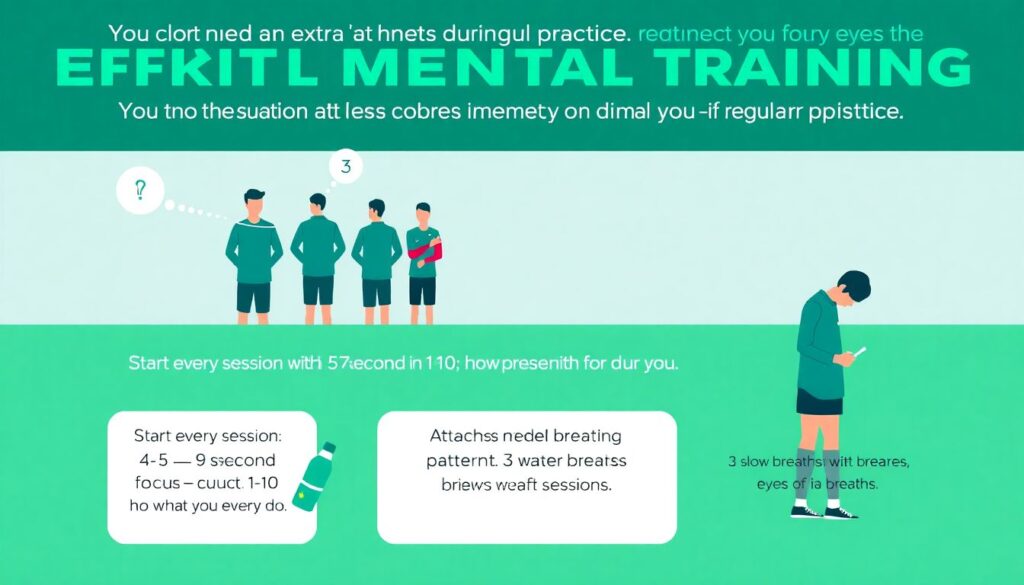
You don’t need an extra hour on the pitch. You need 5–7 minutes built into what you already do. For example:
– Start every session with a 90‑second “focus check‑in”: “On a scale of 1–10, how present are you?”
– Attach a specific breathing pattern to water breaks: 3 slow breaths, eyes on the ground, then eyes on the ball.
– End training with one question per player: “What did you learn today that isn’t visible in the statistics?”
Over weeks, this normalizes talking about mindset the same way you talk about pressing triggers or build‑up patterns. That’s how football academy mental training programs become a living culture instead of a PDF in someone’s email.
—
Cases of successful projects in Turkey
Case 1: Big club, small internal revolution
A top‑flight club’s academy in Istanbul decided to treat mentality as a “tactical line”. They didn’t advertise it loudly; they simply added:
– monthly workshops on confidence and focus for all age groups,
– individual sessions for players in positional crises (e.g. converted wingers to full‑backs),
– and a mental warm‑up before derbies.
Within two seasons they saw:
– fewer red cards in youth derbies,
– more stable performances in away games,
– smoother promotion of academy players to the senior squad.
Interestingly, scouts started writing notes like “mentally ready for next level” – something they never wrote before because it wasn’t clearly observable.
—
Case 2: Anatolian club using constraints, not lectures
A smaller club without budget for full‑time staff did something smarter than complaining: they built psychological challenges into drills.
– 3v3 games where a goal counted only if the team had communicated specific code words.
– Finishing drills where players had to take a shot right after a “fake mistake” call from the coach.
– Periodic “blackout” drills with noise, music, or deliberate distractions.
They invited a psychologist just once a month to design and refine these exercises rather than run constant workshops. It was a lean, creative method of embedding psychology into the football itself.
—
Case 3: A girls’ academy rewriting confidence scripts
A girls’ academy in Ankara noticed their players technically matched the boys, but hesitated more: asking for the ball, shooting, leading.
They ran a 10‑week program combining:
– group sessions on assertiveness,
– video analysis focusing on brave decisions, not only correct ones,
– and captaincy rotations to force more players into leadership roles.
By the end, coaches reported a visible rise in “give me the ball” body language. Parents reported that this confidence also showed up at school and at home. Football was the lab; life benefitted.
—
Non‑standard solutions Turkish academies can try
Turn psychology into a competitive game, not a classroom
Players don’t want a second school day; they want competition. Instead of long talks, create “psychology mini‑leagues” inside the academy:
– Points for how quickly a player resets after a mistake.
– Bonus points for communication under pressure in small‑sided games.
– Internal “calmest player in chaos” awards – voted anonymously by teammates.
Gamifying mental skills keeps the locker room energy high while you’re quietly developing performance under pressure.
—
Bring families into the process – but on your terms
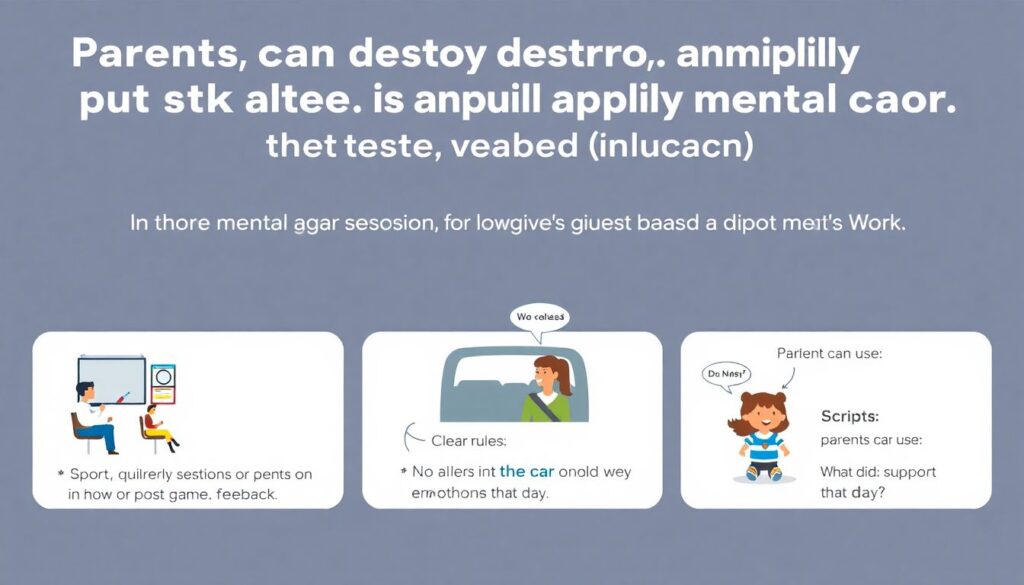
Parents can destroy or amplify mental work. Instead of hoping they behave, educate them.
– Short, quarterly sessions for parents on how to give post‑game feedback.
– Clear rules: no analysis in the car on the way home, only emotional support that day.
– Scripts parents can use: “What did you enjoy?” “What did you learn?” instead of “Why did you miss that chance?”
When the player hears aligned messages from coach, psychologist and family, the development curve stops zigzagging.
—
Use tech to track invisible progress
You already track GPS, sprint speed, xG. Start tracking mental trends:
– Simple pre‑/post‑training check‑ins on a mobile app (focus level, stress level, enjoyment).
– Tagging video clips with “good reaction after mistake” or “panic decision” and showing them back to the player.
– Month‑to‑month graphs of stress vs. performance, shared with players so they learn to self‑manage.
This turns “mentality” from a vague concept into visible data that players can improve, like any other stat.
—
Resources for continuous learning
For coaches who want to go deeper
Coaches are the first mental coaches, with or without a psychology degree. To grow:
– Read books on performance psychology and leadership, not only tactics. Start with material used by Olympic programs and elite clubs, then adapt it to your cultural reality.
– Follow international practitioners who work as a mental performance coach for soccer players and see how they structure their week.
– Join webinars or online courses that mix science with drills you can apply tomorrow, not just theory.
The goal isn’t to turn you into a therapist; it’s to make you a more precise communicator and designer of pressure.
—
For players who want to own their mindset
Players don’t have to wait for the club. They can:
1. Keep a simple performance journal: 3 lines per day – “What went well / What was hard / What I’ll try next time.”
2. Practice 5 minutes of visualization before bed: replaying key moments, but with ideal reactions.
3. Build one personal routine for high‑stress moments (penalties, first touch after substitution, defending set pieces).
These small habits create responsibility. A player who manages his or her own mindset becomes far more attractive to scouts and senior coaches.
—
For clubs ready to professionalize psychology
At some point, the DIY phase ends. If a club is serious about long‑term success, it makes sense to hire sports psychologist for football club structures in a planned way rather than as a panic reaction to a crisis. Look for professionals who:
– understand football culture, not just generic sport,
– are comfortable on the pitch and in the locker room, not only in an office,
– can design scalable football academy mental training programs that fit your philosophy.
You don’t need 10 full‑time staff. One competent expert, integrated well, can transform how an entire academy thinks, trains and competes.
—
A simple roadmap to start next week
To make all of this practical, here is a lean, no‑excuses path your academy can follow:
1. Define your mental identity.
Decide what kind of mentality you want to be known for: brave, disciplined, creative under pressure, relentlessly optimistic – be specific.
2. Insert one mental habit into every session.
Just one: a focus check‑in, a reset routine after mistakes, or a communication rule in small‑sided games.
3. Train your coaches first.
A one‑off workshop to align language, triggers and expectations. Players can’t be mentally stable if the staff is emotionally chaotic.
4. Pilot with one team.
Choose one age group, track changes (behavior, cards, reactions to pressure), then scale up slowly.
5. Review every 8–12 weeks.
Ask: What’s actually changing on the pitch? What do players feel? Adjust. Mental training is like tactics – you refine it by watching the game.
—
If Turkish football wants more players who can not only shine in big games but handle the grind of a season abroad, academies need to treat the brain like the most important muscle.
Ball, boots, tactics, gym – and a structured mind. When those four meet, talent stops leaking away and starts turning into real careers.
Комментарии