Why TFF 1. Lig Is the Toughest Classroom for Football Economics
TFF 1. Lig is brutal financially.
Broadcast money is modest, sponsors prefer Süper Lig, stadiums are often half‑empty, and the pressure to get promoted is constant. Yet every season some clubs manage not only to survive, but to build competitive squads on a shoestring.
Below — how they actually do it in practice: what works, what doesn’t, and what will matter most by 2026.
—
Different Survival Models: How Clubs Build a Sustainable Core
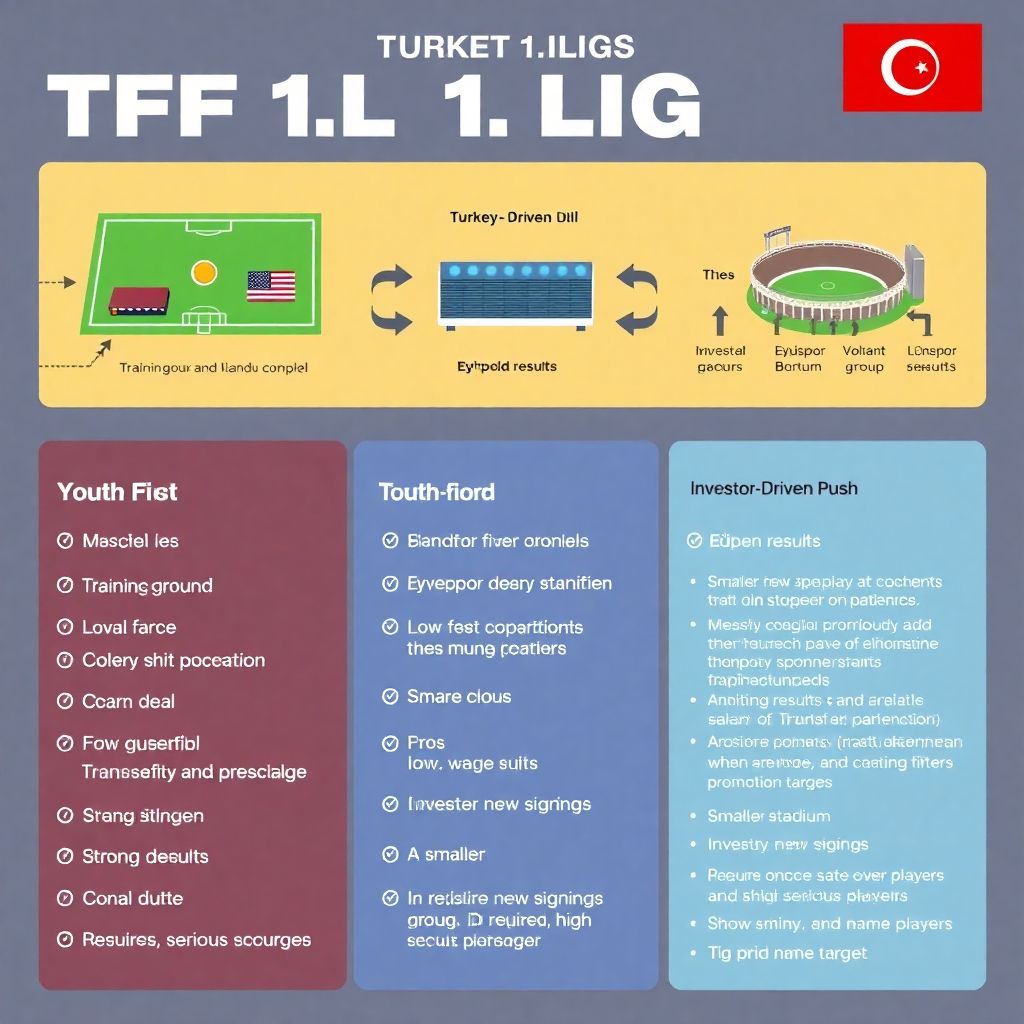
1. Youth‑First: The “Altınordu Logic” Applied Across the League
A few years ago Altınordu became the poster child of the academy‑driven model in Turkey: strict local‑player policy, heavy investment in youth, consistent sales to Süper Lig and Europe. That philosophy has quietly influenced several TFF 1. Lig clubs.
Typical pattern:
– Stadium and squad costs are kept lean.
– Most of the budget goes into academy infrastructure, coaching and scouting.
– The club aims to sell 1–2 players every 1–2 seasons to cover deficits.
This is basically a long‑term version of football club financial management strategies: accept that matchday and TV money won’t cover everything, and make player trading the primary cash engine.
Case: Altınordu (reference model)
– Sold players like Cengiz Ünder and Çağlar Söyüncü after they left for bigger clubs, benefiting from sell‑on clauses.
– Used those funds to upgrade facilities instead of chasing an all‑in promotion campaign.
Other clubs — like Giresunspor in their better years — tried to copy parts of this: betting on cheap, hungry players and hoping for resale value, instead of signing aging names on high wages.
Strengths of the youth‑first approach
– Lower fixed wage bill.
– Identity and fan sympathy: “our kids” narrative sells.
– Long‑term upside through transfers and solidarity payments.
Weaknesses
– Results are volatile: one “lost generation” from the academy and the model can collapse.
– Needs patience from fans and board — rare in promotion‑obsessed environments.
– Requires advanced scouting and development structure; you can’t fake it.
—
2. Investor‑Driven Push: Eyüpspor, Bodrum FK and “Promotion at All Costs”
At the other extreme, some TFF 1. Lig clubs follow a capital‑injection model: an ambitious owner or local business group funds a rapid rise.
Case: Eyüpspor
– Backed by a strong investor, quickly assembled a squad with Süper Lig‑level salaries.
– Signed experienced players who would never join a typical 1. Lig budget club.
– Focused on short‑term success, then tried to build a brand around that success.
Case: Bodrum FK
– Smaller market, but impressive climb thanks to targeted transfers and stable financial backing.
– Invested not only in players, but also in matchday experience to grow local attendance.
This is high‑risk, high‑reward. If promotion arrives quickly, the math kind of works. If not, wage bills become a time bomb.
Pros
– Immediate improvement in sporting competitiveness.
– Easier to attract sports sponsorship deals for football clubs, since brands like visible wins.
– Can accelerate infrastructure upgrades (training centers, stadium improvements).
Cons
– Dependence on a single benefactor. If they leave or cut funding, the club can implode.
– Legacy wage commitments and unpaid bonuses are common side effects.
– Hard to build a genuine identity; fans may see it as “project club” rather than community club.
—
3. Balanced Hybrid: Pragmatic Budgeting + Smart Recruitment
The healthier path — though harder to execute — is a hybrid:
– Solid academy work, but no ideological restrictions.
– A core of local players, supplemented by targeted foreign or experienced Turkish signings.
– Strong focus on cost control and data‑driven recruitment.
Case: İstanbulspor (pre‑promotion years)
– Known for using analytics and a lean wage structure.
– Signed undervalued players, improved them, then sold them on.
– Maintained competitiveness without completely breaking the bank.
This approach is where best practices in budget management for football teams show up most clearly:
– Zero or minimal transfer fees; focus on free agents and loans.
– Very tight wage hierarchy and performance‑based incentives.
– Clear exit strategy for players: realistic release clauses, active sale planning.
—
Technologies: Helpful Tool or Expensive Toy?
1. Data Analytics and Scouting Platforms
For TFF 1. Lig clubs, the tech question is tricky: do you invest scarce funds in software, or in one more solid squad player?
Clubs increasingly use:
– Video scouting platforms (Wyscout, InStat, Hudl).
– Basic data‑analysis tools to filter players by metrics and salary range.
– Internal databases to track performance and contract details.
Advantages
– Wider scouting reach; small clubs can monitor exotic markets without traveling.
– Avoid costly mistakes: you can check injury history, playing style, usage.
– Helps build consistent football club financial management strategies: sign undervalued assets, sell at a profit.
Disadvantages
– Subscription costs are significant for a 1. Lig budget.
– Requires staff that can actually interpret data; numbers alone don’t sign good players.
– Risk of over‑relying on stats and ignoring personality, adaptation, and dressing‑room chemistry.
—
2. Performance Tech: GPS Vests, Injury‑Prevention Systems
Some clubs experiment with GPS trackers, wellness apps and advanced medical monitoring.
Upsides
– Better load management: fewer muscle injuries, more minutes from key players.
– Extra selling point when convincing young talents to join (“we’ll improve you professionally”).
– Over time, reduces rehab and salary paid to injured players.
Downsides
– Hardware + software + staff training is expensive.
– If coaching culture is old‑school, the data is ignored and the investment is wasted.
– For a club struggling to pay electricity bills, performance tech can look like a luxury.
A practical compromise many 1. Lig teams follow: buy limited sets of GPS units for starters only, and use simpler, cheaper tools (like standardized wellness questionnaires) for the rest.
—
3. Digital Marketing, CRM and Fan Engagement Platforms
On the commercial side, the question is: how to increase revenue for small football clubs when stadium size and national TV exposure are limited?
Clubs are experimenting with:
– Basic CRM systems that track ticket buyers and season‑ticket holders.
– Email and WhatsApp marketing campaigns for merch, membership, and matchday offers.
– Social media content optimized for TikTok, Instagram Reels and YouTube Shorts.
Pros
– Direct channel to fans, bypassing traditional media.
– Higher conversion from “interested locals” into ticket buyers or shirt buyers.
– Crucial piece of modern football club marketing and commercial growth strategies.
Cons
– Needs consistent, quality content — not easy with small media teams.
– Requires long‑term thinking; results are modest in the first 1–2 years.
– If the team is losing, engagement drops and ROI shrinks.
—
Comparing Approaches: Who Actually Survives?
Short‑Term vs Long‑Term Orientation
In TFF 1. Lig, clubs that think only in 1‑year cycles tend to repeat the same mistakes:
– Overpay for aging stars “to get promoted now”.
– Fire coaches frequently, paying multiple severances.
– Ignore academy and commercial development.
They might have one good year, but usually end up with debts, point deductions or relegation battles.
By contrast, clubs that mix sporting ambition with financial discipline do a few things consistently:
– Set a maximum percentage of income that can go to wages (e.g. 60–65%).
– Use multi‑year planning instead of panicking every transfer window.
– Protect themselves with clauses (relegation wage cuts, performance bonuses instead of fixed pay).
—
Local Context Matters
A coastal club with tourist traffic (like Bodrum FK) can tap into visiting fans and hospitality.
A traditional Anatolian club (like Sakaryaspor or Kocaelispor) can monetize a huge, loyal fan base even in lower leagues.
So you can’t copy‑paste one model, but you can adapt its logic:
– Big local community: focus on season tickets, local sponsors, fan memberships.
– Smaller town: focus on academy, trading players, and high‑margin online merchandise.
—
Pros and Cons of Key Technologies for TFF 1. Lig
Tech That Usually Pays Off
– Video scouting tools
– Relatively affordable compared to sending scouts everywhere.
– Direct impact on recruitment quality and avoiding overpaying.
– Simple CRM + digital ticketing
– Helps identify who actually attends games.
– Makes targeted offers: discounted family sectors, student promos, derby packages.
– Basic performance tracking
– Not full “smart stadium” setups, but enough to manage workloads and prevent injuries.
These technologies tie directly to best practices in budget management for football teams: protect your biggest expenses (players), and improve decision‑making on signings and renewals.
Tech That Can Become a Money Pit
– Overcomplicated analytics departments with no decision power.
– Fancy apps for fans with no clear monetization or user base.
– Large, custom‑built software systems when cheaper off‑the‑shelf tools exist.
For mid‑table 1. Lig clubs, the correct question isn’t “is this cool?” but “does this directly save or earn money in the next 2–3 seasons?”
—
Practical Recommendations for TFF 1. Lig Clubs
1. Start With a Hard Financial Reality Check
Before talking tactics or star signings, boards should answer:
– What is our stable, realistic annual income (TV, sponsors, tickets, transfers averaged over 3–5 years)?
– What wage‑to‑income ratio are we willing to accept?
– How much debt can we carry without risking points deductions or transfer bans?
Then lock those numbers into internal policy. Every transfer decision should be filtered through that. This is the core of serious football club financial management strategies, not spreadsheets for show.
—
2. Prioritize Three Low‑Cost, High‑Impact Areas
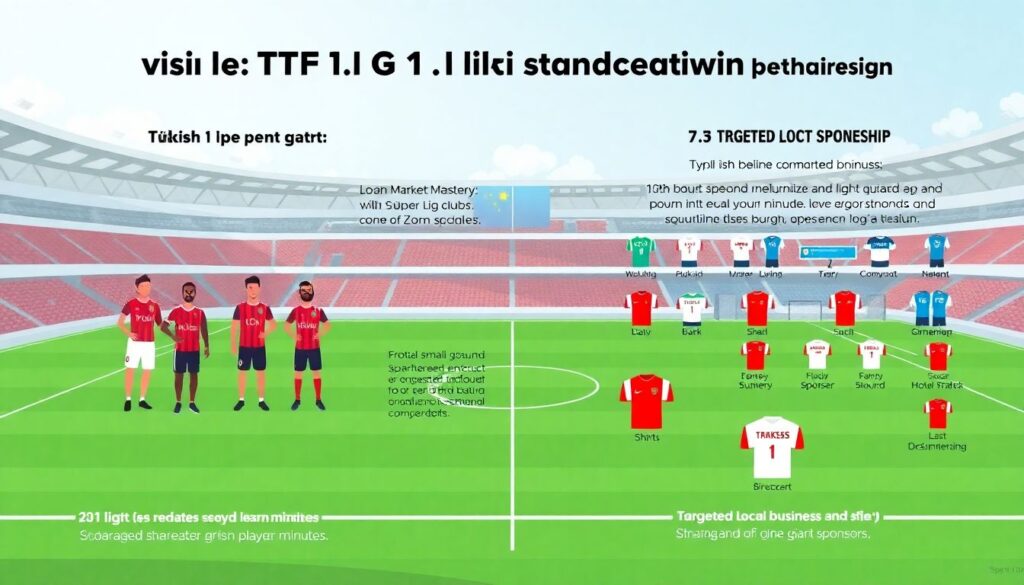
For a typical TFF 1. Lig club, the highest ROI usually comes from:
– Loan Market Mastery
– Build relations with big Süper Lig clubs.
– Offer guaranteed minutes to their youngsters in exchange for low or no loan fees.
– Targeted Local Sponsorship
– Don’t chase one giant sponsor and ignore SMEs.
– Build a “sponsor ladder”: main shirt sponsor, back sponsor, sleeve, training kit, youth team sponsors, digital content partners.
– Fanbase Monetization Basics
– Membership schemes with small monthly fees and clear benefits (priority tickets, discounts, behind‑the‑scenes content).
– Simplify buying: online store, mobile‑friendly ticket sales, QR‑code entry.
—
3. Use Case‑Driven Tech Adoption Instead of Fashion
Before buying any tech, define:
– Problem: “We sign too many wrong players”, “We can’t fill the stadium”, “We have too many injuries”.
– Metric: what number will change if the tech works? (e.g., 15% fewer muscle injuries, 10% higher average attendance).
– Time horizon: when will we judge if it works (12–24 months)?
If no one at the club can answer these, the tech purchase is probably premature.
—
Real‑World Patterns: What Successful 1. Lig Clubs Tend to Share
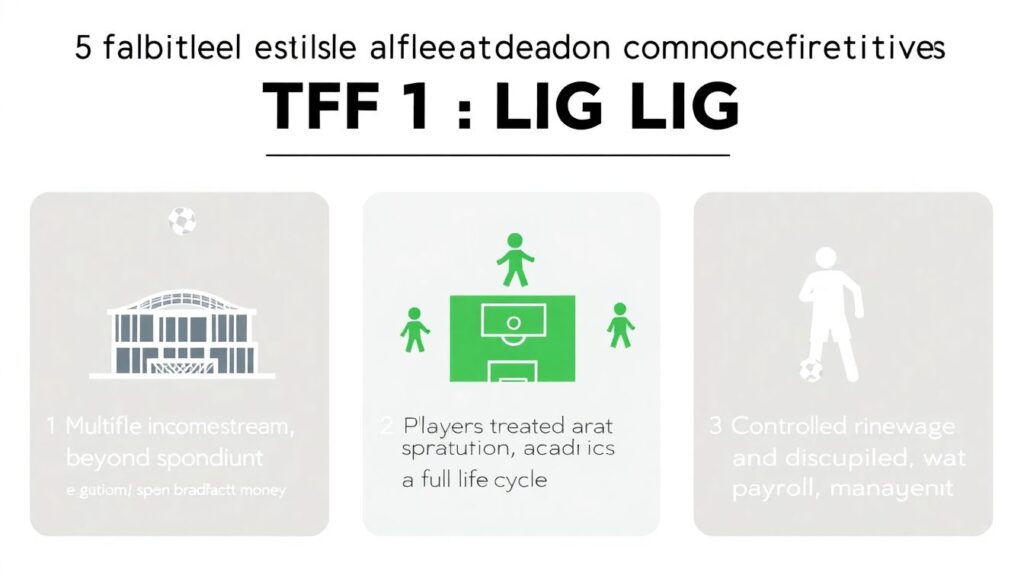
Across different models, the more stable and competitive TFF 1. Lig clubs usually share a few habits:
– They accept that broadcast money is not enough and build multiple income streams.
– They treat players as assets with a full life cycle: acquisition, development, peak, sale.
– They keep wage inflation in check, even after a good season.
– They invest at least something in youth and scouting every single year.
– Their football club marketing and commercial growth strategies are not an afterthought — they assign real people and real targets to commercial work.
On the flip side, clubs that bounce between promotion dreams and relegation despair share different traits:
– Sudden, chaotic spending spikes when a new president arrives.
– No clear transfer policy; coach changes reset the squad every season.
– Debt is treated as abstract, until the federation or FIFA steps in.
—
Trends to Watch in 2026 and Beyond
1. More Data‑Informed Recruitment Across the League
By 2026, even small TFF 1. Lig clubs are expected to:
– Use data platforms as standard in scouting.
– Combine stats with live scouting instead of choosing one or the other.
– Share some scouting infrastructure regionally (e.g., municipalities co‑funding tools).
The gap will not be between “with or without data”, but between clubs that know how to use it and those that drown in it.
—
2. Localization of Sponsorship and Content
International mega‑sponsors won’t suddenly flood TFF 1. Lig. However:
– Strong local companies will increasingly see clubs as community engagement tools.
– Clubs that produce constant local‑flavored content (dialect, local heroes, regional culture) will attract non‑traditional sponsors: tech startups, education companies, even tourism boards.
That changes the landscape of sports sponsorship deals for football clubs: less about being on TV, more about targeted local brand alignment.
—
3. Smarter Player Trading, Especially With Süper Lig and Abroad
Expect:
– More structured sell‑on clauses and performance bonuses in outgoing transfers.
– Better use of EU and Middle Eastern markets for both buying and selling.
– Joint ventures: TFF 1. Lig clubs acting as “bridge clubs” for African or Balkan talents en route to Europe.
Here, knowing how to increase revenue for small football clubs is mostly about solving one puzzle: how to consistently sell 1–2 players per season above their acquisition and wage cost.
—
4. Gradual Professionalization of Club Management
Not overnight, but there’s a clear trend:
– More general managers with business backgrounds, not just ex‑players or local politicians.
– Basic internal controls: budgets, forecasting, risk reports.
– Separation (at least partly) between sporting decisions and political pressure.
As this spreads, wild boom‑and‑bust cycles should soften, and the clubs that combine professionalism with local passion will have a real edge.
—
Final Thoughts
TFF 1. Lig is unforgiving but also full of opportunity. A club doesn’t need a billionaire or a 40,000‑seat stadium to be competitive. It needs:
– Clear financial limits and the courage to respect them.
– A consistent recruitment and academy philosophy.
– Simple, focused use of technology where it really moves the needle.
– Patience to let smart ideas compound over several seasons.
Those who treat the league as a get‑rich‑quick promotion lottery will keep paying for their illusions. Those who use it as a tough but valuable business school for football will be the ones still standing — and winning — in 2026 and beyond.