
Turkish coaches used to be seen as local specialists, good for getting a big Istanbul club out of a crisis and that’s it. Now they’re popping up in UEFA rankings, youth tournaments and, more and more often, in job shortlists abroad. The story is no longer just about fiery touchline behavior; it’s about structure, data, and a very specific mix of passion and pragmatism that’s starting to reshape how people talk about coaching itself.
—
From “local heroes” to global operators
Why Turkish coaches suddenly look modern
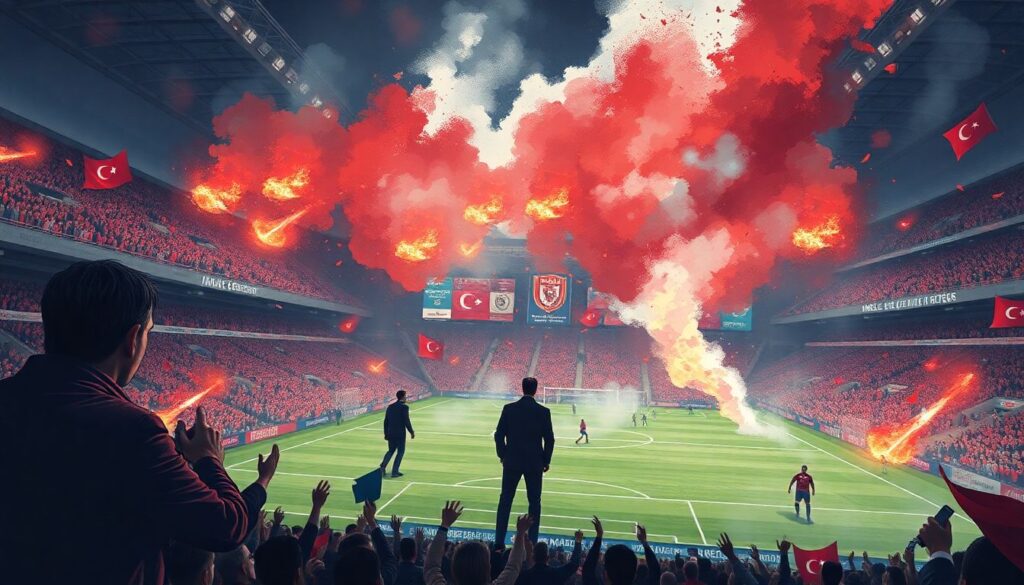
For years Turkish football was labeled chaotic: crazy atmospheres, changing presidents, trigger‑happy sackings. And yet, within that chaos, a new generation of managers learned to adapt fast, manage up, manage down and survive. That survival toolkit – handling intense media, boardroom politics and demanding fanbases – is now an asset in Europe, the Middle East and Asia. When clubs look at Turkish football coaches abroad today, they see people used to pressure that would crush many others, but who can also speak the modern language of periodization, data and player profiling, not just “hunger” and “heart”.
Case study: the evolution of Şenol Güneş
Take Şenol Güneş. Many remember him for leading Turkey to third place at the 2002 World Cup. That run wasn’t random: Turkey conceded only six goals in seven matches, and the team ran more kilometers per game than heavyweights like Italy and Spain. Two decades later, at Beşiktaş, he rebuilt his reputation by winning back‑to‑back Süper Lig titles (2015–16, 2016–17) while topping their Champions League group ahead of Porto, Monaco and RB Leipzig. What matters here isn’t just trophies; it’s the shift. Güneş stopped being “old school” and embraced structured pressing, coordinated buildup and integrated analytics – exactly the kind of blend foreign clubs now expect.
—
The core of Turkish football coaching philosophy
Mix of street football and university lab

If you talk to coaches who worked in Turkey’s academies, a pattern appears. Most grew up on asphalt pitches and crowded neighborhoods; creativity and toughness were basic survival skills. Later, after the 2000s, came UEFA licenses, sports science degrees and internships in Germany, the Netherlands and Spain. The emerging Turkish football coaching philosophy lives at that intersection: street ball instincts filtered through tactical frameworks borrowed from Central and Western Europe. Players are pushed to be expressive on the ball but drilled to understand pressing triggers, compactness and rest defense. It’s not “romantic chaos” anymore; it’s organized emotion.
Data, but not for show
A lot of clubs now say they’re “data‑driven”, but often it’s window dressing. At the top Turkish clubs, performance analysts originally arrived as outsiders who had to prove their worth in rooms full of ex‑players. To survive, they learned to translate metrics into simple, competitive language. That culture travelled with the coaches. When you see best Turkish football managers in Europe presenting to a new dressing room, they rarely start with heatmaps; they start with duels, meters sprinted in the last 15 minutes, and chances conceded after turnovers. It’s analytics, framed in a way that fires players up rather than putting them to sleep.
—
Famous Turkish football managers success stories
Fatih Terim: branding, Euros and the long shadow
You can’t talk about Turkish coaching without Fatih Terim. At Galatasaray he turned local dominance into European credibility, winning the 2000 UEFA Cup and Super Cup – still a reference point for many chairmen when they think about Turkish leadership. His Euro 2008 run with the national team, with multiple last‑minute comebacks, built the global image of the “never‑die” Turkish mentality. Economically, those results meant higher TV rights, better sponsorship deals and a spike in academy investment. Agents and sporting directors abroad started adding “Turkish coach can handle pressure” as a real line item, not just a stereotype.
The quieter success stories at mid‑tier clubs
Away from the spotlight, there’s a wave of coaches making strong impressions in smaller markets. Think of Turkish assistants and head coaches in leagues like Romania, Azerbaijan, the Gulf countries, even Scandinavia. Several sides led by Turkish managers have overperformed their wage bills, qualified for European prelims, or flipped undervalued players for profits. These aren’t viral moments; they are the kind of steady famous Turkish football managers success stories that convince club boards to extend contracts and recommend Turkish colleagues to other owners looking for “value” hires. Word‑of‑mouth has become a powerful export tool.
—
Turkish football coaches abroad: numbers and patterns
What the stats actually say
The numbers are still modest compared to German, Spanish or Portuguese coaches, but the curve is pointing up. Over the past decade, the count of Turkish head coaches and assistants in foreign top‑flight or second‑tier leagues has grown steadily, especially in the Middle East and Eastern Europe. Clubs cite adaptability and man‑management as key reasons for hiring them. In several leagues, Turkish coaches have helped teams lift their average points per game by 0.2–0.3 compared to the previous season – not headline‑grabbing, but enough to mean the difference between mid‑table safety and relegation scraps, and therefore millions in broadcast money.
Where the jobs are coming from
Turkish football coach jobs overseas tend to cluster around three hubs: the Gulf (Saudi Arabia, Qatar, UAE), the post‑Soviet space and parts of Central/Eastern Europe. The logic is pretty simple. These markets want coaches who understand passionate crowds, can work with multicultural squads, and won’t freeze when owners call after every draw. Turkish managers are comfortable with that reality because they grew up in clubs where the board might change midseason. Add the fact that many also speak German or English from time spent abroad, and you get a profile that fits the modern, restless club owner’s wish list.
—
Economic impact: from touchline to balance sheet
Why foreign clubs see Turkish coaches as “value buys”
Hiring a big‑name Western European manager is expensive, and doesn’t always guarantee alignment with club culture. Turkish coaches often arrive on smaller salaries but bring a full package: tactical flexibility, strong staff networks, and the ability to unlock local fan engagement. When a mid‑tier European or Asian team hires one and suddenly makes a deep cup run, matchday income and merchandise sales jump. For some clubs, a single successful season under a Turkish coach has covered several years of wage costs through improved league position, prize money and player trading – especially when youngsters are showcased in Europe for the first time.
Feedback loop into the Turkish economy
The money doesn’t just disappear abroad. When coaches earn and build reputations outside Turkey, they return with both capital and contacts. Some invest in academies, sports schools, analytics startups, even local lower‑league clubs. That strengthens the domestic development pipeline and makes it easier for European sides to scout Turkish talent. Over time, you get a loop: better coaching in Turkey produces more exportable players and staff, which in turn attracts more interest from foreign leagues, raising transfer fees and broadcast value. It’s a subtle but real contribution to the wider sports economy around Turkish football.
—
Tactical and cultural influence on the global game
Pressing, transitions and emotional management
Tactically, many Turkish coaches have built their careers on aggressive pressing and fast transitions, shaped by the noisy, impatient stadiums back home. You can see their fingerprints when clubs that used to sit passively suddenly start hunting in packs after losing the ball. But there’s also a cultural angle: emotional management. These managers are used to calming presidents, motivating mercurial talents and dealing with ultras. That skill translates to dressing rooms full of internationals who all want to be the star. More than once, foreign directors have admitted they hired Turkish coaches to “bring some life” back into a flat squad.
Youth development and the “late bloomer” belief
Another under‑rated export is the belief in late bloomers. Turkish leagues are full of stories of players who bounced around the lower divisions until 23–24 and then exploded. Coaches carry that belief abroad – they’re willing to give a 26‑year‑old his first serious run at a higher level. That mindset changes how clubs manage their B‑teams and loan strategies. Instead of giving up on players at 20, some foreign clubs coached by Turks have extended development windows. The result is cheaper, homegrown depth and occasional surprise sales when a “written‑off” player finally clicks.
—
Future trends and forecasts
Where Turkish coaches could be in 5–10 years
If the current pipeline continues, it’s realistic to expect more Turkish coaches in the top 5 European leagues, not just at crisis clubs but in long‑term projects. As data literacy and language skills keep improving in Turkish coaching courses, the credibility gap with German or Portuguese candidates will shrink. Within a decade, seeing best Turkish football managers in Europe regularly qualifying for UEFA competitions with mid‑table budgets won’t feel unusual. Another growth area will be women’s football, where federations and clubs are only now starting to look seriously at the Turkish market for qualified staff.
Threats and opportunities
The main risk is internal: if domestic clubs keep cycling through coaches every few months, younger managers may struggle to build coherent ideas and portfolios. On the other hand, that same volatility pushes many to look abroad earlier, which expands the global footprint. There’s also a branding opportunity: if the federation and leading clubs market their coaching education more aggressively, “Turkish‑trained” could become a label like “Dutch school” or “Portuguese school”. The ingredients – emotional intelligence, tactical adaptability and survival under pressure – are there; it’s a matter of consistency and smart positioning.
—
Conclusion: more than a passing trend
Right now, Turkish influence on world football isn’t about a single superstar coach changing everything. It’s about dozens of professionals gradually altering perceptions – one promotion fight, one Europa Conference League run, one rebuilt dressing room at a time. As Turkish football coaches abroad keep stacking these small, tangible wins, club owners and sporting directors will increasingly see them not as wildcards but as calculated bets. And once that mindset shifts fully, the path opens for the next generation to land even bigger roles, pushing Turkish ideas and methods deeper into the global game.