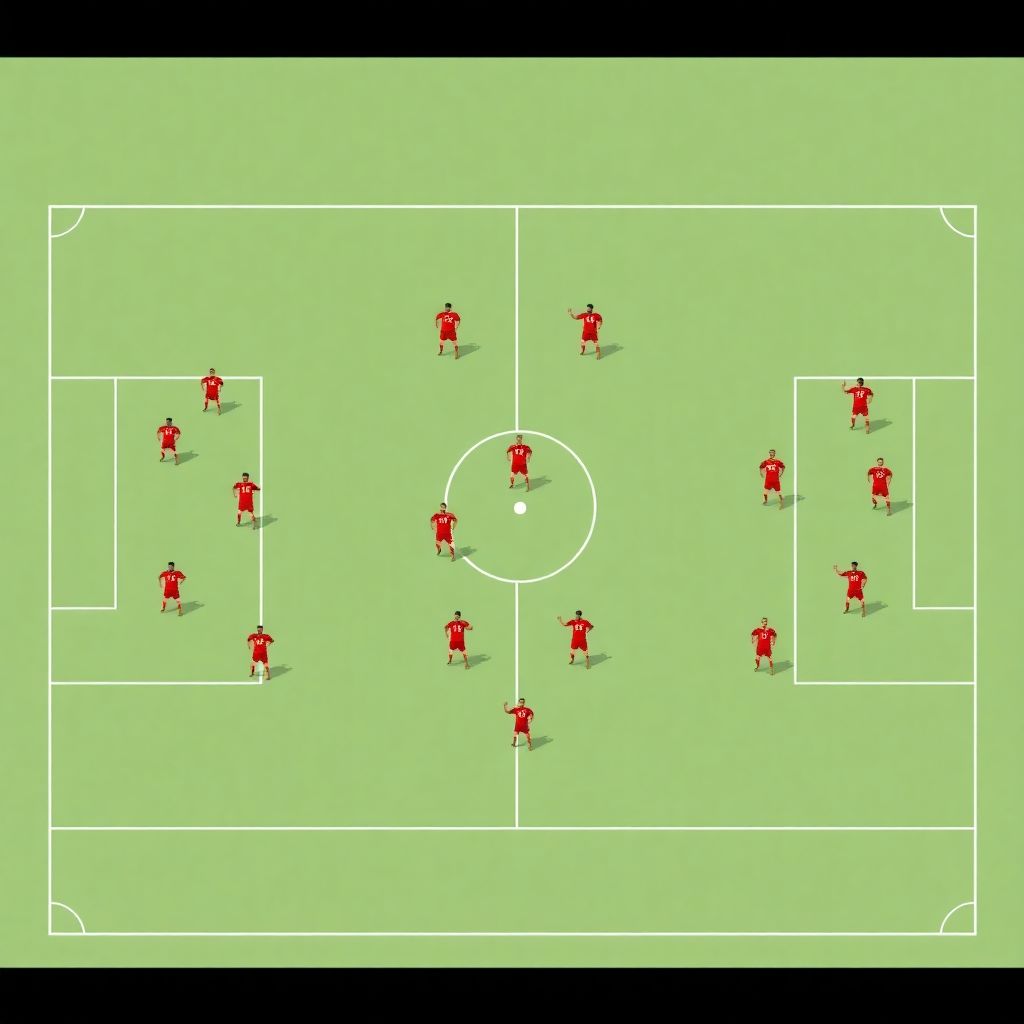
The 2002 benchmark: what made Turkey special
When people talk about the “tactical evolution of the Turkish National Team”, they usually start with the 2002 World Cup because that side under Şenol Güneş created a very clear baseline. Structurally it was mostly a 4‑1‑4‑1 or 4‑2‑3‑1 on paper, but functionally it looked like a compact 4‑4‑1‑1: disciplined mid‑block, aggressive ball‑oriented pressing, fast vertical transitions. The team relied on a strong spine (Rüştü, Alpay, Tugay, Emre, Hakan Şükür) and consistent automatisms: full‑backs timing their overlaps, wingers tucking inside during build‑up, and clear pressing triggers when the opponent played into wide zones. That mix of defensive solidity and ruthless counter‑attacking is the tactical “version 1.0” against which later Turkish generations are usually measured and contrasted, especially regarding how much freedom is now given to ball‑playing defenders and creative midfielders.
Necessary tools to really understand this evolution
You don’t need a Pro License to track how Turkey’s tactical model has changed, but you do need to be systematic. At the most basic level, you want three “tools”: structured match footage, reliable data, and a clear coding method. First, gather full‑match video from the 2002 World Cup, Euro 2008, Euro 2016, Euro 2020 and Euro 2024 qualification and tournament games. Second, access basic metrics: PPDA (pressing intensity), average defensive line height, positional heatmaps of key players, and passing networks. Third, create a simple tagging system: note shape in possession, shape out of possession, pressing height, and transition pattern. Many fans casually watching in their new Turkey national team jersey 2024 focus only on flair players, but a proper toolkit forces you to watch the “boring” details like rest‑defence structure and spacing between lines, which are actually where most of the evolution has happened.
Step‑by‑step process of tactical evolution
1. 2002–2008: From reactive transitions to controlled chaos
The first big step came between the 2002 World Cup and Euro 2008. The backbone of the idea remained similar: Turkey were still most dangerous when they could press, recover, and attack at speed. But the team under Fatih Terim started flirting more with proactive possession and flexible positioning. Offensively, you could see more 4‑3‑3 and 4‑2‑3‑1 variations, with the “10” dropping into the half‑spaces to help progression, while one winger stayed high to stretch. Defensively, Turkey experimented with higher pressing lines, especially in qualifying, which created a kind of “controlled chaos”: ball‑oriented counter‑press, lots of players around the ball, and frequent changes of tempo. The emotional comebacks of Euro 2008 were not a coincidence; they were tied to a tactical willingness to overload certain zones and accept risk in the last 20–25 minutes when chasing scores, a sharp contrast to the more conservative risk management of 2002.
2. 2008–2016: The search for stable possession
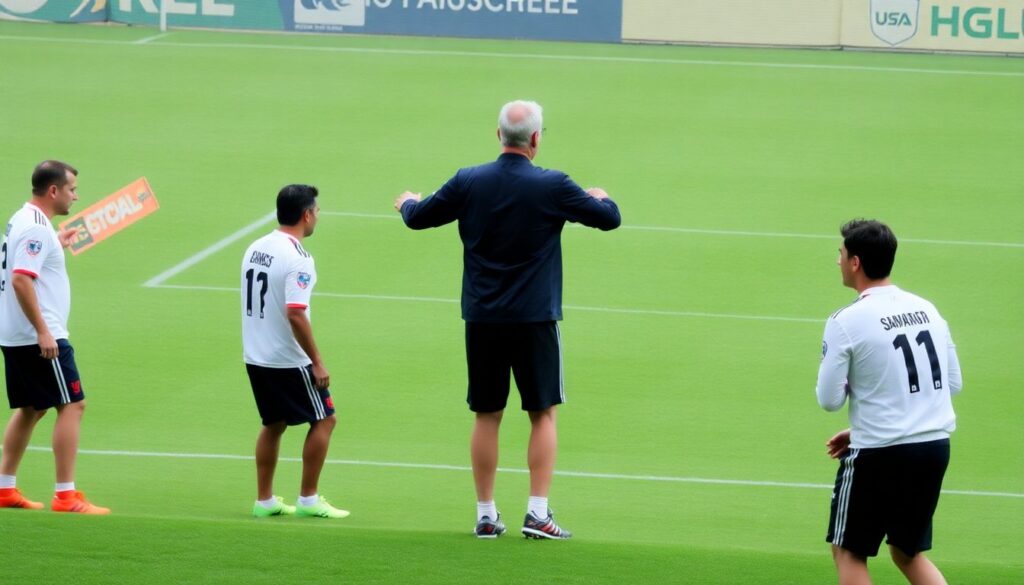
After 2008, Turkey entered a transitional era with fluctuating coaching ideas and an inconsistent player pool. Many managers tried to move the national setup towards a more stable 4‑2‑3‑1 or 4‑3‑3 focussed on controlled possession and structured build‑up from the back. The difficulty was in synchronising roles: double pivots that were either too similar or too static, full‑backs going high without proper cover, and a number 10 who often floated without clear responsibility in the press. Statistically you see slightly more possession and shorter average pass length, but the qualitative issue was lack of clear automatisms. Unlike the 2002 side, which had drilled transition patterns, this period often looked like a collection of decent individuals trying to keep the ball, yet struggling to create stable progression lanes and to compress space against the ball, which led to vulnerability in defensive transitions and ongoing tactical identity questions.
3. 2016–2021: Modern pressing concepts and structural dilemmas
Approaching Euro 2016 and especially into the late 2010s, the global game shifted: high pressing, compactness between lines, and build‑up through the goalkeeper became standard. Turkey started to adopt these principles more explicitly. The team frequently lined up in a 4‑2‑3‑1 morphing into a 4‑4‑2 in the press, with the “10” jumping alongside the striker to press the centre‑backs and funnel the ball wide. The centre‑backs were encouraged to step into midfield with the ball, and full‑backs were tasked with providing width high and early. However, this created structural dilemmas: when both full‑backs advanced simultaneously without a proper single pivot to protect, the rest‑defence was thin. In qualifiers, Turkey could look like a high‑pressing, modern side; in tournaments, small spacing errors and poor vertical compactness meant they were often caught in transition by better‑drilled opponents, highlighting the gap between theoretical tactical model and real‑time execution.
4. 2021–today: Flexible structures and role‑based thinking
In the run‑up to Euro 2024, Turkey’s tactical evolution moved towards flexibility and role‑based structures rather than rigid formations. You would see nominal 4‑2‑3‑1s turning into 3‑2‑5 or 2‑3‑5 in possession: one full‑back staying deeper to form a back three, the other pushing into the last line; one pivot dropping between centre‑backs; interior midfielders occupying half‑spaces to create passing triangles around the opposition block. Out of possession, the team alternated between mid‑block 4‑4‑2 and higher 4‑1‑4‑1 pressing depending on the opponent and game state. This flexibility is supported by a generation of players comfortable in multiple roles and by analysis staff who treat every opponent differently. Fans planning their trips and searching for Turkey Euro 2024 tickets are essentially watching a side that is still emotionally Turkish in its intensity, but tactically closer to contemporary European reference models in how it manages rest‑defence, positional play, and pressing traps.
How to “read” a Turkish game today: a practical workflow
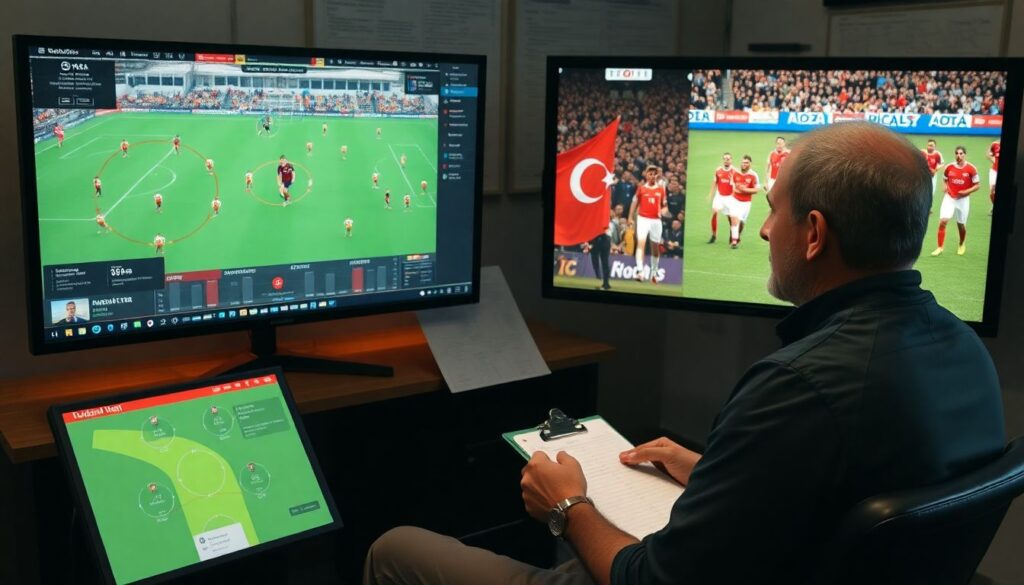
If you want to analyse a Turkey match like a coach rather than like a casual viewer, it helps to follow a repeatable process. That way, you can really see how today’s ideas differ from the 2002 blueprint instead of relying on nostalgia. Below is a simple workflow you can apply every time you sit down to watch a game, whether live or on replay.
1. Before kick‑off, note the announced formation and likely roles (who is the pivot, who provides width, who plays between lines).
2. In the first 15 minutes, focus only on Turkey without watching the ball: look at their starting positions and how they shift as the ball moves.
3. Freeze the game in your mind at every Turkish goal–kick: how many players are involved in build‑up and what structure are they forming (2‑4, 3‑2, 3‑1‑3‑3 etc.)?
4. Observe pressing triggers: back‑pass to centre‑back, pass into full‑back, or poor first touch by the opponent.
5. Track how the structure changes after substitutions or when Turkey go a goal up or down.
Following this pattern a few times makes it much easier to compare Turkey 2002, Turkey 2008, and Turkey 2024 as distinct tactical “versions” defined by spacing, pressing height, and build‑up structure rather than just by the famous names on the team sheet or the emotional tone of each tournament run.
Common beginner mistakes when analysing (or coaching) Turkey’s tactics
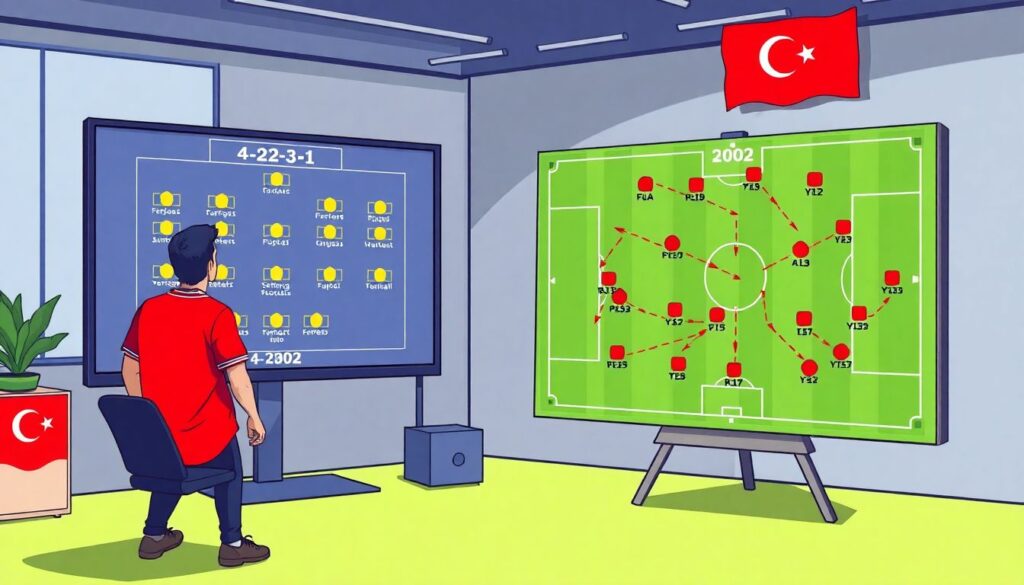
Newcomers to tactical analysis of the Turkish National Team usually repeat a set of predictable errors. The first is confusing nominal formations with actual behaviour: seeing “4‑2‑3‑1” on a line‑up graphic and assuming it tells the whole story. In reality, the evolution since 2002 has mostly been about principles—how many players in each line during build‑up, who defends rest‑defence, where the pressing traps are—rather than about which digits appear on screen. A second typical mistake is over‑focusing on the ball carrier and not on the structure around him; that leads people to blame individual players for problems that are really systemic spacing issues. A third error is ignoring game state: Turkey’s risk profile when chasing a goal is wildly different from when protecting a lead, especially compared to the more rigid, conservative mindset in 2002. Finally, a lot of beginners compare eras without adjusting for the general evolution of football tactics worldwide, which makes 2002 look more “basic” than it actually was for its time.
Frequent on‑pitch errors by inexperienced coaches and players
On the coaching side, novice managers dealing with the Turkish setup often try to import a fashionable system without adapting it to player profiles. For example, they may demand very high full‑backs and a single pivot without verifying if that pivot has the range and positional IQ to protect transitions, resulting in the classic issue of being countered through the centre. Another frequent mistake is unclear pressing rules: players are told to “press high”, but there is no shared understanding of triggers or cover shadows, so the first line jumps while the midfield stays passive, leaving vertical gaps that stronger opponents exploit. Young players also fall into habit errors: centre‑backs following the ball too aggressively into midfield and leaving space behind, wingers failing to track opposition full‑backs in a 4‑4‑2 mid‑block, or the number 10 pressing late and allowing easy progression through the middle. Compared with the 2002 team, which had very strict role discipline, today’s increased tactical freedom can punish inexperience if coaches do not couple flexibility with clear behavioural rules.
Using merchandise culture as a lens on tactical identity
It may sound odd, but even commercial aspects provide a small window into tactical evolution. The modern boom in Turkey national football team merchandise reflects a wider engagement with the team, where fans are not only emotionally engaged but also more tactic‑aware than twenty years ago. You see supporters discussing rest‑defence and pressing intensity on social media while unboxing the latest Turkish national team football kits online, which shapes expectations: a national side is now judged not only on passion and fight but also on whether it “looks modern” in its positional play. Similarly, the ease of buying Turkey national team match tickets and following the team home and away has created a travelling fan culture that witnesses tactical shifts in real time. While none of this directly changes the formation, it creates public pressure for coherence between the historic identity of intense, high‑emotion football and the current demand for structured, analytically robust game plans that can compete with Europe’s elite in tournament settings.
Troubleshooting your analysis: how to avoid wrong conclusions
When your tactical reading of Turkey’s evolution feels inconsistent—one week they look like a pressing machine, the next like a passive side—it usually means something in your observation method needs adjusting, not that the coach has “no plan”. Start troubleshooting by separating phases: possession, non‑possession, and transitions. Many people mash them together and conclude that Turkey have “no style”, when in reality the team may be strong in structured build‑up but weak in defensive transitions, or vice versa. Next, normalise for the opponent: facing a top‑seeded side, Turkey might intentionally sit in a mid‑block, while against weaker opposition they adopt an aggressive high press; comparing those games without context leads to false narratives. Also, consider sample size: drawing big conclusions from a single bad tournament—like a poor Euro—ignores longer qualification cycles where the tactical model might have been more consistent. Finally, include data checks: if your eye test says Turkey are ultra‑aggressive, but PPDA and average defensive line height are low, revisit your assumptions before blaming the coach or declaring a total loss of the 2002 identity.
From 2002 solidity to 2024 flexibility: what really changed
Across more than two decades, the Turkish National Team has moved from a clearly defined, transition‑heavy 4‑4‑1‑1/4‑2‑3‑1 with strict roles towards a flexible, role‑based positional system that adapts by opponent and game state. The essence—emotional intensity, aggressive mentality, and willingness to embrace high‑risk scenarios—has remained recognisably Turkish. What changed is the toolkit: build‑up through the goalkeeper, variable pressing heights, hybrid roles for full‑backs, and attention to rest‑defence. For fans who follow every cycle, whether picking up Turkey national team match tickets or streaming qualifiers from home, understanding this evolution turns each game into a coherent episode of a long tactical story rather than a series of disconnected highs and lows. If you avoid the usual beginner mistakes—overrating formations, ignoring game state, and neglecting global tactical trends—you can see how the journey from 2002 to today is less about abandoning tradition and more about upgrading it to survive in a far more complex, data‑driven football ecosystem.