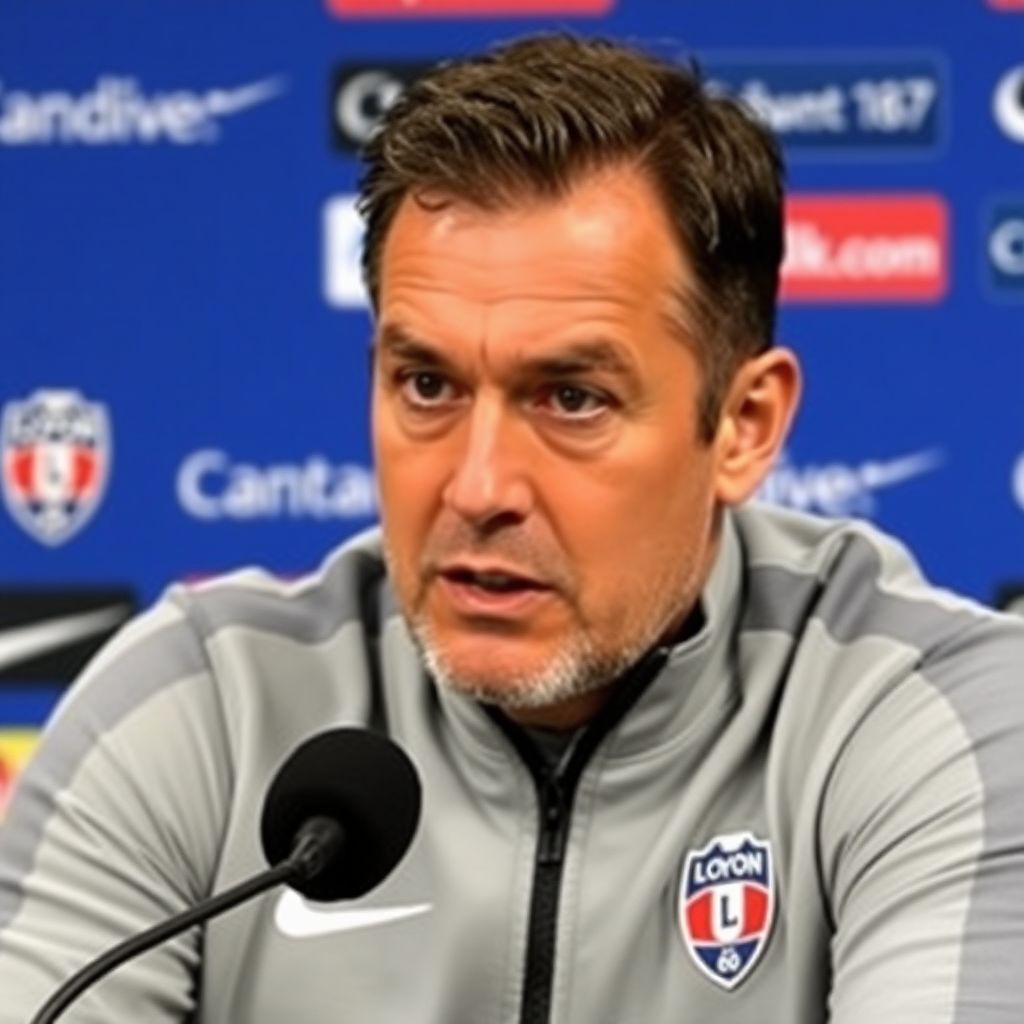
Paulo Fonseca unhappy with Endrick’s form at Lyon
Lyon head coach Paulo Fonseca has openly voiced his dissatisfaction with the recent performances of young Brazilian forward Endrick, putting the spotlight on the player at a time when the club is struggling both domestically and in Europe.
The French side is going through a difficult spell. Lyon were knocked out of the Europa League by Celta Vigo and, in the league, their winless run has now stretched to six matches. In the middle of this negative series, Endrick’s dip in form has become one of the main talking points around the team.
Fonseca did not hide his frustration when asked about the 18-year-old attacker. Speaking about Endrick’s current level, the Portuguese coach was direct: he is not satisfied with what the player is offering on the pitch. According to Fonseca, Endrick returned from international duty with Brazil feeling tired, but that cannot serve as a long-term explanation for his underwhelming displays.
“I’m not happy with Endrick,” Fonseca said. “He came back from Brazil fatigued, but he has to give us much more. We need him.” With this statement, the manager made it clear that he expects higher intensity, greater contribution and more responsibility from the youngster, especially in a period when the team is short on confidence and results.
The coach also highlighted Endrick’s poor showing in the match against Angers, using it almost as a symbol of the player’s current struggles. In Fonseca’s words, the forward must show “much more” and be “much better prepared” when he gets minutes. That implies not only physical readiness but also mental sharpness and the right attitude to impact games.
Endrick’s numbers underline his decline. In the league, his last goal dates back to 25 January, when he delivered a standout performance by scoring a hat-trick. Since then, he has failed to find the net domestically, and his influence has steadily decreased. In European competition, he has scored only once, against Celta Vigo, which was not enough to prevent Lyon’s elimination.
The international break has also played its part in this complicated period. Called up to the Brazil national team, Endrick saw limited playing time. He was used only briefly against Croatia and did not feature at all in the match against France. Instead of boosting his confidence, this window appears to have left him physically drained and slightly out of rhythm with his club side.
Away from the pitch, Endrick is experiencing major changes in his personal life. It has been announced that he and his wife, Gabriely, are expecting a baby. While this is a joyful milestone, such life events can also bring additional emotional pressure and require significant adjustments, especially for a player still at the very start of his professional journey.
For Lyon, the timing of Endrick’s dip could hardly be worse. The team is desperate for solutions in attack, and Fonseca had initially counted on the Brazilian as one of the main weapons in the final third. His pace, one‑on‑one ability and instinct in front of goal were supposed to bring unpredictability and goals to a side trying to rebuild and return to the top end of the table.
Fonseca’s public criticism can be read as both a warning and a challenge. Coaches sometimes choose to protect young players by downplaying their struggles in the media, but in this case, the manager opted for a different strategy: sending a clear message that talent alone is not enough. Work rate, consistency and professionalism are required if Endrick wants to secure a starting place and become a decisive figure.
At the same time, this situation reveals the delicate balance between developing a prospect and meeting immediate competitive demands. Endrick arrived in Europe with huge expectations on his shoulders, seen as one of the brightest hopes of Brazilian football. Adapting to a new league, a new culture and a more tactical style of play, however, often takes longer than fans and clubs would like.
From a tactical standpoint, Endrick’s current problems might also be linked to Lyon’s collective form. A struggling team usually creates fewer chances, presses less effectively and leaves forwards isolated. When goals dry up, it becomes easier to single out attackers for criticism, even if the roots of the crisis are deeper and extend to the whole structure of the side.
Psychologically, a long goal drought can weigh heavily on a young forward. Every missed opportunity increases the pressure, and confidence can quickly erode. Fonseca’s words, while harsh, could also be intended to jolt Endrick into reacting strongly: training harder, fighting more for his place and showing that he can handle the expectations attached to his name.
The coming weeks will therefore be a crucial test of character for Endrick. How he responds to Fonseca’s public statements – both in training and in matches – may shape his season and even his wider trajectory in European football. If he manages to transform criticism into motivation, regain sharpness and start scoring again, this difficult period could later be seen as a turning point in his development.
Lyon, for their part, need more than just goals from their young attacker. They require energy in pressing, better decision‑making in the final third and a player willing to sacrifice himself for the team’s structure. Fonseca’s emphasis on being “more ready” suggests that he is looking for a forward who is fully engaged in every phase of the game, not only when finishing chances.
The added responsibility of impending fatherhood can also influence Endrick’s perspective. Many players have spoken about how becoming a parent changes their motivation, focus and priorities. For some, it becomes an extra source of strength and maturity on the pitch. If Endrick channels this new chapter in his life positively, it could help him grow faster both as a person and as a professional.
In the broader context of Lyon’s season, the Endrick case symbolizes the club’s current crossroads. The team is built around a mix of young talents and experienced names, but the blend has yet to produce consistent results. Fonseca’s firm stance indicates that he expects the younger core, with Endrick among them, to take on responsibility sooner rather than later.
For now, Endrick finds himself at a critical juncture: underperforming, under scrutiny and openly challenged by his coach, but still clearly important for the team’s plans. Lyon “need him,” as Fonseca stressed – and that need is exactly why the expectations, and the criticism, are so high. How he reacts on the pitch will determine whether he can move from promise to reliability in the eyes of his coach and the club’s supporters.