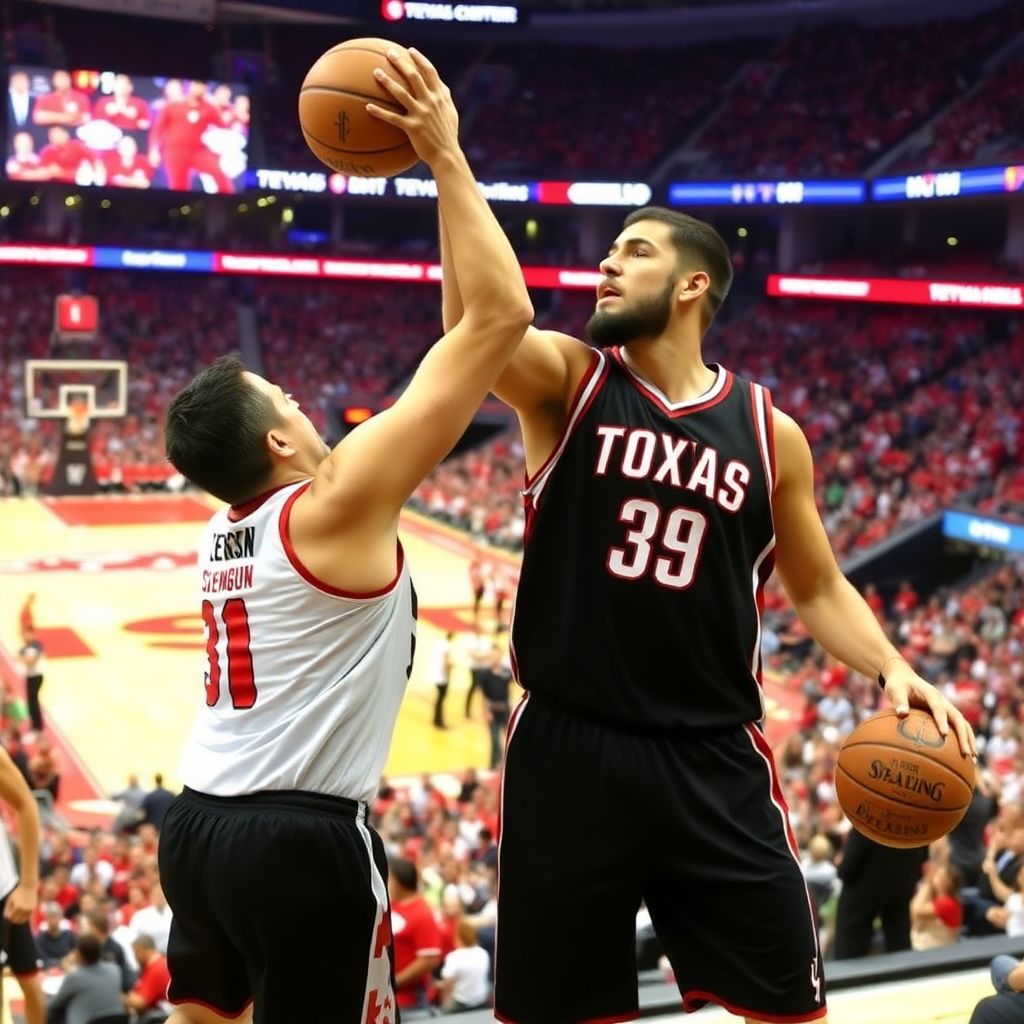
Rockets with Alperen Şengün outplay Adem Bona’s 76ers in Houston
Houston Rockets, led by Turkish center Alperen Şengün, extended their impressive run with a 113-102 home victory over the Philadelphia 76ers, featuring fellow Turkish big man Adem Bona. The matchup at Toyota Center highlighted both teams’ young cores, but Houston’s deeper rotation and higher offensive efficiency made the difference, earning them their eighth straight win.
Şengün may not have delivered a headline-grabbing scoring night, but he once again influenced the game across multiple areas. The Rockets’ center finished with 8 points, 12 rebounds and 4 assists, showing his trademark versatility. His work on the glass and in playmaking helped control the tempo, especially in stretches where Houston needed to slow the 76ers’ momentum.
The scoring burden for Houston was carried primarily by Kevin Durant, who delivered a standout performance and topped all scorers with 29 points. Durant repeatedly punished mismatches, capitalizing on mid-range opportunities and attacking closeouts, forcing Philadelphia’s defense into tough rotations. His presence opened up driving lanes and kick-out chances for his teammates throughout the night.
Jabari Smith Jr. and Amen Thompson provided crucial secondary scoring, each adding 19 points. Smith stretched the floor with his shooting and contributed on the boards, while Thompson injected energy with his drives, transition play and defensive pressure. Their contributions ensured that the Rockets remained dangerous from multiple positions, preventing the 76ers from focusing solely on Durant and Şengün.
On the opposing side, Adem Bona contributed modest numbers in limited offensive touches, recording 2 points and 2 rebounds. While Bona’s box score line was not eye-catching, his primary role centered on physical defense, setting screens and trying to disrupt Houston’s rhythm in the paint. However, the 76ers struggled to consistently neutralize Houston’s varied offensive threats.
Philadelphia’s scoring load was carried by its backcourt and wings. Tyrese Maxey led the team with 23 points, showcasing his quickness and ability to create off the dribble. VJ Edgecombe followed closely with 21 points, while Quentin Grimes chipped in 20. Together, they kept the 76ers in contention for large stretches, knocking down perimeter shots and attacking closeouts, but it ultimately wasn’t enough to overturn Houston’s balanced attack.
With this victory, the Rockets collected their 51st win of the season, underlining their status as a serious contender and one of the hottest teams in the league. Their current eight-game winning streak reflects both growing chemistry and tactical clarity: the ball moves, multiple players are involved, and the team defends with purpose. The 76ers, on the other hand, recorded their 37th loss of the campaign, a reminder of their inconsistency and the work still to be done to compete with the league’s most in-form teams.
Beyond the raw numbers, the game underlined how important versatility has become in modern NBA lineups. Houston’s ability to run the offense through different players – Durant on the wing, Şengün from the high post, Thompson as a slasher and Smith as a stretch option – consistently pulled Philadelphia’s defense out of position. The 76ers found themselves switching frequently, which opened up mismatches that Houston’s veterans and young talents exploited.
For Şengün, this was another game reinforcing his evolution into a complete big man. Even when he is not the primary scorer, he impacts the game through screens that free shooters, smart passes from the elbows and relentless rebounding on both ends. His connection with ball-handlers like Thompson and Durant allows Houston to run fluid sets where the ball rarely sticks, a key factor behind the team’s current surge.
Adem Bona, meanwhile, is still carving out his niche at the NBA level. His impact stems from energy, rim protection and physicality rather than high usage on offense. Against a frontcourt combination like Şengün and Smith, his task was demanding: to contest shots without getting into foul trouble and to battle for positioning on every possession. Even in games where the stats look modest, matchups like this are valuable learning experiences that can shape his defensive instincts and timing.
The 76ers’ reliance on perimeter creation was evident. Maxey’s 23 points came through a mix of pull-up jumpers, drives to the basket and movement without the ball. Edgecombe and Grimes provided additional spacing and shot-making, but the lack of consistent interior scoring or dominant inside presence put extra pressure on the guards. When their outside shots dipped in accuracy in key stretches, Houston’s defensive rebounds quickly turned into transition opportunities.
From a tactical standpoint, Houston’s coaching staff deserves credit for the way they staggered minutes and managed matchups. By frequently pairing Şengün with different lineups – sometimes alongside shooters, sometimes with more defensive-minded players – they were able to adjust to Philadelphia’s runs and maintain control. The Rockets also showed composure in late-clock situations, repeatedly finding the right mismatch or initiating sets through Durant’s isolation and Şengün’s playmaking.
The psychological side of an eight-game winning streak should not be underestimated either. Teams on long positive runs often show higher confidence, sharper decision-making and stronger trust in the system. Houston’s players looked comfortable in their roles, with bench contributions complementing the stars. Every key rotation player seemed to understand when to attack, when to move the ball and when to slow the pace, something that often separates good teams from truly dangerous ones in the postseason race.
For Philadelphia, this loss highlights several points of emphasis moving forward. They need more balance between perimeter and interior offense, more reliable bench production and a clearer defensive identity against teams with multiple playmakers. While strong individual scoring nights from Maxey, Edgecombe and Grimes are encouraging, basketball at this level demands synchronized team defense and diversified offensive options, especially against deep, well-structured opponents like the Rockets.
Looking at the bigger picture, the duel between Şengün and Bona carried symbolic weight for Turkish basketball fans. Having two players from the same country sharing the floor in the NBA illustrates the growing international influence on the league. Even with different roles and responsibilities, both big men show that players developed outside the traditional American pipeline can adapt, contribute and compete against the very best.
As the season progresses, Houston’s 51 wins and ongoing momentum position them well in the standings. If they continue to blend veteran leadership with youthful energy, they will enter the postseason as a team few opponents will want to face. Philadelphia, with its 37th defeat now on the record, must respond with adjustments, better execution and a stronger defensive edge if it aims to solidify its place and avoid sliding down the table.
LeBron James leads Lakers past Warriors on the road
On the West Coast, another marquee name delivered a statement performance. The Los Angeles Lakers traveled to San Francisco and defeated the Golden State Warriors 119-103, securing an important road win and reaffirming their ambitions.
LeBron James once again acted as the engine of the Lakers’ offense and the stabilizing force for the entire team. He finished the game with 26 points, 11 assists and 8 rebounds, coming close to yet another triple-double. James dictated the pace, exploited mismatches in the post, initiated fast breaks with long outlet passes and found open teammates on the perimeter.
Deandre Ayton provided valuable interior presence for Los Angeles, adding 21 points. His scoring came through a mix of post-ups, pick-and-roll finishes and put-backs. By commanding attention in the paint, Ayton created more space for outside shooters and gave the Lakers a reliable option when the game slowed down in the half-court.
Jake LaRavia and Luke Kennard supplied important scoring depth. LaRavia contributed 16 points, frequently cutting into open spaces and knocking down open looks created by LeBron’s drives. Kennard, with 14 points, stretched the floor and punished the Warriors whenever they were late to rotate on the perimeter. Their combined efforts ensured that Golden State could not simply load up on James and Ayton.
Golden State, traditionally known for its offensive firepower, struggled to match Los Angeles’ consistency. Nate Williams and Brandin Podziemski each scored 17 points, giving the Warriors some perimeter scoring and energy. Charles Bassey, meanwhile, delivered a strong performance inside with 12 points and 13 rebounds, registering a double-double. His effort on the boards was one of the few areas where Golden State managed to compete physically with the Lakers.
However, despite those individual performances, the Warriors could not generate enough stops or sustain long scoring stretches. The Lakers frequently targeted defensive weaknesses, using screens and switches to create favorable matchups for James and Ayton. When Golden State attempted to trap or double LeBron, he responded with pinpoint passes to open shooters, breaking down the defensive scheme.
This victory for the Lakers underlines how critical playmaking and versatility are in the current NBA landscape. With James organizing the offense, big men like Ayton and role players like LaRavia and Kennard can focus on their strengths – finishing, spacing and timely cuts. It also highlights the importance of balanced contributions: while LeBron’s near triple-double was central, the win was built on collective execution on both ends of the floor.
For the Warriors, the loss raises familiar questions about depth, consistency and defensive stability. While their younger players and role players can produce strong individual nights, they need more cohesion and reliable two-way impact to contend with physical, disciplined teams like the Lakers. The performance of Bassey on the glass and the scoring from Williams and Podziemski offer positives, but the overall defensive structure still requires refinement.
Taken together, these two games – Rockets vs. 76ers in Houston and Lakers vs. Warriors in San Francisco – showcase several current trends in the league: the rise of versatile big men like Alperen Şengün, the continued star power and leadership of players like LeBron James, and the decisive role of depth and tactical flexibility in separating contenders from the rest of the field. As the regular season advances, performances like these will weigh heavily in shaping playoff matchups and expectations.