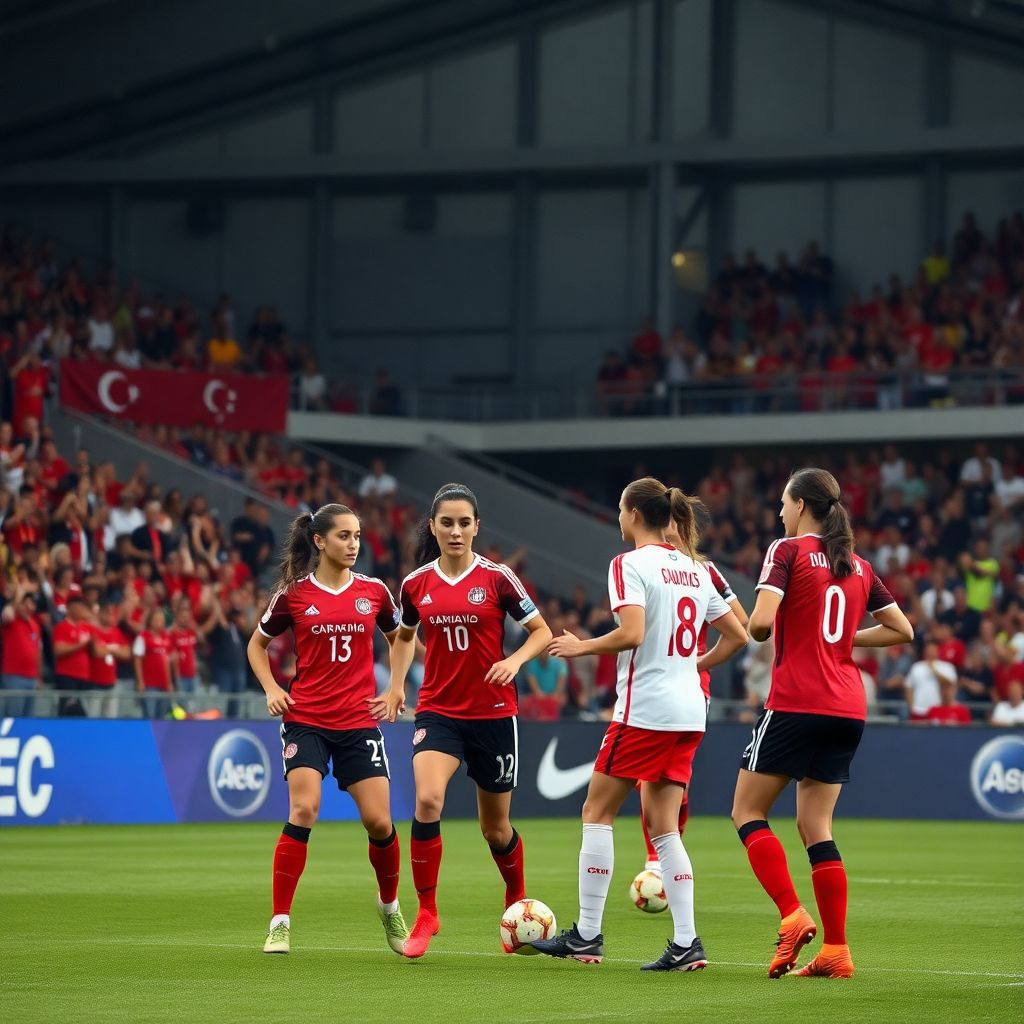
Women’s football in Turkey is a growing but still underdeveloped ecosystem, centered on a national league structure, a handful of professionalized clubs, and expanding youth pathways. Progress since the 1990s is clear, yet structural funding gaps, limited visibility, and cultural barriers still restrict participation and slow the game’s commercial and sporting potential.
Snapshot Overview: Women’s Football in Turkey
- Modern women’s football in Turkey has moved from amateur, fragmented competitions to a national top tier with stronger club backing.
- Traditional men’s giants now field women’s teams, raising standards but also creating dependency on broader club finances.
- Youth systems and every women's football academy Turkey offers remain uneven, with strong hubs in big cities and weak presence elsewhere.
- Media coverage, turkey women's football live stream options, and sponsorships are expanding but still far from mainstream levels.
- Social norms, facilities access, and limited role models continue to limit grassroots participation, especially outside major urban centers.
Evolution and key milestones since the 1990s
Women’s football in Turkey has evolved from sporadic, loosely organized local competitions in the 1990s to a structured national ecosystem anchored by an officially recognized top division. Early decades were marked by frequent pauses, low institutional support, and limited public visibility, despite dedicated pioneers and local community teams.
From the 2000s onward, more systematic league formats emerged, with promotion and relegation and clearer federation oversight. The turning point came when major multi-sport clubs began investing in women’s teams, aligning them with existing infrastructures, brands, and fanbases. This significantly raised visibility and brought women’s football turkey league conversations into mainstream sports media.
In the last decade, international exposure, UEFA competitions, and national team participation have created new aspirational pathways. Younger players now grow up seeing women on major club jerseys, and fans can increasingly buy turkish women's football tickets, even if still in modest numbers compared with men’s matches. The landscape today is transitional: more structured than ever, but still consolidating.
- Clarify your time frame when analyzing the game: pre-2000s, consolidation phase, and current expansion phase.
- Track how major club entries changed visibility and professional standards.
- When explaining the game’s history, connect milestones to concrete impacts on players (contracts, facilities, travel).
- Use the evolution story to set realistic expectations about current challenges and pace of change.
Current league structure, clubs and competition formats
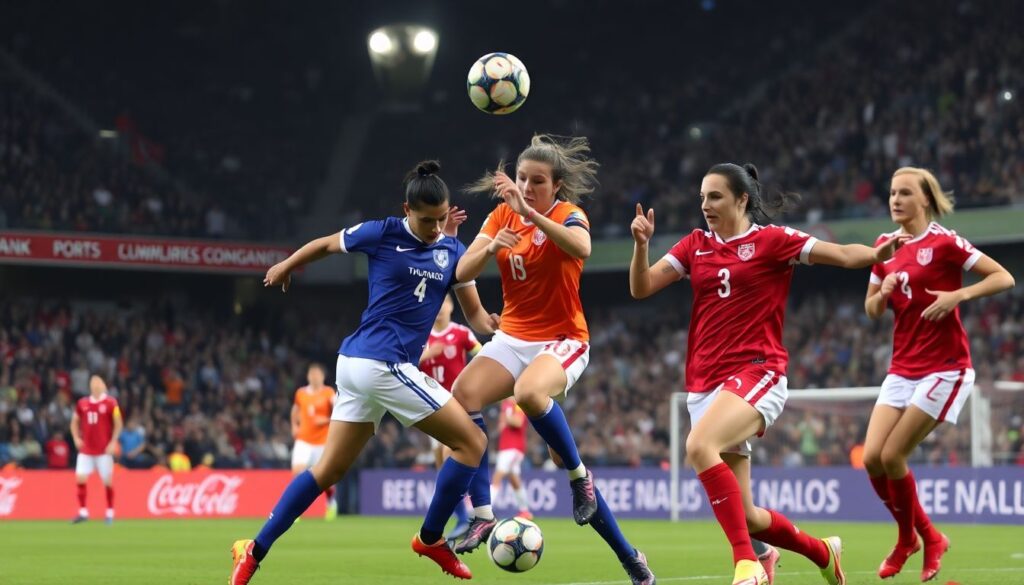
- Top division focus: The main competition is the national top tier, often discussed under the umbrella of the women's football turkey league, where leading clubs compete for the domestic title and potential European qualification.
- Role of established clubs: Several turkish women's super league teams are run by historically strong men’s clubs, leveraging shared training centers, medical teams, and administrative staff, which elevates standards but may tie budgets to men’s performance.
- Lower divisions: Beneath the top tier, regional and national lower leagues function as semi-professional or amateur pathways, giving smaller-city clubs access to structured competition and promotion opportunities.
- Domestic cups: Knockout cup competitions provide additional fixtures, allow lower-tier clubs to face top teams, and offer a testing ground for squad rotation and youth players.
- Calendar and workload: The season typically follows the men’s calendar, with concentrated fixtures and travel that can strain semi-professional squads, especially where players juggle work, study, and football.
- Matchday experience: Attendance is growing slowly; smaller venues and limited marketing mean many fans only discover turkish women's football tickets through club social media or local promotions.
- Map each club in your region: which division, training facilities, and links to big multi-sport clubs.
- Evaluate match calendars and travel demands before planning training loads or school/work commitments.
- Use cup competitions to blood younger players and test tactical variations with lower risk.
- Audit how your club communicates ticketing and schedules to potential new fans.
Talent pipeline: youth systems, academies and scouting
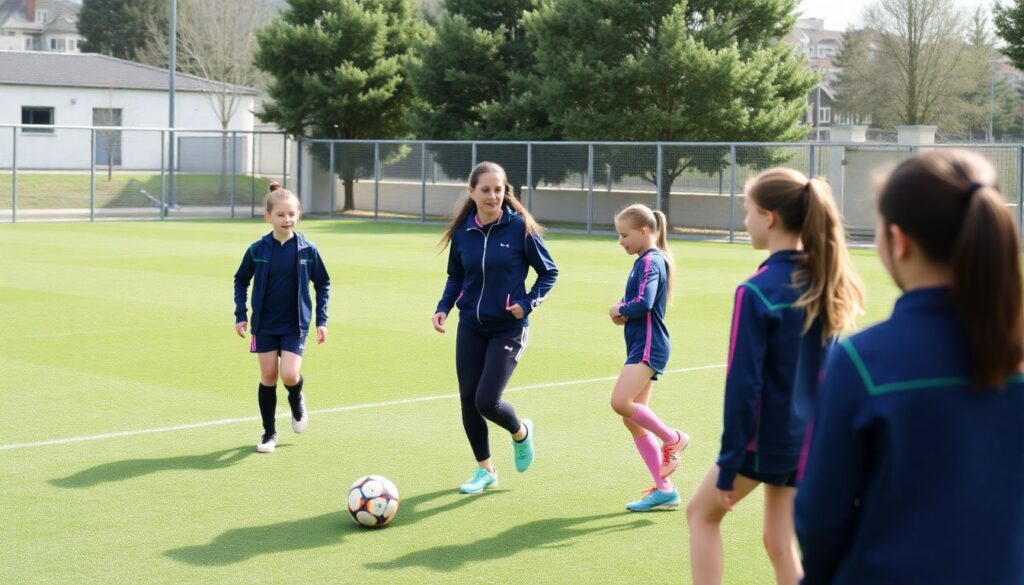
The talent pipeline relies on a mix of grassroots clubs, school competitions, and structured academies. In major cities, at least one women's football academy Turkey based will typically partner with a professional club, offering age-group teams, licensed coaches, and clearer progression routes from junior to senior squads.
Outside metropolitan centers, the pipeline often depends on multi-use amateur clubs and school physical education teachers who identify promising players. Scouting is still informal in many regions, with coaches relying on word-of-mouth, local tournaments, and occasional regional festivals rather than systematic nationwide scouting networks.
For players, typical scenarios include moving to a big-city academy in their mid-teens, combining training with school, and aiming to enter the senior squad or a university team. For clubs, success means aligning academy curricula with first-team playing style and coordinating with national youth-team selectors to showcase talent at the right moments.
- Identify the nearest structured academies and clarify age categories, selection criteria, and school partnerships.
- Standardize basic data collection on players (position history, injury record, match minutes) to support scouting decisions.
- Encourage collaboration between schools, local clubs, and academies to reduce duplicated effort and missed talent.
- For players and parents, plan early for relocation, housing, and education continuity when considering big-city academies.
Economics: funding, sponsorship and media rights
Financially, women’s clubs in Turkey rely on a layered model: core funding from parent clubs or local municipalities, supplemented by sponsorship deals, modest gate receipts, and limited merchandise sales. Media rights for women’s competitions are still developing, which directly affects how often fans can access a turkey women's football live stream for domestic matches.
On the positive side, brands increasingly seek association with women’s sport values such as inclusivity and empowerment. However, sponsors often prefer leading turkish women's super league teams with established fanbases, leaving smaller clubs and lower divisions struggling for stable revenue. Without robust central media-rights packages, individual clubs must be proactive in digital storytelling and localized partnerships.
Revenue strengths and opportunities
- Club integration with men’s sections reduces overhead via shared staff, facilities, and marketing channels.
- Targeted sponsorships (e.g., for jerseys, training kits, or matchdays) can provide flexible, project-based funding.
- Digital content and in-house streaming can grow audiences even where traditional TV coverage is limited.
Economic constraints and bottlenecks
- Limited stand-alone commercial value makes women’s sections vulnerable to budget cuts in wider clubs.
- Low baseline attendance caps matchday income and can discourage stadium investment.
- Uneven media coverage creates a visibility gap between a few well-known clubs and the rest of the league.
- Develop a simple budget model separating fixed costs (rent, staff) from variable costs (travel, bonuses).
- Create sponsor-ready assets: audience profiles, community outreach stories, and content plans.
- Experiment with low-cost streaming setups to reach fans beyond local stadium capacity.
- Prioritize partnerships that offer both cash and in-kind support (transport, medical services, equipment).
Structural and societal barriers limiting participation
Participation in women’s football in Turkey remains uneven due to overlapping structural and cultural factors. Many regions lack safe, accessible pitches at suitable times for women and girls; scheduling often privileges men’s and boys’ teams, leaving women with late or inconsistent training slots.
Social expectations can discourage girls from pursuing sport seriously, especially when travel, mixed-gender training environments, or visible public participation challenge local norms. At the organizational level, a shortage of women in coaching, refereeing, and leadership roles limits representation and can make environments less welcoming for newcomers.
- Myth: "There is no appetite for women’s football." Local tournaments and school leagues often draw strong interest when organized and promoted properly.
- Myth: "Quality is too low to attract fans." Quality improves directly with consistent training, professional support, and stable competitions; investment precedes performance.
- Mistake: Ignoring parents and schools. Without engaging families and educators, many promising players drop out before reaching clubs or academies.
- Mistake: Copying men’s football marketing. Women’s football often benefits from family-friendly scheduling, community storytelling, and role-model visibility rather than ultra-tribal messaging.
- Audit facility access: pitch hours, safety, transport options, and changing-room availability for women and girls.
- Include parents and teachers in information sessions about pathways, safety, and academic balance.
- Proactively recruit and train women coaches, managers, and referees as visible role models.
- Design campaigns that highlight local success stories rather than only elite national-team stars.
Strategic pathways: realistic growth scenarios and metrics
Strategic growth for women’s football in Turkey depends on aligning federation policies, club strategies, and community initiatives around measurable targets. Instead of aiming vaguely to "grow the game," stakeholders should agree on specific indicators like registered players, regular match attendance, academy graduation rates, and media reach.
A practical mini-scenario: a mid-table club in the women's football turkey league commits to a three-year plan. Year one focuses on creating a small but high-quality youth program linked to at least one school. Year two emphasizes fan engagement, including clear promotion of turkish women's football tickets and basic in-house streaming. Year three targets competitive improvement, measured by league position and player call-ups to youth national teams.
By tracking simple monthly data-such as training-session attendance, social-media engagement, and academy-player minutes in the first team-clubs can make evidence-based decisions about where to allocate limited resources and when to scale successful initiatives.
- Define 3-5 key metrics (e.g., registered players, average attendance, academy graduates, local sponsors) and track them consistently.
- Set realistic time frames: short term (seasonal), medium term (2-3 years), long term (5+ years).
- Start with low-cost, high-impact projects such as school partnerships and community open days.
- Regularly review data and adjust strategy instead of relying on one-off campaigns or short-lived enthusiasm.
- Can you clearly explain the current league structure and where your club or region fits within it?
- Have you mapped nearby clubs, schools, and any women's football academy Turkey options for talent pathways?
- Do you track simple participation and audience metrics that inform decisions, not just anecdotes?
- Are your matchday and streaming offers easy to find for new fans searching for turkey women's football live stream information?
- Have you identified at least two realistic sponsorship or community-partnership opportunities for the coming season?
Practical clarifications and concise answers
How professional is the top level of women’s football in Turkey today?
The top division is moving toward professional standards, especially among clubs linked to major men’s teams. However, many players still combine football with work or study, and conditions vary widely between leading and smaller clubs.
How can fans buy turkish women's football tickets easily?
Most clubs sell tickets through their official websites, stadium box offices, or third-party platforms used for men’s matches. Following club social channels is often the fastest way to find updated pricing, times, and any free-entry promotions.
Where can I watch turkey women's football live stream matches?
Broadcast arrangements change season to season, but a mix of TV channels, federation platforms, and club-run streams is common. Checking the federation site and each club’s matchday announcements usually reveals current streaming options.
What distinguishes turkish women's super league teams from lower divisions?
Top-tier clubs generally offer better facilities, more licensed coaches, and stronger medical and logistical support. Lower-division teams may be semi-professional or amateur, with smaller budgets and fewer training sessions per week.
How can a young player enter a women's football academy Turkey based?
Parents should contact nearby professional or semi-professional clubs to ask about age categories, trial dates, and selection criteria. Many academies run open days or short trial periods at the start of each season or school term.
Is there a clear pathway from school football to the national team?
The pathway exists but is not perfectly aligned. Talented players typically move from school teams to local clubs, then into strong academies or top-division squads, where they gain visibility for youth and senior national-team selection.
What is the most impactful area to improve in the short term?
Improving local organization-regular training times, safe facilities, and communication with families-usually delivers quick gains in participation and performance, even before larger funding or media deals arrive.