‘I Thought About Leaving the National Team’: Mbappé Opens Up on Pressure, Criticism and Change
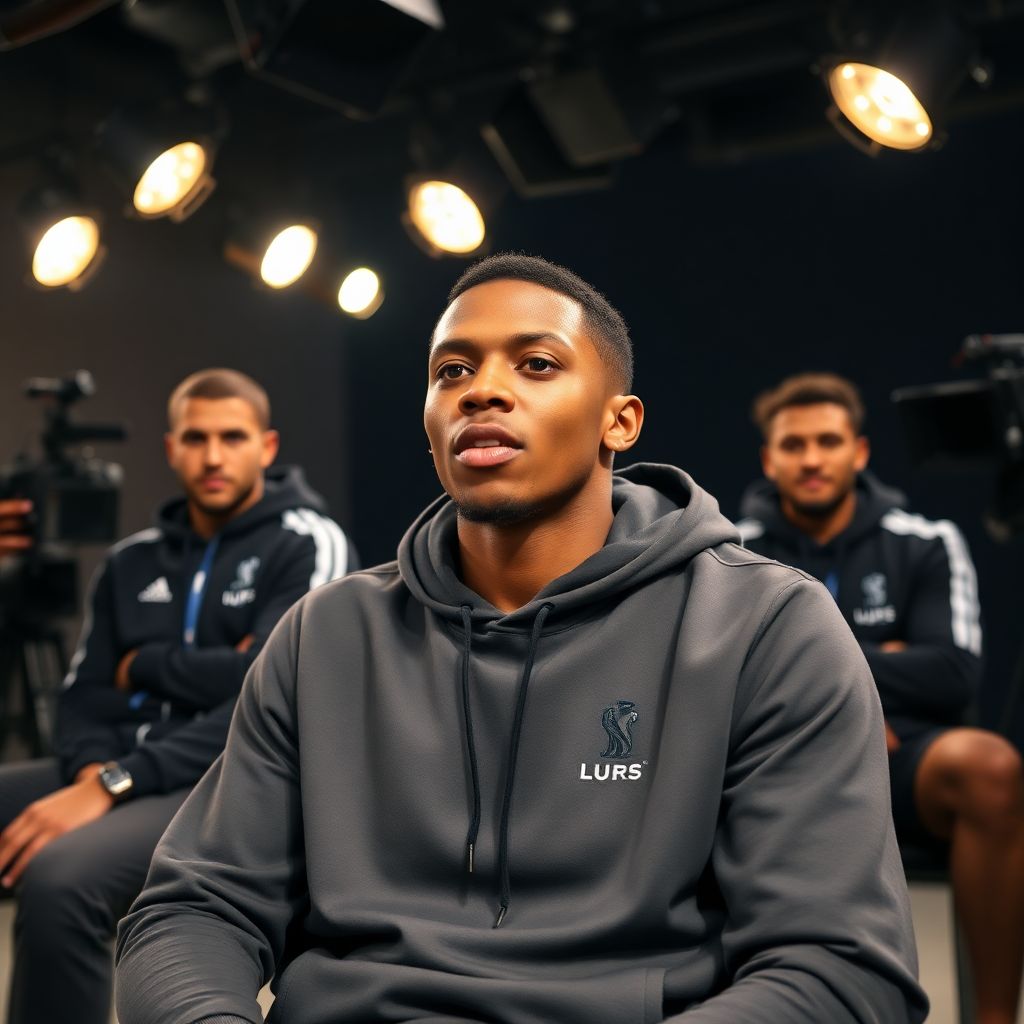
Kylian Mbappé has spoken with unusual frankness about the hidden weight of fame, the toll of constant scrutiny and the moment he genuinely considered stepping away from the French national team. Appearing on a show alongside teammates Achraf Hakimi and Aurélien Tchouameni, the French star abandoned his usual reserved tone and answered questions with disarming honesty.
One of the first topics Mbappé tackled was his strained relationship with interviews and the media. He admitted that he has grown tired of the way post‑match questions are framed and the pressure that comes with every word he says. According to him, interviews often turn into a psychological duel rather than a simple conversation.
“Journalists try to push you into saying things you don’t want to say, and you resist because you don’t want to give them exactly what they’re looking for. It’s like being in a boxing ring,” he reflected, describing a constant battle to stay in control of his own narrative.
Mbappé also addressed one of the most common criticisms directed at him: his defensive work rate. He did not try to deny that he defends less than many other players in his position. Instead, he acknowledged the reality and explained why he believes it is sometimes a necessary trade‑off.
“Yes, I defend less than others,” he conceded. “But when I do track back, it’s really impactful. At Real Madrid, when I commit to that effort, I feel the rest of the team respond as well. It becomes a collective signal.” He added that such criticisms do not unsettle him and he has learned to live with the expectations that surround his role on the pitch.
The most striking part of the conversation came when Mbappé revisited the painful memory of Euro 2021, when France were eliminated by Switzerland and he missed the decisive penalty in the shootout. That moment triggered a deep personal crisis and made him question his place with the national team.
“I had put France in a very special, almost sacred place in my life,” he said. “But after missing the penalty, I received a wave of insults. I started asking myself: ‘Are these really the people I’m fighting for on the field?'”
He described those weeks after the tournament as a dark period, using the expression “living like a dead man” to capture the emotional numbness he felt. Coming off the high of winning the 2018 World Cup and being hailed as one of the faces of a new generation, he suddenly found himself at the heart of a national disappointment. The fall from the summit to a brutal low was abrupt, and it left him doubting whether continuing with the national team still made sense.
In that fragile moment, Mbappé seriously considered ending his international career. He revealed that he spoke directly with the president of the French Football Federation and was completely transparent about his doubts. He explained that he no longer wanted to play for the national team under those circumstances, feeling betrayed by parts of the public that had turned on him so aggressively. The response he received, however, helped change his mind and convince him not to walk away. Although he did not repeat the exact words, he made it clear that this conversation was key in bringing him back from the brink.
His reflections also touched on how much the modern game is shaped by social media, where a single missed penalty can trigger a storm of abuse in seconds. For a player who has grown up in the digital era, Mbappé is acutely aware that every mistake lives forever in clips, memes and comments. He hinted that the volume and intensity of the reactions after Euro 2021 went beyond ordinary football criticism and reached a deeply personal level, forcing him to rethink his relationship with the fans and the shirt he wears.
At the same time, Mbappé stressed that the national team remains one of the great honors of his life. The very fact that he thought about leaving shows, in his eyes, how wounded he was by the backlash. Returning, he suggested, was not just a professional decision but a choice to keep believing in the idea of representing his country, despite knowing that admiration can quickly turn into hostility. This awareness has changed the way he looks at pressure: he no longer expects universal love, but demands consistency from himself.
Beyond the heavy themes, the program also found space for lighter moments, revealing another side of Mbappé away from the stadium. One of the funniest anecdotes came when he spoke about getting his driving license. He admitted that the process in Paris was complicated, attracting attention and making things more difficult. Eventually, he chose to complete it more discreetly in Madrid, avoiding the spotlight.
When Tchouameni jokingly suggested he must have “paid his way through” the exam, Mbappé laughed and fired back: “If you drive well, you pass.” The story showed the strange reality of being a global star in your early twenties: even learning to drive becomes a public event.
These glimpses into his private life fit with a broader picture Mbappé painted of himself during the conversation – a player who is constantly balancing enormous expectations with a desire for a normal life. He spoke indirectly about how fame can isolate, how simple activities require planning to avoid crowds, and how crucial it is for him to surround himself with a close circle of trusted friends and family to stay grounded.
His comments about defending less than others also highlight a tactical debate that has followed him throughout his career. In modern football, even the most gifted attackers are expected to press, chase and close down space. Mbappé’s view is that his energy must be managed carefully over 90 minutes, so that he can be decisive in the final third. He hinted that at Real Madrid the balance feels right, with teammates willing to absorb certain defensive tasks so he can explode in key moments, while still stepping up when the team truly needs him to press.
Mentally, the missed penalty appears to have been a turning point. Mbappé explained that failure at such a visible stage forces you to grow quickly or collapse under the weight. For him, the European Championship exit eventually became a source of strength. It taught him that even the best players in the world are not defined by a single kick of the ball but by how they respond afterward. The decision not to quit the national team, in that sense, became a personal statement of resilience.
He also gave the impression of a player who is increasingly aware of his role beyond football. Mbappé understands that every statement, every gesture, every reaction sets an example for younger players watching him. By admitting he considered leaving and then choosing to stay, he indirectly addressed themes of mental health, pressure and vulnerability in elite sport. Rather than hiding his doubts, he put them into words, showing that even global icons struggle with internal battles.
Looking ahead, his bond with the French national team seems to have been reshaped rather than broken. The innocence of the early years, when everything felt like a dream after the 2018 World Cup, has gone. In its place stands a more mature, perhaps more guarded version of Mbappé, one who has seen both adoration and hostility and decided to keep playing anyway. That choice, made after long reflection and difficult conversations, might ultimately define his legacy as much as his goals and trophies.
In the end, his confession “I wanted to leave the national team” is less a dramatic headline and more a window into the human side of a footballer living under constant pressure. It reveals a young man learning to navigate fame, criticism and expectation, trying to protect his own sanity while still carrying the hopes of a nation. And if his words are any indication, the Mbappé that steps onto the pitch for France now does so with clearer eyes, thicker skin and a deeper understanding of what it truly means to keep going when walking away once felt like the easier option.