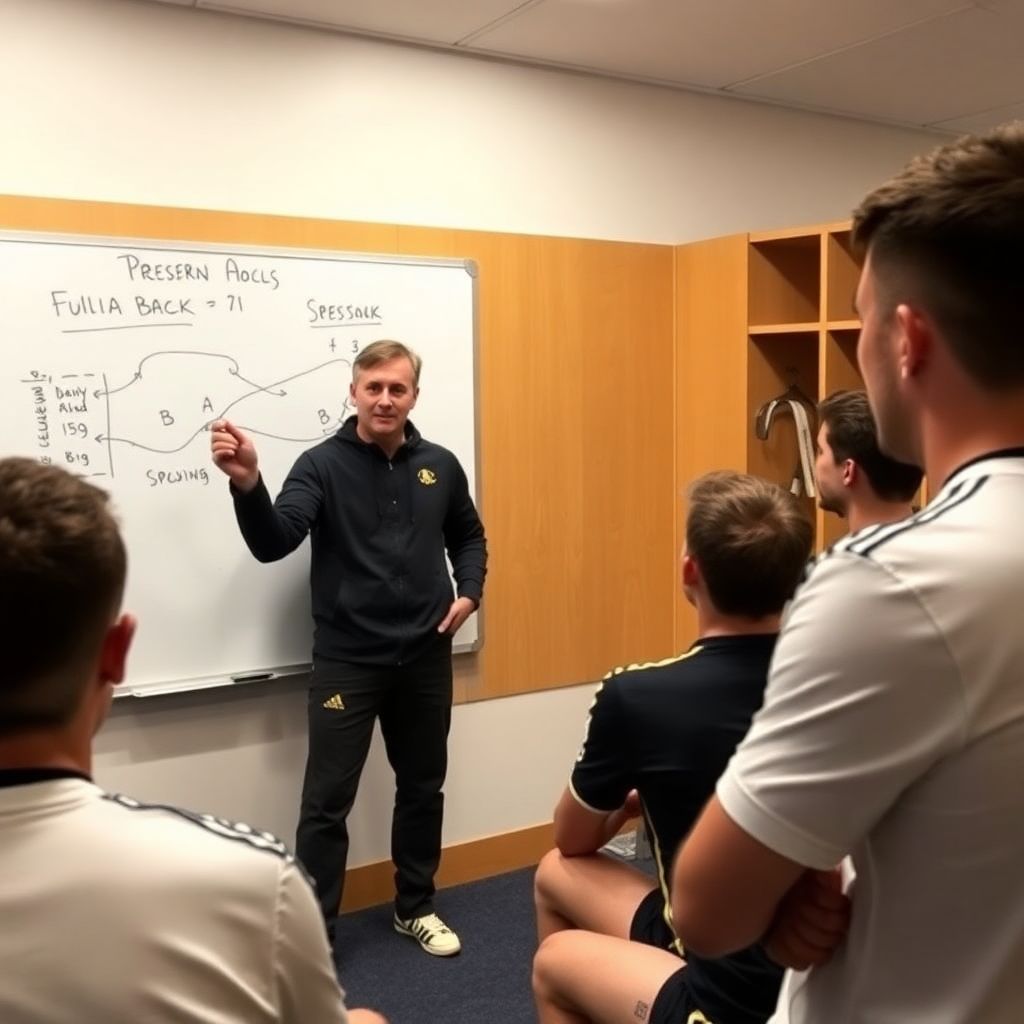
Modern Süper Lig tactics are shifting from rigid 4-4-2 to fluid 4-3-3 and hybrid systems, demanding better spacing, pressing and role clarity. The most frequent coaching errors are poor staggering, vague pressing rules, misused full-backs and wrong player profiles. Quick prevention comes from clearer principles, small-sided pattern work and ruthless video feedback.
Core Tactical Concepts in the Süper Lig
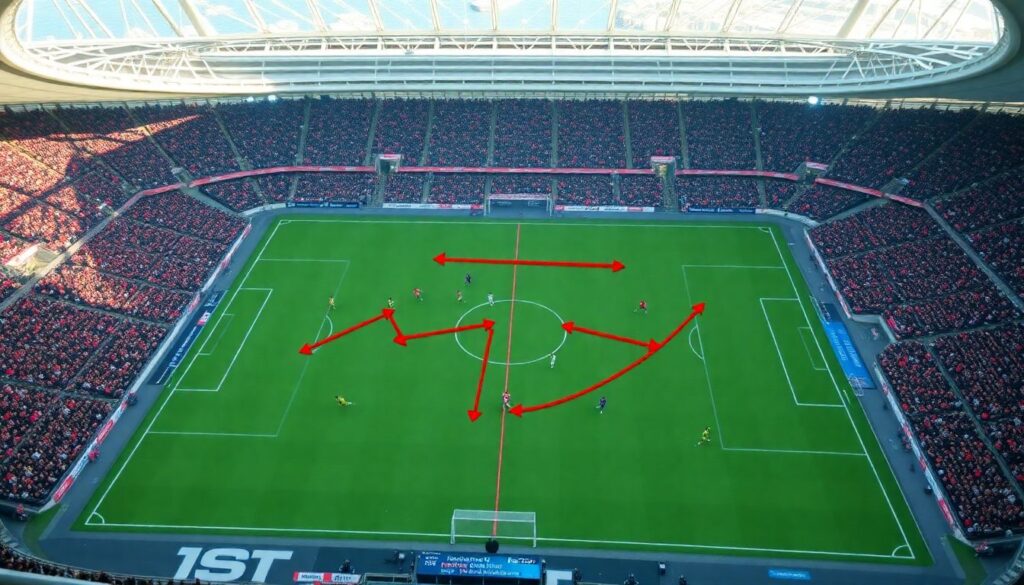
- The classic 4-4-2 struggles against modern build-up structures and half-space occupation common in the Süper Lig.
- Most successful sides use flexible 4-3-3 or 4-2-3-1 with clear positional play and role-specific automatisms.
- Pressing and counter-pressing quality now decides many Istanbul derbies and mid-table clashes.
- Asymmetric backlines and inverted full-backs help protect transitions but demand precise coaching.
- Wide play has moved from simple crosses to dynamic overloads and underlaps, especially against low blocks.
- Fast error correction relies on video, clear language, and targeted drills rather than whole-team lectures.
Why the Classic 4-4-2 Declined: Structural and Contextual Drivers
The traditional 4-4-2 gave the Süper Lig clear roles and vertical threat, but it leaves critical spaces open in modern football. Double sixes, interior eights and inverted wingers in 4-3-3 and 4-2-3-1 exploit the half-spaces that 4-4-2 wide midfielders struggle to protect consistently.
Against back three build-ups and dropping pivots, two forwards often get outnumbered, while flat midfield lines cannot simultaneously press and screen between the lines. Locally, imported coaches and players, plus detailed Super Lig tactical analysis 2024 materials, accelerated this shift by exposing these structural weaknesses every matchday.
The main coaching error is trying to “modernise” a 4-4-2 only with instructions (“press higher”, “keep the ball”) without correcting its geometry. Lines remain flat, distances too long, and central overloads against you persist. The quick fix is to add a third midfielder or a false winger to close the inside channels.
| Aspect | Classic 4-4-2 | Modern Systems (4-3-3 / 4-2-3-1) |
|---|---|---|
| Base structure | Two straight lines of four, two strikers on same line | Staggered three-man midfield, flexible front three lines |
| Key strengths | Simple roles, direct counter-attacks, box presence | Central overloads, better pressing angles, flexible build-up |
| Typical weaknesses | Exposed half-spaces, overloads vs pivot, flat pressing lines | Complexity, higher cognitive load, reliance on intelligent eights/wingers |
| Player profiles | Two penalty-box strikers, straight-line wingers, box-to-box eights | Hybrid winger-10s, playmaking six, dynamic full-backs |
| Training focus | Crossing & finishing, basic pressing, running power | Positional games, pressing triggers, rotations, build-up patterns |
| When viable in Süper Lig | As low/mid block with strong centre-backs and aggressive target pair | For proactive teams wanting consistent dominance in ball and territory |
Mini case-study (Istanbul): A 4-4-2 side facing a big club’s 4-2-3-1 conceded repeated “third man” runs as its double pivot got stretched laterally. The quick in-season fix was switching a striker into a clear number 10 role out of possession, creating a 4-4-1-1 and sealing the pivot.
Possession Upgrades: 4-3-3 Variants and Positional Play Adaptations
Modern 4-3-3 in the Süper Lig is less about a fixed shape and more about principles: occupying five vertical lanes, staggering heights, and ensuring at least one free player between the opponent’s lines. The danger is copying elite patterns without considering your players’ technical level and decision-making speed.
- 3+1 or 2+1 base in build-up – Either a full-back tucks in to form a three, or a six drops to make a 2+1. Quick prevention of errors: always define who forms the first line versus high press; do not leave this to “intuition”.
- Interior eights in the half-spaces – They must receive on the half-turn, not back to goal. Common mistake: eights standing on the same horizontal line as wingers, killing passing lanes. Fix this with strict height rules in rondos and half-space positional games.
- Wingers’ width versus underlaps – In many Süper Lig games, wingers come too early inside, blocking eights. Simple rule: winger stays wide until the ball reaches the full-back or the near-side eight. Then he can attack inside.
- False nine or fixed striker – Dropping striker without coordinated wide runs only crowds midfield. Quick solution: whenever nine drops, the far winger attacks depth; coach it as a fixed pattern three times a week.
- Backwards support and rest defence – Full-backs bombing forward together leave counters open. Prevent this by defining “one goes, one guards” and constantly tracking your rest-defence line in video.
- Role clarity from 4-4-2 to 4-3-3 – Many Turkish players learned in 4-4-2; they need explicit education on new roles. Using materials similar to football coaching courses modern tactics 4-4-2 to 4-3-3, hold short classroom sessions supported by clips from your own matches.
Mini case-study (Anatolia): A mid-table club adopted 4-3-3 but kept both eights level with the six. Build-up stagnated and turnovers rose. In one international break, they re-coached the left eight to stay one line higher and the right full-back to invert. Result: cleaner exits and fewer central losses.
Pressing Mechanics: Counter-pressing, Triggers and Transition Templates
Pressing in the Süper Lig used to mean “run hard and close down the ball”. Now, top teams script where they want to steal the ball, choosing between mid-block traps and high regains. Counter-pressing after loss is a non-negotiable, especially against quick transition sides.
- High press vs back three – Common mistake: pressing man-to-man without cover, leaving simple “wall passes” into midfield. Quick fix: angle your wide forwards to block inside, forcing play to the wing-back before jumping.
- Mid-block pressing trap – Many teams say they use traps but never define them. Decide: Do you trap into the full-back, the weak-foot centre-back, or the pivot? Script your pressing triggers in four to five clear cues.
- Counter-pressing around the ball – Players often fall back automatically instead of attacking the moment of loss. To correct this, forbid backward runs for two seconds after losing the ball in training games.
- Cover and access balance – Aggressive eights overjump and open passes behind them. Counter this by assigning a “pressing side eight” and a “cover side eight” with different rules.
- Goalkeeper involvement – Modern presses target keepers with weaker feet. Avoid naive all-out sprints by setting a pressing line and a maximum distance for the striker from the ball.
Scenario 1 (home favourite): Your team presses high in a derby, chasing the opponent’s left centre-back. He calmly bounces the ball inside to the pivot every time. You adjust at half-time: winger closes his inside, striker curves to block the pivot, and eight jumps on the full-back. Turnovers move from central zones to the sideline.
Scenario 2 (away underdog): You set a mid-block and call for counter-pressing, but players drop to the box after every loss. Within one week you change language: use “three-second hunt” as a cue and build a small-sided game with points only for ball recovery within three seconds in the same zone.
Defensive Remodeling: Asymmetric Backlines and Compactness Strategies
Asymmetric backlines (one full-back inverts, the other overlaps) help balance modern attacking risk with defensive stability. The danger is over-complication: players forget their reference points and spacing collapses. Compactness now depends more on distances and staggering than on whether you nominally defend in a four or a five.
In Süper Lig, late-game chaos, noisy stadiums and emotional swings amplify small spacing errors. When one full-back tucks in too deep or the weak-side winger sleeps, the whole block tilts. Rapid prevention comes from a short set of non-negotiable “anchors”: maximum line height, line spacing, and where the block must end on the wings.
Upsides of asymmetric and compact defensive structures
- Better central protection against playmaker tens and half-space dribblers.
- More players around the ball when it is lost, improving counter-pressing chances.
- Ability to overload the ball side while keeping a spare defender for long clearances.
- Clear roles for aggressive versus conservative full-backs, suiting mixed squads.
- Easier transitions into three-at-the-back shapes without formal formation changes.
Limitations and fast failure-prevention tips
- High cognitive load: In loud away games, complex rules break. Reduce to two clear cues per line (“step on pass”, “drop on long ball”).
- Weak-side exposure: Common error is the far full-back staying too wide. Train him to stay connected to the nearest centre-back by a fixed arm’s-length reference (visually, not literally measuring).
- Over-defensive inversion: Inverted full-back standing next to the six but never joining attacks leaves you pinned back. Assign him clear timing to step forward once the ball passes the halfway line.
- Back-five collapse: Teams accidentally sink into a back five when wingers drop too deep. Fix this by requiring wingers’ starting position to be in line with central midfield in settled defence.
- Misfitting profiles: Forcing slow, aerially strong full-backs inside creates pressing traps against you. Better to keep them classic and invert a more mobile teammate.
Mini case-study (title challenger): A contender inverted both full-backs in possession but did not adjust the wingers. The shape became a narrow 2-4-4 with no width, losing every second ball. Within two matches they fixed it by holding one full-back wide and only inverting the ball-near side.
Wide Play Reimagined: Inverted Full-backs, Wide Pivots and Overloads
Modern wide play in the Süper Lig revolves around rotations: winger inside, full-back underlapping or overlapping, and an eight sliding wide. Mis-timed, these rotations create congestion and counters. Corrected, they generate the clean cutbacks and far-post runs that decide tight games.
- Myth: “Inverted full-backs always improve possession.” They help if your winger can hold width and your six can cover transitions. Quick test: if your winger constantly drops back to the touchline to receive, inversion is hurting, not helping.
- Myth: “Overloads win by themselves.” Overloading the flank without a clear exit route (switch or underlap) just attracts opponents. Train wide overloads with a rule: you must finish with a central shot or far-side finish within five seconds.
- Mistake: Wingers playing on the wrong foot just for fashion. Inverted wingers who cannot cross with the weaker foot become predictable. Simple preventative step: set a weekly weaker-foot crossing block for all wide players.
- Mistake: Full-backs running on the same line as wingers. This flattens your attack and forces hopeful crosses. Correct by coaching three fixed lanes: touchline, half-space, and corridor between full-back and centre-back.
- Myth: “Cross count equals wide effectiveness.” Modern analysis, especially on the best Super Lig analysis sites for tactics, shows shot quality matters more than cross volume. Track how many crosses end in controlled finishes, not just raw numbers.
Mini case-study (relegation fight): A struggling team simply “crossed more” in training, but their xG from crosses barely moved. They changed the task: only cutbacks or far-post crosses counted. Within weeks, wide players started delaying runs and choosing better angles, reducing blocked crosses sharply.
From Theory to Pitch: Drills, Matchday Checklist and Implementation Table
Turning ideas into stable habits requires short, focused exercises that connect directly to match behaviours. You do not need to redesign your whole training week; instead, insert targeted 10-15 minute blocks that repeat key pictures players will see in real Süper Lig games.
Targeted drills to fix common tactical errors
- 4-3-3 build-up & half-space game (20x25m)
Organise 7v5: back four, six, and one eight versus front three and two midfielders. Objective: progress ball through the eight in the half-space. Constraint: no vertical pass allowed if eight is on same line as winger. This punishes flat positioning and rewards staggering. - Three-second counter-press game (two 25x20m zones)
Play 6v6+2 neutrals. When a team loses the ball, they have three seconds to win it back in the same zone for double points. This conditions forwards and eights to react forward instead of retreating automatically. - Wide overload to cutback pattern
Use one flank and a box in the half-space. Full-back, winger, and eight attack 3v2. They must create a cutback or far-post cross within five seconds of entering the final third. Rotate sides and roles to coach timing and lane separation. - Compactness and line-spacing wave drill
Set two defending lines (back four and midfield four) versus a coach-led attacking wave. Attackers play from side to side; defenders shift as a unit, keeping fixed vertical distance between lines. Blow the whistle randomly and check spacing; repeat until it becomes automatic.
Concise matchday tactical checklist
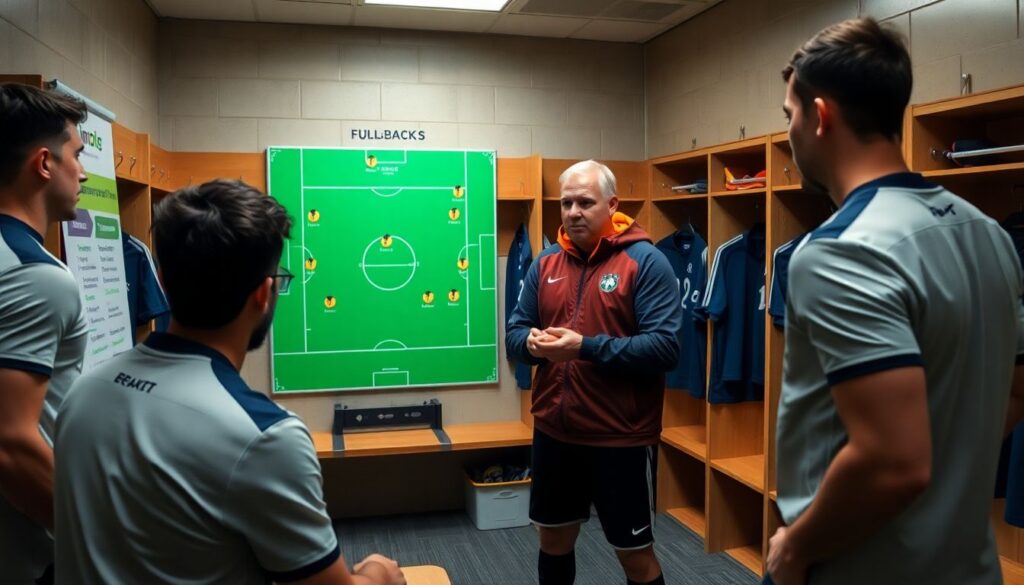
- Define, in the dressing room, your pressing height, pressing triggers, and who calls the press.
- Remind eights and wingers of their exact lane and height in build-up and against low block.
- Clarify which full-back can invert or overlap first and who stays for rest defence.
- Agree on where you want to win the ball (wing, half-space, or central) and who attacks the first pass after regain.
- Set two in-game “micro-adjustments” you will use if pressing or build-up fails in the first 20 minutes.
- Assign one staff member to track distances between lines and wide overload effectiveness with basic Super Lig match analysis and statistics tools.
Implementation focus table for 4-4-2 to modern systems
| Area | Typical 4-4-2 Problem | Modern-System Fix | Main Drill | Coaching Cue |
|---|---|---|---|---|
| Central overloads | Outnumbered around pivot, easy progression for opponent | Add third midfielder or dropping nine to form 4-3-3 / 4-2-3-1 | 4-3-3 build-up & half-space game | “One more inside than they have” |
| Pressing coordination | Forwards press alone, big gaps behind them | Clear pressing triggers and cover roles for eights | Three-second counter-press game | “Press together, or don’t press” |
| Wide rotations | Full-back and winger on same line, easy to defend | Lane-based roles: wide, half-space, underlap | Wide overload to cutback pattern | “Never share the same lane” |
| Block compactness | Lines too far apart, ten receives freely | Defined maximum line spacing and anchors | Compactness and line-spacing wave drill | “Stay close enough to talk, not shout” |
Mini case-study (using data & betting context): A staff analysing Super Lig predictions and betting tips noticed that their team consistently underperformed expected goals after conceding first. By cross-checking with Super Lig match analysis and statistics tools, they saw a pattern of losing compactness when chasing games. The next month’s micro-goal was simple: never let the back line drop below the top of the box unless the ball is inside it.
Coaching Practical Queries
How do I start modernising a 4-4-2 without confusing my players?
Begin with out-of-possession tweaks: turn your second striker into a ten in defence (4-4-1-1) and give one winger clear instructions to move inside when you win the ball. Only later add full 4-3-3 rotations once players feel secure.
What is the quickest way to improve our pressing organisation?
Define one or two simple triggers (back pass, poor first touch) and rehearse them in small-sided games with clear scoring rewards for regains. Film 10-minute blocks and review with players immediately so they see correct and incorrect distances.
How often should I train wide overloads and cutbacks?
Twice per week is usually enough if exercises are specific and intense. Integrate them into your finishing sessions instead of running them as isolated crossing drills with no defenders.
Do I need advanced data to copy top Süper Lig tactical trends?
No, but you should at least track where you win and lose the ball, and how your chances are created. Free or low-cost platforms plus the best Super Lig analysis sites for tactics provide enough basic insights for most clubs.
How can I align our training with what bettors and analysts expect from us?
Use Super Lig tactical analysis 2024 style reports to see how external observers describe your strengths and weaknesses. If their view differs from your internal perception, review video with staff and adjust your weekly focus accordingly.
Are formal coaching courses essential to manage the 4-3-3 transition?
Formal education helps with structure and terminology, especially football coaching courses modern tactics 4-4-2 to 4-3-3, but day-to-day clarity and honest video-based feedback are even more important. Use course ideas as a toolbox, not a strict template.
What if my squad lacks ideal profiles for a modern system?
Prioritise principles over pure shape: staggering, central protection, and clear pressing cues. Adapt roles to players rather than forcing a textbook 4-3-3; hybrid systems such as 4-2-3-1 or 4-4-2 diamond often suit mixed squads better.