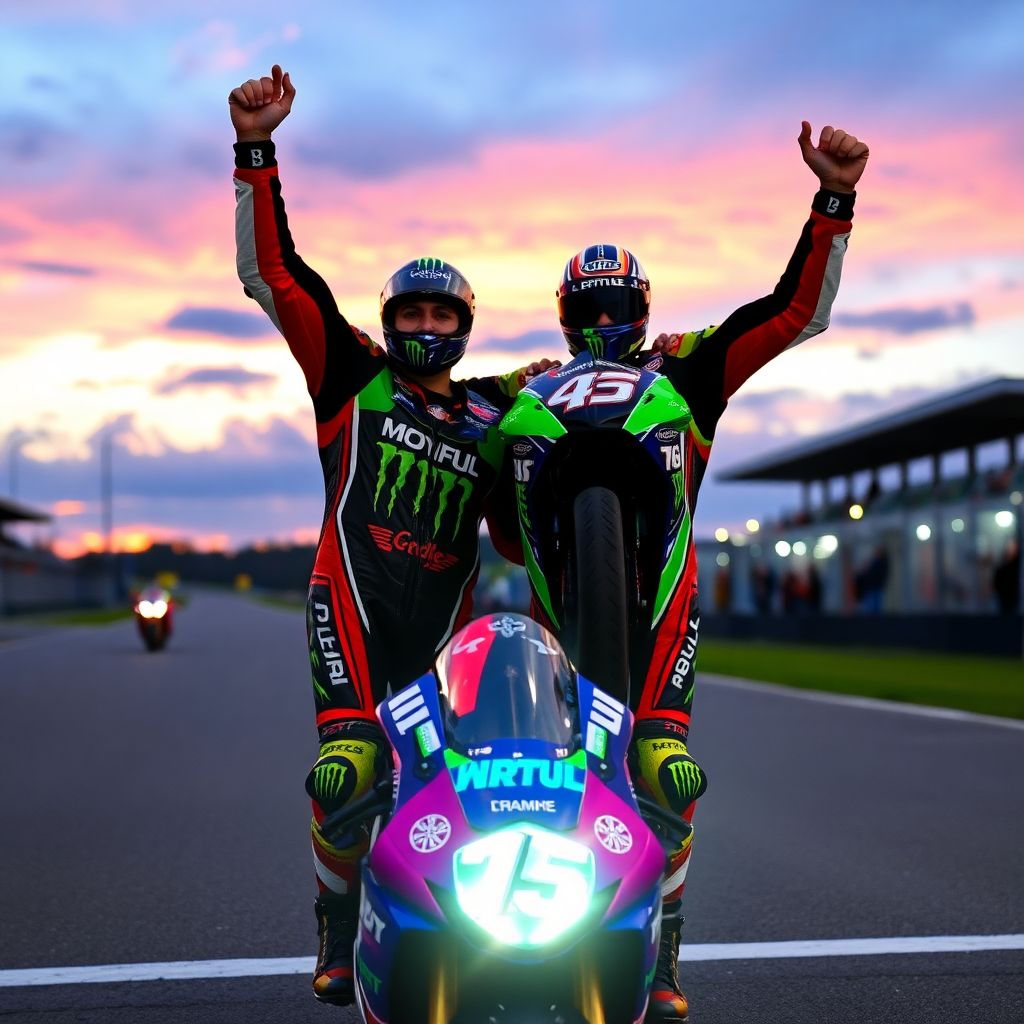
Toprak Razgatlıoğlu scores first-ever MotoGP point in dramatic US Grand Prix
The United States Grand Prix delivered a memorable weekend for MotoGP fans, marking a key milestone in Toprak Razgatlıoğlu’s premier-class journey and showcasing an authoritative victory from Marco Bezzecchi. While Bezzecchi controlled the race at Austin from start to finish, Razgatlıoğlu quietly wrote his own piece of history by claiming the first point of his MotoGP career.
The 2026 MotoGP season’s visit to the Circuit of the Americas in Austin ended with Italian rider Marco Bezzecchi standing on the top step of the podium. Starting with confidence and maintaining relentless pace throughout the race, he kept his rivals at bay and crossed the finish line as the undisputed winner of the US Grand Prix.
For Turkish motorsport, however, the spotlight was firmly on Toprak Razgatlıoğlu. The national rider began the race from 17th on the grid, facing heavy traffic and a challenging starting position on one of the most demanding circuits of the calendar. Lap after lap, he managed his tyres well, stayed out of trouble, and capitalised on the mistakes and misfortunes of others to climb up to 15th place by the chequered flag.
Finishing 15th secured Razgatlıoğlu a single point in the riders’ standings – a modest-looking number on paper, but a huge psychological boost and a symbolic breakthrough in his MotoGP career. It marked the moment he officially stepped onto the scoresheet in the world’s most prestigious motorcycle racing championship.
At the very beginning of the race, Pedro Acosta snatched the lead and looked ready to dictate the pace. The young Spanish talent made a strong start, using his aggressive style to get ahead in the opening laps. However, Bezzecchi responded quickly, finding his rhythm and overtaking Acosta before firmly establishing himself at the front.
From that point on, Bezzecchi never relinquished control. He managed the gap, preserved his tyres, and avoided unnecessary risks, displaying the maturity of a rider who knows how to convert speed into victory. Every time his rivals tried to close in, he had enough pace in reserve to keep them behind.
In the closing stages, Jorge Martin mounted a determined charge. Lap times began to drop as Martin pushed harder, trimming the gap and forcing Bezzecchi to stay fully focused until the very end. Despite Martin’s late surge, he could not get close enough to attempt a decisive move for the lead. He ultimately had to settle for second place, a strong result but not the win he was chasing.
Pedro Acosta, after his bright start, gradually slipped back into third place as the race unfolded. While he could not defend the lead against Bezzecchi and later Martin, a podium finish still underlined his speed and potential in the premier class. His performance confirmed that he will remain one of the key names to watch as the season progresses.
One of the talking points of the race was Ai Ogura’s impressive rise through the field. The Japanese rider put together an eye-catching charge, overtaking several rivals and hinting at a possible top result. However, his efforts were brutally cut short by a mechanical problem, forcing him to retire and turning a promising afternoon into a frustrating one.
The race also produced its share of incidents and disappointment. Johann Zarco and Joan Mir were both eliminated after separate crashes, reminding everyone once again how fine the margin is between pushing for speed and crossing the limit. Their exits reshaped the midfield battle and opened the door for riders like Razgatlıoğlu to gain positions.
For Toprak, the US Grand Prix will be remembered less for the final classification and more for what it represents: a tangible step forward in adaptation to MotoGP machinery. Coming from production-based championships, adjusting to the braking performance, electronics, and tyre behaviour of a MotoGP bike is a significant challenge. Earning a point at a track as physically demanding and technically complex as Austin is a strong indicator that he is heading in the right direction.
Starting 17th meant Razgatlıoğlu had to be smart from the very first corner. The opening laps in MotoGP can be chaotic, especially in the middle of the pack, where contact and mistakes are common. He avoided the worst of the early traffic, built his pace gradually, and took advantage of retirements and errors ahead of him without losing his composure.
His progress into 15th place was not the result of pure luck. Throughout the race, he maintained consistent lap times, adapted his lines as the grip level changed, and managed the physical strain of the long, technical Austin layout. The combination of endurance, race awareness, and patience proved decisive in securing that crucial point.
From a broader perspective, this first point can act as a turning point for Razgatlıoğlu’s confidence. Entering MotoGP as a proven champion from other categories brings expectations, but success is rarely immediate. Getting onto the scoreboard validates the work of both rider and team, reducing pressure and allowing them to focus more on incremental improvement rather than chasing results at all costs.
It also fuels optimism for the upcoming rounds. With every race, Razgatlıoğlu gains more data, more experience with race starts, tyre wear, and in-race strategy. The ability to understand how the bike behaves over a full race distance is essential for climbing further up the order. If the progress continues at this rate, regularly fighting for points – and later for higher positions – becomes a realistic objective.
The performance in Austin will likely prompt adjustments within his team as well. Engineers and crew chiefs now have a complete race’s worth of competitive data under similar conditions to compare with rivals. This opens the door to refining electronics, chassis balance, and race setups specifically tailored to Razgatlıoğlu’s aggressive yet controlled riding style, which has been his trademark in other championships.
For Turkish fans, seeing their national rider score in MotoGP carries an emotional dimension. It strengthens interest in motorcycle racing at home and can inspire a new generation of riders to pursue international careers. The presence of a competitive Turkish athlete at the pinnacle of the sport also shines a spotlight on the country’s growing motorsport culture and infrastructure.
Looking towards the rest of the season, consistency will be key. Transforming occasional points into regular top-15 finishes, then targeting the top 10, is the usual development path for riders new to MotoGP. Razgatlıoğlu’s ability to learn quickly, combined with his proven racecraft from previous categories, suggests that his first point may be just the beginning of a steady upward trajectory.
Meanwhile, at the front of the championship picture, Bezzecchi’s triumph in the US Grand Prix could play an important role in the title battle. Winning at a circuit that tests braking, acceleration, and rider fitness sends a clear message to his competitors: he has both the speed and the race management skills to fight for the championship over the long haul.
Jorge Martin’s second place and Acosta’s podium mean that the top of the standings remains tightly contested. Each race is now gaining extra importance, with every podium, every retirement, and every mistake potentially swinging momentum from one contender to another. The US GP result will be dissected by all leading teams as they search for advantages going into the European leg of the season.
The next chapter of this evolving story will be written in Spain, where the next MotoGP round is scheduled for 26 April. The return to European tracks traditionally marks a new phase of the season, with teams introducing technical updates and riders feeling more at home on familiar circuits. For Bezzecchi, it is an opportunity to consolidate his form; for Martin and Acosta, a chance to strike back.
For Toprak Razgatlıoğlu, the Spanish race represents the next test in his adaptation process – and a chance to prove that his first MotoGP point in Austin was not a one-off, but the start of a sustained rise through the field.