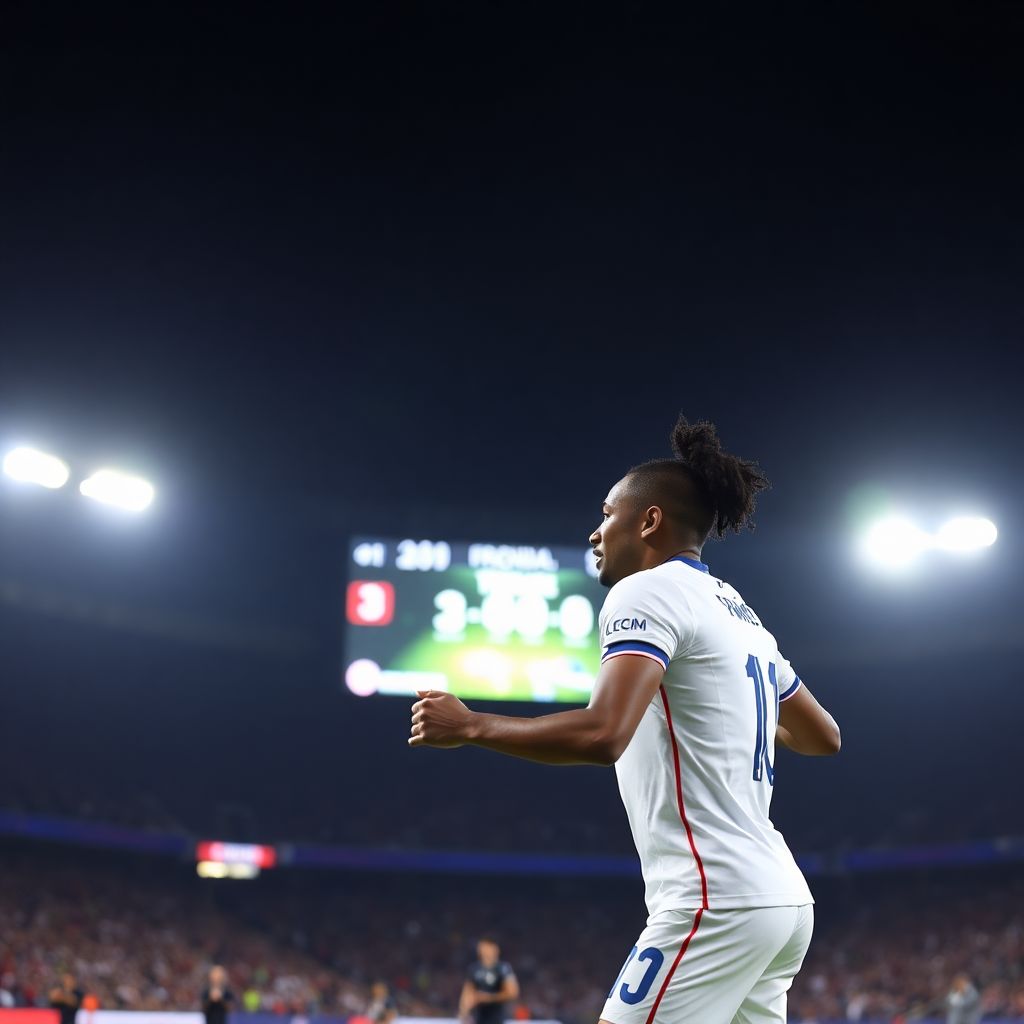
France outclass Colombia in US friendly as Doue brace leads 3-1 win
France signed off their latest international window in style, defeating Colombia 3-1 in a high‑tempo friendly played at Northwest Stadium in the United States. A clinical brace from teenage talent Desire Doue and a composed finish from Marcus Thuram secured the victory for Didier Deschamps’ side, while Jaminton Campaz produced Colombia’s only reply in the second half.
The match brought together two ambitious national teams fine‑tuning their squads ahead of the 2026 FIFA World Cup. From the first whistle, France imposed their rhythm, pressing high and forcing Colombia into rushed clearances and misplaced passes. Deschamps chose a lineup mixed with experienced names and emerging stars, and that blend of maturity and youthful energy quickly paid off.
A notable subplot before kick‑off was the presence of two players familiar to Turkish football fans: N’Golo Kante, currently at Fenerbahçe, started in France’s midfield, and Galatasaray defender Davinson Sanchez marshalled Colombia’s back line. Both were named in the starting XI, underlining their continued importance at international level despite playing their club football away from Europe’s traditional top five leagues.
France’s breakthrough came in the 29th minute. After sustained pressure around the Colombian penalty area, the ball fell to Desire Doue, who seized his moment with the composure of a seasoned veteran. Exploiting a brief lapse in Colombia’s defensive structure, he found space on the edge of the box and drove a precise shot beyond the goalkeeper to make it 1-0. The goal reflected France’s growing dominance in midfield and their ability to turn possession into clear‑cut chances.
Colombia, shaken by the opener, tried to respond through quick transitions and direct balls towards their forwards, but they struggled to link midfield and attack. France, meanwhile, refused to let the tempo drop. In the 41st minute, their control was rewarded again. Marcus Thuram, constantly on the move across the front line, found a pocket of space in the area. Timing his run perfectly, he met a service into the box and calmly finished to double the lead at 2-0.
Heading into the dressing rooms, France held a comfortable advantage and, more importantly, looked in complete control of the game’s rhythm. Colombia had not been entirely passive-there were occasional forays down the flanks and a couple of half‑chances from distance-but they lacked precision in the final third.
After the restart, Colombia attempted to inject more urgency and pressed higher up the pitch. Yet this change of approach also left more space behind their defensive line, and France punished them ruthlessly. In the 56th minute, Doue struck again. Exploiting a defensive gap, he burst into the danger zone and finished clinically to stretch the scoreline to 3-0. His second goal of the night confirmed him as the standout performer and highlighted why he is increasingly viewed as one of France’s brightest young prospects.
At 3-0, Deschamps could afford to rotate his squad and test different combinations without losing control. He adjusted the tempo, giving France periods of patient possession interspersed with sudden bursts forward. Colombia, however, refused to fold completely. As the French intensity dipped slightly, Néstor Gabriel Lorenzo’s men began to find more joy in wide areas and in between the lines.
Their persistence eventually paid off in the 77th minute. Jaminton Campaz, who had been one of Colombia’s more active attacking outlets, capitalized on a rare moment of disorganization in the French defense. Reading the play sharply, he found himself in a favorable position and converted to reduce the deficit to 3-1. Although the goal did not fundamentally threaten France’s victory, it restored some pride for Colombia and rewarded their late push.
The final minutes saw a more balanced contest, with both teams trading attacks but without further changes to the scoreline. France managed the closing stages with professionalism, slowing the game when needed and avoiding unnecessary risks. When the referee blew for full time, the scoreboard confirmed a deserved 3-1 triumph for Les Bleus.
This result crowns a perfect international window for Deschamps’ side. Earlier, they had edged past Brazil 2-1, meaning France leave the break with two wins from two against South American opposition. Beyond the raw results, the performances offered valuable information: the depth of the squad, the rise of younger players like Doue, and the continuing influence of experienced figures such as Kante.
For Colombia, the international period painted a far less positive picture. Lorenzo’s team had already fallen to Croatia and now end this window with two defeats in two games. The back‑to‑back losses highlight issues that must be resolved quickly: defensive concentration, balance in midfield, and a more coherent attacking structure. While friendly matches do not carry the pressure of competitive tournaments, they are important indicators of readiness, and Colombia’s recent results signal that there is substantial work ahead.
Looking toward the World Cup build‑up, both sides already have their final pre‑tournament plans mapped out. France will complete their preparations for the 2026 FIFA World Cup with a fixture against Ivory Coast on 4 June. That match is expected to serve as a last major test of tactics and personnel before Deschamps locks in his final squad decisions. Competition for places is fierce, and performances in these friendlies could be decisive for several players on the fringes.
Colombia’s schedule is similarly busy. They are set to face Costa Rica on 29 May and Jordan on 7 June as part of their own run‑up to the global showpiece. These encounters will offer Lorenzo opportunities to experiment with formations, evaluate alternatives in key positions, and rebuild confidence after a difficult window. The coaching staff will likely focus on tightening defensive organization and improving the team’s effectiveness in transition.
Beyond the scoreline, this France-Colombia clash offered a clear snapshot of where both teams stand. France looked like a mature, well‑structured side with defined automatisms: rapid ball circulation, coordinated pressing, and clear roles for each line of the team. The presence of a deep, versatile bench allows Deschamps to rotate without significantly weakening the side, an asset that becomes crucial in long tournaments.
Colombia, by contrast, showed glimpses of individual talent but less cohesion as a collective. Campaz’s goal and some energetic moments in attack suggest there is enough quality to trouble strong opponents, but the consistency and discipline required at top international level are still not fully there. If they can address these gaps in the coming months, Colombia could still arrive at the World Cup as a dangerous outsider.
Individually, several players strengthened their cases. Doue’s brace will inevitably draw headlines, positioning him as a serious candidate for more minutes in competitive fixtures. Thuram’s goal and work rate underlined his ability to operate both as a central striker and drifting into wide spaces, giving France tactical flexibility. Kante once again demonstrated his reading of the game in midfield, breaking up Colombian moves and launching transitions, proving he remains highly relevant for the national team setup.
From Colombia’s perspective, Campaz’s lively display was a rare bright spot, suggesting he may become a more regular figure in Lorenzo’s plans. Davinson Sanchez, despite the difficult evening for his defensive unit, remains a key leader at the back, and the coaching staff will look to build a more stable structure around him.
In a broader sense, this friendly confirmed that France approach the 2026 World Cup cycle among the leading contenders, equipped with experience, depth, and fresh talent. Colombia, meanwhile, are still in the process of refining their identity and structure, using matches like this as reference points for what must improve. The 3-1 scoreline in the United States may not carry competitive weight, but it provides valuable lessons-and a clear benchmark-for both national teams as they count down to the world’s biggest stage.