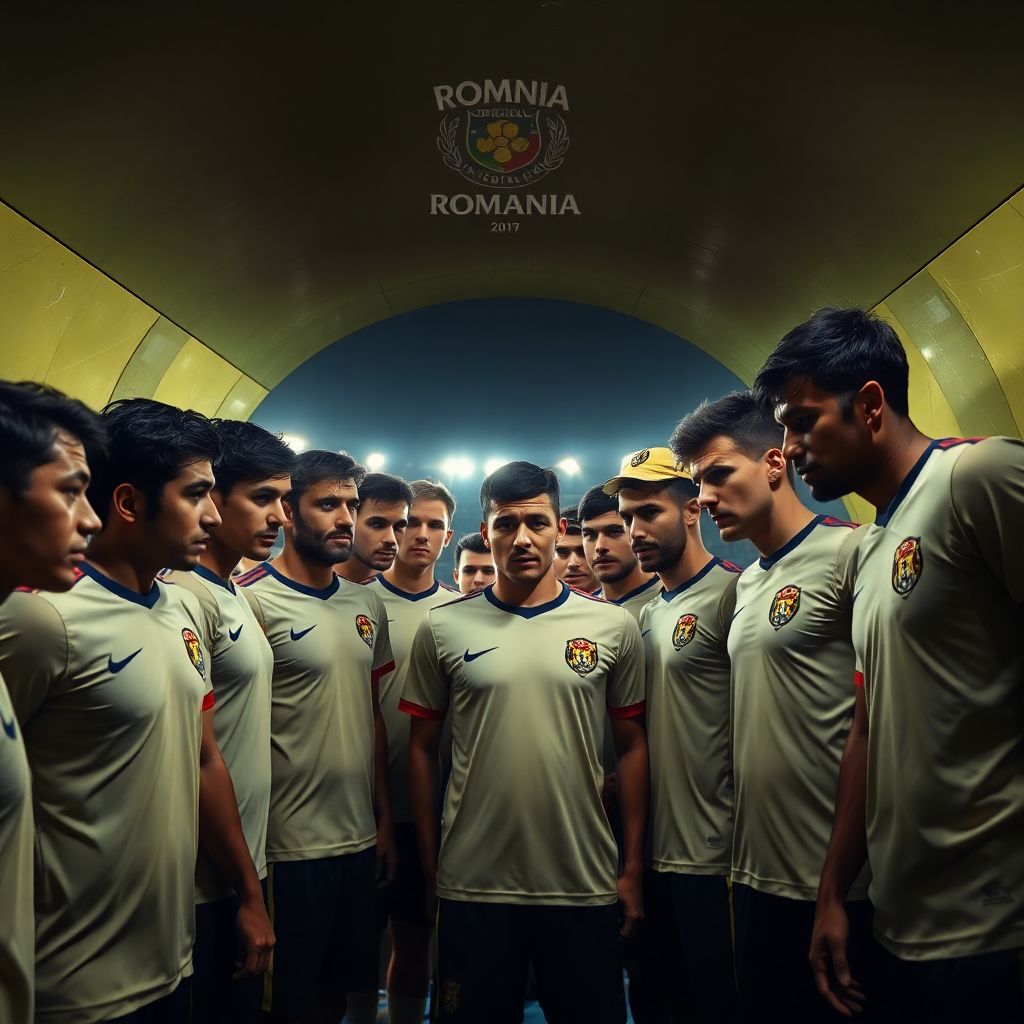
Standout Romanian Players Ahead of the World Cup Play-Off Clash
As the national team prepares for a do-or-die play-off semi-final on the road to the 2026 FIFA World Cup, all eyes turn to Romania, a rival with both a rich footballing past and a long-standing World Cup drought. The match will be played in a single-leg knockout format: the winner will face the victor of the Slovakia-Kosovo tie away from home, with a World Cup ticket on the line in the play-off final.
Romania comes into this phase driven by a desire similar to that of the national side: to put an end to years of frustration. “Tricolorii” have not appeared at a World Cup since 1998. They fell at the play-off stage in both 2002 and 2014, and now, under the guidance of Mircea Lucescu, they aim to finally close a 28-year gap and return to football’s biggest stage.
Their path to the play-offs already shows two contrasting faces. Romania marched through the Nations League campaign without a single defeat, securing their play-off spot through consistent, organised performances. Yet, in the standard qualifying group they could not maintain the same stability and finished only third, underlining how streaky and unpredictable this team can be.
Within this fluctuating collective performance, several individuals stand out through their impact, statistics, and specific roles in Romania’s tactical setup. Names like Ianis Hagi, Dennis Man and Florin Tanase share much of the attacking responsibility, while players such as Daniel Birligea are capable of delivering surprise contributions off the bench or when called upon. On the left flank, full-back Nicuşor Bancu adds a different dimension, turning what is traditionally a defensive role into one of the team’s main attacking outlets.
Below, we take a closer, more detailed look at the three most eye-catching Romanian players in this squad and how they might shape the play-off clash: Dennis Man, Ianis Hagi and Nicuşor Bancu.
—
Dennis Man: The Engine of Romania’s Transition Game
Dennis Man is arguably the most dynamic component of Romania’s frontline. A regular starter throughout the qualifiers, he began all 8 matches in the first eleven and contributed 2 goals and 1 assist. However, the real value of Man lies far beyond his direct goal involvement. He constantly stays engaged in every phase of play, tracking back, driving forward, and offering passing lanes.
His numbers underline this all-round profile. An 84% pass completion rate is particularly impressive for a winger who frequently attempts risky, vertical actions high up the pitch. With 14 key passes and 9 big chances created in the qualifying campaign, he is not just a finisher at the end of attacks but a genuine creator. He can both deliver the final pass and be on the receiving end of it.
Romania’s transition game is built heavily around Man’s strengths. Whenever the team regains possession, especially in their own half, they seek him early and often. His acceleration and willingness to carry the ball directly towards the opposition’s goal make him one of the primary threats in counter-attacking situations. For defenders, he is difficult to contain because he can cut inside, go down the line, or slip a through ball into the box.
From a tactical standpoint, containing Dennis Man will be crucial. If he is allowed space between the lines or given room to turn and run, Romania can quickly turn defensive phases into dangerous attacking sequences. Pressing him early, doubling up on him near the touchline, and preventing him from receiving with his body oriented towards goal will be key defensive tasks.
—
Ianis Hagi: The Creative Mind That Unlocks Defences
Ianis Hagi, currently playing his club football at Alanyaspor, stands out as Romania’s main creative force in the final third. Even though he featured in fewer qualifiers than some teammates, his efficiency was remarkable: in just 5 matches he recorded 2 goals and 1 assist. Hagi’s influence is most visible in tight spaces, where his quick decision-making and vision can dismantle compact defensive blocks.
Advanced metrics further highlight his all-round attacking contribution. With an expected goals (xG) figure of 1.25 and an expected assists (xA) value of 0.59 in the qualifiers, Hagi demonstrates that he is capable of both finishing and setting up chances at a high level. These numbers suggest that he consistently gets into high-quality shooting positions and also creates promising opportunities for his teammates.
What makes Hagi particularly dangerous is his ability to find pockets of space between the opposition’s midfield and defensive lines. Once he receives the ball in these central or half-space zones, he can dictate the tempo, switch play, or slip incisive passes into channels for runners like Man or Tanase. His technical quality also makes him a threat from distance and on set pieces, adding yet another layer to Romania’s attacking arsenal.
Against the national team, the moments when Hagi picks up the ball facing the goal will likely coincide with Romania’s most threatening attacking phases. Reducing his influence means closing those central spaces, staying compact between the lines, and preventing him from turning freely. Defensive midfielders will have a critical role in shadowing his movements and cutting off passing lanes into his feet.
—
Nicuşor Bancu: Hyper-Active Left Flank and a Double-Edged Sword
At left-back, Nicuşor Bancu is central to how Romania creates width and overloads on the flanks. Although he lines up in a defensive position on paper, in practice he spends large portions of the match advancing into the opposition half. His passing accuracy stands at 81%, impressive for a player who frequently operates near the final third and attempts ambitious balls.
Bancu’s numbers in the attacking phase are striking for a full-back: he has created 4 clear goal-scoring chances, regularly arriving near or inside the box to deliver low crosses, cut-backs or even take shots himself. His constant overlapping and underlapping runs show how much Romania relies on the left flank to stretch and destabilise opponents. When he joins the attack, wingers or attacking midfielders can drift inside, creating numerical superiority in central zones.
However, Bancu’s adventurous positioning comes with a risk. When he pushes forward, he inevitably leaves vacant space behind him. If Romania lose the ball and are not well organised in rest defence, opponents can counter quickly into the area he abandons. This structural vulnerability offers a potential route for the national team to launch fast breaks, especially if they can win the ball on their right side and immediately exploit that channel.
For Romania, the challenge will be to balance Bancu’s attacking contributions with defensive security. Holding midfielders and centre-backs must be ready to slide across and cover the vacated zone. If they fail to do so, Bancu’s greatest strength could turn into Romania’s most dangerous weakness.
—
Supporting Cast: Florin Tanase and Daniel Birligea
While Man, Hagi and Bancu attract most of the attention, Romania’s attacking scheme also relies on other key figures. Florin Tanase is one of the players sharing the goal-scoring burden. Comfortable operating both as a second striker and an advanced midfielder, he often appears in the box at the right moment, benefiting from the creative work of Hagi and the wing play of Man.
Daniel Birligea, on the other hand, represents the “joker” in this squad – a player who may not always start but can bring energy and unpredictability when introduced. His mobility, pressing intensity and willingness to attack space make him an ideal option when Romania need to change the rhythm of the game or chase a result. Coaches value such profiles in knockout matches, where one substitution can alter the course of a tie.
—
Romania’s Overall Game Model and What to Expect
Structurally, Romania tend to build on a compact defensive block, then explode forward with quick, direct attacks once the ball is recovered. The high technical level of players like Hagi and Man allows them to transition from defence to attack in just a few passes. Wide areas, particularly the left side with Bancu’s overlaps, are central to their offensive patterns.
In possession, they look to create triangles on the flanks, using the full-back, winger and an interior midfielder to progress up the pitch. Once they advance into the attacking third, they try to combine short passes with sudden vertical balls in behind, aiming to catch defenders on the wrong foot. Crosses from advanced full-backs and cut-backs from the byline are frequent, making late runs into the box critical.
Defensively, their Nations League run showed an organised, structured team that rarely lost its shape. However, the inconsistencies in the qualifying group revealed that under sustained pressure they can be forced into errors, particularly when their full-backs are caught too high and the centre-backs are dragged wide.
—
Key Tactical Battles Against the National Team
In a high-stakes knockout match, individual duels and small details often decide the outcome. For the national side, three strategic questions stand out when facing this Romanian team:
1. How to contain Dennis Man in transition?
Losing the ball in central areas with full-backs high up the pitch could be punished severely if Man is given a chance to run at the defence. Quick counter-pressing and good spacing around the ball will be essential.
2. How to limit Ianis Hagi’s time on the ball between the lines?
If defensive midfielders fail to track his movements or if the back line sits too deep, Hagi will find ample space to turn and pick passes. Compactness and constant communication between midfield and defence will be crucial.
3. How to exploit the spaces left by Nicuşor Bancu?
Romania’s left-back is key to their attacking game, but whenever he pushes on, there will be room to target behind him. Fast wingers and vertical passes into that corridor could create some of the best attacking opportunities.
—
Psychological and Historical Context
Beyond tactics and statistics, there is a strong psychological dimension. Romania carries the burden of a 28-year absence from the World Cup stage. Coming close and failing in previous play-off campaigns has shaped the mentality of both the team and supporters. This pressure can work both ways: it can either fuel extra motivation or create anxiety in key moments.
The national team faces its own ambitions and expectations, aware that missing out on the World Cup would be a major setback. In knockout fixtures, the side that better manages nerves, keeps concentration for 90 minutes (or more, if extra time is needed) and capitalises on small margins often prevails. Experienced figures like Mircea Lucescu on the Romanian bench add another layer of intrigue; his knowledge of international football and of many players in the opposing squad could influence preparation and in-game adjustments.
—
Conclusion: A Dangerous, Ambitious Opponent
Romania enters this play-off semi-final as a team full of contrasts: solid and unbeaten in the Nations League, yet inconsistent in their qualifying group; ambitious going forward, but at times vulnerable in defensive transitions. Within this collective, several key players stand out.
Dennis Man drives their transitions and offers a constant threat with his pace and creativity. Ianis Hagi orchestrates attacks, finding solutions in tight spaces and contributing both goals and assists. On the left, Nicuşor Bancu stretches the field and injects width, while simultaneously leaving exploitable areas behind him. Supported by finishers like Florin Tanase and energetic options such as Daniel Birligea, this Romanian side has enough quality to trouble any opponent in a one-off match.
For the national team, neutralising these strengths while taking advantage of Romania’s structural weaknesses will be decisive. The duel promises to be tense, tactical and finely balanced – exactly the kind of contest that defines a World Cup journey.