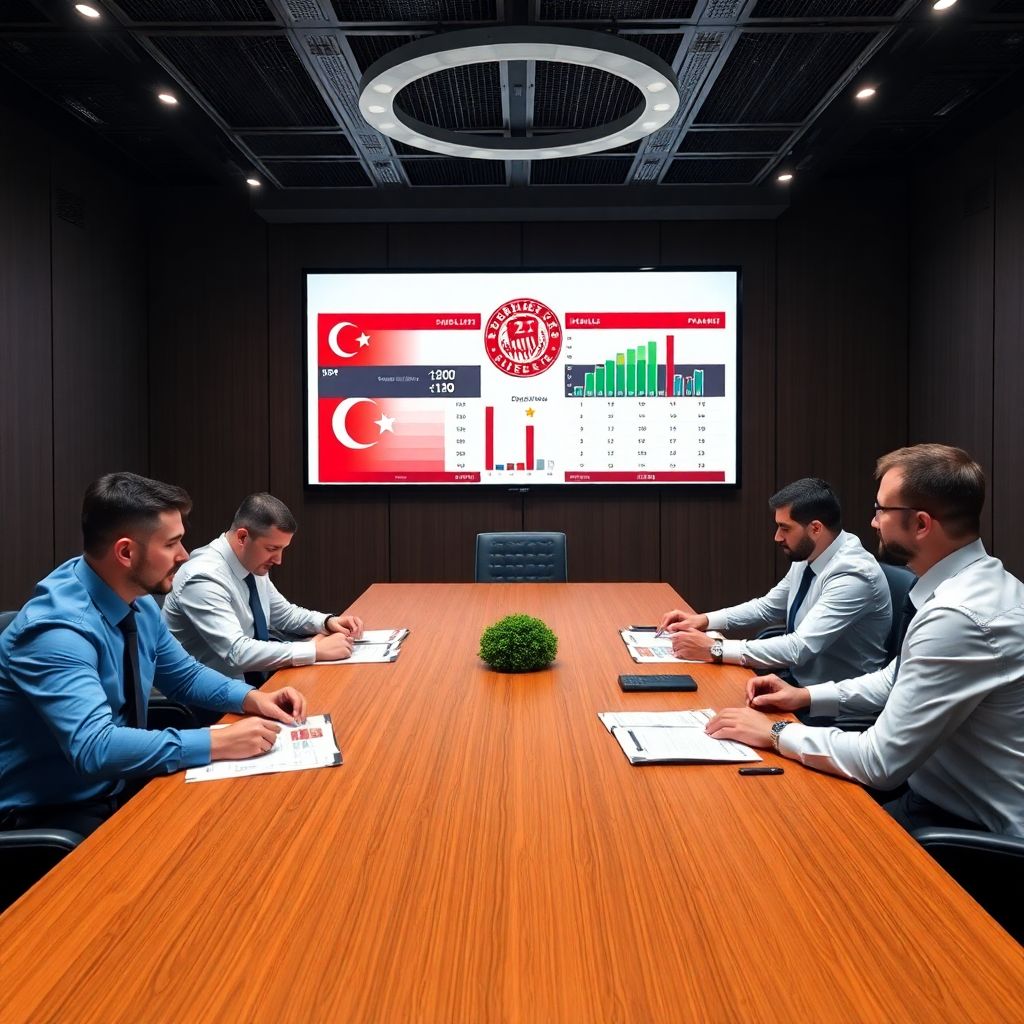
Financial fair play in the Turkish Süper Lig links squad spending to sustainable income, especially from TV and commercial revenues. If clubs treat the turkish super lig broadcasting rights deal as a stable base budget, then they can plan wages and transfers within limits, reduce debt risk, and attract long‑term investors.
Executive summary: implications for Süper Lig finances
- If you rely mainly on TV money, then FFP will cap your sporting ambition whenever a rights cycle underperforms or devalues in hard currency terms.
- If super lig tv rights revenue distribution stays concentrated among big clubs, then competitive balance and league‑wide media growth will remain limited.
- If clubs build three independent income pillars (media, commercial, matchday), then FFP ratios become easier to respect without weakening squads.
- If the federation couples financial fair play rules Turkey super lig with stricter governance tests, then insolvency risk and unpaid wages should decline.
- If investors can see predictable regulation plus growing media reach, then to invest in turkish football clubs future value becomes a rational, medium‑term bet.
- If policy makers support centralised marketing and data‑driven pricing, then super lig media rights market analysis will show higher aggregate values over time.
How Financial Fair Play works: principles, enforcement and measurement
Financial Fair Play (FFP) is a rule set that limits how much a club can lose over a defined assessment period relative to its legitimate football income. In the Süper Lig context it is applied both at UEFA level (for clubs in Europe) and domestically via TFF licensing rules.
The core principle is simple: if your club spends consistently more on wages, transfers and related football costs than it earns from recurring revenues, then you must either inject regulated equity or reduce costs, otherwise sanctions follow. Sanctions range from warnings and settlement agreements to squad registration limits and competition bans.
Measurement revolves around a few key indicators:
- If you track break‑even result (football income minus relevant expenses) over several seasons, then you can test whether your club respects the cumulative deviation allowed by regulators.
- If you monitor the wage‑to‑turnover ratio, then you see early whether squad costs are crowding out operational flexibility.
- If you separate recurring income (media, matchday, sponsorship) from volatile items (player trading, one‑off donations), then your FFP planning becomes more realistic.
Practical example: if a mid‑table Süper Lig club expects stable TV income and modest ticket sales, then it should lock wage commitments below that combined figure and treat any future transfer profits only as a buffer or investment bonus, not as a baseline for fixed costs.
Broadcasting rights market in Turkey: structure, contracts and key players
The turkish super lig broadcasting rights deal is the financial backbone of most clubs, but its structure and volatility create planning risk. Understanding the mechanics is essential before committing to long‑term sporting projects tied to media income.
- If the federation sells centralised rights for all clubs, then it can package live matches, highlights and digital clips together, usually achieving a higher total fee than separate sales.
- If broadcasters pay in local currency while clubs hold many costs in foreign currency, then exchange‑rate swings can erode the real value of TV revenues during the contract.
- If rights cycles are relatively short, then every renewal brings uncertainty on price level, distribution model (single operator vs multiple), and payment security.
- If super lig tv rights revenue distribution favours top‑finish bonuses and big‑club audience factors, then smaller teams remain dependent on survival money rather than growth capital.
- If digital platforms and international sub‑licensing are under‑developed, then upside from global fans of Turkish clubs stays largely unrealised.
- If payment schedules are back‑loaded or linked to subscriber targets, then cash flow within a season can become unstable for clubs.
Operationally, this means club boards must plan under uncertainty. For example, if a new broadcaster wins at a lower overall fee or with stricter performance clauses, then wage inflation must stop immediately or FFP pressure will spike within one to two seasons.
How media revenues interact with FFP: effects on solvency and squad investment
Media rights are the largest single income line for many Süper Lig teams, so their profile largely determines whether FFP is a brake or an enabler. If TV revenue is predictable and growing, then it supports investment and helps meet FFP tests; if it is unstable, then it amplifies risk.
- If your club treats guaranteed TV money as the maximum safe level for fixed wage commitments, then FFP margins are protected even if other income underperforms.
- If you budget expected prize money and European bonuses into fixed costs, then missing sporting targets will instantly turn FFP indicators negative.
- If you rely on late transfer sales to close annual gaps, then a single failed deal can create non‑compliance and force fire‑sale exits in the next window.
- If the league negotiates better international rights and shares upside proportionally, then more clubs can raise sustainable wage caps without breaking FFP.
- If super lig media rights market analysis is integrated into your three‑year financial model, then you can test best‑ and worst‑case paths for solvency before committing to long contracts.
| Scenario | Media revenue profile | Wage strategy | FFP risk level |
|---|---|---|---|
| Conservative | Use only guaranteed domestic TV minimum as base; ignore bonuses | Wages capped below base media income; bonuses paid from extra revenues | Low: if performance drops, club still meets break‑even and liquidity tests |
| Balanced | Domestic TV plus modest forecast for international and sponsorship | Wages aligned with medium forecast; performance bonuses variable | Medium: needs active monitoring and quick adjustments if forecasts slip |
| Aggressive | Assumes growth in next turkish super lig broadcasting rights deal | High fixed wages based on future TV uplift and player sales | High: non‑compliance likely if rights renewal is weak or sales stall |
Applied example: if your projections show that moving from a balanced to an aggressive scenario only improves sporting quality marginally but pushes the wage‑to‑turnover ratio near critical levels, then the rational decision is to stay balanced and seek performance gains through scouting and coaching instead.
Practical revenue diversification: commercial deals, international distribution and matchday optimisation
Diversifying beyond TV money reduces both risk and regulatory pressure. If your club grows sponsorship, international and matchday income, then FFP metrics improve without needing constant player sales, and reliance on any single broadcaster declines.
If‑then options for commercial partnerships
- If your brand is strong in a specific city or diaspora market, then target local banks, telecoms and e‑commerce brands there for shirt or sleeve sponsorships tied to digital activation.
- If your stadium naming rights are undervalued, then bundle them with training‑kit visibility and hospitality access to create a more attractive, longer‑term package.
- If you lack in‑house sales capacity, then hire a specialised marketing agency on a performance‑based contract instead of building a large fixed‑cost department.
- If investors want to invest in turkish football clubs future value through equity or long leases, then structure deals that protect sporting control while funding infrastructure and digital assets.
If‑then options for international and matchday growth
- If your club has foreign‑language social media traction, then push for inclusion in international TV and streaming highlight packages and cross‑promote those feeds.
- If your average attendance is below capacity, then segment pricing: family zones, student discounts and dynamic pricing for lower‑demand fixtures.
- If you control food, beverage and merchandising on matchdays, then redesign fan flow to increase spending time in the stadium, not just seat occupancy.
- If international fans cannot attend physically, then offer membership tiers with digital content, voting on non‑sport decisions and early access to limited merchandise.
Compliance playbook: governance, financial controls and negotiated remedies
FFP compliance is less about clever accounting and more about disciplined governance. Typical mistakes come from misaligned incentives, over‑optimistic forecasting and weak internal controls rather than from the rules themselves.
- If club presidents promise titles in one or two seasons, then sporting pressure will often push budgets beyond what financial fair play rules Turkey super lig can tolerate.
- If your finance team updates forecasts only once per year, then you will notice FFP problems too late to adjust wages or transfer strategies calmly.
- If related‑party sponsorships are priced above market without documentation, then regulators may re‑state them at lower values, instantly worsening your FFP position.
- If you treat settlement agreements with UEFA or TFF as soft guidelines, then recurring breaches can escalate quickly into squad and registration sanctions.
- If the board receives simple, visual dashboards on cash flow, wage ratios and projected break‑even each month, then strategic decisions become more grounded and defensible.
Future scenarios and policy options: modelling growth, centralisation and competitive balance

The future of the Süper Lig economy depends on coordinated choices by the federation, broadcasters and clubs. Scenario thinking helps align club strategy with possible league‑level reforms and evolving media technology.
Mini‑case scenario modelling:
- If the next super lig media rights market analysis suggests stable domestic fees but higher potential abroad, then the league can prioritise a centralised international rights office, shared data platform and coordinated brand campaigns in key territories.
- If distribution rules are adjusted so that every club receives a higher equal share and a lower performance bonus component, then more teams can plan medium‑term wage bills without fear of sudden relegation shocks destroying FFP compliance.
- If the federation links licensing to independent audits, youth development standards and timely tax payments, then default risk for broadcasters and sponsors declines, supporting higher valuations in future tenders.
Simple decision logic for a club board over a three‑year horizon:
- If you expect conservative media growth, then freeze wage inflation, invest in academy and analytics, and aim for steady FFP surpluses.
- If an optimistic media and sponsorship wave materialises, then prioritise infrastructure and digital platforms first, and only then expand wage budgets.
- If macroeconomic or currency shocks hit the league, then immediately shift to the conservative scenario tabled above and renegotiate high‑cost contracts where possible.
Practical questions club managers commonly face
How much of our TV income should we lock into fixed wages?
If your club is financially fragile, then keep fixed wages clearly below guaranteed domestic TV revenue and cover the rest of the squad cost with flexible bonuses. More robust clubs can include a portion of stable sponsorship, but not volatile prize money.
Can we rely on transfer profits to satisfy FFP over several seasons?
If you treat transfer profits as recurring income, then a single bad market window can create a sudden FFP breach. Use transfers as upside or to rebalance the squad, not as the core of your compliance plan.
What is the safest way to approach a new broadcasting cycle?
If the upcoming tender looks uncertain, then budget your next two seasons on a conservative TV number, not on the most optimistic forecasts. Adjust upwards only once contracts and payment guarantees are clear.
How should we deal with foreign‑currency exposure in wages?
If most media income is in local currency but key players are paid in foreign currency, then hedge part of that risk via financial instruments or renegotiate mixed‑currency structures to avoid FFP shocks from devaluation.
Does signing a global star always help with FFP?
If a marquee player brings truly incremental sponsorship and international attention, then the deal can pay for itself and even improve FFP. If not, then it simply inflates wages and raises compliance risk without structural revenue gains.
What internal reports should the board see to stay ahead of FFP issues?

If the board receives monthly updates on cash flow, wage‑to‑turnover ratio and projected break‑even for the current and next seasons, then it can course‑correct early instead of facing last‑minute crises.