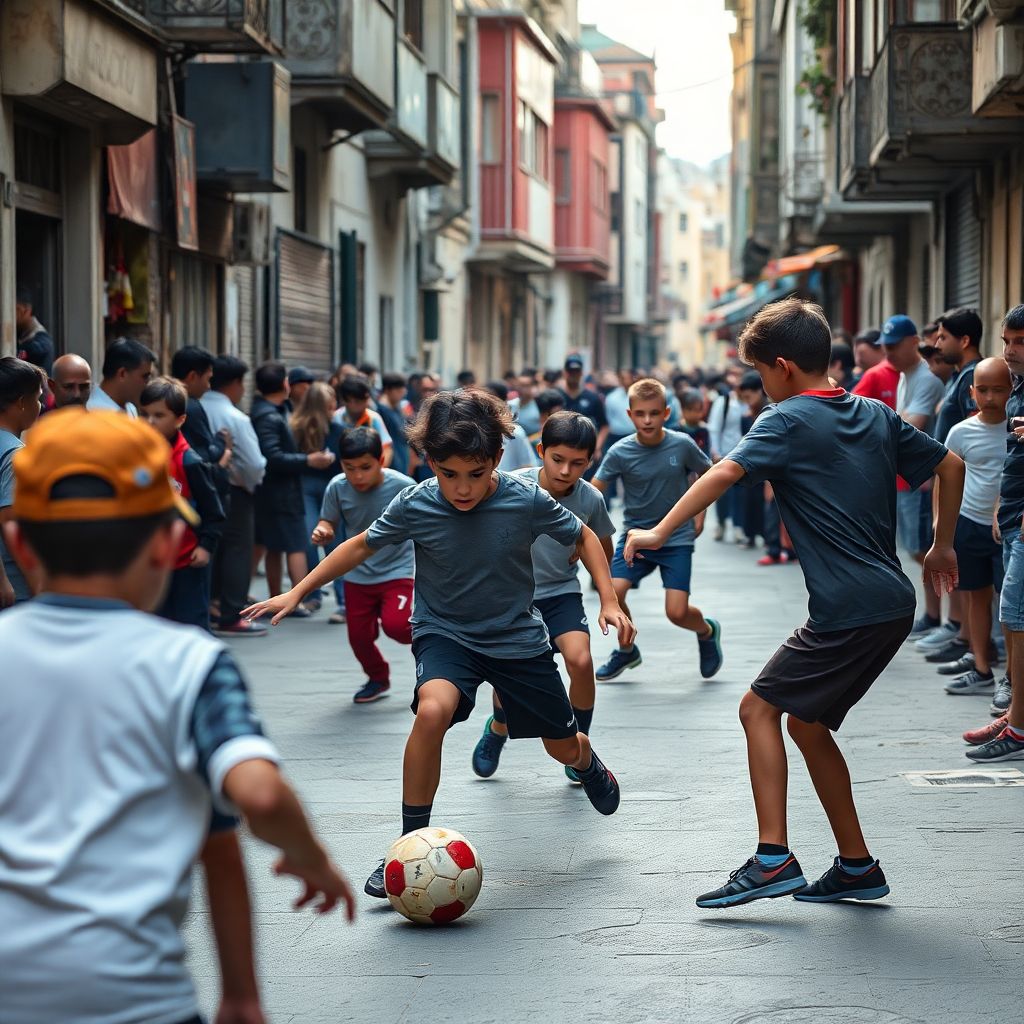
Street football in Turkey acts as an informal academy where kids learn deception, close control and vision in tight spaces, then carry these abilities into professional structures. The most creative players keep their street instincts, while academies add fitness, tactics and discipline so flair can survive under pressure.
Creative Traits That Carried Players from Streets to Academies
- Unscripted 1v1 skills and deceptive first touches developed in crowded street games.
- Fast scanning and decision-making in chaos, later refined into tactical vision.
- Bravery to try risky passes or dribbles instead of always playing safe.
- Body strength and balance from playing on rough surfaces with little protection.
- Strong inner motivation formed before entering turkish football academies for youth.
- Ability to quickly adapt when moving from local pitches to top-level academy environments.
Street Roots: How Urban Play Shapes Technique and Vision
In many Turkish cities, narrow streets, schoolyards and small caged pitches naturally create the conditions of a high-level technical school. Pitch sizes are small, teams are often uneven, and rules are flexible. Players meet after school, bring one ball, and play almost non-stop until dark.
This street environment shapes a specific profile: close ball control, short explosive movements, improvisation with limited space, and a constant need to protect the ball under contact. The “coach” is usually older kids; the “curriculum” is simple: if you lose the ball, you might not get it back for a long time.
Creativity appears because there is no rigid instruction. Children try nutmegs, wall-passes with parked cars, chipped passes over curbs, or feints discovered accidentally. Repetition under pressure gives them timing and confidence. Later, when they enter structured turkish football academies for youth, these instincts become their competitive advantage.
Mini-profiles from the streets:
- Ali, Kadıköy backstreet playmaker: grew up organizing 5v5 games between apartment blocks, learned to play one-touch because the surface was uneven and the ball bounced unpredictably.
- Deniz, İzmir seafront dribbler: played on slippery stone near the water, developed low center of gravity and quick changes of direction to avoid slipping while dribbling.
- Musa, Ankara schoolyard pivot: had to keep the ball with strong older kids around him, learning to use his body to shield and release the ball at the last second.
Section checklist: using street roots well
- Observe if players can control the ball reliably on hard, uneven surfaces.
- Check how they react in tight 3v3 or 4v4 games with minimal space.
- Note if they invent solutions on their own instead of waiting for instructions.
Local Icons: Portraits of Turkey’s Most Inventive Young Players
Creative street players who reach academies often share similar journeys, even if their locations, families and clubs differ. Their stories explain how raw talent becomes a professional path and how local heroes inspire others in their neighborhood.
-
The neighborhood “number 10” who became an academy leader
In a dense Istanbul district, a boy nicknamed “No.10” for his vision was always picked first. A scout from one of the best football academies in turkey for international players saw him at a local tournament and invited him to a trial. At the academy he struggled with fitness at first but quickly became the link player in youth teams thanks to his ability to see diagonal passes from the street. -
The wing trickster who learned discipline late
On the outskirts of Bursa, a left-footed winger dribbled everyone on dusty fields but refused to track back. At a regional club’s youth team he initially spent more time on the bench. When he understood that recovering after losing the ball created more 1v1 opportunities in transition, his street dribbling started to decide games instead of just entertaining. -
The small forward who mastered rebounds and chaos
In a crowded Adana neighborhood, a short striker played where there were walls on all sides. Shots bounced in strange ways, so he learned to anticipate rebounds better than anyone. In academy football he became the player who always appeared first on second balls inside the box, turning street instincts into real goals. -
The late starter from a small town
A girl from a Black Sea town played first with boys on a sloping pitch. She joined an academy later than others but quickly reached national youth level because her weaker-foot passing was already reliable from adapting to the uneven field and strong wind conditions at home.
Section checklist: spotting “local icons” early
- Look for the player others trust to decide tight games on the street.
- Notice who organizes teams, rules and restarts naturally.
- Track which player still influences games even on a bad day (through pressing, assists, link-up play).
From Flair to Framework: Converting Improvisation into Tactical Sense
When street players enter structured training, the main task is not to remove flair but to connect it to a tactical framework. Coaches must show where, when and why each creative action increases the team’s chance to progress or score, instead of treating creativity as something “extra.”
Typical scenarios where improvisation turns into tactical strength:
-
Dribbler learns to recognize numerical superiority
A winger who always dribbles starts to see when it is 1v2 or 2v2, and when a wall-pass is better than another 1v1. Video pauses and simple questions like “who is free if you attract two defenders?” connect his instinct to the team’s structure. -
Street playmaker becomes a pressing trigger
A central player who loves risky passes learns that some forward passes are best played just after winning the ball. Coaches build small games where he must instantly look forward after a regain, turning chaos-reading skills into a specific transition principle. -
Freestyler learns zone management
A player with many tricks is asked to limit elaborate dribbles to the final third. In build-up zones, he keeps the ball moving quickly; near the box, he has freedom to use feints. The rule is simple: “high risk, high reward only close to goal.” -
Backstreet defender becomes ball-playing center back
A strong street defender used to clearing the ball learns how to dribble out of pressure and split lines with passes, using the calmness he developed dealing with constant pressure in cage-like pitches. -
Playground pivot turns into pressing-resistant six
A player used to shielding the ball with friends crowding around him is given responsibility to receive under pressure facing his own goal, then turn or find the free man without panic.
Section checklist: ensuring creativity fits the game model
- Define zones and moments where each player has more freedom.
- Use video or freeze-frames to link their best street actions to specific phases (build-up, transition, final third).
- Reward correct decision-making, not just successful tricks.
Scouting Lines: How Academies Spot and Recruit Unconventional Talent
Turkish clubs increasingly organize turkey football talent scouting trials, regional tournaments and visits to school and neighborhood games to find hidden creative players. Scouts must look beyond physical size and standard positions, focusing instead on decision-making, bravery and ball mastery in real game situations.
Advantages of recruiting street-rooted creative players:
- High technical ceiling: years of free play give them a wide range of controls, feints and passing solutions.
- Resilience: they are used to playing with contact, teasing and uneven refereeing; setbacks in academy games feel manageable.
- Unpredictability: they can change games with unexpected actions in tight matches.
- Leadership potential: many organized their own street games, which translates into on-pitch communication.
Limitations and risks if scouting is not careful:
- Gaps in physical preparation: some players arrive with poor endurance or strength and need time to catch up.
- Resistance to structure: players used to “no rules” may struggle with tactics, schedules and discipline.
- Over-romanticizing flair: scouts may overvalue tricks and ignore whether actions help the team.
- Late specialization issues: positions might be unclear, slowing integration into a precise academy system.
Section checklist: scouting creative players effectively
- Watch full games, not only short highlight clips.
- Evaluate how players respond to being pressed or fouled, not just when they are comfortable.
- Speak briefly with coaches or locals to understand the player’s training habits and attitude.
Coaching Creativity: Methods That Preserve Individuality within Teams
Once street players join structured setups such as professional football training camps in turkey or long-term academy programs, the challenge is to improve them without erasing what makes them unique. Over-coaching can create safe but predictable players; under-coaching can leave them tactically unreliable.
Common mistakes and persistent myths:
- Myth: “Creative players do not need structure.” In reality, a clear framework increases the impact of their creativity. They must know where teammates move so their risky passes or dribbles have a target.
- Mistake: Bench after the first lost ball. Fear of mistakes kills experimentation. Better: define which risks are acceptable and in which zones; correct choices, not personality.
- Myth: “Small players from the street cannot play at higher levels.” Many succeed once physical training and positional understanding balance their technical skills.
- Mistake: Isolating them from the group. Special players sometimes train separately “for skills,” which can stop them learning combination play. Integration with teammates is crucial.
- Myth: “Academy drills must always be fully scripted.” Adding free-play blocks, 1v1 lanes, and advantage games keeps players solving new problems themselves.
Section checklist: protecting and growing individuality
- Include at least one free-play or street-style block in each weekly cycle.
- Give players individual “superpowers” to use (e.g., “your task: look for line-breaking passes”).
- Regularly ask them how they see the game to incorporate their perspective into the team plan.
Obstacles and Breakthroughs: Social Factors, Access, and Turning Points
Many talented street players in Turkey never reach academies because of money, distance, or lack of information about how to join a football academy in turkey. Families might not know about open days, or they fear the costs of travel and equipment. Some players must work part-time jobs and can only train at night.
Mini-case: a boy from a low-income district in Antalya played barefoot on a dusty basketball court. A PE teacher filmed a local school tournament, then shared the video with a regional scout. The club invited him first to weekend sessions, then to longer professional football training camps in turkey, covering transport and boots. The key turning point was simply that one adult decided to show his game to a wider network.
Another mini-case: a girl in Konya played futsal in a small sports hall but saw no path to higher levels. Her coach researched turkish football academies for youth that accepted girls, contacted them, and arranged a trial during school holidays. Her parents initially hesitated, but the academy’s clear education plan and accommodation support convinced them.
Simple pseudo-algorithm clubs and schools can follow to reduce missed talent:
- Film or record local tournaments and school games regularly.
- Create a shared folder or channel where trusted scouts can watch clips.
- Flag players who repeatedly influence games in different contexts.
- Invite them first to low-cost regional sessions, then to central academy visits.
- Communicate clearly with families about costs, schooling and realistic timelines.
Section checklist: opening doors for hidden street talent
- Maintain simple scouting relationships with PE teachers and local coaches.
- Offer at least one low-cost or free regional trial per year.
- Explain to parents the balance of education, training and travel from the first meeting.
Practical Questions Coaches, Scouts and Parents Commonly Face
How can I tell if a street player can adapt to academy demands?
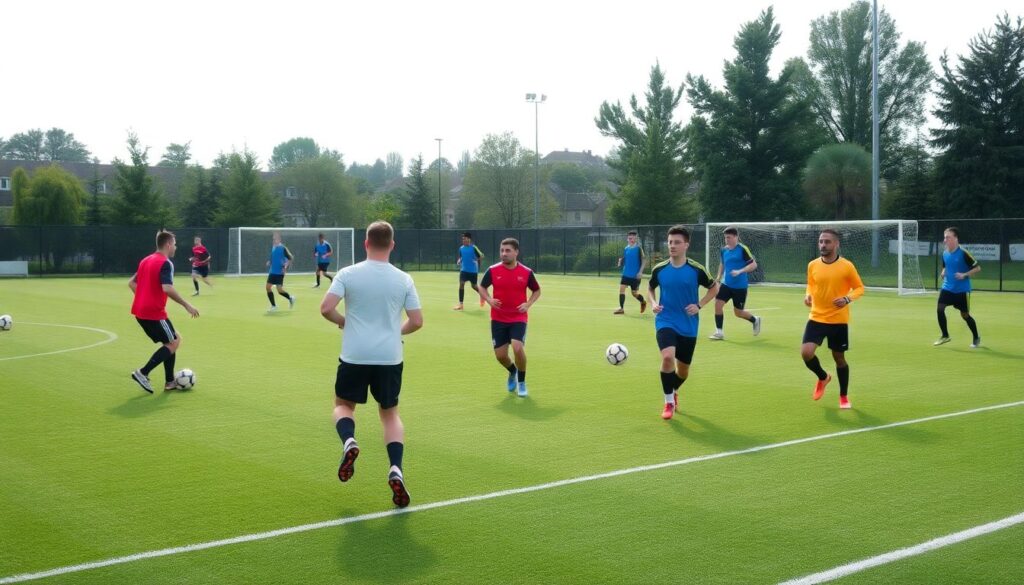
Watch their reaction when tasks become more structured: passing patterns, positional games and fitness runs. If they stay engaged, ask questions and adjust quickly, they likely can adapt. If they switch off as soon as play is organized, expect a longer adaptation period.
Are turkey football talent scouting trials enough to find creative players?
Trials help, but they are snapshots. Many creative players show their best in informal settings. Combine open trials with periodic visits to local pitches and school tournaments, where players feel natural and show their full personality with the ball.
What role do professional football training camps in turkey play in development?
Short camps accelerate learning, especially in tactical understanding and physical habits. They are useful for testing how a talented street player copes with daily training, recovery routines and higher intensity. Camps should complement, not replace, consistent weekly training near the player’s home.
How to join a football academy in turkey if my child plays only in the street?
Start by joining a local amateur club or school team to get regular 11v11 or 8v8 matches. Collect simple video from games and tournaments. Apply to turkish football academies for youth via their websites or open days, attaching game clips and coach references when possible.
Do the best football academies in turkey for international players accept late developers?
Many strong academies leave room for late entries, especially when a player shows rare technical or mental qualities. Size and physical power are less important than touch, game intelligence and coachability. However, the later the player enters, the steeper the adaptation curve.
How often should creative players train outside official sessions?
Extra training should be frequent but smart. One or two informal sessions per week focusing on small-sided games, 1v1s and finishing is usually enough to maintain creativity without causing overload, provided recovery and school demands are respected.
What is a simple checklist to review whether development is on track?
Every few months, review four areas: technical improvement, game understanding, physical robustness and emotional resilience. If at least three are clearly progressing while school performance stays stable, development is likely on a healthy path.
End-of-Article Self-Check: Short Algorithm for Reviewing Progress

- Collect evidence: gather 3-5 recent match clips and brief coach notes for the player.
- Scan four dimensions: for each clip, rate technical action, decision, effort and emotional reaction after mistakes.
- Compare to past: repeat the same review with clips from 6-12 months ago and look for clear differences.
- Identify one strength and one gap: choose one creative action to encourage and one recurring problem to address.
- Plan a micro-cycle: design the next 4-6 weeks of training around repeating the strength in game-like drills and gradually correcting the gap.