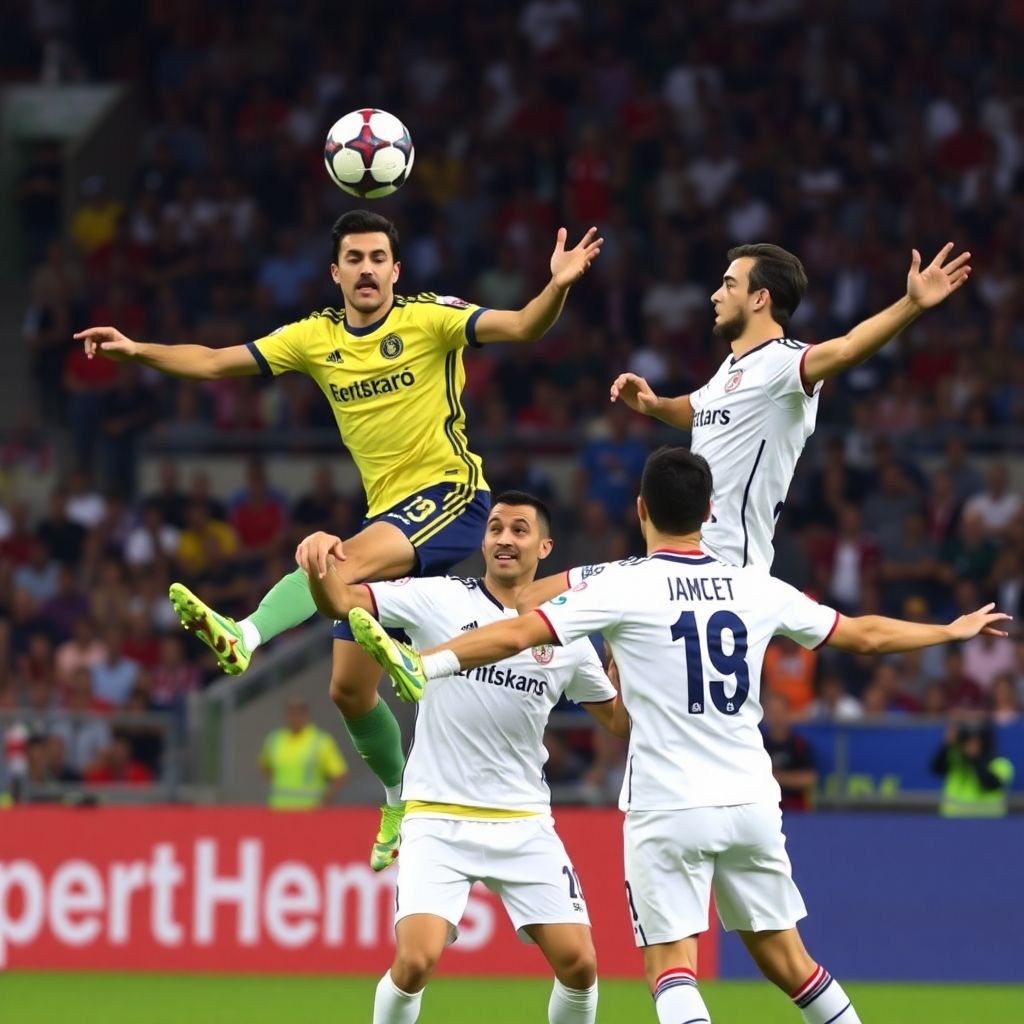
For style, tempo and tactical trends, the Süper Lig sits between Europe’s Top 5: less structured than Premier League or Bundesliga, more vertical than La Liga, and more open than Serie A. It is ideal for budget-conscious clubs hunting undervalued talent, while the Big Five remain better for peak tactical sophistication and stable development pathways.
Snapshot: how Süper Lig stacks up against Europe’s Big Five

- Süper Lig is more transition-heavy and emotional than the Big Five, with wider variance in game state and tactical discipline.
- Premier League offers the most stable high-intensity benchmark for Super Lig vs Premier League comparison work.
- La Liga and Serie A provide the clearest references for compact blocks, control and game management.
- Bundesliga is the cleanest pressing and counter-pressing model for Turkish clubs to copy on a budget.
- Ligue 1 and Süper Lig share volatility, athleticism and strong resale stories, but differ in defensive structure.
- For a football data comparison Super Lig and Europe top leagues, Turkey shows bigger spread: some clubs play near Big Five level, others far more chaotic.
Evolution and competitive balance: league structures and calendar effects
When doing any serious Turkish Super Lig vs top 5 European leagues analysis, start by aligning structural criteria before you even touch video or metrics.
- Calendar alignment: Check how winter breaks, fixture congestion and European schedules differ; Süper Lig rhythm can distort short-term form versus Big Five teams.
- Competitive balance shape: Identify how many genuine title, European and relegation contenders each year; Turkey often has a sharper divide between big clubs and the rest.
- Squad age profiles: Compare average peaks; Süper Lig often leans on slightly older, experienced imports, while Big Five clubs push more academy and early-peak talent.
- Foreign player rules: Track changes in foreign quotas and match-day restrictions, as these directly shape tactical flexibility and recruitment channels.
- Financial stability: Map wage delays, currency risk and debt levels; this can influence tactical risk-taking, squad churn and the viability of long-term playing models.
- Coaching turnover: Shorter cycles in Turkey mean more reactive tactical shifts, contrasting with the multi-year projects more common in Europe’s top 5 leagues.
- Refereeing and disciplinary trends: Variations in foul thresholds and added time influence intensity, pressing feasibility and the real duration of high-tempo phases.
- Stadium and travel conditions: Travel load, pitch quality and climate differences between regions in Turkey and the Big Five subtly push styles toward or away from high pressing.
- European competition exposure: Regular UEFA group-stage football for top Süper Lig clubs creates sub-ecosystems closer to Big Five standards than the league average.
| League | General competitive pattern | Calendar & rhythm | Stability for long projects |
|---|---|---|---|
| Süper Lig | Big-club dominance with volatile mid-table and relegation battles. | Intense stretches, emotionally charged derbies, variable pitches and climates. | High coaching turnover, harder to maintain multi-year tactical identity. |
| Premier League | Deep competitive pool, strong mid-table; ideal base for Super Lig vs Premier League comparison. | High-intensity schedule, minimal winter pause. | Very stable projects at most top and upper-mid clubs. |
| La Liga | Stratified but tactically mature across the table. | Controlled tempo, strong emphasis on spacing and circulation. | Many clubs commit to clear medium-term playing models. |
| Serie A | Multiple tactical schools, strong mid-table expertise. | Rhythm tailored to coaching detail and game management. | Clubs often sustain clear identities despite coach changes. |
| Bundesliga | Pressing-oriented league with structured recruitment. | Winter break historically shapes conditioning and tempo arcs. | Good environment for data-informed, system-first projects. |
| Ligue 1 | Physically strong, high-upside talent with some structural volatility. | Mix of high-tempo and low-block clashes. | Mid-table projects fluctuate with player trading cycles. |
Tactical DNA: dominant formations, coaching philosophies and identity
Below is a compact lens for Turkish Super Lig vs top 5 European leagues analysis in terms of tactical "packages". Each variant captures a recognizable style that you can map onto both Süper Lig and Big Five clubs.
| Variant | Best fit for | Pros | Cons | When to choose |
|---|---|---|---|---|
| High-tempo Premier League-style intensity | Clubs with strong physical profiles, deep squads and high coaching stability. | Forces errors, suits modern pressing metrics, easier to sell players to England. | Expensive to maintain physically; risky in hot climates and with small squads. | When you benchmark Turkish players for England or plan a high-energy derby strategy. |
| Structured Bundesliga-style pressing | Data-driven clubs wanting repeatable schemes and clear positional roles. | Translates well from football analytics subscription Super Lig and top 5 leagues datasets; scalable from budget to elite. | Requires detail-oriented coaching; can look rigid if individuals lack discipline. | When you want a clear template for training, video analysis and recruitment filters. |
| Possession-heavy La Liga-style control | Teams with technically secure midfielders and patient fan bases. | Stabilizes game states; good for controlling emotional swings in Turkish stadiums. | Can be slow and predictable; needs high technical floor across the XI. | When protecting leads in Europe or shifting a chaotic Süper Lig side toward control. |
| Tactically hybrid Serie A-style adaptability | Managers comfortable with multiple systems and in-game role changes. | Maximizes squad versatility; strong for tournament football and varied opponents. | Can confuse players without strong tactical education; demands detailed preparation. | When your squad is unbalanced and you must hide weaknesses with tailored plans. |
| Transitional Süper Lig-style verticality | Budget-conscious Turkish clubs with fast wingers and creative number 10s. | Cheaper to build; punishes disorganized defences; fits crowd energy and home advantage. | Harder to export players directly to top-possession clubs; volatile results. | When you seek short-term impact, underdog upsets and value for betting tips Super Lig vs major European leagues. |
| Direct Ligue 1-style athleticism | Clubs targeting resale of young, powerful profiles to Big Five leagues. | Aligns with many scouting expectations; easier to evaluate on simple metrics. | May under-develop tactical nuance; over-reliance on individual duels. | When the main objective is resale profit and raising physical standards quickly. |
Match tempo and transitions: pressing intensity, counterattacks and recovery
Tempo choice is where Süper Lig realities collide with idealized Big Five models. Use these scenario-based guidelines, especially when weighing budget-first versus premium approaches.
- If your wage budget is limited, then prioritize a transitional Süper Lig-style or direct Ligue 1-style approach: shorter high-intensity bursts, compact mid-blocks, and targeted counters rather than continuous high pressing.
- If you are a Big Five club scouting Turkey, then look for players who can already sustain Bundesliga or Premier League pressing distances, not just short sprints after turnovers.
- If your squad is older or depth is thin, then lower the baseline tempo and build hybrid blocks: periods of La Liga-style control with selective high presses instead of constant full-throttle transitions.
- If you are designing a premium, Europe-facing project in Turkey, then copy Bundesliga-style structure with Premier League tempo in key fixtures, using clear triggers and pre-rehearsed counter-pressing lanes.
- If your home pitch or climate slows the game, then shift value from long pressing phases to quick-strike counters and high-quality set-plays; these adapt better from Süper Lig to Europe’s top 5 leagues.
- If you trade players upward to Big Five leagues, then coach them to modulate tempo: show in data that they can operate both in chaotic Süper Lig transitions and in calmer, more positional European games.
Quantitative markers: possession, pass networks and expected goals patterns
Use this compact checklist as a practical algorithm whenever you run a football data comparison Super Lig and Europe top leagues for style and tactical trends.
- Normalize possession profiles: Compare possession shares only after grouping games by opponent strength; Süper Lig big clubs versus small clubs look superficially similar to Big Five elites but differ against peers.
- Segment pass networks: Build separate networks for settled attack, build-up under press and counterattacks; then see which phase each player or team dominates in Turkey versus the Big Five.
- Classify xG patterns: Tag chances by origin (crosses, cutbacks, through balls, set-plays) and compare distributions across leagues; this reveals whether a Süper Lig striker’s output is system-dependent.
- Adjust for game state: Slice data by leading, level, trailing; Turkish sides may open games more when chasing, inflating xG and tempo relative to structured European benchmarks.
- Benchmark intensity proxies: Without inventing numbers, use publicly available sprint, duel and pressing-event indicators to place Süper Lig clubs on a rough scale with Bundesliga and Premier League teams.
- Cross-check with video: For any surprising metric gap between a Süper Lig club and a Big Five reference, validate with 3-5 full matches before trusting the conclusion.
- Align with recruitment questions: Always map metrics to a clear question: "Can this player execute in a higher-control, lower-transition environment?" or "Can this defender cope with Premier League crossing volume?"
Defensive frameworks: blocks, wide coverage and set-piece organization
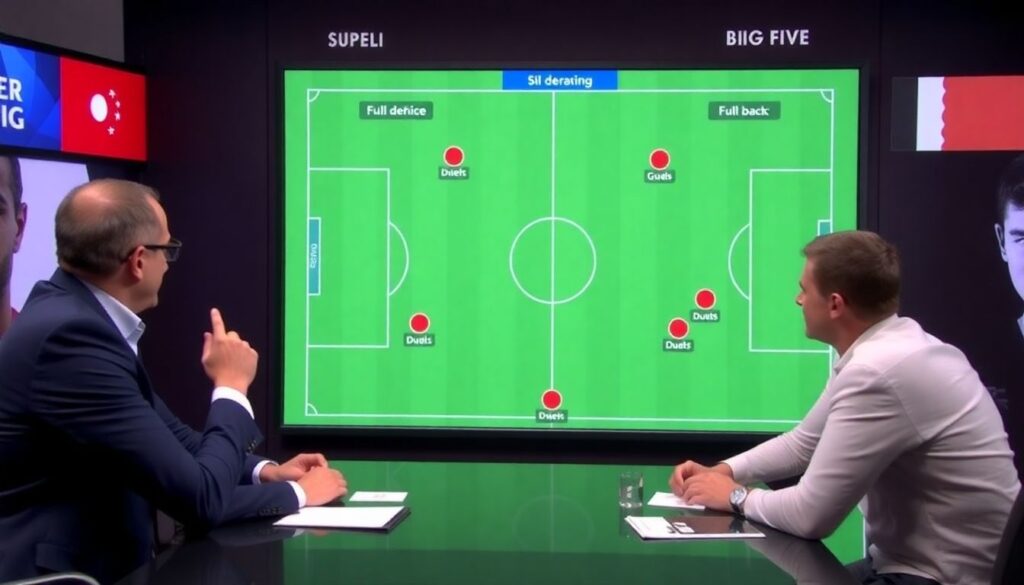
Defensive comparisons between Süper Lig and the Big Five often go wrong due to recurring analytical and coaching mistakes.
- Judging Süper Lig defenders only by duels and not by their positioning in shifting blocks against Big Five-level circulation.
- Underestimating how often Turkish full-backs defend 1v2 wide, compared with better-supported structures in La Liga or Serie A.
- Assuming set-piece chaos is purely "quality" and not a result of coaching time, video support and staff specialization gaps.
- Copy-pasting high defensive lines from Premier League models without matching goalkeeper sweep range and centre-back speed.
- Ignoring the communication load in noisy Turkish stadiums when comparing to more controlled atmospheres elsewhere in Europe.
- Overrating players who shine in deep low blocks but struggle when asked to defend larger spaces like in Bundesliga pressing systems.
- Misreading card and foul data without adjusting for refereeing thresholds and cultural expectations around contact.
- Failing to separate team-level tactical issues from individual qualities, leading to undervaluation of good Süper Lig defenders on poorly organized sides.
- Neglecting how travel and fatigue affect late-game defensive concentration in Turkey versus the top 5 leagues.
Talent pipelines and budget realities: recruitment, resale and wage models
For budget-conscious Turkish clubs, Süper Lig is best for discovering undervalued, high-upside profiles in volatile, transition-heavy environments and selling them upward. For Big Five clubs, their own leagues remain best for peak tactical sophistication and stable development, while Süper Lig offers a lively, imperfect but valuable testbed and scouting market.
Practical queries coaches, analysts and scouts commonly raise
How should I use Süper Lig data when scouting for a Premier League club?
Focus on how players handle high-tempo moments, pressing triggers and recovery runs, then cross-check those clips with your Super Lig vs Premier League comparison benchmarks. Prioritize versatility in tempo, not just top speed or single-phase output.
Which Big Five league is the best stylistic benchmark for Turkish clubs?
Bundesliga is usually the most practical: its pressing structure scales from budget to elite, and its tactical concepts translate well to Süper Lig realities. Then use La Liga or Serie A as references for compact blocks and game control.
Can a transition-heavy Süper Lig forward succeed in a possession-focused La Liga or Serie A side?
Yes, but only if their off-ball movement, first touch and decision-making in tighter spaces already show up in your video and data samples. Check chance origin types and involvement in slower build-up, not just counters.
How reliable are betting tips that compare Süper Lig to major European leagues?
Any betting tips Super Lig vs major European leagues should be treated as opinions layered on noisy, volatile data. Use your own basic metrics on tempo, xG patterns and squad rotation rather than relying on surface-level narratives.
Is it worth paying for a football analytics subscription covering Süper Lig and the top 5 leagues?

If you recruit or scout across these markets, a football analytics subscription Super Lig and top 5 leagues can pay off quickly by standardizing your comparisons. Just ensure you have internal expertise to interpret the numbers correctly.
How do I compare defenders across Süper Lig and the Big Five fairly?
Normalize for block height, team compactness and set-piece workload. Then combine duel metrics with clips that show spacing, body orientation and decision-making under pressure against different levels of opposition.
What is the main tactical risk when moving a coach from a Big Five league to Süper Lig?
The biggest risk is underestimating emotional volatility and schedule pressure in Turkey. Coaches who rigidly import their old model without adapting to local tempo swings and squad depth often struggle.