Turkish coaches can compete with Europe’s elite tacticians when clubs match their tactical strengths with the right context: emotionally intense environments, ambitious but patient ownership, and squads built for aggressive pressing and fast transitions. The main trade-off versus many European coaches is higher short-term impact but potentially greater volatility and adaptation risk.
Why Turkish coaches are gaining traction now
- The visible rise of Turkish football coaches in European clubs has shown that their intense, results-first style can quickly stabilise or energise underperforming squads.
- Scouting departments now track successful Turkish football managers more systematically, treating them as cost-effective alternatives to established Western European names.
- Improved language skills and UEFA licensing make top Turkish football coaches in Europe easier to integrate into multinational dressing rooms.
- Clubs looking for a cultural reset often see Turkish football coaches vs European coaches as a choice between emotional edge and process-driven stability.
- Domestic success in the Süper Lig and continental campaigns has legitimised ambitious projects built around the best Turkish football managers.
Historical momentum: clubs, academies and the domestic coaching ecosystem
The rise of Turkish coaches is rooted in a dense domestic ecosystem: big-club pressure at Galatasaray, Fenerbahçe, Beşiktaş and Trabzonspor, competitive mid-table sides, and a volatile media landscape. This environment forces coaches to deal early with extreme expectations, noisy politics and rapid squad turnover.
Academies and smaller Anatolian clubs add another layer. Many future managers start in youth setups or as assistants, learning to maximise limited budgets, adapt to poor pitches, travel issues and short pre-seasons. The result is a generation used to improvisation, strong dressing-room management and tactical flexibility under stress.
When we talk about successful Turkish football managers in European leagues, most have passed through this high-pressure domestic filter. Their methods are shaped less by long-term project planning and more by survival: finding quick tactical wins, simplifying roles, and using emotional narratives to build buy-in fast.
| Aspect | Typical Turkish coach profile | Typical elite European tactician profile |
|---|---|---|
| Primary context of formation | Big-club pressure and unstable mid-table jobs in Süper Lig | Academy work, stable project clubs, strong analytical support |
| Main tactical driver | Short-term impact, transitions, emotional momentum | Medium/long-term structure, positional play, data-aligned models |
| Implementation style | Clear rules, strong hierarchy, big-game focus | Complex game models, distributed leadership, process focus |
| Perceived risk | Higher volatility, big peaks and sharp dips in form | Lower volatility, slower turnarounds but steadier trends |
| Communication challenge | Language and media management in new countries | More used to multinational setups from early career |
- Clarify whether your club needs short-term shock therapy or a slower structural reset before choosing a Turkish or another European profile.
- Check how candidates handled academy work, assistant roles and crisis jobs; this reveals their true default style.
- Map your ownership’s patience level against the volatility typical of Süper Lig-shaped careers.
Distinct tactical fingerprints: pressing, transition play and positional systems
On the pitch, many of the best Turkish football managers share a recognisable tactical footprint. It combines aggressive pressing phases, direct and vertical transitions, and simplified positional structures that players can execute under stress. The aim is to move quickly from emotional energy to measurable performance.
- Pressing triggers built around emotion and moments. Turkish coaches often tie pressing cues to emotional anchors: losing the ball, a bad referee call, or a key opponent receiving with back to goal. This can create high-intensity bursts that change match momentum, especially at home.
- Vertical transitions over careful circulation. Instead of long possession sequences, they favour quick forward passes once the ball is won. Wingers and strikers are coached to attack space early, accepting some loss of control for higher chance creation.
- Role clarity instead of complex positional play. Compared with many elite European tacticians focused on detailed positional play, Turkish managers often reduce tasks to 2-3 simple rules per position. This eases implementation in mixed-quality squads and chaotic fixtures.
- Flexible base shapes. The same coach may use 4-2-3-1 domestically and 3-4-3 in Europe, adjusting to opponent strengths. The emphasis is on exploiting mismatches rather than defending a single rigid game model.
- Match-specific psychological plans. Tactical plans are closely tied to emotional management: public speeches, media narratives and internal slogans are aligned with how the team will press, foul and counter in key phases.
- When comparing Turkish football coaches vs European coaches, map how much your squad can handle complex positional rules versus simple, transition-based tasks.
- Evaluate whether your home advantage and fan culture reward emotion-driven pressing spikes or calmer control.
- Assess the risk of fatigue and inconsistency if your competition schedule punishes high-intensity transition football.
Education pipeline: licenses, mentoring and overseas internships
Modern Turkish coaches follow the UEFA licensing pathway, often through the TFF’s education structure, combining local modules with European study visits. Many spend time observing clubs in Germany, Italy or Spain, blending Süper Lig experience with exposure to data-driven and positional approaches.
Mentoring is central. Future head coaches commonly serve long apprenticeships as assistants to established names, absorbing methods for dealing with boards, ultras and the Istanbul-centric media. This creates a “guild” effect where ideas spread informally across clubs and generations.
Overseas internships and short consultancy roles have become stepping-stones to permanent jobs, especially in mid-tier European leagues. This is how the rise of Turkish football coaches in European clubs often starts: a limited-scope role that proves language skills, adaptability and tactical fit before a full appointment.
- Clarify which UEFA license level and which international internships a candidate has, and how recently they updated their education.
- Ask specifically what they changed in previous roles after learning from European study visits; this reveals actual integration of new ideas.
- For European clubs, consider an assistant or specialist role as a lower-risk entry point before a full head-coach commitment.
Translating domestic success to Europe: adaptation strategies and case studies
Domestic achievements do not automatically transfer abroad. Turkish managers moving to Europe must adapt man-management style, media tone and daily training structure to different expectations. Successful Turkish football managers in European leagues typically slow down their decision-making, accept more analytical input and adjust disciplinary standards to local norms.
The upside is that their crisis-handling expertise and ability to energise fanbases can unlock underperforming clubs. The downside is that emotionally direct communication and selection policies can clash with more consensus-driven, HR-sensitive environments. How they adjust these levers usually decides whether their European spell is short-lived or transformative.
Advantages of hiring a Turkish coach for a European club
- Proven experience in high-pressure, politically noisy settings similar to relegation battles or big-derby environments.
- Natural fit for clubs wanting an identity built on intensity, passion and fast, vertical transitions.
- Potentially lower salary and buy-out cost compared with well-branded Western European tacticians at the same competitive level.
Limitations and main risks to anticipate
- Risk that domestically successful practices (public criticism, squad overhauls) backfire in more regulated European HR and media contexts.
- Communication gaps in tactical meetings, especially where English or local language skills are still developing.
- Possible tension between coach-driven decision culture and data/committee-led recruitment structures.
- Align board, sporting director and coach on what must adapt from the Süper Lig toolbox and what should remain non-negotiable.
- Design a support team (analysts, local assistants, translators) that reduces adaptation risk during the first season.
- Set realistic KPIs that reflect a transition year rather than expecting instant replication of domestic dominance.
Measuring impact: metrics, scouting reports and performance evidence
Clubs evaluating the top Turkish football coaches in Europe often lean too much on narrative (“motivator”, “winner mentality”) and not enough on hard evidence. A structured measurement framework reduces this bias and clarifies whether a coach’s style really suits your league and squad profile.
- Myth 1: “They only win with big Turkish clubs.” In reality, many reputations are built by overperforming smaller teams on modest budgets; look for point gains after appointment and player development records.
- Myth 2: “They can’t coach possession football.” Several modern profiles blend pressing and structured build-up; check match footage and data on how often they progress through the thirds, not just raw possession.
- Myth 3: “They are tactically reactive, not proactive.” Scouting reports often show prepared game plans with targeted pressing traps and set-piece routines rather than pure improvisation.
- Myth 4: “Too emotional equals too risky.” Emotion can be a tool; the question is whether it is controlled and aligned with tactical aims or expressed randomly.
- When assessing candidates, compare performance before and after their arrival at each club, not only trophy counts.
- Combine video analysis, tracking data and internal player feedback to understand not just results but training quality.
- Benchmark them fairly against peer coaches who had similar budgets and squad quality, not against global super-club specialists.
Structural hurdles: language, networks, reputation and transferability
Beyond tactics, structural barriers shape how far Turkish coaches can rise in European hierarchies. Language skills affect trust in the dressing room and boardroom. Limited agent networks or weaker PR can hide strong candidates from hiring shortlists dominated by more media-ready European names.
Reputation also lags reality. While the rise of Turkish football coaches in European clubs is noticeable, many decision-makers still associate them primarily with volatile environments, not with medium-term project building. This perception can cap opportunities regardless of actual competence.
Mini-case: a mid-table European club chooses between a well-packaged assistant from a top-5 league and a Turkish coach with a track record of saving clubs from relegation. Without deep analysis, the safer “brand” often wins, even if the contextual fit favours the Turkish profile.
- Include unbiased external analysis when building shortlists, so reputational inertia doesn’t exclude high-fit Turkish candidates.
- Probe language, adaptability and support-structure needs explicitly in interviews rather than assuming they are deal-breakers.
- Plan a narrative strategy (media, fan communication) to integrate a non-traditional profile and manage early scrutiny.
Quick self-check before choosing a Turkish coach profile

- Have you mapped your club’s immediate needs (survival, culture reset, long-term rebuild) to the typical strengths and risks of Turkish profiles?
- Do you understand how this specific coach’s pressing and transition ideas will fit your current squad and league rhythm?
- Is there a concrete adaptation plan for language, staff structure and media handling in the first 6-12 months?
- Are your KPIs and patience level aligned with the volatility that often accompanies high-intensity football?
Practical tactical questions about Turkish managers
How do Turkish coaches usually change a team in the first months?
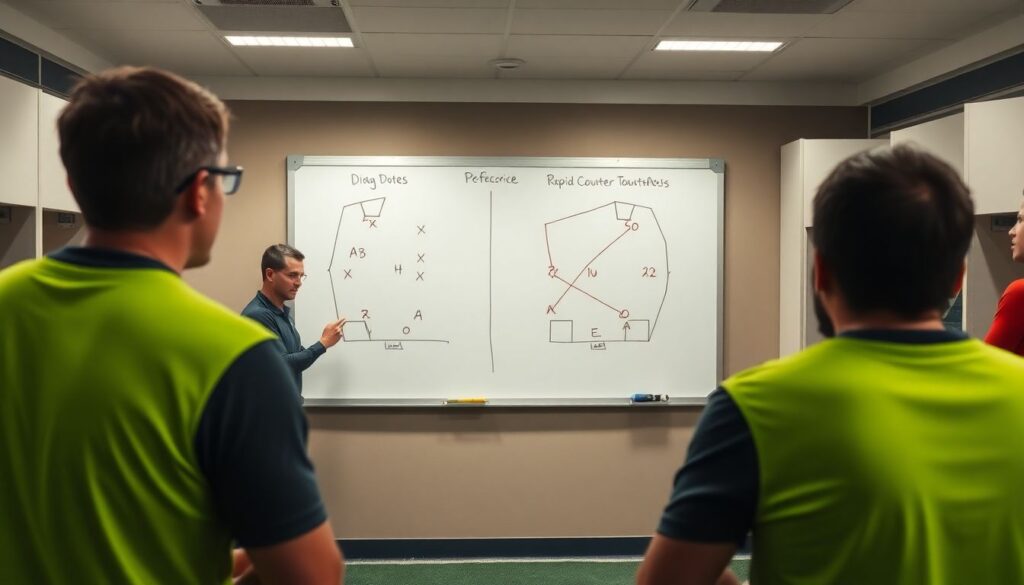
They often simplify roles, raise physical and emotional intensity, and focus on quick wins: defensive compactness, set-pieces and faster transitions. Structural, possession-based changes typically come later, once the squad believes in the basic idea and results stabilise.
Are Turkish managers suitable for youth-oriented projects?
Yes, if their background includes academy or development work and they accept clear KPIs around minutes and progression. Some specialise in squeezing veterans; others have strong records improving young, aggressive squads. The key is matching their history to your project type.
What is the main tactical risk of hiring a Turkish coach in a possession-dominant league?
Their preference for transitions can leave your team without clear mechanisms for patiently breaking low blocks. If your league demands long phases of controlled build-up, you must confirm they can coach structured possession, not only reactive football.
How should a European club support a Turkish coach tactically?
Provide strong analytical staff, at least one local assistant who understands league culture, and clear data feedback loops. This combination lets the coach keep their intensity edge while gradually refining pressing heights, rest defence and possession schemes to local standards.
Do Turkish coaches struggle more with star players than European elites?
Not necessarily. Many come from big Istanbul clubs and are used to managing strong personalities. Problems arise when communication style and disciplinary expectations are not aligned early. Transparent rules and consistent application usually prevent major conflicts.
Can a Turkish coach lead a club in European competitions effectively?
Yes, especially if they adapt their typically high-risk domestic approach with better load management and in-game control. Their emotional management can be an advantage on big European nights, provided squad rotation and tactical plans are carefully prepared.
What profiles benefit most from hiring a Turkish manager?
Clubs needing a cultural jolt, struggling underdogs, and teams whose fans value intensity and directness often benefit most. Stable, data-centric clubs can also gain if they clearly define boundaries between the coach’s autonomy and the club’s long-term model.
Комментарии