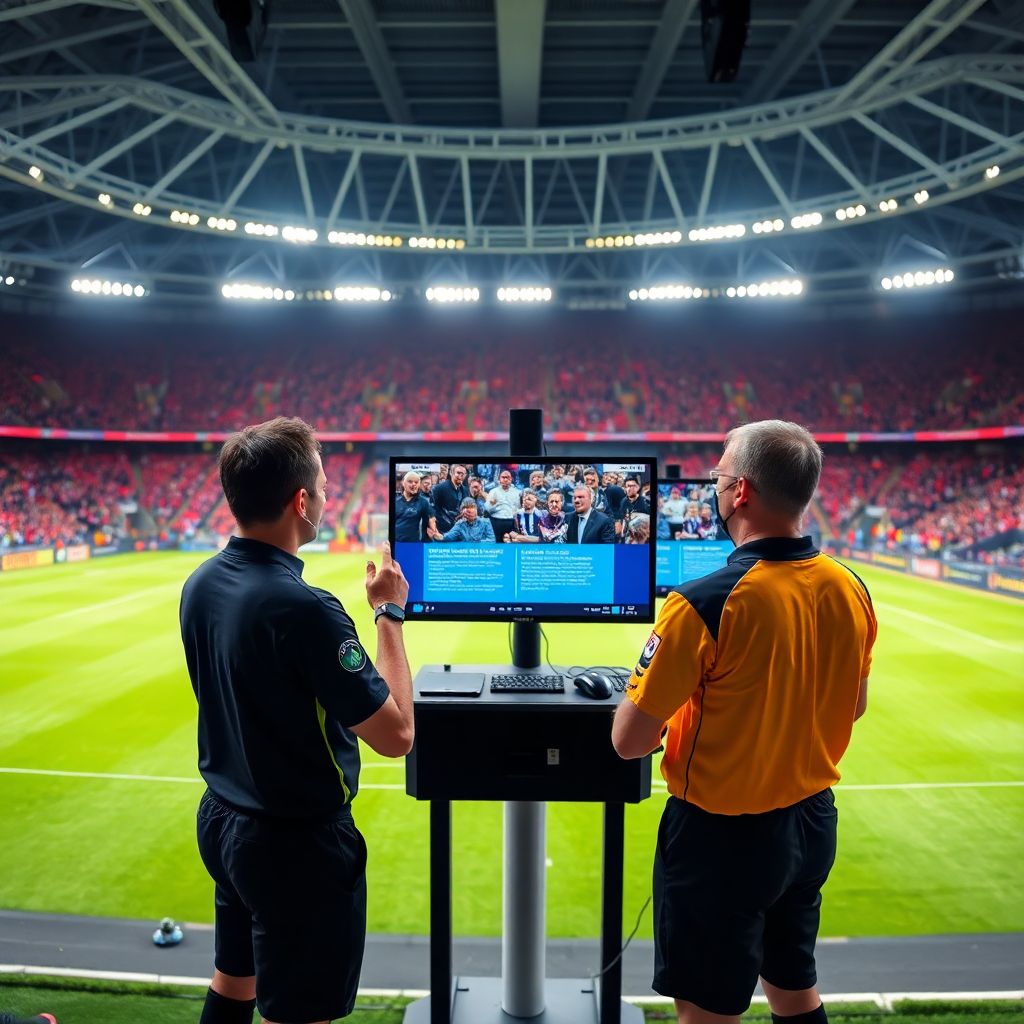
Video Assistant Referee (VAR) works best in Turkey when aligned with FIFA VAR rules and guidelines, using clear intervention thresholds, transparent communication and consistent referee training. Comparing football VAR technology models from UEFA, CONMEBOL and AFC shows that Türkiye should combine rigorous centralized oversight with local transparency reforms, rather than copying one system wholesale.
Snapshot: VAR impact metrics in Turkey and internationally
- VAR reduces clear officiating errors when protocols are narrow and well‑defined, not when it is used to re‑referee every incident.
- The main trade‑off in the var system in football pros and cons is accuracy versus game flow and trust; each region balances this differently.
- Türkiye’s implementation matches core FIFA VAR rules and guidelines, but communication and consistency lag behind UEFA’s leading leagues.
- Centralized replay centers and the best VAR review software for football improve calibration across officials but require major investment and connectivity.
- Public confidence depends less on how does VAR work in soccer leagues technically and more on transparency around decisions and audio explanations.
- Future reforms in Turkey should focus on referee education, uniform camera standards and real‑time information to broadcasters and fans.
Evolution of VAR deployment in Turkish professional leagues
When judging how VAR has evolved in Turkish professional leagues, it helps to use a set of consistent criteria rather than only reacting to single controversies.
- Protocol clarity – how precisely the four main categories (goals, penalties, direct reds, mistaken identity) are defined and respected.
- Intervention threshold – whether “clear and obvious error” is interpreted narrowly or becomes an excuse to re‑referee subjective calls.
- Technological coverage – number and quality of broadcast cameras, offside lines, goal‑line tech and overall football VAR technology reliability.
- Referee and VAR training – frequency and realism of simulation sessions, cross‑assessment and post‑match debriefs.
- Centralization level – use of a national VAR center versus in‑stadium operations and how that affects consistency.
- Transparency practices – publication of explanations, access to VAR audio, and clarity of on‑screen graphics for fans and media.
- Governance and independence – how appointments, assessments and disciplinary measures are insulated from club and political pressure.
- Integration with domestic culture – how protocols are communicated to players, coaches and fans in Turkey’s specific football environment.
- Alignment with international standards – compatibility with leading UEFA leagues to ease referee exchanges and international competitions.
Using these criteria shows that Türkiye has reached basic technical alignment with global practice but still struggles with consistency, perception of bias and transparent communication.
Comparative analysis of VAR systems: UEFA, CONMEBOL, AFC and Türkiye
The table below compares how different confederations and Türkiye have implemented and governed VAR, focusing on suitability, strengths and trade‑offs.
| Variant | Best suited for | Pros | Cons | When to choose this model |
|---|---|---|---|---|
| UEFA elite league model | Leagues with strong broadcast infrastructure and stable referee programs | High camera counts, centralized replay centers, rigorous training, strong alignment with FIFA VAR rules and guidelines | Costly to build and maintain; risk of over‑standardization that can feel rigid in local contexts | When a league wants maximum consistency and can afford top‑tier technology and staffing structures. |
| CONMEBOL competition model | High‑intensity competitions with frequent big‑match pressure | Emphasis on big‑decision support, robust communication from VAR to referee, extensive continental experience | Historically uneven tech quality between venues; public trust fluctuates during high‑profile controversies | When managing continental cups and derbies where pressure on officials is extreme and support structure is crucial. |
| AFC developing‑league model | Emerging leagues upgrading football VAR technology step by step | Phased roll‑out, pragmatic adaptation to local resources, strong guidance on how does VAR work in soccer leagues with limited budgets | Slower path to full coverage, variability between top clubs and smaller venues, reliance on external expertise | When a federation must expand VAR gradually, prioritizing key matches before full‑league deployment. |
| Türkiye hybrid adaptation model | National leagues aiming to blend UEFA‑style structures with local governance realities | Central VAR center, alignment with international training, growing experience with domestic derbies and high‑stakes fixtures | Perception of inconsistency, limited public access to VAR audio, recurring debates on var system in football pros and cons | When a league wants to stay compatible with UEFA while still experimenting with communication and governance reforms. |
| Minimalist in‑stadium VAR model | Lower divisions or smaller countries with basic TV setups | Lower cost, simpler logistics, easier to reverse course if public acceptance is low | Less consistency, fewer camera angles, greater risk that key incidents are not clearly captured | When resources are tight and the priority is piloting VAR in a limited, controlled way before scaling up. |
For Türkiye, the UEFA elite league model offers the best long‑term template, but realistic short‑term reforms look more like a refined hybrid adaptation, strengthening transparency and training without overextending budgets.
Controversial match incidents and how VAR ruled – case studies
Short case studies help expose how small protocol choices can either defuse or inflame controversies around VAR.
Case study 1: Offside in a title‑deciding Turkish derby
A late winning goal is initially awarded, then checked for offside. VAR draws the line and recommends overturning the goal. The main controversy comes from camera angle quality and communication, not from the offside law itself.
If camera coverage is limited or offside lines are unclear, then the recommendation should lean toward “on‑field decision stands” with transparent explanation rather than stretching technology beyond its limits.
Case study 2: Penalty for handball in a UEFA Champions League match
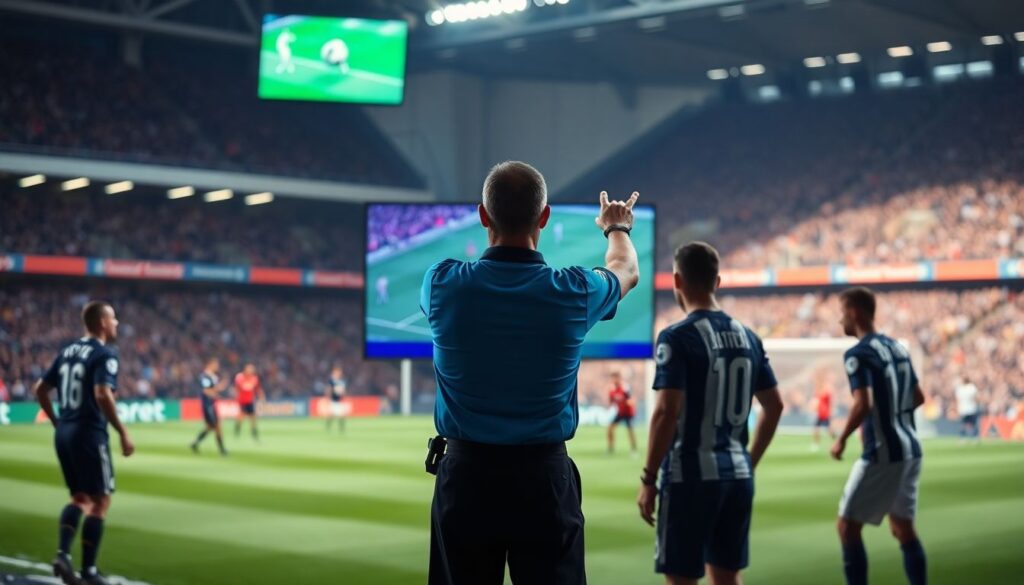
The referee misses a potential handball; VAR recommends an on‑field review. After replays, the referee awards a penalty. Debate centers on the interpretation of “unnatural position” and distance from the ball.
If the hand clearly enlarges the body and blocks a shot on goal, then the Turkish system should mirror UEFA in recommending a review; if body position is natural or contact is accidental, then VAR should not intervene.
Case study 3: Red card for serious foul play in a South American qualifier
The referee gives a yellow card for a high tackle; VAR checks for serious foul play. Multiple replays show studs above the ankle with high force, leading to an upgraded red card.
If replays show clear endangerment of an opponent’s safety, then VAR should recommend an upgrade; if force and contact point are ambiguous, then the original yellow should remain.
Case study 4: Goalkeeper encroachment on a penalty in AFC competition
A penalty is saved, and VAR checks goalkeeper position. One frame suggests the keeper is inches off the line, but the kicker also double‑touched the ball.
If both attacking and defensive infringements occur, then protocols must specify which is penalized first; if the kicker clearly commits the more serious infraction, then the restart should favor the defending team.
Decision‑tree table: incident type → VAR check → likely outcome
| Incident type | VAR check focus | Likely outcome if evidence is clear |
|---|---|---|
| Goal with possible offside | Last touch before the goal, attacker’s position at pass, defender contact | Offside line confirms attacker ahead of second‑last defender → goal disallowed |
| Potential penalty for handball | Arm position, distance, deflection, impact on shot or cross | Arm clearly enlarges body and blocks shot → penalty awarded after review |
| Serious foul play or violent conduct | Point of contact, intensity, studs exposure, speed | Clear endangerment of safety → yellow upgraded to red after on‑field review |
| Penalty area mistaken identity | Who committed the foul, jersey numbers and angles | Card transferred to correct player; restart (penalty or free‑kick) unchanged |
| Goalkeeper encroachment at penalty | Feet on or over line at kick, outcome of save/goal/post | Keeper clearly off line and save made → penalty retaken |
Quantitative successes: accuracy, overturn rates and match-flow indicators
Even without publishing full statistics, Turkish football can use a simple, data‑aware checklist to assess its VAR implementation against global practice.
- Define core metrics – track at minimum: total reviews, on‑field overturns, time taken per check, and how many reviews are “silent checks” versus on‑field reviews.
- Segment by incident type – separate goals, penalties, red cards and mistaken identity, since football VAR technology affects each category differently.
- Benchmark against leading leagues – compare Turkish overturn rates and average review times with top UEFA competitions to identify outliers rather than to copy blindly.
- Monitor match‑flow indicators – log additional stoppage time linked directly to VAR decisions and how often reviews come in added time or during critical phases.
- Track perception, not just decisions – survey referees, coaches and players on whether VAR improves fairness, and cross‑check perceptions with objective metrics.
- Audit edge cases – regularly review incidents where VAR could have intervened but did not, ensuring the “check but no review” logic is consistently applied.
- Publish summarized trends – release periodic reports with anonymized trends so that debates around how does VAR work in soccer leagues in Turkey are grounded in shared facts.
Operational bottlenecks: technology, referee training and stadium logistics
Common weaknesses in VAR deployments tend to cluster around equipment, people and processes, and Turkey is no exception.
- Uneven camera standards between stadiums – some venues lack enough angles for reliable offside and penalty decisions, undermining consistency.
- Insufficient hands‑on training time – referees and VARs may know protocols on paper but lack repetition with the specific best VAR review software for football used domestically.
- Overreliance on technology for subjective calls – slow‑motion replays can exaggerate contact, leading to harsher sanctions than originally intended by the Laws of the Game.
- Poor communication with broadcasters – unclear graphics or delayed replays fuel speculation and conspiracy theories, particularly in heated Turkish derbies.
- Latency and connectivity issues – unstable links to a central VAR hub risk delayed or missed interventions and erode referee confidence in the system.
- Lack of standardized debriefs – without structured post‑match reviews, crews repeat the same mistakes in positioning, communication and check logic.
- Opaque appointment and assessment processes – clubs may question neutrality if criteria for assigning VAR officials and evaluating their performances are not transparent.
- Inadequate crisis‑communication plans – after major controversies, silence from officials allows misinformation about football VAR technology and decisions to spread unchecked.
Decision path: choosing a VAR governance and operations model
- If the league can fund high‑end technology and centralized operations, prioritize a UEFA‑style centralized VAR center with strict protocols.
- If budgets are moderate but political pressure is high, adopt Türkiye’s hybrid model but add independent oversight and transparent reporting.
- If infrastructure is limited, start with a minimalist in‑stadium VAR model focusing only on title races and relegation battles.
- If public trust is low after repeated controversies, prioritize transparency reforms (audio release, explanations) even before adding new technology.
Reform roadmap: governance, transparency and enforceable standards
For Turkey, the most sustainable path is a refined hybrid system: UEFA‑level protocols and centralized review for top tiers, with locally adapted communication and gradual expansion to lower leagues. UEFA’s model is best for technical and training benchmarks, while CONMEBOL’s experience helps manage intense, high‑pressure fixtures.
- Codify a narrow, public intervention threshold and stick to it, resisting pressure to re‑referee subjective incidents.
- Standardize minimum camera and connectivity requirements for all Super Lig venues, audited before each season.
- Establish independent review and publication of key VAR audio‑plus‑video packages within a fixed time after controversial matches.
- Increase joint training camps with leading UEFA referees to align interpretations and match‑management skills.
- Create clear, published pathways for referee and VAR promotion and demotion based on performance, not reputation.
- Roll out fan‑facing education on var system in football pros and cons so that expectations match what VAR can realistically deliver.
Practical questions referees, clubs and federations face about VAR
How strictly should Turkish referees apply the “clear and obvious error” standard?
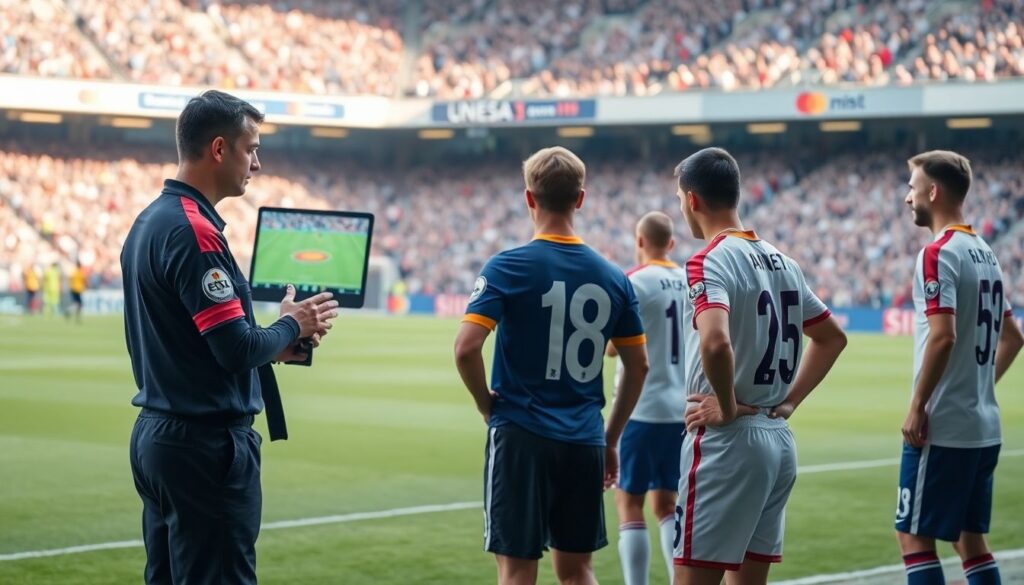
They should apply it narrowly, intervening only when video clearly contradicts the on‑field decision. This keeps VAR focused on major mistakes and preserves the referee’s authority and game flow.
Should VAR in Turkey ever review yellow cards?
Only when the yellow card might actually be a red card for serious foul play or violent conduct. Routine yellow cards should not be reviewed, or VAR will become intrusive and slow games down.
How can clubs better prepare for VAR‑heavy matches?
Clubs should educate players on common VAR‑triggering fouls, practice emotional control after reviews and coordinate with analysts who understand football VAR technology to anticipate likely checks.
Is releasing VAR audio to the public a good idea?
Timed, contextual release of VAR audio for key incidents can build trust if it follows clear rules and protects referee safety. Random leaks or selective publication, however, can deepen mistrust.
What should federations prioritize: more technology or better training?
Basic technology must reach a minimum standard, but after that, investment in referee and VAR teamwork, communication and decision‑making delivers more benefit than adding extra cameras alone.
How can smaller leagues align with FIFA VAR rules and guidelines without overspending?
They can phase in VAR for key matches, share regional training resources, and adopt lean protocols that mirror global standards while using simpler technical setups.
Does VAR eliminate refereeing controversy?
No. VAR reduces clear factual errors but cannot remove all debate over subjective decisions. Managing expectations and communicating decisions clearly are as important as the technology itself.