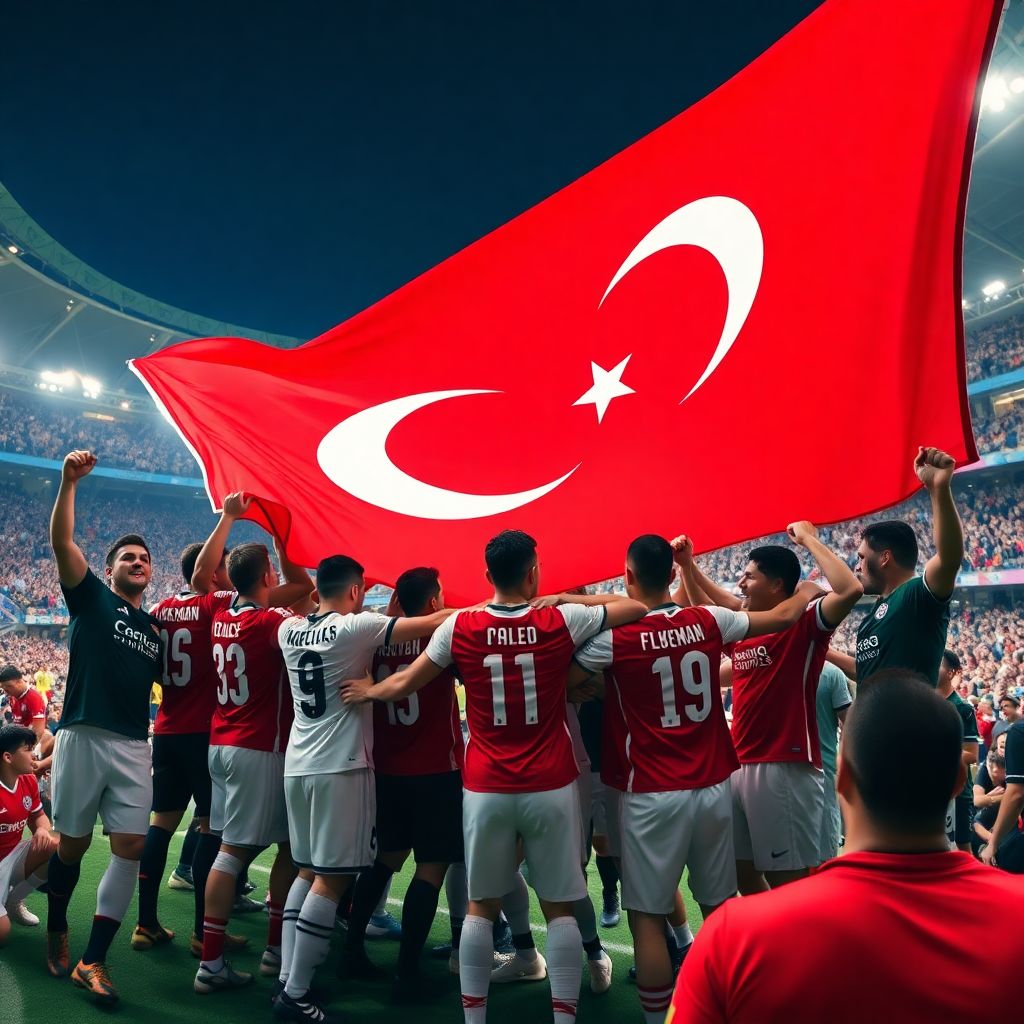
Turkish diaspora players strengthen the National Team by enlarging the talent pool, importing elite training habits from European leagues, and offering tactical flexibility across positions. When integrated with clear selection criteria and cultural support, they raise internal competition, deepen squad depth, and connect fans worldwide more strongly to the Turkish football identity and brand.
Common Myths and Central Arguments
- Myth: Diaspora players are less committed. In reality, many over‑perform to prove they belong in the Turkish setup.
- Myth: They block local talent. Proper rotation and succession planning show that they often raise, not reduce, domestic standards.
- Myth: Different football education hurts cohesion. With good coaching, mixed schooling broadens the tactical toolbox.
- Myth: Dual nationals will instantly switch away after a bad tournament. Retention depends more on trust and role clarity than on individual results.
- Central argument: The question is not “diaspora vs homegrown” but how to create one integrated high‑performance environment.
- Central argument: Scouting and communication structures, not passports, decide whether diaspora talent becomes an asset or a distraction.
Quick Practical Guidelines for Leveraging Diaspora Talent
- Define transparent criteria for call‑ups that apply equally to domestic and diaspora players (minutes, role, physical data, attitude).
- Create a dedicated process for scouting Turkish diaspora football players in key regions (Germany, Netherlands, France, Belgium, Scandinavia).
- Assign each dual‑national prospect a clear liaison (coach or scout) responsible for regular contact and feedback.
- Use short camps and friendly matches to test tactical fit before competitive caps lock eligibility.
- Integrate language and cultural support into camps to help Europe‑raised players adapt quickly to the National Team environment.
- Align marketing (turkish national team jersey launches, turkey national team merchandise campaigns) with diaspora stories to strengthen their emotional attachment.
- Monitor fan sentiment, especially around turkey national football team tickets demand abroad, to choose host cities that welcome diaspora‑heavy squads.
Diaspora Pathways: Identifying Talent Pools in Europe and Beyond
Turkish diaspora players are footballers with Turkish heritage who grew up or were developed outside Türkiye, often with dual nationality. Their role in strengthening the National Team starts with how well their pathways from youth clubs abroad into Turkish scouting networks are mapped and managed.
The biggest talent clusters lie in European countries with large Turkish communities and strong league structures. Systematic scouting Turkish diaspora football players typically focuses on Germany, the Netherlands, France, Austria, Switzerland, Belgium, and the Scandinavian leagues, plus emerging pockets in England and the United States. Each region offers slightly different player profiles and tactical schooling.
Practically, a pathway means an observable journey: youth academy abroad → age‑group national teams (foreign or Turkish) → contact from Turkish scouts → trial camps → full international debut. Where this chain is broken, players are lost to other national teams or simply never reach senior level. Clear digital databases, video analysis workflows, and regular shortlists are essential to keep track of players from U15 upwards.
A mini case: A German‑born Turkish striker in a Bundesliga academy may be scouted early by Germany’s youth setup. If Türkiye waits until he is already a U21 international elsewhere, the emotional and competitive cost of switching becomes high. Early relationship‑building, even without immediate call‑ups, keeps the Turkish option real and respected.
Eligibility Rules and Dual-Nationality Dynamics
Diaspora impact is constrained and enabled by eligibility rules. Understanding the mechanics of dual nationality is crucial for smart, long‑term squad building.
- Citizenship requirement: A player must hold Turkish nationality according to Turkish law. Dual nationals can be eligible for Türkiye and another country simultaneously at youth level.
- Youth appearances vs senior commitment: Playing for another country in youth categories does not automatically close the door to Türkiye. The decisive factor is competitive senior caps (qualifiers, tournaments), not friendlies or youth tournaments.
- One‑time switch procedures: Players who represented another association in official youth games can often request a one‑time switch to Türkiye, provided they meet nationality and match‑type criteria. This makes early strategic dialogue critical.
- Cap‑tying fixtures: Once a player appears in an official senior competitive match for Türkiye, their international future is effectively committed. Friendly matches usually do not have the same binding effect, but rules can evolve and must be monitored.
- Age and timing considerations: Many dual nationals feel intense pressure around ages 18-23, when both federations may invite them. Late, reactive approaches by Türkiye increase the risk of losing them permanently.
- Family and advisor influence: Parents, agents, and club coaches often shape the decision. Federations that educate these stakeholders about rules and realistic pathways win more decisions.
- Perceived respect and sporting project: Players rarely choose only based on trophies. Clear roles, honest communication, and visible investment in their development can outweigh short‑term competitive rankings.
Technical Contributions: Skill Sets Brought by Diaspora Players
The main technical benefit of diaspora players is diversity of training backgrounds. Different academies abroad specialise in different aspects of development, and combining these strengths can raise the National Team’s overall technical ceiling.
- Press‑resistant midfielders from possession schools: Diaspora midfielders trained in Dutch or Spanish‑influenced systems often excel in receiving under pressure, using the half‑spaces, and playing progressive passes. They help Türkiye maintain control against aggressive pressing opponents.
- High‑intensity full‑backs and wingers: Players raised in German and Austrian academies are typically conditioned for intense pressing, overlapping runs, and repeat sprints. This enables modern wide play with both defensive reliability and offensive width.
- Structurally disciplined defenders: Centre‑backs developed in France, Belgium, or Switzerland may be more accustomed to zonal defending, line management, and playing out from the back. They can anchor a higher defensive line or a three‑at‑the‑back structure.
- Finishing specialists from elite attacking leagues: Forwards coming from Bundesliga, Eredivisie, or top‑tier youth leagues often show strong penalty‑box movement, timing, and composure. Their micro‑movements between centre‑backs convert half‑chances into goals.
- Set‑piece and delivery experts: Exposure to advanced set‑piece coaching means some diaspora players bring rehearsed routines for corners and free‑kicks. When combined with aerially strong homegrown players, this can add several goals per qualifying campaign.
- Mental and professional habits: Elite European environments emphasise nutrition, recovery, and video analysis. Diaspora players can informally transfer these standards into the Turkish camp, provided coaches reinforce them instead of treating them as “foreign extras”.
A short case: When Türkiye selects a diaspora right‑back used to high pressing and inverted movements, coaches suddenly gain flexibility to build attacks inside rather than only through the wings. This technical profile widens tactical options without changing half the squad.
Tactical Integration: Coaching Strategies for Blending Styles
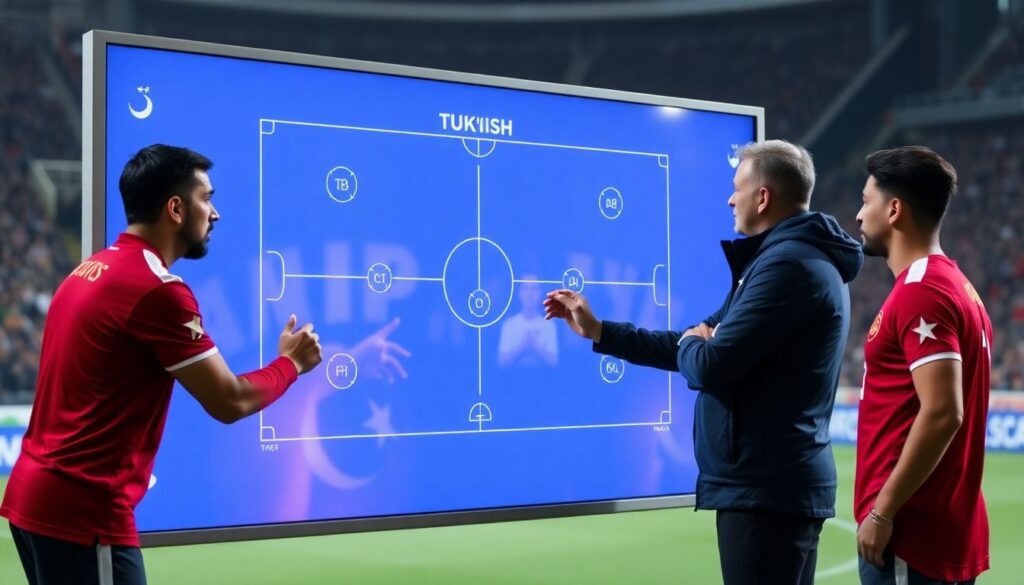
Bringing diaspora players into the National Team only pays off when tactical integration is planned. Coaches must blend different football educations into a coherent identity that fits Türkiye’s player pool and competitive goals.
Advantages when integration is done well
- Multiple game plans: The mix of diaspora and domestic profiles allows Türkiye to switch between possession‑heavy and transition‑oriented styles depending on opposition.
- Role redundancy and depth: Having diaspora options in key roles (e.g., left‑footed centre‑backs, ball‑playing sixes) ensures injury or suspension does not force a tactical downgrade.
- Higher internal tempo: Players coming from high‑intensity leagues raise the speed of training, forcing teammates to adapt to continental rhythms.
- Better in‑game problem solving: Different tactical educations mean more players can read and adjust to new shapes and pressing schemes during matches.
- Broader opponent familiarity: Diaspora players bring lived experience against European club styles, helping the staff prepare targeted match plans.
Constraints and risks to manage proactively
- Over‑complex game models: Trying to accommodate every tactical nuance brought by diaspora players can overload the team with instructions.
- Unclear hierarchy: If status is based on league brand rather than role clarity and performance, the dressing room hierarchy becomes unstable.
- Short international windows: Limited training time makes it hard to rehearse bespoke schemes, so staff must simplify and prioritise core principles.
- Language and terminology gaps: Identical concepts may be described differently across leagues; miscommunication can cause pressing or build‑up errors.
- Dependence on a few individuals: Overreliance on star diaspora players can leave the team tactically fragile when they are absent.
In practice, staff should build a small library of base structures (for example, two main formations and one late‑game variant) and define in advance which diaspora profiles plug into each role. Video‑based “micro‑schools” during camp can quickly align terminology and expectations.
Socio-cultural Impact: Identity, Motivation and Team Cohesion
The socio‑cultural layer often decides whether diaspora involvement becomes a powerful unifier or a source of quiet tension. Several recurring misconceptions and mistakes can be avoided with clear policies and communication.
- Mistake: Labeling players as “German‑Turkish”, “Dutch‑Turkish” inside the camp. Over‑emphasising origin creates sub‑groups and makes some players feel like guests instead of full internationals. Uniform standards and language of “our players” support cohesion.
- Myth: Diaspora players only choose Türkiye as a backup. Many turn down youth offers from other countries because of emotional ties to Türkiye. Assuming they lack ambition or loyalty damages trust before they even arrive.
- Mistake: Ignoring off‑field adaptation. Players raised abroad may struggle with local media expectations, humour, and daily routines. Simple orientation sessions and mentorship by senior teammates reduce friction.
- Myth: Fans will reject diaspora‑heavy squads. In reality, when players show visible passion for the flag and interact with fans, demand for turkey national football team tickets and turkish national team jersey sales often increases, especially in cities with large diaspora populations.
- Mistake: Using diaspora players mainly as marketing symbols. Highlighting them only in turkey national team merchandise campaigns without giving them meaningful on‑field roles can create cynicism among both players and supporters.
- Myth: One camp is enough for full integration. Cohesion builds over cycles. Consistent call‑ups, transparent selection, and shared leadership responsibilities help diaspora and domestically raised players feel they are building something together.
Handled well, diaspora players can become cultural bridges who show that being Turkish is compatible with global life paths, inspiring young fans and strengthening the National Team’s broader identity.
Policy and Recruitment: Federation Practices That Deliver Results
Effective use of diaspora talent is less about luck and more about institutional design. Federations that do this well treat diaspora recruitment as a long‑term project, not a last‑minute reaction before major tournaments.
A practical model for the Turkish federation might look like this simplified “pseudo‑process”:
1. Map
   - Build a live database of Turkish-heritage players in top 20 leagues and key academies.
   - Tag: position, foot, minutes, contract status, previous national-team involvement.

2. Monitor
   - Assign regional scouts to update match reports and video clips monthly.
   - Flag "priority prospects" for regular staff review.

3. Engage
   - Make first contact early (U15-U18) with honest feedback on chances.
   - Offer short training camps or youth friendlies where possible.

4. Decide
   - Before each window, select call-up candidates using:
     - Performance data
     - Tactical fit for upcoming opponents
     - Character references from club coaches.

5. Integrate
   - Provide language/translation support when needed.
   - Pair each newcomer with a senior mentor already established in the squad.

6. Review
   - After each window, evaluate:
     - On-field impact
     - Group dynamics
     - Player feedback on the environment.
As this process matures, the federation can justify investing in at least one Turkish football academy for diaspora players (or partnerships with existing academies) in major hubs like Germany. These hubs would share methodology with domestic academies, ensuring that by the time players reach senior level, the gap between “diaspora style” and “local style” is already narrowed.
In one practical case, a federation office in a European capital partnered with local clubs and fan groups to host annual talent ID days for youth of Turkish origin. Over several seasons, this turned informal kick‑about communities into structured scouting opportunities and created a steady pipeline of prospects for youth national teams and, eventually, the senior squad.
Practical Questions Coaches and Selectors Ask
How early should we contact a promising dual-national player?
Ideally before they become regulars in another country’s U21 setup. Early contact does not promise caps but signals respect and interest, making later decisions easier for the player and their family.
What if a diaspora player is technically strong but does not speak Turkish well?
Language should be a development objective, not an immediate exclusion criterion. Basic football terms can be learned quickly; in the meantime, translators, bilingual teammates, and clear video sessions can bridge the gap.
How can we fairly compare domestic and diaspora players for the same position?
Use a shared evaluation grid: physical metrics, tactical understanding, technical skills, psychological profile, and recent performances. The league name alone should never be the deciding factor; decision‑makers need objective criteria and shared video references.
Do we risk weakening domestic leagues by focusing on diaspora players?
Not if selection remains performance‑based and communication is clear. When domestic players see that standards rise and that they can reach the same level through consistent performance, competition becomes a growth driver rather than a threat.
How should we react if a targeted diaspora player chooses another country?

Stay professional and respectful. Decisions can change under certain eligibility conditions, and your reputation with agents, clubs, and younger prospects depends on how you handle setbacks. Avoid public blame or emotional statements.
Can diaspora-heavy squads handle the pressure of major tournaments?
Yes, provided that leadership roles, communication channels, and tactical principles are clear before the tournament. Pressure is more about preparation quality and role clarity than about where players grew up.
How do we involve diaspora players in fan engagement and marketing without overusing them?
Focus on authentic stories: family roots, first visit to Türkiye, connection to local clubs. Rotate responsibilities so both domestic and diaspora players appear in campaigns for the turkish national team jersey and turkey national team merchandise, keeping the message unified.