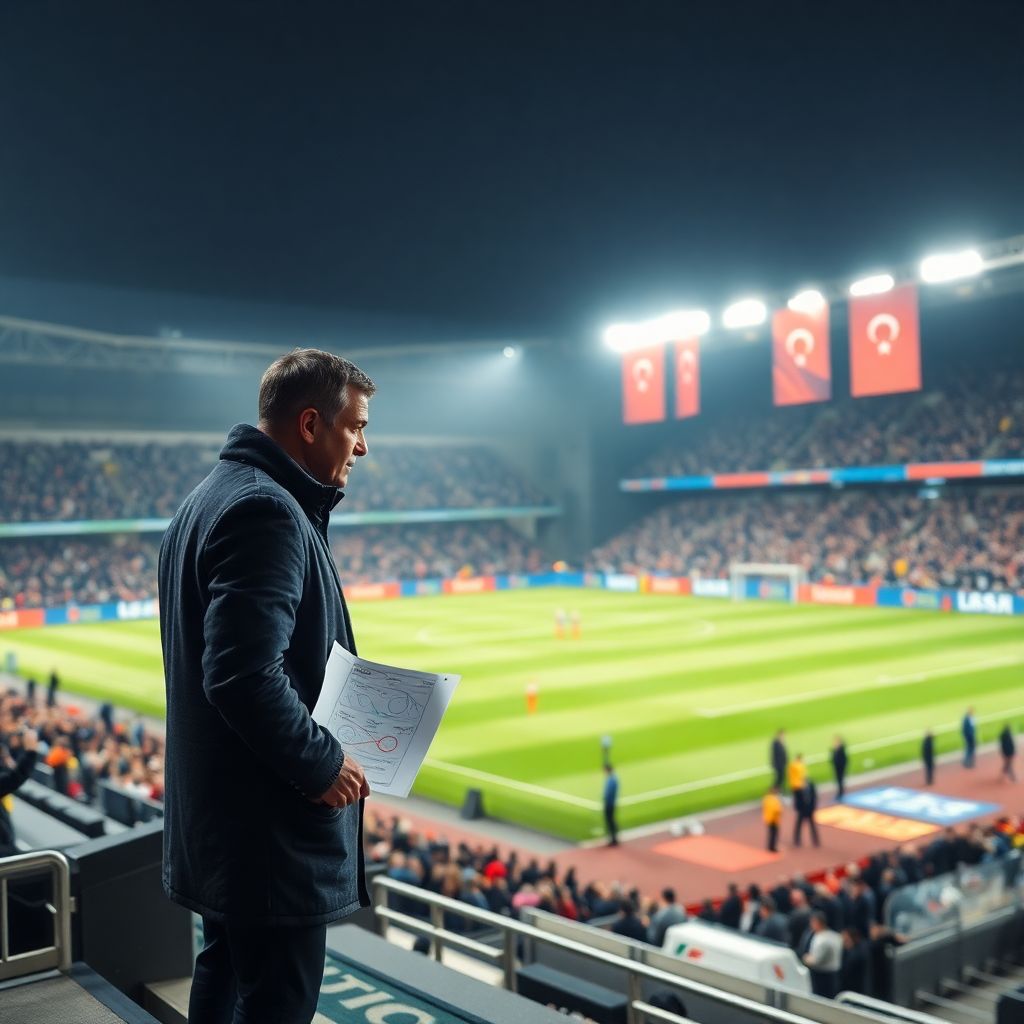
Turkish coaches struggle in Europe’s top leagues because their domestic success model does not fully translate: tactical habits, communication style, political club cultures and data use often mismatch Western European expectations. If Turkish football coaches in European leagues want sustained impact, they must deliberately adapt on licensing, language, networking and performance measurement.
Core barriers for Turkish coaches in Europe’s elite leagues
- Domestic coaching culture prioritises short-term results and emotional leadership over long-term, process-driven structures common in top European clubs.
- Licensing and education pathways are formally aligned with UEFA, yet practical tactical paradigms and methodology can differ significantly.
- Language gaps and communication style differences weaken leadership credibility in mixed, international dressing rooms.
- Limited networks and perception biases mean fewer chances and less patience compared with coaches from historically exporting nations.
- Reliance on intuitive judgement over integrated data and scouting reduces trust from modern, analytics-driven sporting directors.
- Few visible role models in the history of Turkish managers in top European clubs make clubs cautious and coaches under extra scrutiny.
Historical context: domestic coaching culture and its exportability
The coaching culture in Turkey has grown inside a league environment defined by intense fan pressure, powerful presidents and frequent coach changes. Tactical plans are often built to satisfy immediate demands of derbies and title races rather than multi-season projects shaped with a sporting director.
This shapes the typical profile of Turkish football coaches in European leagues when they move abroad: strong in motivation and in managing chaotic environments, but less aligned with process-heavy, analytics-driven models. The history of Turkish managers in top European clubs is short, so there is little accumulated know-how on how to translate domestic strengths into a different ecosystem.
In Western Europe, coaches are expected to integrate into club-wide philosophies that survive individual managers. In Turkey, the coach is more often the central figure defining style and mood. This inversion creates friction when boards want a head coach who will plug into, not redesign, the system.
- If you come from a results-first Turkish environment, then define explicitly how you will work within a multi-year club project before accepting a job.
- If your past success relied on personal authority, then map which structures (analytics, academy, medical) you must respect and empower abroad.
- If you lack role models from your own culture, then study detailed cases of foreign coaches who successfully exported their local style.
Licensing, education and tactical paradigms mismatch
On paper, UEFA licensing aligns Turkish coaching badges with those in other countries. In practice, emphasis, mentors and daily training culture can differ, creating a gap once a Turkish coach enters a league that lives on specific tactical and methodological norms.
- Training methodology: Many Turkish coaches grow up in environments where session design changes rapidly with results, whereas elite European clubs expect stable, periodised methodology linked to physical data.
- Tactical paradigms: Domestic focus on reactive tactics in big matches can clash with clubs that demand proactive, pressing or positional play as a non-negotiable identity.
- Youth integration: European sporting directors expect clear pathways from academy to first team; in Turkey, short-term pressure can limit trust in young players.
- Specialist staff usage: Top clubs assume collaboration with analysts, set-piece coaches and fitness experts; some Turkish coaches are less used to devolving control.
- Continuous education: In several Western leagues, there is strong informal pressure to stay updated via international conferences; Turkish coaches may have had fewer such exchanges.
- If your licence is formally valid, then audit your training methodology against current practices in your target league and adjust before arriving.
- If you favour reactive game plans, then prepare one proactive tactical identity that fits the club and can be consistently trained.
- If you are used to deciding everything alone, then define clear roles for analysts and specialists and commit to using their input.
Language, communication and cultural adaptation on the touchline
The touchline and dressing room in Europe’s top leagues are multilingual and culturally diverse. Communication quality affects not only clarity of instructions but also perceived leadership, trust and authority, which directly influences why Turkish coaches fail in top European leagues when they cannot adapt.
- Pre-match tactical meetings: Without confident working English or the local language, complex tactical ideas become simplified, and players may quietly switch off.
- In-game adjustments: Touchline instructions and half-time changes must be fast and precise; language gaps slow decisions and create confusion.
- Media interactions: Poor communication in press conferences can damage public perception and internal club confidence, shortening patience.
- One-to-one player management: Sensitive conversations about role, contract or behaviour require nuanced language and cultural awareness.
- Staff coordination: Aligning assistant coaches, analysts and medical teams demands shared vocabulary and routines.
A Turkish coach who excelled in the Süper Lig with passionate, high-volume communication may be misunderstood in calmer, more understated cultures, where emotional displays are read differently.
- If you cannot yet hold detailed tactical talks in the league language, then invest in intensive coaching-specific language training before and during your tenure.
- If your natural style is highly emotional, then adapt volume, body language and timing to local norms while keeping authenticity.
- If you rely heavily on trusted Turkish assistants, then add at least one local or internationally experienced coach to bridge cultural gaps.
Club politics, networking and perception biases
Access to elite jobs is never purely meritocratic. In Europe’s top leagues, informal networks, agent influence and national coaching reputations strongly shape opportunities. Countries with a long export history benefit from familiarity; Turkey does not yet enjoy this status.
There are also perception biases: club boards and media often see the best Turkish football managers in Europe through the lens of stereotypes about emotional volatility, lack of discipline or tactical conservatism. Even when unfair, these perceptions reduce patience windows and magnify minor mistakes.
Advantages that can be leveraged
- Experience under extreme pressure and in hostile atmospheres, valuable for clubs with demanding fan bases.
- Background in managing technically skilled, creative players similar to many attacking talents in European squads.
- Ability to stabilise crisis situations thanks to strong man-management and motivational skills.
Constraints that must be managed
- Thinner personal networks among Western European sporting directors and agents.
- Media narratives that focus on temperament rather than methodology.
- Limited historical success cases to reassure boards and fans.
- If your network in Western Europe is weak, then build relationships with agents and sporting directors years before targeting a top-league job.
- If you face national stereotypes, then proactively show your tactical and data work in presentations and media, not only emotional leadership.
- If a club has internal political instability, then negotiate clear authority lines and decision rights before signing.
Performance metrics, scouting data and tactical flexibility

Modern European clubs benchmark coaches through data as much as through trophies. Some challenges for Turkish coaches in European football come from a slower shift at home towards integrated analytics and structured scouting, which can make their work seem less transparent or less modern abroad.
- Overconfidence in intuition: Relying mainly on personal eye-test for player selection and tactics, while ignoring data that clubs have already invested in.
- Narrow preferred systems: Sticking to one or two formations even when squad profiles or league trends demand adjustments.
- Misreading physical demands: Underestimating the intensity and running metrics expected in high-pressing European teams.
- Data used as decoration: Presenting statistics in meetings without letting them genuinely influence decisions.
- Belief that passion can compensate for structural gaps: Assuming motivation alone will solve tactical or physical mismatches.
- If your strength is reading the game by eye, then pair it explicitly with club data, and document how numbers confirm or challenge your views.
- If you prefer a specific formation, then prepare at least two alternative structures that match squad data and opposition patterns.
- If you are unfamiliar with advanced metrics, then work closely with analysts to translate key indicators into daily training tasks.
Success pathways: case studies and realistic strategies
Looking at Turkish football coaches in European leagues who have at least partially succeeded, patterns emerge: they often started in smaller clubs or assistant roles, learned the local language early, and positioned themselves as collaborative, analytically aware leaders rather than lone decision-makers.
Imagine a coach leaving a top Turkish side for a mid-table club in a major European league. Instead of importing his full staff and system unchanged, he spends months studying the club’s data and academy, learns functional language, and presents a three-season plan aligned with the sporting director’s model. His adaptation buys time and internal trust.
These realistic strategies matter more than waiting for a glamorous offer from a super-club. Building credibility step by step abroad can, over time, change how boards view coaches from Turkey and gradually expand the list of best Turkish football managers in Europe.
- If your first job abroad is in a modest club, then treat it as a learning lab where you prove adaptability, not as a downgrade.
- If you aim at a top-five league, then consider entering first as an assistant or co-coach to understand local dynamics.
- If your long-term goal is a top club, then map a clear five- to seven-year path of leagues and roles that develop missing skills.
End-of-article self-check for Turkish coaches
- If you took a job tomorrow in a top European league, then can you run full tactical meetings in the local language without an interpreter?
- If a sporting director asked for your three-year game model and data plan, then could you show concrete training and analytics processes?
- If you were fired after a short spell, then would your reputation abroad still show adaptability and professionalism, opening the next door?
- If a club board questioned Turkish coaching culture, then could you explain clearly how your methods align with modern European standards?
Practical clarifications and implementation concerns
Are Turkish coaches really less tactical than their European peers?
No. Many are tactically strong, but their methods and terminology are shaped by the Turkish league context. The perception problem arises when they do not translate this knowledge into the language, structures and data formats expected in top European clubs.
How important is language compared with pure coaching quality?
Language is a force multiplier. Strong coaching ideas delivered in weak language lose impact and authority. For a head coach in a top league, language skills are not a luxury; they are a core tool of leadership and must be developed early.
Can success in the Süper Lig alone convince European boards?
It helps, but it is rarely enough. Boards look for evidence that a coach can work within modern club structures, collaborate with sporting directors and handle media. Presenting structured processes, not just trophies, is crucial.
Is starting in a smaller European league a good pathway?
Yes. Coaching in mid-tier European leagues can provide language immersion, networking and proof of adaptability. Consistent work there builds the trust needed to eventually move into Europe’s top competitions.
Do Turkish coaches need to change their personality to adapt?

No, but they must adjust their expression. Keeping core values while moderating communication style, emotional displays and decision-making processes to fit local norms is usually enough for better acceptance.
How can a coach quickly show that he is data-friendly?
By involving analysts in public presentations, referring to key metrics in press conferences and basing visible selection or tactical choices on data-informed reasoning. Small, repeated signals change perceptions over time.
What should clubs consider when hiring a Turkish coach?
They should assess not only tactical ideas but also language plan, staff composition, openness to collaboration and willingness to align with the club’s existing sporting model. Clear expectations on these points reduce future friction.
Комментарии