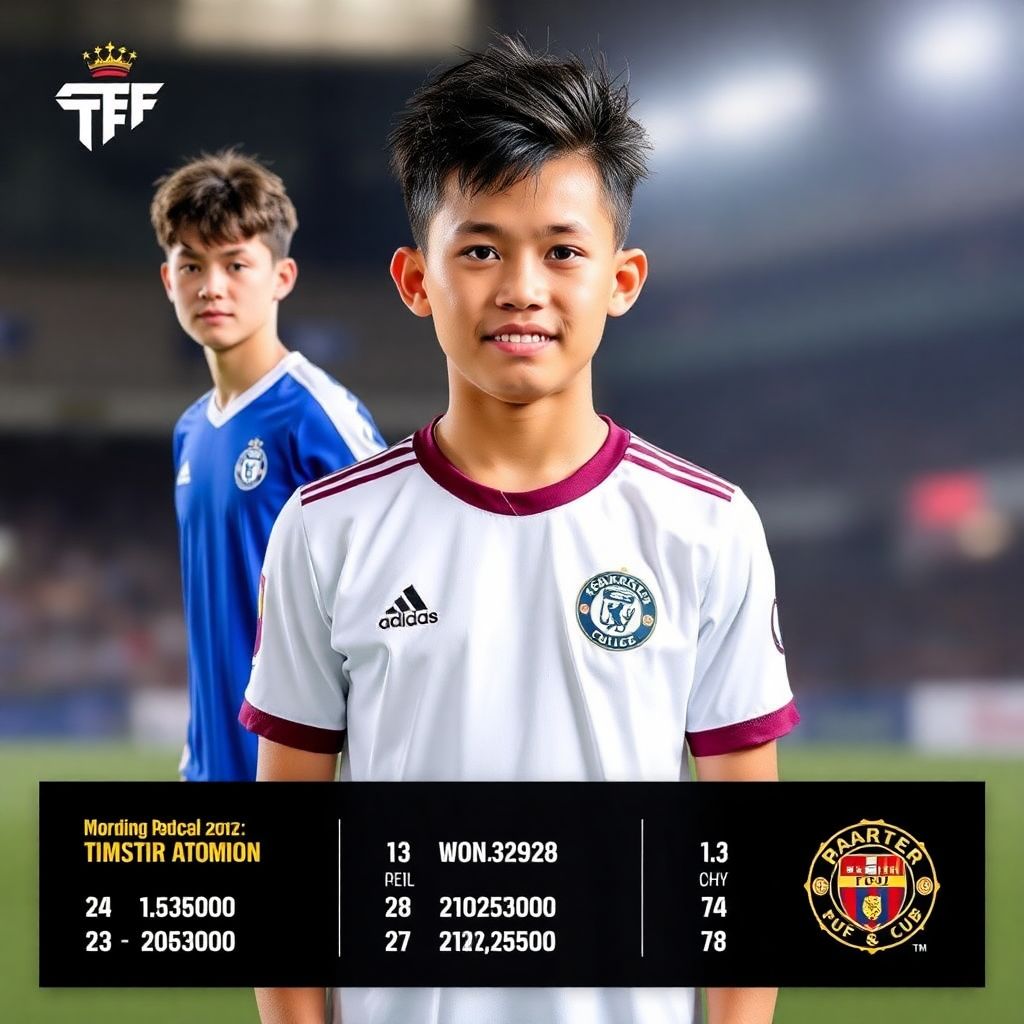
Rising stars of the TFF 1. Lig are young or still-developing players who already perform above the league average and show clear indicators they can handle Süper Lig or European level. To work with them effectively, focus on objective data, repeatable strengths, tactical fit and realistic pathways for a bigger move.
Why these TFF 1. Lig prospects deserve top-league attention
- They already dominate key actions in 1. Lig games rather than just showing occasional flashes.
- Their strengths translate directly to common Süper Lig and European tactical demands.
- Physical and mental profiles are closer to top-league standards than to typical 1. Lig averages.
- Data trends show consistent impact over a meaningful run of matches, not a short hot streak.
- Market conditions in Turkey make them more accessible than comparable profiles abroad.
- Early investment allows top clubs to shape their development before bad habits become fixed.
Five breakout players reshaping expectations in the 1. Lig
When scouts and analysts talk about TFF 1. Lig best young players 2024, they rarely mean just one type of footballer. They refer to a small group of breakout profiles that are already carrying their teams, forcing opponents to adjust game plans and attracting attention from bigger clubs.
In this context, rising stars are not simply the youngest players or those with the flashiest skills. They are the ones whose performances clearly project upwards: they handle pressure moments, sustain high-intensity runs and make decisions that would not look out of place in the Süper Lig. That is why these names quickly appear on lists of TFF 1. Lig rising stars transfer targets.
Instead of focusing on specific clubs or short-lived hype, it is more practical to think in five breakout archetypes that repeatedly show up among top TFF 1. Lig talents ready for Super Lig:
- Explosive wide forward: beats full-backs in 1v1s, attacks the box aggressively, high shot volume from good zones; ideal as an inverted winger in a 4-3-3.
- Press-resistant No. 8: scans well, turns under pressure, progresses play consistently; best in a midfield three with licence to advance.
- Ball-playing centre-back: calm in the first phase, breaks lines with passes, defends forward; suited to high defensive lines that dominate possession.
- Box-crashing No. 10: arrives late in the area, combines quickly, excellent final ball; thrives behind a mobile striker in 4-2-3-1 structures.
- Modern full-back: covers ground relentlessly, overlaps or inverts intelligently, strong crossing; fits both traditional wide roles and inside full-back tasks.
Across recent seasons, agents and recruitment departments looking for TFF 1. Lig wonderkids to watch for European clubs usually prioritise at least one player from each of these archetypes. Understanding the profile is more actionable than chasing every new headline name.
Technical and physical traits that predict Süper Lig success
To decide which TFF 1. Lig players are genuinely ready to jump, focus on specific, observable traits that scale to faster, more physical competitions.
- Repeatable ball control under pressure: first touch away from the defender, clean receiving on weaker foot, limited heavy touches when pressed from behind or the side.
- Game-speed decision making: quick, simple choices in crowded zones; limited touches in build-up; early passes when teammates break lines.
- Explosiveness over endurance: 5-10 metre acceleration to win duels, escape tight areas or attack space; visible in both attacking and defensive transitions.
- Defensive intensity and body orientation: active scanning, correct pressing angles, staying side-on rather than square to react to changes in direction.
- Position-specific technique: for example, centre-backs judging aerial duels and timing step-outs; wingers mastering cut-back crosses not just hopeful long balls.
- Recovery capacity: ability to repeat high-intensity sprints without major drop-off, especially for roles in wide channels and high presses.
If a player ticks several of these boxes consistently across different match types, that player enters the realistic group of TFF 1. Lig players ready for big transfer move discussions. Traits that only show up in highlight clips are not enough; they must survive full-match analysis.
Data signals: metrics and match contexts that show readiness
After defining the key traits, translate them into practical, repeatable checks for real-world scouting and analysis.
- Dominance against promotion contenders: prioritise performances versus top 1. Lig sides that play at higher tempo. If a winger still wins duels and creates chances in these games, his skill set is more likely to scale upward.
- Impact under different game states: track how a player behaves when leading, drawing and chasing the game. Reliable prospects keep discipline when ahead and still find solutions when the team is under heavy pressure.
- Ball progression involvement: for midfielders and defenders, count how often they break lines with passes or carries. It is not only volume that matters but also whether those actions actually move the team into more dangerous spaces.
- High-intensity actions per match: instead of generic running distance, note the number of sprints, counter-press efforts and recovery runs back toward own goal. These numbers must stay stable across congested fixture periods.
- Error profile: log every direct mistake leading to shots or goals. A young centre-back can still project well if errors are technical and coachable, but repeated poor decisions under no pressure are a red flag.
- Consistency across venues: compare home and away output. Prospects who maintain performance in difficult away atmospheres are more trustworthy for bigger stages.
Use these scenarios as simple workflows: watch one full match live, then cross-check impressions with event data and video of at least two contrasting fixtures. When the numbers and the eyes agree, the player deserves closer tracking and possibly targeted live scouting from senior staff.
Tactical fit: which systems will unlock each player’s strengths
Even outstanding TFF 1. Lig talents can stall if they move into the wrong tactical environment. Evaluate both what a player can already do and what the target team is willing to adapt.
Systems and roles that typically maximise 1. Lig breakout profiles
- Explosive wide forwards: best in 4-3-3 or 4-2-3-1 with clear isolation patterns, where full-backs overlap and midfielders shift to create 1v1s in wide channels.
- Press-resistant No. 8s: thrive in teams that build short from the back, using a single pivot and giving them freedom to receive between opposition lines.
- Ball-playing centre-backs: need compact units that press high and keep defensive distances short, so they can defend forward rather than retreating constantly.
- Box-crashing No. 10s: flourish when full-backs provide width and the striker pins centre-backs, opening half-spaces to arrive late into shooting positions.
- Modern full-backs: suit sides that either overload flanks with overlaps or invite them inside next to the pivot to help progression through the middle.
Situations where strengths may be limited or hidden

- Deep-block reactive teams: high-potential attacking talents can be starved of the ball and judged unfairly if the game plan only focuses on long clearances and counters.
- Rigid man-marking schemes: creative midfielders struggle when asked mainly to follow opponents instead of occupying smart zones to receive and turn.
- Ultra-direct styles for ball-playing defenders: centre-backs with good passing can regress if instructed to hit long balls at every opportunity.
- Full-backs in constant low block: modern full-backs who add value in attack can look ordinary when pinned next to their own box for most of the match.
- Overloaded squads at bigger clubs: even suitable systems can hide a prospect if there is no clear rotation plan or loan strategy to guarantee regular minutes.
Mental makeup and professionalism: non-technical drivers of progression
Technical quality opens doors, but mentality and habits decide whether a player can step through them. Misreading these aspects is one of the fastest ways to waste money on 1. Lig prospects.
- Confusing confidence with arrogance: visible self-belief on the ball is positive; ignoring tactical instructions or refusing defensive work is not. Check how the player reacts when substituted or criticised.
- Overvaluing social media presence: big online followings do not equal resilience under pressure. Prioritise how the player responds to mistakes inside games over how they project their brand.
- Ignoring off-ball work rate: some young attackers shine in highlights but walk without the ball. In higher leagues, this often leads to quick benching regardless of technical level.
- Underestimating adaptation stress: moving from a smaller Anatolian club to a big-city environment brings lifestyle pressure. Clubs should check support networks, language skills and willingness to adapt routines.
- Assuming leadership will arrive later: even at 20-22, future leaders already show small behaviours: organising pressing triggers, calming teammates, asking for the ball after mistakes.
Market timing: valuation, contract issues and optimal transfer paths
From a practical perspective, the best deals on TFF 1. Lig wonderkids to watch for European clubs and local giants usually come from getting timing right rather than beating everyone on pure scouting insight.
A simple approach many smart clubs use looks like this:
- Early flagging: identify a target when he first enters the conversation of TFF 1. Lig best young players 2024, long before mainstream headlines start pushing his name.
- Contract mapping: log contract length, option years and likely salary demands. Aim to move when two seasons remain on the deal, before the final-year discount turns into a bidding war.
- Step-by-step pathway: for top TFF 1. Lig talents ready for Super Lig, define a clear pathway: first year as rotation or loan to a stable mid-table side, second year as starter, then only consider an overseas transfer.
- Aligned incentives: work with the player and agent to build a realistic career plan. If everyone accepts that the next move is a development step rather than a final destination, the transition is smoother.
This disciplined, staged method is how clubs turn promising TFF 1. Lig players ready for big transfer move narratives into actual long-term assets instead of one-season gambles.
Practical concerns about promoting 1. Lig talents to higher competitions
How many 1. Lig games should a young player start before a big move?
There is no magic number, but you want a solid run of starts across different opponents and match states. Focus less on total appearances and more on how consistently the player influences games over several months.
Is it better to loan a prospect or integrate directly into the first team?
It depends on squad depth and tactical fit. If the player can realistically get 1,000-1,500 minutes in your first team, integration makes sense; otherwise a focused loan with a clear role is usually safer.
How do you protect a young player from media and fan pressure after the move?
Set realistic public expectations, avoid overhyping the transfer and give the player a defined role rather than selling them as an instant saviour. Internal support from staff and experienced teammates is more important than statements in the press.
What is the biggest on-pitch adjustment for 1. Lig attackers moving up?
The main change is tempo: less time on the ball, more intense pressing and better defenders. Encourage them to simplify actions, release the ball earlier and pick their 1v1 moments instead of trying to dribble every time.
Why do some dominant 1. Lig defenders struggle in the Süper Lig?
Many are used to defending deep with the game in front of them. At higher levels they must defend big spaces behind them and make faster decisions in the build-up. Without these skills, their physical strengths are less effective.
How should clubs handle salary jumps for promoted 1. Lig talents?
Use step-based contracts with performance triggers rather than huge guaranteed increases. This protects the club if adaptation is slower than expected and rewards the player quickly when they hit agreed milestones.