
Foreign player quotas in Turkey help local talent development only when they are balanced, predictable, and combined with strong academy incentives. Very strict caps in the Turkish Super Lig can lower quality and transfer value, while totally open rules can block pathways. A mixed model with minute-based incentives, smart registration limits, and club monitoring works best.
Practical overview: quotas and their immediate effects
- The current turkish super lig foreign player rule only makes sense when clubs also invest in youth coaching and minutes for young Turks.
- Hard caps alone do not guarantee more local players; they can just raise wages for average domestic players.
- Clubs react to turkey football foreign player quota 2024 type changes by shortening contracts and rotating foreigners tactically.
- For sustainable growth, turkey local talent development vs foreign players must be treated as one integrated policy question, not a conflict.
- The effect of foreign players on turkish football development depends more on coaching quality and playing time than on headcount.
- Reliable analysis of foreign player limits in turkish super league requires tracking minutes, debut ages, and academy budgets over several seasons.
Historical evolution of foreign player regulations in Turkish football
Foreign player quotas in Turkey have shifted repeatedly, moving between protection of local players and ambitions for European competitiveness. These swings create uncertainty for clubs and practitioners who plan over multi‑year cycles.
When comparing phases of regulation, focus less on exact numbers and more on clear evaluation criteria:
- Stability of rules over time – how often the federation changes the quota framework.
- Clarity between registration and match-day limits – difference between foreigners you can sign and those you can field.
- Impact on Turkish players’ total minutes – whether domestic players actually stay longer on the pitch.
- Pathway from academy to first team – share of squad slots reserved or effectively used for club-trained talent.
- Quality of imported foreigners – whether quotas push clubs toward higher quality or cheaper, short-term options.
- Financial discipline – interaction of quotas with wage inflation and transfer spending.
- European competition performance – how rules affect Turkish clubs versus continental opponents without similar limits.
- National team pipeline – number and readiness of players stepping from Super Lig into the A national team.
- Legal and political pressure – disputes with clubs, players, or external bodies that force rule adjustments.
Using these criteria allows club directors, youth coaches, policymakers, and fans to judge whether any given phase of quota policy helped or harmed local talent, beyond the slogans around the turkish super lig foreign player rule.
How Turkey compares: quota policies in neighboring and benchmark leagues
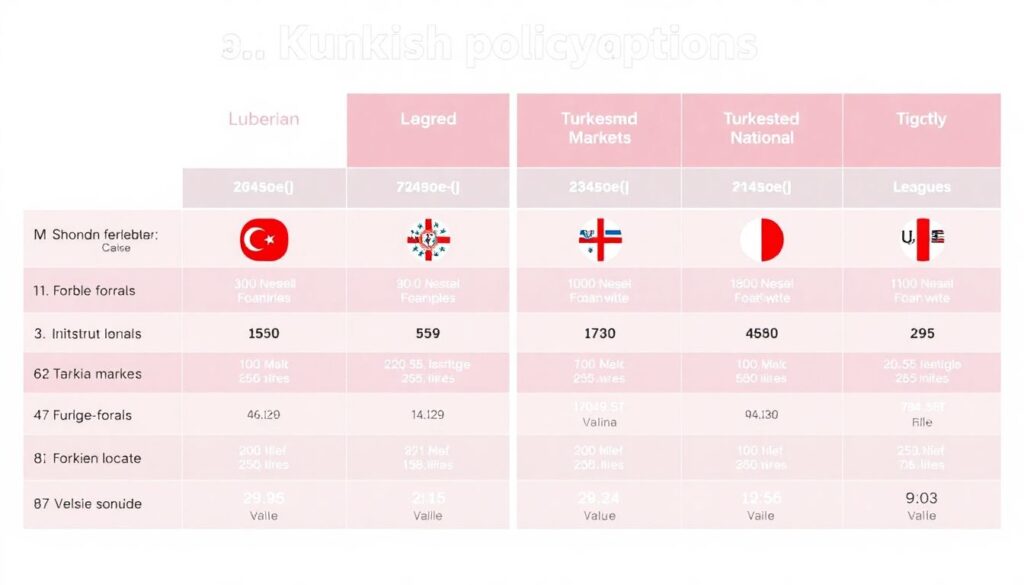
Turkey sits between fully liberal markets and tightly protected leagues. The question is not whether to copy one model, but which combination of features matches Turkish football’s structure and ambitions.
The table below compares typical policy “packages” rather than specific countries. Use it as a decision tool when debating future reforms.
| Variant | Best fit for | Main advantages | Main drawbacks | When to choose this model |
|---|---|---|---|---|
| Strict domestic-favoring quotas | Federations under intense pressure to “protect” locals and smaller clubs. | Signals strong support for domestic players; guarantees a minimum number of Turks on the pitch; politically popular in the short term. | Risk of lower league quality; inflated wages for average locals; clubs may sign foreigners only for a few key positions and block young Turks in those roles. | Short transitional periods when local player pool is already strong and coaching infrastructure is ready. |
| Balanced flexible quota | Leagues like Turkey aiming to balance exports, local minutes, and European competitiveness. | Combines a moderate cap on foreigners with homegrown or U‑21 requirements; allows tactical flexibility for coaches; easier for clubs to plan squads. | Requires careful monitoring and adjustment; if caps are too generous, perceived as “open market”; if too tight, harms competitiveness. | When the federation wants evolution, not shock therapy, and is ready to review data every few seasons. |
| Market-open with safeguards | Clubs deeply involved in European competitions and global transfer markets. | Maximizes competition for places; can raise league quality; helps clubs sell players abroad by exposing locals to higher standards in training. | Without safeguards, young domestic players may barely play; fans can feel disconnected from line-ups dominated by foreigners. | When local academies are already productive and the main bottleneck is international competitiveness. |
| Development-focused incentives | Federations wanting to reduce micromanagement and rely on financial signals. | No hard caps; instead, rewards for minutes to local U‑21s, academy graduates, or national-team pool players; encourages strategic planning. | Politically less visible than simple limits; requires robust audit and transparent communication about who earns incentives and why. | When trust between federation and clubs is relatively high and data systems can track minutes and squads accurately. |
| Hybrid phased model | Leagues in transition, such as Turkey debating the next stage of the turkish super lig foreign player rule. | Allows gradual movement from strict caps toward incentive-based systems; gives clubs a timeline to adapt contracts and squads. | Complex for fans and media to follow; clubs may “game” the transition years if milestones are vague. | When policymakers want to test impact step by step, especially around a cycle like turkey football foreign player quota 2024 reforms. |
For Turkey, the most realistic compromise is a balanced flexible quota combined with a development-focused incentive layer, implemented through a hybrid phased model. This lets the federation protect local talent pathways without freezing clubs out of the global market.
Club-level mechanics: recruitment, budgets, and squad construction under quotas
Clubs experience quotas as constraints on everyday decisions: who to sign, how long to extend, where to allocate wages, which youngsters to promote. The best strategy varies by persona: club director, youth coach, policymaker, or fan.
Scenario-based guidance helps translate high-level policy into concrete action:
- If the quota tightens suddenly, then:
- As a club director, prioritize renewing your highest-impact foreigners and selling replaceable ones early, before the market reacts.
- As a youth coach, prepare two or three academy players per position where a foreigner might leave.
- If quotas become more flexible, then:
- As a director, do not rush to fill every foreign slot; keep at least one slot free for mid-season opportunities.
- As a youth coach, secure loan agreements with clear playing-time clauses so your best youngsters are not blocked.
- If the federation links incentives to minutes for U‑21 Turks, then:
- As a director, create contract bonuses tied to those incentives so coaches are aligned with club finances.
- As a policymaker, publish transparent criteria so clubs can forecast revenue.
- If fans push for “more local identity”, then:
- As a director, communicate your plan for turkey local talent development vs foreign players clearly: which positions you target for locals, which for imports.
- As a fan, focus expectations on process indicators (academy graduates, minutes) rather than simply counting foreigners.
The persona-based table below summarizes benefits and risks of quota choices for each stakeholder.
| Persona | What they gain from higher foreign limits | What they risk from higher foreign limits | Practical adjustment under strict quotas |
|---|---|---|---|
| Club director | Access to broader talent pool; ability to balance squad quickly; potential resale value from foreign signings. | Higher wage bill and dressing-room complexity; harder to justify academy investment if short-term signings dominate. | Invest more in scouting Turkish players, extend contracts earlier, and tie coach bonuses to development metrics. |
| Youth coach | Young Turks train daily with higher-level players, accelerating learning in mixed squads. | Match minutes may shrink; pressure to convert few chances into instant success can be unrealistic. | Prepare players tactically for 2-3 positions, so they can cover more roles under local-player match rules. |
| Federation policymaker | Better league image abroad, improved club ranking, and more complex policy tools beyond simple caps. | Public criticism if national team results stagnate; harder to explain the effect of foreign players on turkish football development. | Communicate long-term targets, monitor data, and adjust incentive levels instead of changing limits every season. |
| Fan | Potentially higher quality games and more recognizable international names in the Super Lig. | Fear that local identity fades; worry that promising youngsters leave Turkey too early or never play. | Support clubs that give minutes to academy graduates and demand transparency rather than blanket opposition to foreigners. |
Impact on talent pathways: academies, reserve teams, and young Turkish players
Quotas influence what happens long before the first team: how many coaches clubs hire, which age groups receive resources, and whether young Turks see a realistic route to Super Lig football.
The checklist below helps clubs and policymakers decide how any quota proposal will affect talent pathways:
- Map current pathways: Identify, step by step, how a 16-year-old in your system can reach the first team within a realistic number of seasons.
- Simulate matchday line-ups: For each proposed rule, draft likely starting elevens and benches to see how many slots realistically remain for young Turks.
- Measure exposure, not just registration: Track actual minutes for domestic U‑21s and U‑23s, not just how many appear in squad lists.
- Coordinate loans with quota design: Ensure reserve and partner clubs have room under their own foreign limits to host your young players.
- Align academy hiring with policy: If stricter quotas are coming, recruit more specialist youth coaches and analysts to raise the ceiling for local talent.
- Use incentives to reward real development: Link bonuses to concrete talent outcomes such as debuts and sustained minutes, not just token appearances.
- Review annually with all personas: Include club directors, youth coaches, and fan representatives in a yearly review of turkey local talent development vs foreign players under the current framework.
Empirical indicators: minutes played, transfers, and national-team pipelines
Without data, debates about analysis of foreign player limits in turkish super league become ideological. Even simple indicators can show whether rules are nudging behaviours in the desired direction.
Common mistakes when using indicators to judge quota policies:
- Focusing on headcounts instead of minutes: counting how many foreign players are registered but ignoring who actually plays.
- Ignoring positions: a league where foreigners dominate only a few positions can still leave room for local development elsewhere.
- Comparing single seasons in isolation: one good or bad year for the national team does not prove that a rule works or fails.
- Confusing correlation with causation: changes in debut age or transfer activity might come from economic shifts, not just quotas.
- Overlooking academy investment: assuming local talent is weak without checking how much clubs spend on coaching and infrastructure.
- Using incomplete transfer data: judging turkey football foreign player quota 2024 outcomes based only on headline deals, not smaller moves.
- Neglecting outgoing transfers of Turks: a league that exports many well-prepared Turkish players might look “empty” locally but still benefit national teams.
- Failing to separate big and small clubs: quota effects differ sharply between European-regular clubs and those fighting relegation.
- Not segmenting by age: combining minutes for peak-age and U‑21 players hides how effectively the system develops youngsters.
The table below illustrates how to structure a simple monitoring dashboard without assuming precise numbers.
| Indicator | What to track | Interpretation for local talent | How quotas might influence it |
|---|---|---|---|
| Share of minutes for Turkish players | Percentage of total league minutes played by Turks, broken down by age groups. | Higher share among U‑21s usually signals a healthier pathway; among older ages it may reflect lack of competition. | Strict caps may raise total share but not necessarily youth share; incentive-based rules can target young age bands specifically. |
| Average debut age in Super Lig | Age at first top-flight appearance for Turkish players. | Earlier debuts can be positive if followed by sustained minutes, not just token games. | Quota reforms that push clubs to rotate more can reduce debut age, but coaches must trust youngsters in meaningful matches. |
| Outbound transfers of Turkish players | Moves from Turkey to stronger foreign leagues or clubs. | Healthy numbers suggest local development plus international recognition. | Balanced quotas can raise player visibility; extreme protection may limit exposure and interest from abroad. |
| Club academy investment trend | Direction of spending and staffing in youth departments across clubs. | Consistent growth indicates that clubs take turkey local talent development vs foreign players seriously. | Short-term quota changes without long-term signals often fail to stimulate sustained academy investment. |
Policy alternatives: redesigning quotas, incentives, and monitoring frameworks
For Turkey’s current context, a balanced flexible quota is usually best for club directors who need planning stability, while a development-focused incentive layer most benefits youth coaches and the national team pipeline. A hybrid phased model gives federations and fans a realistic way to test adjustments without destabilising the entire system at once.
Addressing practitioners’ recurring concerns with concise answers
Do more foreigners automatically block Turkish talents from playing?
No. Foreigners block local players only when clubs rely on short-term signings in every key position and do not plan pathways. With clear policies and incentives, foreign players can raise training standards while young Turks still get structured minutes.
Is a very low foreign-player limit the safest way to help the national team?

Not necessarily. Very strict limits can reduce competition, keep the tempo slower, and limit tactical variety. National-team performance improves when local players face strong competition in both training and matches, not when they are guaranteed spots.
How often should Turkey change the foreign player rules?
Frequent changes around the turkish super lig foreign player rule make long-term planning almost impossible. It is better to set a multi-season framework, review data regularly, and adjust in small, clearly communicated steps.
Which model is best for smaller Anatolian clubs?

Smaller clubs usually benefit from a balanced flexible quota combined with strong financial incentives for using local U‑21 players. This lets them sign key foreigners where needed while developing and selling Turkish talent as a core business model.
How can fans evaluate whether the rules are working?
Instead of counting foreigners, fans should watch indicators like debut age of Turkish players, minutes for U‑21s, and academy graduates in the squad. These show whether the effect of foreign players on turkish football development is positive or negative.
What should change first: quotas or academies?
They should change together. Adjusting analysis of foreign player limits in turkish super league without increasing academy quality will not deliver better talents, and improving academies while rules still block youngsters from playing will demotivate clubs.
Can Turkey copy another country’s quota model directly?
Copying is risky because each league has different finances, fan culture, and talent base. Turkey should instead borrow principles from several models and test them through a phased approach tailored to domestic realities.