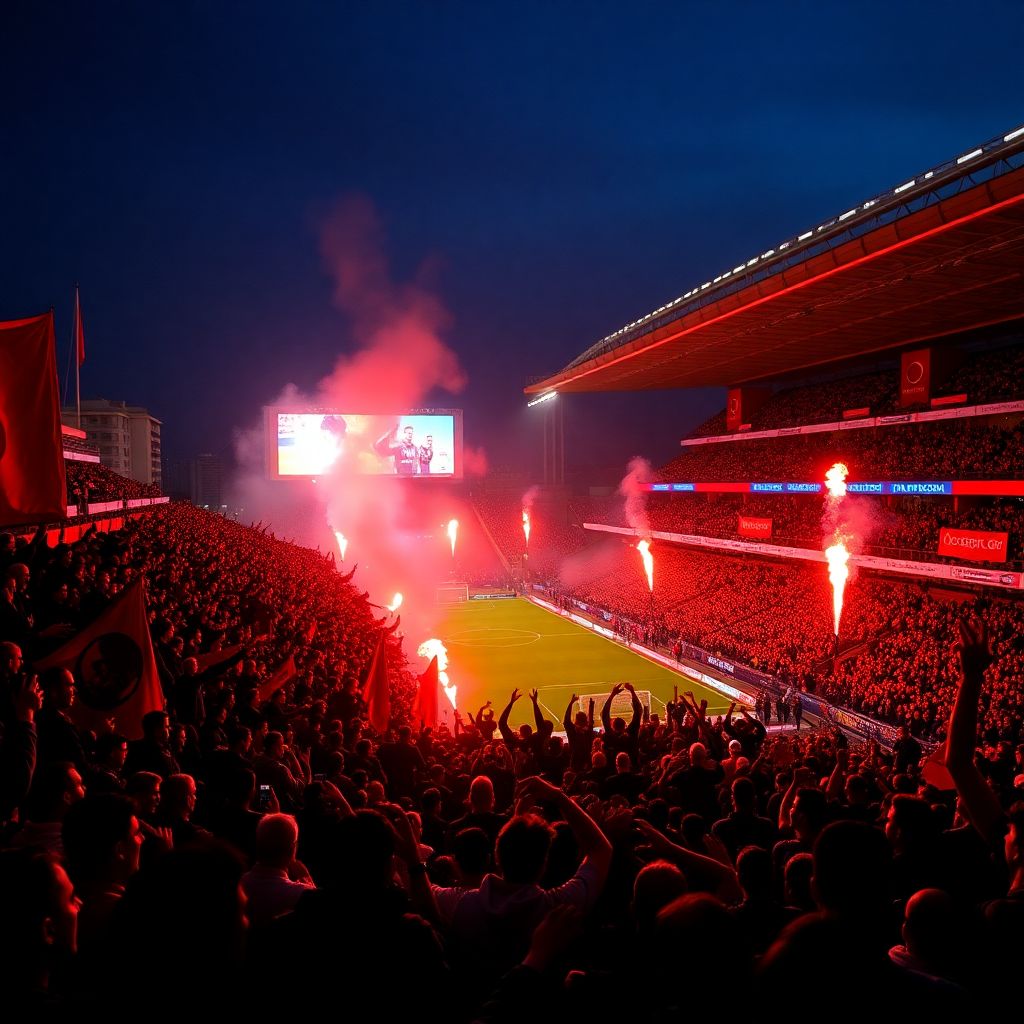
Derby days in Turkey are intense football matchdays when historic rivals like Galatasaray, Fenerbahçe and Beşiktaş face each other, mixing sport with history, politics and local identity. Streets, cafés and stadiums turn into loud, colourful arenas where choreography, chants and symbolism matter almost as much as the result on the pitch.
Overview: What Defines a Turkish Derby Day
- Long-standing rivalries rooted in Ottoman-era Istanbul neighbourhoods, schools and social class divisions.
- Highly organised ultras creating non-stop noise, choreography, banners and pyrotechnic displays.
- Strong local and political identities attached to clubs, often felt across generations in families.
- Massive police presence, strict security rules and complex ticketing procedures for safety.
- Wall-to-wall media coverage driving commercial value, from TV deals to global merchandise.
- Tourism offers like football derbies in Turkey tour packages and VIP hospitality experiences.
Historical Roots of Turkey’s Football Rivalries
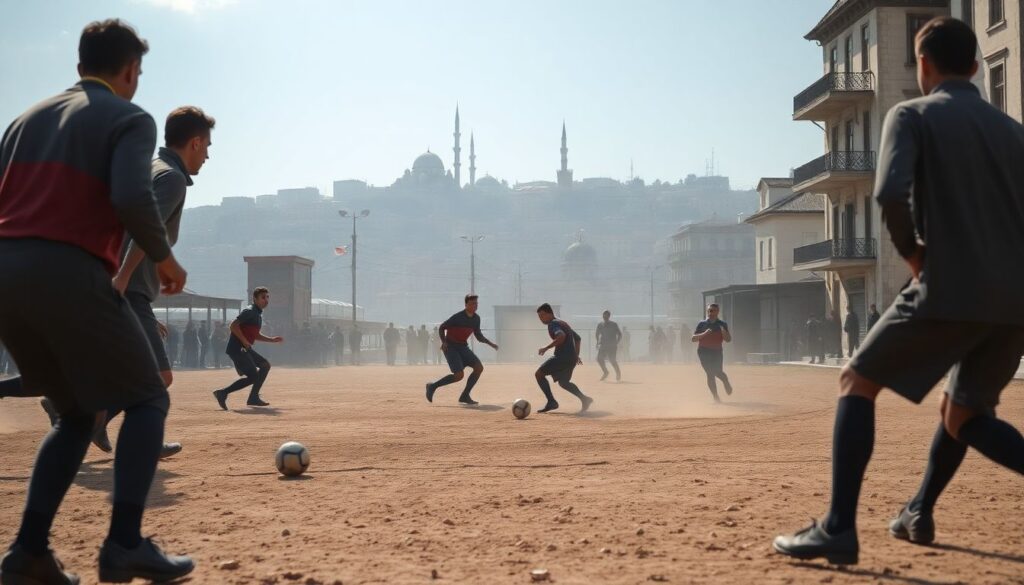
Football arrived in late Ottoman Istanbul through British communities in port districts like Kadıköy. Turkish students and professionals quickly adopted the game, founding clubs that reflected their own social circles and neighbourhood loyalties.
Galatasaray was founded in 1905 by students of Galatasaray High School, representing an educated, cosmopolitan elite on the European side. Fenerbahçe followed in 1907 in Kadıköy on the Asian side, rooted in a more local, nationalist and community-based identity.
Beşiktaş, founded in 1903 as a multi-sport club, drew support from working-class and traditional neighbourhoods uphill from the Bosphorus. Over time, Istanbul derbies crystallised into symbols of east-west, elite-popular and centre-periphery tensions within the city.
The first formal Galatasaray-Fenerbahçe clash in 1909 set the pattern: packed stands, intense rivalry and a sense that the match went beyond sport. Later, the inclusion of Anatolian clubs such as Trabzonspor and Bursaspor extended the concept of derby days from Istanbul to the whole country.
- Remember that derbies grew from specific neighbourhoods and schools, not just from the league format.
- Link each big club to its original social base: Galatasaray (school elite), Fenerbahçe (Kadıköy community), Beşiktaş (older inner-city districts).
Iconic Derby Matches: Galatasaray vs Fenerbahçe and Beyond
The Galatasaray-Fenerbahçe rivalry, often called the Intercontinental Derby, is the most famous of all football derbies in Turkey. It connects two continents, two cultures and two football philosophies inside one city, Istanbul.
- Early Istanbul League clashes: Pre-Super Lig games in the 1910s-1950s built the mythology, with title deciders and disputed refereeing decisions shaping club narratives.
- Galatasaray vs Fenerbahçe title showdowns: Modern Super Lig seasons frequently see these derbies decide championships, intensifying pressure and media hype.
- Beşiktaş vs Galatasaray rivalry: A clash of black-and-white versus yellow-and-red, often tied to style differences: Beşiktaş stressing fighting spirit, Galatasaray emphasising technical flair.
- Fenerbahçe vs Beşiktaş duels: Kadıköy versus the slopes of Beşiktaş, with a strong emphasis on fan noise and intimidation rather than grand choreography.
- Regional derbies beyond Istanbul: Trabzonspor versus Istanbul giants, Izmir derbies and Central Anatolian rivalries show that derby culture is national, not only metropolitan.
- European-stage encounters: When Turkish clubs carry their rivalries into European competitions, global audiences get a condensed view of derby-day intensity.
- Associate the phrase Istanbul derby tickets Galatasaray Fenerbahce with the highest-demand fixture on the Turkish calendar.
- When planning a trip, map which derbies fall during your travel dates, not just which team you want to see.
Fan Culture: Ultras, Rituals, and Matchday Atmosphere
Turkish ultras are highly organised groups that coordinate songs, flags and tifo displays. Each major club has several groups with their own internal hierarchies, codes and traditions, often tied to specific stands in the stadium.
Rituals start hours before kick-off. Fans gather in cafés, meyhanes and streets near the stadium, lighting flares, chanting and marching together. On the European side, some of the best places to watch Turkish derby in Istanbul are traditional football pubs in Beşiktaş, Kadıköy ferries and fan-dominated squares.
Inside the ground, sound is continuous: whistles when opponents touch the ball, coordinated chants for each player, and call-and-response songs between opposite stands. Visual identity is equally important, with massive banners and club colours covering entire sections of the stadium.
Digital culture reinforces this world. Social media amplifies chants, memes and matchday videos; fans buy from a Galatasaray Fenerbahce Besiktas merchandise online shop or club stores, wearing the latest scarves and jerseys to align themselves visibly with their side.
- Notice not just what fans sing, but how they coordinate songs and movements across stands.
- Respect local rituals: avoid mocking club symbols and never enter an ultras section with rival colours.
Politics, Identity, and Social Impact of Derby Days
Derby days in Turkey express identities related to class, neighbourhood, ethnic background and political preferences. Fans use chants and banners to comment on national politics, local government, economic pressures and social injustice, often in coded language.
The stadium can be a rare public space where large groups express disagreement or solidarity. During key political moments, derby chants have echoed broader social moods, from economic frustration to support for disaster relief fundraising.
Constructive Forces of Derby Culture
- Creates strong local solidarity and community belonging across generations of supporters.
- Encourages charity campaigns and coordinated responses to earthquakes, refugees and social needs.
- Offers a shared cultural reference point that cuts across many social divides.
Risks and Constraints Linked to Rivalries
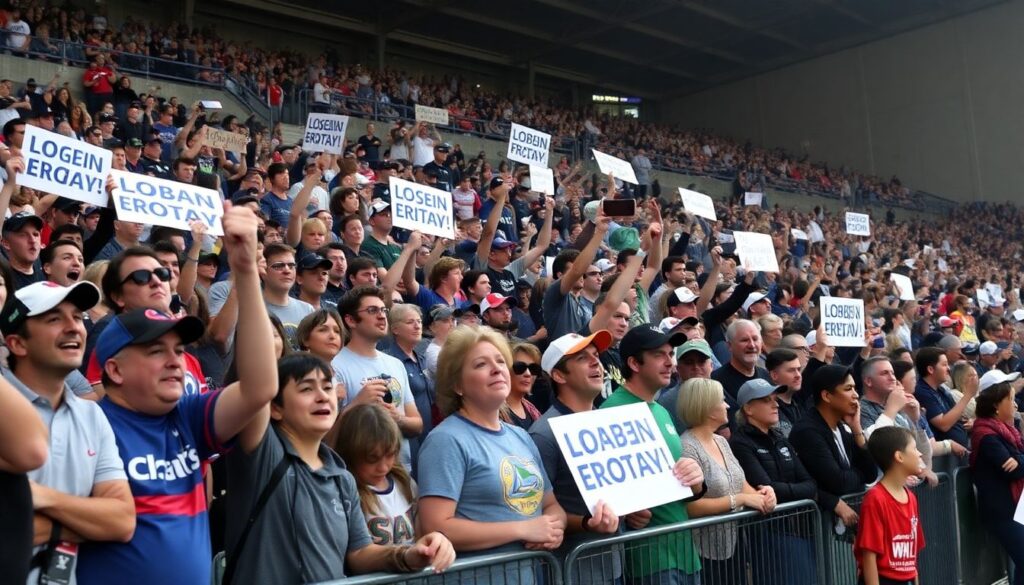
- Can intensify polarisation and aggressive behaviour, especially when political slogans dominate.
- May exclude or intimidate newcomers, women and families if safety is not prioritised.
- Sometimes used by political actors for symbolism, reducing space for independent fan expression.
- Observe which chants are about football and which carry political messages; the mix explains the mood of the fan base.
- Keep in mind that derby-day tensions usually stay verbal but can escalate if mixed with alcohol and political rallies.
Stadiums, Security, and Logistical Challenges
Modern Turkish stadiums are all-seater, high-security venues with surveillance systems and separate entrances for visiting fans. Derby matches trigger maximum-level precautions, including strict away-fan limits or, at times, bans and ticket restrictions.
Authorities coordinate traffic, public transport and police deployments to separate rival groups. Fans often face ID-based ticketing, bag checks and controlled arrival routes. For visitors, this can feel overwhelming but is designed to keep clashes away from stadium gates.
There are myths that derby days are always violent or impossible to attend safely. In reality, most incidents are minor, and careful planning-using official ticket platforms or trusted agencies-reduces risk significantly, especially if you consider Turkish Super Lig derby match hospitality VIP packages with controlled access and seating.
- Do not buy tickets from street touts; use club channels or recognised travel operators instead.
- Arrive early, follow police instructions and avoid walking between known home and away gathering points.
Media, Commercialization, and Global Reach
Television and digital platforms transformed derby days from local spectacles into global broadcasts. Satellite deals, social media clips and multilingual commentary brought Turkish derbies to fans far beyond the country’s borders.
Clubs now package derby experiences as premium products. This includes Istanbul derby tickets Galatasaray Fenerbahce with curated experiences, Turkish Super Lig derby match hospitality VIP packages, and football derbies in Turkey tour packages that combine sightseeing, museum visits and live matches for international visitors.
Commercial partners sponsor tifo materials, fan events and marketing campaigns featuring star players in derby-themed content. At the same time, independent fan media-podcasts, YouTube channels, blogs-offer alternative narratives to mainstream broadcasters.
In practical terms, think of derby commercialization like a simple script: identify high-emotion content (the rivalry), attach broadcast rights and sponsor logos, add hospitality layers for premium buyers, then distribute globally via social media and streaming platforms.
- Differentiate between club-owned media (official, polished) and fan media (raw, critical) when learning about derby culture.
- Assume that peak prices and global coverage usually align with the most decisive or politically charged derbies.
Quick Practical Tips for Experiencing a Derby Day in Turkey
This section gives concise, travel-focused advice for visitors who want to attend or simply feel derby-day energy in Istanbul or other Turkish cities.
- Plan tickets early: For high-demand games, consider official club memberships, partner agencies or packages that bundle hotels and transport with tickets.
- Choose your stand wisely: Avoid ultras sections for your first visit; pick central or family stands for a safer, more comfortable view.
- Use public transport: Metro, Marmaray and ferries are usually the easiest way to reach stadium areas on derby days; traffic jams can be severe.
- Dress neutrally if unsure: If you are not strongly attached to one club, avoid wearing ultra-bright club colours near rival fan gatherings.
- Explore fan zones: For non-ticketed experiences, head to fan-dense districts and sports bars often listed as the best places to watch Turkish derby in Istanbul.
Self-Check: Have You Grasped Turkish Derby Days?
- Can you explain how Ottoman-era neighbourhoods and schools shaped the main rivalries?
- Do you recognise why Galatasaray-Fenerbahçe is framed as an intercontinental clash, not just a league game?
- Can you describe at least three key elements of Turkish ultra culture on matchday?
- Do you see both the community-building and polarising sides of derby-day politics?
- Would you know how to plan a safe, well-organised visit to a Turkish derby match?
Practical Concerns and Quick Clarifications About Derby Days
Is it safe for a foreign visitor to attend a Turkish derby match?
Yes, if you use official ticket channels, avoid ultra sections and follow police and steward instructions. Most trouble occurs between organised groups, not ordinary visitors.
How early should I buy tickets for a major Istanbul derby?
Buy as soon as tickets are released to the general public or through approved agencies. High-profile fixtures often sell out quickly, especially in central stands with better views.
Do I need to choose a side, or can I stay neutral?
You can stay neutral, especially as a visitor. In that case, sit in a mixed or family section and wear discreet colours to avoid confusion with either club’s main palette.
Are derby days only about the match itself?
No, they are full-day events with pre-match gatherings, marches, fan chants and post-match celebrations or debates. Many locals participate in the atmosphere even without entering the stadium.
Can families and children attend derby matches?
Yes, but it is better to choose non-ultra sections and arrive early. Some clubs and stadiums also offer designated family blocks with a calmer atmosphere.
How can I buy authentic club merchandise linked to the big derbies?
Use official club stores, their verified websites or a reputable Galatasaray Fenerbahce Besiktas merchandise online shop. Avoid street vendors near the stadium if you want guaranteed authenticity.
What if I cannot secure a ticket but still want a derby experience?
Watch the match in a well-known sports bar or café in a fan-heavy district. The collective reaction there often mirrors the emotional swings inside the stadium.