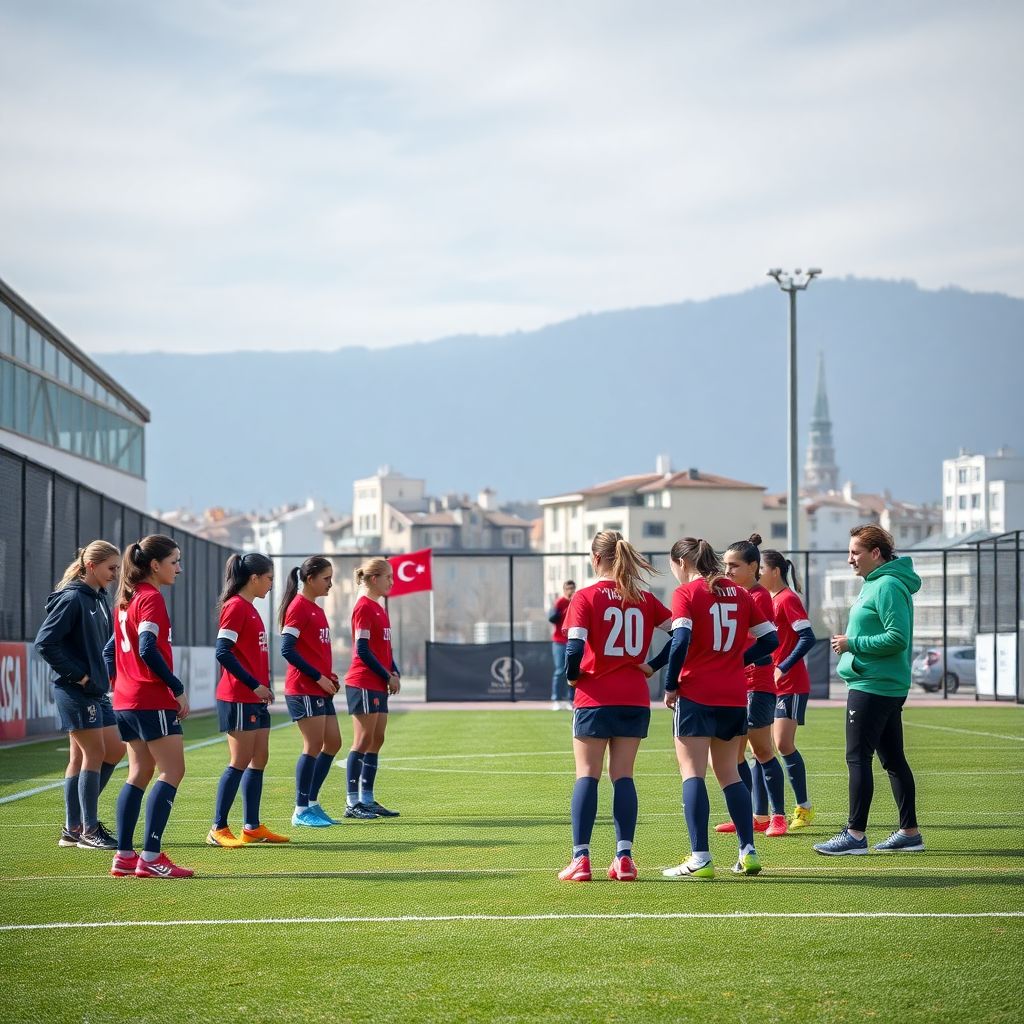
Women's football in Turkey is growing yet still constrained by limited funding, visibility and pathways. Safe, realistic progress comes from strengthening the Turkish women's football league structure, improving grassroots access, building sustainable sponsorship models and focusing on facilities, coaching and safeguarding. Measurable, step‑by‑step goals help clubs and investors avoid overreach and manage risk.
Core insights on Turkey’s women’s football
- Women's football in Turkey now has a clearer league pyramid, but competitive depth, regional coverage and professional standards remain uneven.
- Player pathways are fragmented; many girls drop out between school football and the Turkish women's football league due to limited structured options.
- Financially, most women's soccer clubs in Turkey depend on men's clubs or municipal support, which creates vulnerability when budgets tighten.
- Facilities, sports science and medical support lag behind men's programmes, increasing injury risk and shortening careers.
- Media coverage is improving but still modest; clubs underuse digital channels to grow loyal communities and matchday revenues.
- Safe growth requires modest, diversified investment rather than speculative spending; "invest in women's football Turkey" should mean long‑term development, not short‑term hype.
Current landscape: leagues, clubs and governance
Women's football in Turkey sits on a formal league system administered by the Turkish Football Federation (TFF), with a top division, lower tiers and youth competitions. The structure looks complete on paper, but many clubs lack full‑time staff, stable budgets and consistent training conditions.
The Turkish women's football league increasingly features women's sections of major men's clubs, alongside independent or municipality‑backed teams. This hybrid ecosystem brings visibility and access to big brands, yet it can also leave smaller women's soccer clubs in Turkey exposed when political priorities or local budgets change.
Governance rules around licensing, youth teams, coaching qualifications and safeguarding are developing. However, enforcement capacity is limited, and standards can differ strongly between big‑city clubs and small‑town teams. This creates inequality in competition quality and in player welfare.
| Dimension | Current state in Turkey | Desired safe growth state | Indicative qualitative KPI |
|---|---|---|---|
| League stability | Frequent club turnover and financial fragility | Stable core of long‑term clubs with predictable calendars | Fewer withdrawals, more multi‑year participation streaks |
| Geographic reach | Concentration in major cities | Broader presence across regions and smaller cities | More provinces represented in top two tiers |
| Professional standards | Mixed full‑time/part‑time status | Clear minimum standards for "pro" status | More clubs meeting TFF licensing benchmarks |
| Governance and safeguarding | Developing policies, uneven implementation | Consistent safeguarding, grievance and welfare protocols | Documented club compliance checks per season |
Safe steps for federations and clubs include:
- Clarify a realistic league pyramid with transparent promotion/relegation and minimum club standards.
- Phase in licensing criteria over several seasons to avoid forcing fragile clubs out too quickly.
- Support regional clusters of clubs (shared travel, referees, development programmes) to lower operating costs.
Suggested KPIs: number of active clubs retained year‑on‑year, number of regions represented in the top two tiers, proportion of clubs meeting basic licensing requirements.
Player pathway: grassroots, academies and pro transition
The player pathway describes how a girl in Turkey progresses from first contact with football to elite or professional levels. For many in women's football in Turkey this journey is inconsistent, with gaps between school sport, local clubs and the top league that cause promising players to drop out.
- First touch in schools or community programmes – Girls typically start playing in physical education classes, local mixed teams or municipality projects. The key constraint is irregular playing time and a lack of girls‑only environments in some communities.
- Entry into grassroots clubs – A limited number of community or amateur women's soccer clubs in Turkey accept young girls. Travel distance, family concerns about safety and cultural attitudes can all slow down this step.
- Youth academies at professional clubs – Larger clubs increasingly run age‑group teams and academies, but capacity is still low relative to potential demand. Trial processes are often informal, and scouting outside big cities is patchy.
- Transition to senior football – Many players move from youth to senior squads abruptly, with a sudden jump in training load and physical intensity, raising injury risk and burnout.
- Education and dual‑career planning – Limited guidance on combining school, university and football puts extra pressure on players from non‑wealthy families, who need to balance sport with work or study.
- National team selection – A small number of players reach youth and senior national teams, but scouting coverage of remote regions and smaller leagues is still incomplete.
Mini‑scenarios of safe pathway design:
A city club partners with local schools to run weekly girls' sessions on school pitches, with simple consent procedures and shared transport. Talented players are then invited to structured academy sessions twice a week, with parents receiving written schedules, safeguarding contacts and education support information.
In a smaller town, a municipality uses an existing boys' club licence to add mixed‑gender U11 and U13 teams, gradually moving to girls‑only sides as numbers grow. Training is kept to manageable hours, and exam periods are protected to reassure families that football will not harm academic results.
Actionable recommendations:
- Map the local player pathway from schools to clubs and identify "drop‑off" points, especially around ages 13-16.
- Create written agreements between clubs, schools and municipalities to share pitches, coaches and safeguarding responsibilities.
- Introduce basic dual‑career guidance sessions for players and parents at U15 and above.
Suggested KPIs: growth in registered girls' teams by age group, retention rates from one age category to the next, number of formal school‑club cooperation agreements in place.
Financial reality: funding models, sponsorships and player pay
The financial base of women's football in Turkey is still narrow. Most budgets come from cross‑subsidy by men's clubs, municipalities or short‑term projects. Gate receipts and commercial income are modest, so any shock to a parent club or local authority can quickly destabilise women's teams.
Typical funding scenarios include:
- Department within a men's club – The women's section relies on the overall club budget. This can provide good facilities and branding, but funding is often discretionary and vulnerable to leadership changes.
- Municipality‑backed club – Local governments cover travel, staff stipends and equipment. This improves access in smaller cities but depends heavily on political cycles and budget approvals.
- University or education‑based teams – Some teams are linked to universities, which offer facilities and scholarships. These programmes are relatively stable but can be limited in professional ambition.
- Independent community clubs – These rely on volunteers, small local sponsors and sometimes player contributions. They are important for reach but operate with very tight margins and little reserve capacity.
- Emerging commercial models – A few clubs and brands explore digital content, merchandising and local business partnerships to diversify income, often starting with social media campaigns and small business bundles.
For brands considering sponsorship opportunities women's football Turkey offers targeted, community‑rooted visibility at relatively low cost, but safe involvement means requesting basic financial transparency and clear activation plans from partner clubs.
Actionable recommendations:
- Clubs should build simple, multi‑year budgets with conservative revenue assumptions and clear priorities (travel, medical, youth teams).
- Investors and brands looking to invest in women's football Turkey should start with pilot partnerships (for example, a one‑season shirt sleeve deal plus community clinics) before committing to larger packages.
- Encourage federations and leagues to create model sponsorship contracts and basic financial reporting templates to improve trust.
Suggested KPIs: share of club income from diversified commercial sources vs. single funder, number of active sponsors per club, proportion of players receiving formal contracts or written pay agreements.
Infrastructure and facilities: pitches, training and medical support
Infrastructure shapes both performance and safety. Many women's teams in Turkey train at off‑peak hours on crowded artificial pitches, with limited access to gyms, recovery facilities or dedicated locker rooms. Medical coverage can vary, from fully qualified staff at big clubs to minimal first‑aid provision in lower tiers.
- Access to full‑size pitches at suitable hours can be restricted by competition with men's and youth teams.
- Strength and conditioning spaces are often shared or improvised, making it harder to run structured, female‑specific programmes.
- Some clubs lack reliable transport arrangements to training and matches, increasing fatigue and safety risks, especially for younger players.
- Top‑level clubs increasingly provide dedicated women's changing rooms, better gym access and qualified physiotherapists.
- Municipal facilities occasionally prioritise women's programmes during specific time slots, helping to normalise girls' participation.
- Partnerships with local clinics or universities sometimes bring in sports science and medical expertise.
Actionable recommendations:
- Negotiate written facility‑use schedules that guarantee regular, prime‑time training slots for women's teams.
- Form partnerships with local hospitals, physiotherapy centres or universities for structured injury‑prevention and rehabilitation support.
- Implement basic facility safety checks each season, including lighting, transport routes and emergency procedures.
Suggested KPIs: average weekly hours of quality pitch access per team, availability of qualified medical support on matchdays, number of recorded facility‑related incidents per season.
Media, public perception and fan engagement strategies
Media coverage drives visibility, which in turn attracts sponsors and new players. In Turkey, mainstream coverage of women's football still lags behind men's, but social media gives clubs and players a direct channel to fans. Misconceptions and poor communication often limit this potential.
- Myth: "There is no audience for women's football" – In reality, targeted engagement, storytelling and school outreach can create local fan bases, especially when matchday experiences are family‑friendly.
- Myth: "Marketing women's games is too expensive" – Basic digital strategies using players' stories, short match clips and behind‑the‑scenes content can be low‑cost yet effective.
- Error: Copying men's football campaigns directly – Audiences for women's football often value accessibility, role models and community impact, so "cut‑and‑paste" campaigns miss the mark.
- Error: Ignoring local schools and universities – These institutions can be powerful sources of new fans and volunteers if invited in with tailored ticket bundles and joint events.
- Myth: "Only big brands matter" – Smaller regional businesses can be loyal partners if clubs offer flexible packages (combined shirt, social media and in‑stadium presence).
Actionable recommendations:
- Assign at least one person per club to manage basic digital channels, even on a volunteer basis, with a simple content calendar.
- Create community‑focused matchdays by inviting schools, youth clubs and local women's organisations with group tickets.
- Document and share human‑interest stories (players balancing work, study and football) to counter stereotypes and build emotional connection.
Suggested KPIs: growth in social media followers and engagement, average match attendance trends, number of community groups or schools attending games each season.
Strategic roadmap: scalable interventions and measurable milestones
A safe growth strategy for women's football in Turkey should be incremental, evidence‑based and adapted to local constraints. Rather than attempting to replicate the men's game overnight, stakeholders can focus on a sequence of realistic, scalable steps that gradually raise standards and expand reach.
Illustrative mini‑roadmap for a mid‑level club:
- Season 1 – Stabilise operations: define a clear budget, secure at least one local sponsor, confirm training slots and set up simple safeguarding and medical protocols.
- Season 2 – Strengthen the pathway: launch one younger age‑group team, formalise cooperation with two nearby schools and start documenting player data (minutes, injuries, education status).
- Season 3 – Expand visibility: invest in consistent digital content, organise at least one community tournament, and refine matchday organisation to improve fan experience.
Simple pseudo‑plan for monitoring progress:
Define objectives → Choose 3-5 KPIs →
Collect basic data each month →
Review with staff and player reps →
Adjust budget and priorities safely →
Repeat each season
Actionable recommendations:
- Start with no more than a handful of strategic objectives per season, to avoid overcommitting resources.
- Build an annual review involving players, coaches and at least one external stakeholder (sponsor, school partner, municipality).
- Document policies (safeguarding, travel, medical) so that growth does not outpace basic protections.
Suggested KPIs: completion of planned milestones per season, retention of key staff and players, satisfaction feedback from partners and players.
Practical questions with concise answers
How is the Turkish women's football league structured today?
Turkey has a top women's division and lower tiers under the TFF, plus youth competitions. The structure is defined, but financial and organisational stability varies significantly between clubs and regions.
What are the safest first steps for a new women's football club in Turkey?
Secure reliable training facilities and basic medical coverage, then build one or two age groups with realistic travel schedules. Put simple safeguarding and communication policies in writing before chasing higher‑level competition.
How can small businesses benefit from sponsorship opportunities women's football Turkey?
Local sponsors gain targeted exposure and community goodwill through shirts, training gear, digital content and matchday branding. Starting with modest, clearly defined packages reduces risk for both club and sponsor.
What are the main barriers for girls entering women's football in Turkey?
Limited nearby teams, family safety concerns, cultural attitudes and a lack of information about opportunities all play a role. Clear communication with parents, schools and municipalities helps reduce these barriers.
How should clubs balance education and football for young players?
Align training schedules with school hours, avoid late‑night sessions on school days and coordinate around exam periods. Offering simple study support or liaising with teachers reassures families that football will not harm education.
Is it risky to invest heavily and quickly in a women's football project?
Rapid spending without stable revenue or governance is risky; teams can collapse when initial enthusiasm or funding fades. Phased investment tied to transparent KPIs and conservative budgets is safer.
What role can municipalities play in growing women's football safely?
They can provide pitches, transport support and access to schools, as well as co‑funding coaches and medical staff. Long‑term, written agreements are important to avoid sudden policy changes leaving clubs exposed.