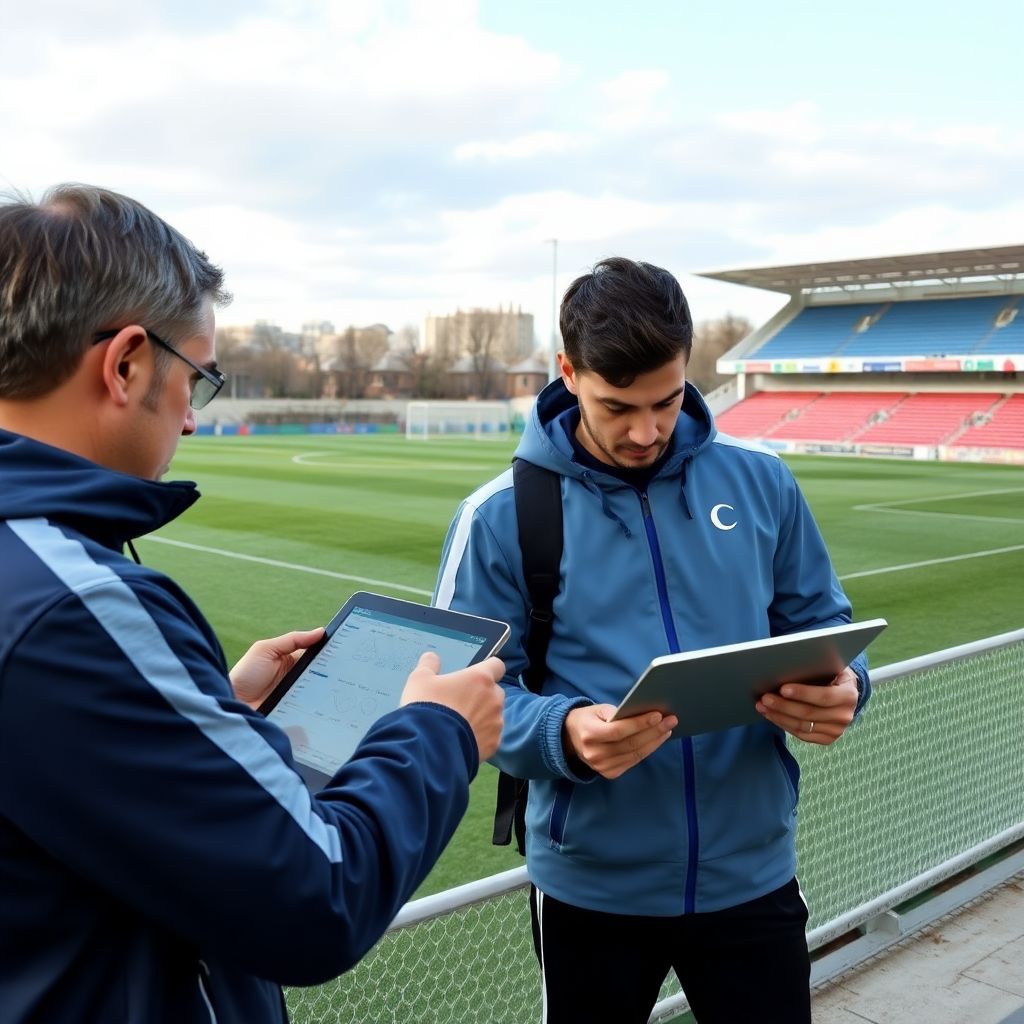
Süper Lig clubs can close the gap to Europe’s elite by tightening local talent pipelines, investing in data-informed scouting, professionalising academy coaching, and managing loans strategically. For Turkish football scouting young talents, the optimal mix is usually: strong regional network, targeted data support, and clear pathways from U14 to first team.
Core scouting and development insights

- Süper Lig youth academy best practices start with clear playing identity, regional school links, and consistent position-specific development from early ages.
- Europe’s elite rely on deep analytics, broad international networks, and strong internal education for scouts and analysts.
- Turkey’s advantage is proximity to dense talent clusters; the challenge is systematising selection and retention.
- Loan strategies and B teams are decisive for turning academy potential into first-team and transfer value.
- Club culture, leadership stability, and coach alignment often matter more than pure budget size.
- KPIs must track both on-pitch progression and market valuation to guide investment in youth development Süper Lig clubs make.
Youth recruitment pipelines in Süper Lig versus Europe’s elite
To compare Süper Lig vs European academies effectively, use shared criteria for how players enter and move through the system.
- Geographical reach of scouting – Local city, regional, nationwide, and international coverage; depth of school and amateur club relationships.
- Age of first systematic contact – U8-U10 pre-academy versus later U13-U15 entry, and how talent ID adapts by age band.
- Selection standards and profile definition – Physical, technical, tactical, and psychological benchmarks per position, aligned to club game model.
- Data and video in early ID – Extent to which clubs use simple databases and tagged video even for grassroots competitions.
- Pathway clarity for families – Transparent descriptions of what each age group offers and realistic odds of professional contracts.
- Retention and deselection processes – How often players are reviewed, how feedback is delivered, and whether exits keep doors open elsewhere.
- Cross-border recruitment rules and strategy – Alignment with league regulations on foreign minors and non-local players.
- Integration with school and education – Study support, schedule coordination, and post-football planning.
- First-team influence on academy intake – Whether the head coach’s tactical demands shape yearly recruitment targets.
In Süper Lig, pipelines often rely heavily on a few trusted amateur clubs and local agents. In contrast, how European elite clubs develop young players typically involves structured pre-academy centres, extensive school partnerships, and firm profile definitions years ahead of recruitment.
Scouting resources: budgets, data, and network reach
Different resource models suit different Süper Lig club profiles. The table below contrasts common scouting setups used by Turkish clubs and European benchmarks.
| Variant | Best for | Strengths | Limitations | When to choose |
|---|---|---|---|---|
| Local network-first scouting | Lower-budget Süper Lig sides prioritising regional talent | Leverages relationships with local coaches; fast information flow; culturally aligned players. | Blind spots outside home region; inconsistent reporting standards; limited benchmarking to Europe. | When travel budget is modest and your city/region has strong grassroots football density. |
| Regional plus selective national coverage | Mid-table clubs building stronger domestic pipelines | Broader reach across Türkiye; better chance to capture late developers; more diverse profiles. | Can overstretch staff; risk of superficial coverage if territories are unclear. | When you can add a few full-time scouts and want to formalise Turkish football scouting young talents nationwide. |
| Data-assisted domestic scouting | Clubs wanting structure without full analytics department | Basic event data and video help verify live reports; more objective comparisons; creates internal database. | Quality depends on chosen provider; staff need training; still limited international reach. | When you already have some network and want to add discipline and memory to decisions. |
| Hybrid global network with analytics cell | Top Süper Lig clubs targeting regular European competition | Combines broad coverage with data shortlists; can spot undervalued markets; aligns youth and first-team recruitment. | Higher cost; needs clear leadership to avoid politics between scouts, analysts, and agents. | When investment in youth development Süper Lig clubs make is part of a wider European competitiveness strategy. |
| Elite academy-integrated global model | European giants with multi-club structures | Shared databases, B teams, and partner clubs; precise succession planning; powerful brand for attracting talent. | Complex coordination; risk of stockpiling players; hard to replicate quickly in Türkiye. | When you operate at the top continental level and can sustain long-term system building. |
Decision guidance by club profile
- If you are a lower-budget Süper Lig club with strong local ties, start with local network-first and layer in simple data-assisted tools over time.
- If you are a stable mid-table club, move towards regional plus national coverage, building a basic central database of all tracked players.
- If you target European qualification, design a hybrid global network with analytics that serves both first team and academy.
- If you partner with an overseas club, emulate aspects of the elite academy-integrated global model suited to your scale.
Academy coaching models and daily training environments
Coaching structure and daily environment turn recruitment into real development. The following conditional guidelines help align Süper Lig youth academy best practices with European standards.
- If your club lacks a clear game model, then first define 3-5 non-negotiable principles (e.g., pressing height, build-up style) and translate them into age-specific training themes before changing staff or facilities.
- If you rely heavily on volunteer or part-time coaches, then prioritise formal education partnerships (federation licences, workshops with elite academies) and standardised session libraries rather than simply hiring ex-players as youth coaches.
- If players train on poor or crowded pitches, then reorganise schedules into shorter, higher-intensity blocks, mix age groups intelligently, and invest in one high-quality surface used by your most promising prospects.
- If technical ability under pressure is a recurring weakness, then design daily rondos, position-specific drills, and constrained small-sided games as mandatory for all age groups.
- If academic performance and fatigue are concerns, then coordinate with schools on exam periods, reduce travel load for younger age groups, and create a simple monitoring system for sleep and wellbeing.
- If staff feedback is inconsistent, then implement a shared evaluation template after each training block, with clear ratings and written comments accessible to players and parents.
- If you want to mirror how European elite clubs develop young players, then schedule regular mixed sessions where U19s train with the first team, supported by clear communication on expectations and development goals.
Transition mechanisms: loans, B teams and first‑team promotion
Turning academy players into professionals requires structured decisions about where they play minutes. Use this checklist to guide transitions.
- Define the ideal next-18-month environment for each player: league level, playing style, and expected game time.
- Decide whether the player’s physical and mental readiness suits immediate first-team integration, a controlled B team step, or an external loan.
- For potential starters within one season, keep them close: integrate them into first-team training and use strategic domestic cup and substitute minutes.
- For players blocked by strong incumbents, prioritise loans to clubs with compatible tactics and a realistic path to 1,500-2,000 competitive minutes per season.
- Set clear loan KPIs (minutes, positions played, physical outputs, behavioural reports) and review them in scheduled windows with the player and loan club.
- Use your B team or U19s mainly for adaptability and role learning, not for parking players indefinitely.
- Before any permanent sale, assess whether the player’s profile will be scarce or abundant in your future squad planning and market context.
Institutional and cultural drivers affecting player growth
Many Süper Lig clubs underperform in youth development not because of talent scarcity, but due to recurring institutional and cultural issues.
- Frequent head coach changes that reset youth integration plans and tactical identity each season.
- Short-term survival mentality, especially around relegation battles, which discourages trusting young players in key moments.
- Overreliance on agents and intermediaries instead of internally-driven, evidence-based assessments of young players.
- Cultural bias towards physically mature early developers, leading to the release of technically gifted but late-maturing talents.
- Lack of cross-department alignment between academy directors, sporting directors, and board members on long-term youth strategy.
- Inadequate communication with families about realistic pathways, creating pressure for premature transfers abroad.
- Limited collaboration with universities and sports science staff, reducing quality of load management and injury prevention.
- Insufficient internal recognition and career progression for youth coaches compared with first-team staff.
- Viewing youth development purely as a cost centre rather than a key driver of transfer revenue and identity.
Assessment frameworks: KPIs, transfers and market valuation
Mini decision tree: which development path to emphasise?
- If your club relies on transfer revenue to stay competitive, focus on export-ready profiles: aggressive loan usage, strong international scouting comparisons, and clear market benchmarks.
- If you prioritise domestic stability and identity, emphasise local-player pathways, long-term contracts, and strong community ties around academy graduates.
- If ownership targets regular European football, invest in hybrid models: deep academy, data-led recruitment, and clear succession plans for every key position.
- If resources are limited and leadership unstable, narrow your scope to one or two core age bands and a clear playing style you can sustain.
For Turkish clubs, the best overall approach is usually a hybrid: Süper Lig-style local networks plus selected European academy practices in coaching, data usage, and loan management. For Europe’s elite, broader global networks and multi-club structures remain optimal, but many principles can still scale down effectively in Türkiye.
Practical clarifications for scouts and sporting directors
How should a mid-table Süper Lig club start professionalising its scouting?
Begin by mapping your existing local network, introducing a simple central database, and standardising match reports. Then add selective national coverage and basic data or video tools. Only after those foundations are stable should you expand into international markets.
What are realistic first steps to align with European academy standards?
Clarify a club-wide playing identity, train youth coaches to reflect it in age-specific plans, and ensure regular mixed sessions between U19 and first team. These are low-cost changes that significantly narrow the gap with top European academies.
When is an external loan better than keeping a player in U19 or a B team?
Loans are preferable when a player is blocked in your depth chart but already physically and mentally ready for senior football. Choose environments that match your playing style and offer clear guarantees or evidence of giving minutes to young players.
How many foreign young players should a Süper Lig club recruit?
Use foreign spots for profiles that are rare locally or with clear resale potential. Overloading on foreign youngsters can block local talent and strain adaptation support. Quality of integration and pathway clarity matter more than the exact number.
Which KPIs best indicate that academy investments are working?
Track minutes played by club-developed players, number of graduates in matchday squads, transfer income from homegrown players, and progression rates from each age group. Combine these with qualitative feedback from coaches and players on the development process.
How can a club protect itself from losing its best talents too early?
Offer clear pathways, appropriate financial progression, strong education support, and honest communication with families. Structuring contracts intelligently and building trust often delays or improves the terms of inevitable exits.
What is the role of analytics if the club has a very small budget?
Start with simple spreadsheets, free or low-cost video, and consistent tagging rules. The goal is not complex models but better memory and comparability across targets, which already reduces waste and impulsive signings.