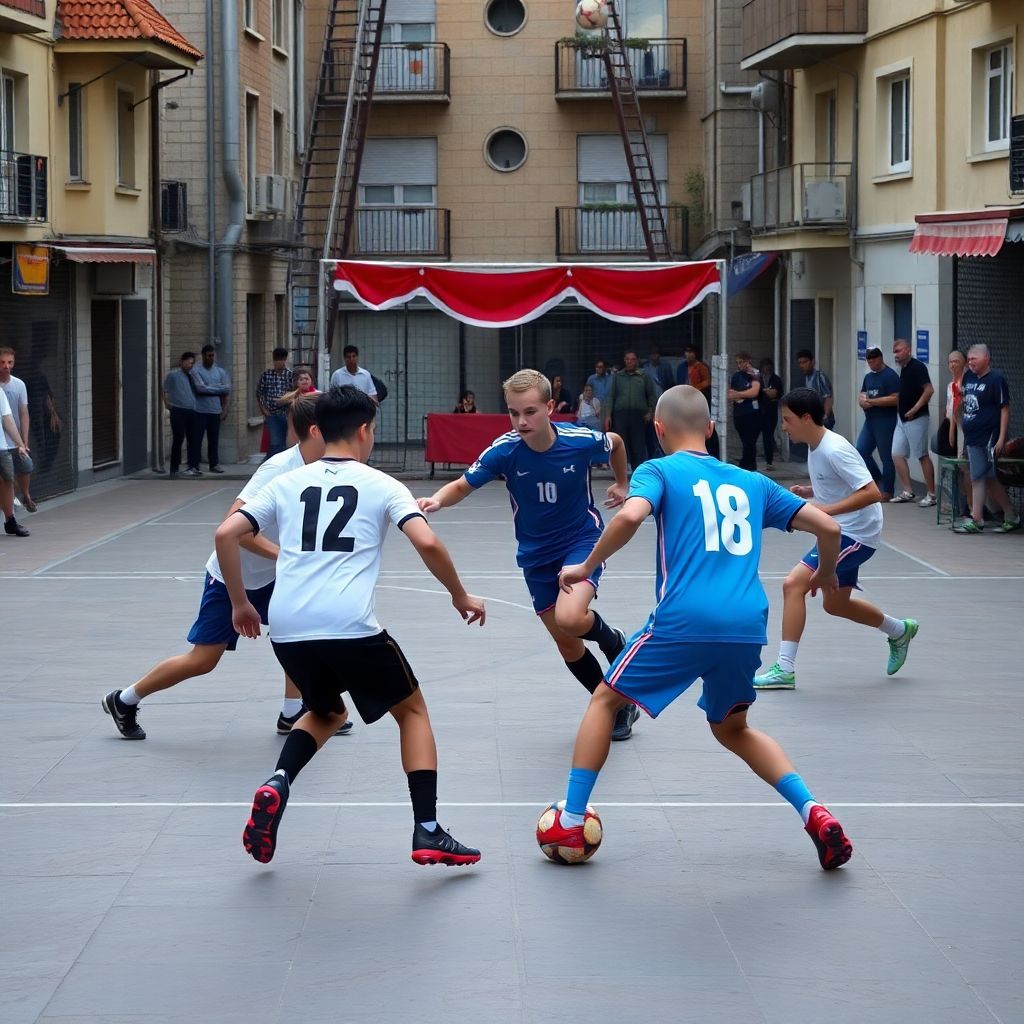
Futsal and street football accelerate Turkish youth players’ technical skills by forcing many ball contacts, quick decisions and creative solutions in tight spaces. Used safely alongside 11v11, they sharpen first touch, 1v1 moves and combination play. The key is structured, age-appropriate design, clear progressions and monitoring fatigue, not endless chaotic games.
Core technical outcomes from futsal and street football
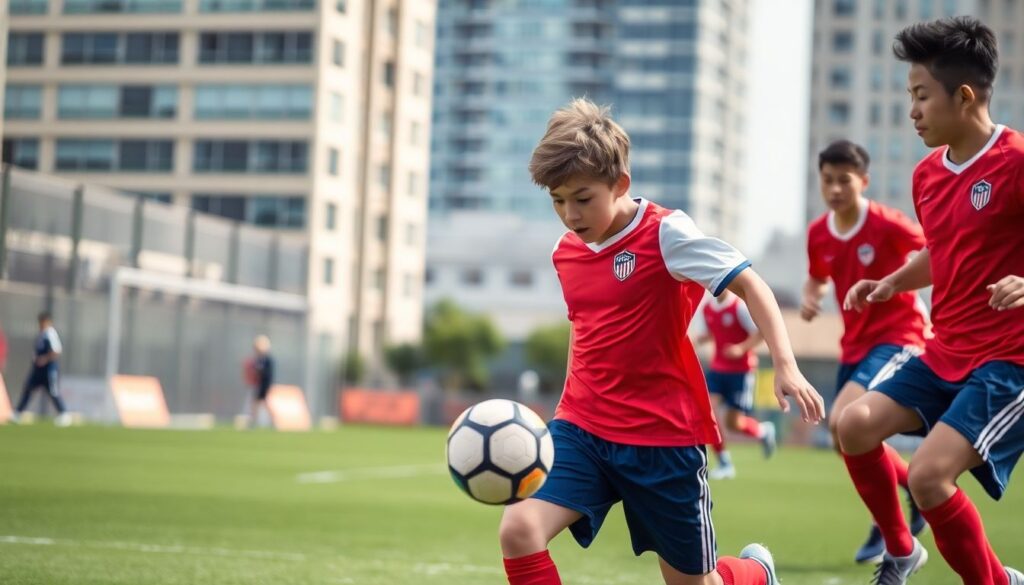
- Sharper first touch under pressure due to constant receptions in tight spaces.
- Improved close control and dribbling using both feet on hard, fast surfaces.
- Faster scanning and decision-making through repeated small-sided situations.
- More confident 1v1 attacking and defending in open and closed body positions.
- Quicker, cleaner short passing and wall passes, especially in combination play.
- Better transition reactions: losing, winning and protecting the ball in seconds.
- Higher creative output, street-style moves and problem solving in unpredictable games.
How small-sided formats accelerate close control and first touch
Small-sided futsal and street games suit players aged roughly 8-18 who already understand basic safety rules and can follow simple coaching cues. They are especially useful for technically focused teams, winter training, or players from areas with limited full-pitch access in Turkey.
Situations when these formats should be limited or avoided:
- Very young children (under 7) who struggle with balance and fall frequently on hard ground.
- Players returning from lower-limb injury without medical clearance for hard surfaces or sudden changes of direction.
- Sessions directly after heavy 11v11 matches, when fatigue increases injury risk.
- Unaudited street environments with traffic, broken surfaces, glass or unstable goals.
Technical benefits that justify adding futsal and street football into your plan:
- Touch density: many more ball contacts per minute than typical 11v11 sessions.
- Forced use of weaker foot in traffic, as players cannot always position for their dominant side.
- Game-like repetitions of receiving under pressure, shielding and playing out of congestion.
- Natural development of body feints, stop-start moves and directional first touches.
In Turkey, small-sided formats integrate well with existing structures such as futsal training camps for youth in Turkey and youth soccer skills development clinics Turkey, as long as coaches coordinate volume, intensity and rest with the players’ main club programs.
Designing futsal and street sessions for progressive skill overload
Objectives for a futsal or street-style block should be narrow and measurable, for example: improve first touch under pressure, increase successful 1v1 take-ons in tight areas, or raise short-pass accuracy. Avoid generic goals like “better technique” that are hard to track.
Basic requirements and tools suitable for Turkish settings:
- Space: school yards, small artificial pitches, car-free parking areas, multi-use courts or indoor halls.
- Surface: flat, clean and grippy; avoid oil patches, loose stones and significant holes.
- Balls: futsal balls (reduced bounce) for indoor and smooth outdoor surfaces; standard size-4 or size-5 for rougher street spaces.
- Markers: flat cones or tape lines to create lanes, end zones and safe boundaries.
- Portable goals: small pop-up goals or cones for mini-goals, fixed so they do not tip onto players.
- Timing tools: whistle and either a watch or simple mobile timer to control work-rest ratios.
Progressive overload for technical skills in these contexts should come from:
- Reducing space while keeping player numbers small, to crowd the ball carrier gradually.
- Increasing decision load: adding neutral players, support zones or scoring conditions.
- Raising pressure: limiting touches, adding chase defenders, shrinking time to finish.
- Changing ball and surface: moving from regular ball to futsal ball, or from grass to a faster court.
Coaches working in the best youth football academies in Turkey for technical skills often blend these overloads carefully into the week so that high-intensity futsal blocks do not clash with match days or heavy conditioning sessions.
For volunteer coaches or parents, short-format street football coaching programs for kids in Istanbul and other cities can follow the same progression logic with minimal equipment, as long as supervision and safety remain the first priority.
Drills that maximize 1v1 creativity and tight-space passing
Before specific drills, consider these key risks and limitations:
- Hard or slippery surfaces increase impact and fall risk; stop sessions if players slide uncontrollably.
- Overcrowded courts cause collisions; cap numbers per pitch and rotate groups instead.
- Too many high-intensity 1v1 duels in one session can overload knees and ankles.
- Uncontrolled tackling in street settings raises injury risk; set clear contact rules from the start.
- Fatigue reduces decision quality; shorten rounds rather than forcing exhausted players to continue.
Use the following step-by-step drills as a safe framework. Each includes objective, setup, progressions and simple outcome metrics.
-
Controlled 1v1 corridor duel – foundation for street-style dribbling
Objective: Improve 1v1 attacking moves and defending stance in a predictable lane.
Setup: Mark a 10-15 m long, 4-5 m wide corridor. One mini-goal at each end or a gate with cones. Players work in pairs, one ball per pair.
How to run:
- Attacker starts with the ball, defender two steps back. Attacker tries to dribble through the far gate; defender aims to delay or win the ball.
- Rotate roles every repetition; 4-6 duels per player, then rest.
- Contact rules: only side-on pressure and foot challenges, no sliding on hard surfaces.
Progressions: limit attacker to three touches before crossing halfway; start defender closer; shrink corridor width slightly.
Age variations: For under-10, widen the corridor and remove strict touch limits. For older players, add a quick counter-goal if the defender wins the ball.
Outcome metric: Track successful dribble wins vs. controlled defensive stops per round.
-
3v1 rondo with street-style flair – tight-space passing and disguise
Objective: Develop first touch, quick passing and deception against pressure.
Setup: Create a 6-8 m square. Three attackers on the outside edges, one defender inside. One ball per group.
How to run:
- Attackers keep the ball with a maximum of two touches; defender tries to intercept or force mistakes.
- Swap defender after each interception or after a short fixed time block.
- Encourage feints before passes and no-look passes only once basic quality is high.
Progressions: reduce space gradually; move to 4v2 with one-touch finish conditions; add a rule that a pass must break a line every few passes.
Age variations: For younger players, allow unlimited touches and a bigger square. For advanced, add touch caps and fast transitions into a mini-goal after a certain number of passes.
Outcome metric: Count consecutive passes and percentage of clean first touches without losing control.
-
Wall-pass alley game – combining and moving off the ball
Objective: Improve one-two passes, timing and support angles in crowded lanes.
Setup: Mark a rectangular lane about 15 m long and 6-8 m wide. Place a neutral “wall” player on each sideline. Play 2v2 or 3v3 inside.
How to run:
- Teams score by dribbling or passing through an end gate. Wall players can play one-touch passes back but cannot be tackled.
- Attackers are encouraged to use one-twos with wall players and change direction frequently.
- Rotate wall players and inside players every short round.
Progressions: require a wall-pass before scoring; limit inside players to two touches; add scoring zones where goals count double.
Age variations: For less experienced players, play 3v1 plus walls to reduce pressure. For older players, narrow the alley and keep intensity high with short games.
Outcome metric: Record how many goals involve a successful wall-pass and how often support players move immediately after passing.
-
Box escape challenge – shielding and turning under pressure
Objective: Strengthen ball protection, body positioning and escape turns.
Setup: Mark a 5-6 m square. One attacker with the ball, one defender inside. Four mini-gates with cones around the outside.
How to run:
- Attacker starts in the middle, aims to exit the square through any gate while keeping control.
- Defender aims to block exits and force the attacker to turn back or lose control.
- Short, intense rounds with plenty of rest; rotate pairs regularly.
Progressions: reduce exits to two gates only; add a time limit; force attacker to use weaker foot touches for certain rounds.
Age variations: For younger players, allow bigger squares and slower defenders. For advanced, introduce two defenders after a few clean escapes.
Outcome metric: Count successful escapes with control and number of turns executed without losing the ball.
-
Street tournament mini-league – applying all skills in realistic play
Objective: Integrate 1v1 moves, passing, shielding and finishing in free, creative games.
Setup: Use two to four small pitches, 3v3 or 4v4, with small goals or cone gates. Keep games short with frequent rotations so intensity stays high but safe.
How to run:
- Teams play quick matches, rotating winners and losers across pitches if space allows.
- Use simple bonus rules: extra points for goals after combinations, wall-passes or weak-foot finishes.
- Enforce safe contact rules and stop play immediately after collisions or risky challenges.
Progressions: reduce touches, change pitch shapes (narrow, wide) and set time-limited comeback challenges.
Age variations: For under-11, focus on enjoyment and creativity with no complicated scoring. For older squads, track results and key technical actions.
Outcome metric: Monitor successful 1v1 actions, combination goals and reduction of panic clearances.
These drills align well with youth soccer skills development clinics Turkey and can also feature in professional futsal coaching courses in Turkey as examples of safe, progressive small-sided design.
Transferring compact-football skills to 11v11 contexts
Use the following checklist to ensure futsal and street-learned skills are moving into full-pitch matches.
- Players show calmer first touches when receiving under pressure in central areas.
- Midfielders use body feints and directional first touches to escape tight pockets instead of passing backwards immediately.
- Wide players attempt more controlled 1v1 duels before crossing, not just early, hopeful deliveries.
- Defenders stay on their feet and delay in 1v1s, using body angle rather than reckless tackles.
- Short passing combinations appear more often in build-up, especially one-twos and third-man runs.
- Transitions are faster: after losing the ball, nearest players react instantly to press or delay.
- Players scan over their shoulders more regularly before receiving, not only after the ball arrives.
- Weak-foot use increases in real games, especially in first touch and quick layoffs.
- Team maintains compact distances between lines similar to a futsal court in defensive phases.
- Coaches can link specific match actions back to training drills, showing players clear cause and effect.
Safety, injury-risk mitigation and age-appropriate load management
Common mistakes to avoid when integrating futsal and street football into youth training in Turkey:
- Scheduling high-intensity futsal sessions on consecutive days without considering school, travel and club match fatigue.
- Allowing aggressive body contact or sliding tackles on hard indoor or street surfaces.
- Ignoring footwear: using running shoes with poor grip rather than futsal or appropriate turf shoes.
- Overloading young players with multiple teams and competitions, plus extra street games, without rest days.
- Skipping warm-up and cool-down because sessions feel like “just street play”.
- Using adult-size balls or heavy balls for younger age groups on hard courts.
- Failing to adjust space sizes and player numbers for different ages and technical levels.
- Under-supervising street sessions, where traffic, strangers or unsafe surfaces can create non-sport risks.
- Copying professional futsal intensity without gradual build-up for grassroots players.
- Not communicating between club coaches and providers of futsal training camps for youth in Turkey, causing overlapping workloads.
Embedding informal play into Turkish youth development pathways
When formal futsal halls or organized leagues are not available, coaches and parents can still use alternatives that keep the benefits of street-style play while managing safety.
-
School-yard micro-leagues
Use existing school courts after lessons to run small, time-limited leagues supervised by a teacher or coach. Simple rules, rotating teams and focus on touches and fair play make this a safe, structured version of street games.
-
Community cage and park projects
Coordinate with local authorities or clubs to mark safe, ball-friendly spaces in parks or cages. Establish fixed times where a responsible adult oversees games, enforcing contact rules and ensuring that non-players stay outside the area.
-
Club-led open play windows
Academies can open their small pitches one or two afternoons per week for supervised free play, with minimal coaching and simple safety guidelines. Many of the best youth football academies in Turkey for technical skills already blend this format into their weekly cycle.
-
Partnering clinics, camps and coaching courses
Local clubs can partner with youth soccer skills development clinics Turkey, street football coaching programs for kids in Istanbul and professional futsal coaching courses in Turkey to align methodology, ensuring consistent safety standards and progressive skill targets across all environments.
Coach clarifications and quick fixes
How many futsal or street-style sessions per week are appropriate for youth players?
For most youth players, one or two focused futsal or street-type sessions per week alongside regular team training are enough. Adjust down during congested match periods and up slightly during off-season blocks, always monitoring fatigue and mood.
What is the safest way to start with hard-surface training for younger players?
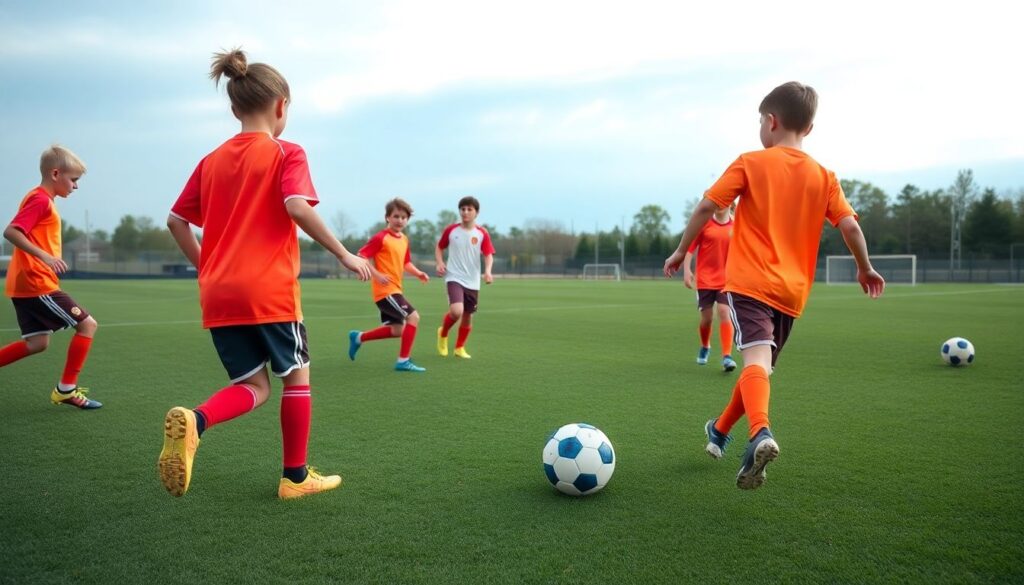
Start with short, low-intensity technical games with plenty of rest and clear no-sliding rules. Choose clean, flat areas, insist on suitable footwear, and avoid full-speed 1v1 duels until players show good balance and braking control.
How can I integrate futsal skills into my 11v11 training sessions?
Embed small-sided rondos, box-escape drills and 1v1 corridors into your warm-up or main technical block. Then, reference the same cues in larger tactical games so players recognize when to apply tight-space skills in match-style situations.
Do I need special equipment to get real benefits from street-style sessions?
No. A safe, flat space, a few balls, cones or tape and small goals or gates are enough. Futsal balls help on smooth indoor surfaces, but the main gains come from how you design space, numbers and rules, not from expensive gear.
How can I keep games creative without losing control and safety?
Set a few non-negotiable rules about contact, sliding and respect, then keep everything else open and playful. Use bonus goals for creative actions instead of strict patterns, and stop play quickly after any reckless challenge or unsafe behavior.
What should I monitor to avoid overloading multi-sport or multi-team players?
Track weekly high-intensity sessions, match minutes, reported soreness and general mood. If a player combines club, school and extra futsal or street play, coordinate with parents and other coaches to schedule guaranteed rest days.
Are structured camps and clinics better than unorganized street games?
Both have value. Camps and clinics offer safer environments, coaching and planned progression, while street games boost creativity and resilience. Aim for a mix, and choose reputable futsal training camps for youth in Turkey that balance intensity with long-term development.