
Turkish transfer market trends are shifting from high-fee, short-term bets toward smarter, lower-risk squad building shaped by currency pressure, UEFA rules and global competition. Super Lig clubs increasingly mix local talent, targeted foreign signings and creative loan structures, while smaller teams adopt data, partnerships and niche export strategies to survive in the new global economy.
Myths vs Reality: Concise Overview
- Myth: The turkish football transfer market 2025 will collapse; Reality: it is restructuring around sustainability, youth and resale value.
- Myth: Only the best turkish clubs for player transfers can attract quality; Reality: mid-table sides win by offering minutes, clear roles and stable payment.
- Myth: Agent services for football transfers in turkey always inflate costs; Reality: aligned, transparent agents reduce risk and unlock external markets.
- Myth: Domestic clubs must copy Western European wage levels; Reality: they compete by offering pathways, visibility and performance-linked bonuses.
- Myth: Transfer success equals headline signings from super lig transfer news and rumors; Reality: value comes from fit, development plans and exit strategies.
Common Myths About the Turkish Transfer Market
The turkish football transfer market 2025 is often portrayed as chaotic, short-term and entirely dependent on ageing foreign stars. In practice it is a web of interconnected domestic and international flows, where currency swings, league visibility, UEFA competitions and local regulations all shape valuations and contract structures.
In this context, the transfer market refers not only to fees paid between clubs, but also to wages, signing bonuses, loan agreements, sell-on clauses and performance incentives that form a player’s complete economic package. It also includes soft factors: playing time, development environment, medical support and lifestyle considerations within Turkey.
A common misconception is that only elite Istanbul clubs define the market. While they dominate headlines and super lig transfer news and rumors, secondary Super Lig and 1. Lig teams increasingly influence wage benchmarks, loan flows and youth export pipelines. Any realistic definition of the market must therefore include lower divisions and regional talent hubs.
Another myth is that Europe simply “buys” and Turkey “imports.” In reality, Turkish clubs both import and export talent, using loans, co-ownership-like profit shares and strategic sell-on clauses to turn domestic academies into revenue sources. Understanding these boundaries is key before designing any transfer strategy or budget model.
Macroeconomic Forces Reshaping Club Behavior
Macroeconomic pressures drive nearly every decision clubs now make in Turkey’s transfer environment. Key forces include:
- Currency volatility
- Clubs earn largely in local currency but pay many players in foreign currency or foreign-linked contracts.
- Even without exact figures, this mismatch pushes clubs away from long, fixed high-wage deals and toward incentives and shorter terms.
- Shifting global capital flows
- Foreign investors, multi-club ownership groups and regional funds look for undervalued leagues.
- Turkish clubs position themselves as talent gateways between Europe, the Middle East and emerging African markets.
- UEFA and domestic financial controls
- Financial discipline requirements reduce tolerance for speculative fees and unsustainable wage-to-revenue ratios.
- Clubs prioritize amortization-friendly deals, realistic resale options and performance-based pay.
- Changing player expectations
- Players and agents demand clarity on payment timing and currency protection.
- Non-financial factors such as medical facilities, career planning and exit routes into top-five leagues grow in importance.
- Competition for media attention
- Clubs still chase attention through big-name arrivals.
- However, smarter executives separate what sells on social media from what sustains a squad over multiple seasons.
| Transfer aspect | Earlier pattern | Current trend in the new global economy |
|---|---|---|
| Transfer fees | High upfront fees on individual marquee signings | Moderate fees spread across several targeted, resale-friendly players |
| Wage structure | Flat, guaranteed salaries in foreign-linked terms | Performance bonuses, appearance-linked pay and mixed-currency structures |
| Loan usage | Short-term gap filling without clear development goals | Strategic loans with play-time guarantees and future fee options |
| Foreign recruitment | Older, high-wage stars for instant impact | Younger profiles with upside and planned resale paths |
| Youth integration | Occasional emergency use of academy players | Planned pathways, minutes targets and structured export strategies |
Domestic Adaptations: Youth Development, Loan Networks and Cost Control
Within Turkey, clubs are adapting to macroeconomic constraints through several repeatable models. These models especially matter for sides with limited resources that cannot compete with the best turkish clubs for player transfers on straight wage bids.
- Youth-first competitive model
- Core idea: turn the academy into the main talent pipeline for the first team and for future transfers abroad.
- Key steps:
- Define position-specific minutes targets for academy graduates each season.
- Pair young players with experienced, affordable mentors instead of adding extra foreign squad players.
- Negotiate sell-on clauses and add-ons rather than chasing maximum upfront fees.
- Alternative for low budgets: co-invest youth development with nearby smaller clubs, sharing scouts and coaches instead of building everything alone.
- Loan network strategy
- Core idea: use incoming and outgoing loans as a structured system, not as emergency moves in the final days of the turkey football transfer window dates.
- Key steps:
- Establish stable relationships with three to five partner clubs domestically and abroad.
- Agree on role definitions, minimum minutes and training standards inside loan contracts.
- Create a tracking system to monitor loanees’ development and adjust future deals.
- Budget-friendly variation: offer to pay a smaller share of wages in exchange for conditional play-time or options to buy.
- Wage-bill optimization
- Core idea: treat wage commitments as a portfolio rather than isolated negotiations.
- Key steps:
- Cap total wage expenditure as a proportion of realistic cash inflows, not optimistic projections.
- Replace marginal squad players on full salaries with flexible contracts, appearance fees or incentive-heavy deals.
- Restructure contracts near expiry to spread cost and align incentives before performance declines.
- Alternative for small clubs: align base wages with domestic norms and compete by offering leadership roles and guaranteed minutes instead.
- Domestic scouting and data-lite recruitment
- Core idea: use simple, low-cost data and local knowledge instead of expensive analytics teams.
- Key steps:
- Track basic indicators such as availability, minutes and role consistency across leagues.
- Use video platforms and shared reports with partner clubs instead of building a large in-house traveling scout staff.
- Focus on domestic undervalued segments: late-bloomers, players returning from abroad, and underused squad players in top clubs.
- Alternative: collaborate with universities or local analysts to access basic data models without full-time staff costs.
- Hybrid export model
- Core idea: combine domestic youth with targeted foreign signings specifically bought for later resale to stronger leagues.
- Key steps:
- Scout age and profile brackets that historically attract foreign buyers from top-five leagues.
- Include clear release triggers and sell-on clauses to make deals attractive for both player and buying club.
- Market players consciously through European competitions, friendlies and media storytelling.
- Lower-budget variation: share discovery rights or future profit percentages with partner clubs that contribute scouting or initial development.
Cross‑border Dynamics: Foreign Investors, Agents and Export Strategies
Cross-border flows increasingly shape how Turkish clubs sign, develop and sell players. Foreign investors, multi-club groups and specialized agents all interact with local directors, often with different timelines and risk appetites. Understanding both benefits and constraints allows clubs to design realistic strategies.
Upsides of deeper international integration
- Access to broader player pools
- Foreign networks open scouting reach into markets that domestic staff cannot cover regularly.
- Clubs can secure promising players before they appear in mainstream super lig transfer news and rumors.
- Coordinated development pathways
- Multi-club groups send players through Turkey for specific tactical and physical development stages.
- Local clubs gain short-term performance plus potential sell-on value when those players move again.
- Improved negotiation leverage
- Professional agent services for football transfers in turkey can generate multiple offers and structured bidding.
- Well-advised clubs design release clauses and payment schedules that stabilize cash flow.
- Increased visibility and brand value
- Regular sales to top-five leagues position the club as a reliable development hub.
- This reputation attracts ambitious players even when wages are lower than elsewhere.
Constraints and risk factors to manage

- Misaligned incentives with investors
- Short-term exit plans can push for quick sales below true value.
- On-field stability may suffer if turnover is too high season to season.
- Overdependence on single agent networks
- Relying on a narrow group for sourcing can reduce diversity of profiles and negotiating options.
- Conflicts of interest arise when the same intermediary represents both player and multiple clubs.
- Regulatory and reputation exposure
- Cross-border deals are more exposed to delayed payments, disputes and regulatory changes.
- Poorly handled cases can damage a club’s international reputation and future deal flow.
- Complex legal environments
- Differences in tax rules, employment law and federation regulations increase contract complexity.
- Without specialized legal support, small details can erase the financial upside of a transfer.
Regulation, Currency Volatility and Contract Design – Case Analyses
Regulation and currency moves are often cited as reasons deals “go wrong.” In many situations, the core problem lies instead in contract design and risk allocation. The following recurring issues illustrate how myths distort practice.
- Myth: Fixed foreign-currency wages provide security for both sides
- Reality: they protect the player but can destabilize the club’s budget when the exchange rate shifts.
- Better practice: blend local and foreign-linked components, with clear adjustment mechanisms tied to verifiable benchmarks.
- Myth: Short contracts always reduce risk
- Reality: very short terms can increase annual cost and reduce resale opportunities.
- Better practice: use medium-length deals with options conditioned on appearance or performance thresholds.
- Myth: Release clauses must be as high as possible
- Reality: unrealistic clauses scare off buyers and may discourage the player.
- Better practice: set tiered release mechanisms that differ for domestic and foreign clubs or for different competition levels.
- Myth: Back-loaded payment schedules always help cash flow
- Reality: compressing large instalments into later periods can create liquidity crunches if sporting results underperform.
- Better practice: align instalments with predictable revenue streams such as broadcasting distributions or scheduled sponsorship income.
- Myth: Add-ons are minor details
- Reality: poorly defined bonuses tied to vague achievements cause disputes and unexpected liabilities.
- Better practice: use simple, measurable triggers like appearances, goals or qualification outcomes, with clear caps and timelines.
- Myth: Regulatory approval is a formality
- Reality: misunderstandings about domestic and international rules, especially around third-party interests, can delay or block transfers.
- Better practice: involve legal experts early, particularly when structures deviate from straightforward fee-and-salary deals.
Implementation Roadmap: Tactical Steps Clubs Can Deploy Now
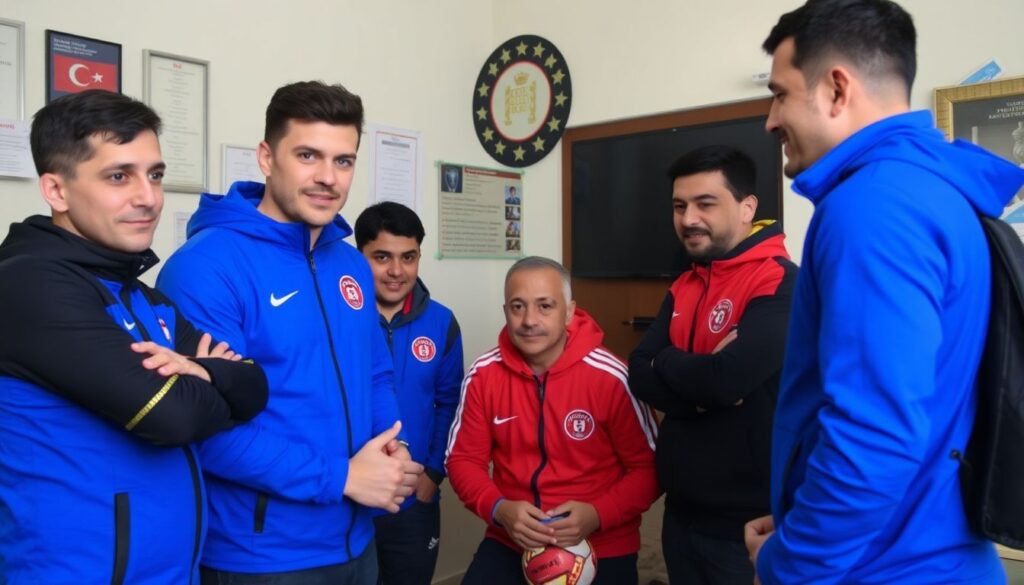
This roadmap outlines a pragmatic sequence for a Turkish club with limited resources to adapt to the new transfer environment while staying within realistic constraints and the turkey football transfer window dates.
- Define a transfer identity
- Choose a clear profile: youth developer, turnaround club for underused players, or specialist in certain positions or regions.
- Write down three to five recruitment rules (for example: age limits, maximum contract length, required physical or tactical attributes).
- Audit the current squad and wage bill
- List all players by contract end date, approximate wage band and resale potential.
- Mark those who are core, tradeable or replaceable; focus new deals on positions, not names.
- Build a minimal but structured scouting-recruitment loop
- Create a shared shortlist document updated weekly, even if maintained by a small staff.
- Tag targets as immediate starters, rotational players or development projects.
- Ensure at least two independent reports (coach plus scout, or video plus live observation) before any final decision.
- Standardize contract templates under volatility
- Prepare templates with:
- Mixed fixed and performance-based components.
- Clear definitions of currency, exchange rules and payment dates.
- Structured sell-on and buyback options when appropriate.
- Use the same logic across deals so the club’s risk profile remains predictable.
- Prepare templates with:
- Develop partner-club and agent ecosystems
- Identify a small group of trustworthy partners domestically and abroad for loans and co-development.
- With agent services for football transfers in turkey, communicate openly about the club’s financial limits and development vision.
- Avoid exclusivity that locks the club into a narrow market view.
- Mini-case: budget club rebuilding in a single window
Scenario: A lower-budget Super Lig side faces expiring contracts for several high-cost veterans. The sporting director decides to prioritize sustainability. Before the next turkey football transfer window dates period opens, the club:
- Releases or sells two ageing starters, freeing wage space.
- Promotes three academy players into squad roles with performance-based contracts.
- Signs one experienced leader on a shorter, incentive-heavy deal instead of two mid-level veterans.
- Secures two loan players from a stronger foreign league on shared wages and clear play-time expectations.
- Agrees realistic sell-on clauses for any potential future sales, building a path to future income.
Within one season, the squad is younger, the wage bill more flexible, and the club better positioned to attract buyers and ambitious players who see Turkey as a stepping stone. Over time, this repeatable model can transform transfer dependency into a sustainable competitive advantage in the turkish football transfer market 2025 and beyond.
Practical Questions Club Executives Often Raise
How can a smaller Turkish club compete for talent without matching wages from bigger leagues?
Emphasize guaranteed minutes, clear roles, development plans and visible pathways to top competitions. Structure contracts with achievable bonuses and realistic exit clauses. Many players accept lower fixed pay in exchange for career growth and future move potential.
What is the best way to prepare for the next transfer window under uncertainty?
Start early with a rolling shortlist, scenario plans for key positions and pre-agreed budget ranges. Simulate three versions of the squad: conservative, balanced and ambitious, then map which deals are essential versus opportunistic when the window opens.
How should we use loans without losing control of our long-term squad plan?
Define the role of each loanee in advance and include minimum minutes or position-use clauses where possible. Limit incoming loans to roles where you lack ready academy options, and use outgoing loans as a structured development tool with regular performance reviews.
Do we really need data analytics, or can we rely on traditional scouting only?

You can start effectively with simple, low-cost data: minutes played, availability, age, and basic performance indicators. Combine this with qualitative scouting rather than replacing it. Over time, build more sophisticated tools only where they clearly support decisions.
When should we sell a key player to maximize value without damaging results?
Identify a planned sale window at least one season ahead, then recruit or develop a potential successor before negotiations. Sell when multiple credible offers exist and when you can replace at a lower total cost without breaking tactical continuity.
How do we avoid risky contracts linked to currency volatility?
Blend local and foreign-linked components, cap guarantees and expand performance-based pay. Clarify exchange rules and payment dates in the contract, and avoid long-term commitments that depend on optimistic currency assumptions.
What role should agents play in our recruitment strategy?
Use agents as market information sources and negotiation partners, not as de facto sporting directors. Maintain relationships with several reputable intermediaries, set clear communication rules and insist on transparent fee structures aligned with the value they create.
Комментарии