The Süper Lig can move closer to Europe’s top five but only with coordinated upgrades in governance, financial discipline, talent pathways, infrastructure, and media strategy. Without reforms to Turkish Super Lig TV rights deals, club ownership, and fan monetization, growth will stall around its current tier rather than reaching Premier League, La Liga, or Bundesliga levels.
Strategic snapshot
- The Süper Lig’s sporting ceiling is high, but financial and governance volatility keep it short of stable top-five status.
- Broadcast, sponsorship, and matchday income lag best-practice models, limiting sustainable wage and transfer budgets.
- Clubs export talent effectively but struggle to retain peak-age players and balance transfer flows.
- Stadium upgrades exist, yet fan experience, digital engagement, and pricing strategies remain under-monetized.
- Ownership fragmentation, political interference, and soft regulation deter long-term capital willing to invest in Turkish football clubs.
- Decision-makers must choose a clear media and growth model: domestic-first, regional, global digital, or hybrid.
- With disciplined execution over 10-15 years, a realistic target is to sit just below or on the edge of the traditional top five.
Current competitive and financial profile of the Süper Lig
When assessing whether the Süper Lig can join Europe’s top five, use a consistent set of criteria that combine sporting and business performance.
- UEFA performance and coefficients – stability of group-stage participation, depth of runs in European competitions, and number of clubs consistently competitive abroad.
- Revenue mix and scale – balance between domestic TV, international rights, sponsorship, matchday, and player trading income, not only headline totals.
- Cost control and wage discipline – ratio of player wages to operating revenue, payment punctuality, and reliance on short-term fixes such as late-window loans.
- Competitive balance inside the league – number of realistic title contenders, volatility of league positions, and the risk of big clubs suddenly collapsing.
- Talent pipeline and retention – volume and quality of academy graduates, pathways into first teams, and ability to keep core players through peak seasons.
- Infrastructure and stadium utilization – modernity of stadiums, training facilities, and consistency of attendances versus stated capacity.
- Commercialization and fan monetization – sophistication of ticketing, merchandising, memberships, and the ease with which fans can buy Turkish Super Lig tickets online.
- Governance and investor confidence – transparency, predictability of regulations, and attractiveness to both domestic and international investors.
- Brand strength and international reach – recognition of clubs and the league among global audiences, including the pull of a Super Lig live streaming subscription.
On most of these criteria, the Süper Lig shows flashes of top-tier potential but inconsistent execution compared with the English Premier League, La Liga, Bundesliga, Serie A, and Ligue 1.
Broadcast, sponsorship and revenue shortfalls versus Europe’s top five
The critical gap between the Süper Lig and Europe’s elite is not passion or talent, but the structure and monetization of its media and commercial rights.
Below is a conceptual comparison of strategic revenue models the Süper Lig could follow, framed as options rather than exact numerical forecasts.
| Variant | Ideal target audience | Main advantages | Main drawbacks | When to prioritise this path |
|---|---|---|---|---|
| Status-quo domestic focus | Risk-averse clubs and broadcasters who prefer familiar Turkish Super Lig TV rights deals and established distribution. | Predictable relationships; easier negotiations with a small group of local partners; lower execution risk for clubs and league. | Limited growth in rights fees; dependence on domestic economy; weak global brand building; underused digital channels. | Short term, while governance is being cleaned up and financial controls are strengthened. |
| Regional broadcast expansion | Stakeholders aiming to tap the wider MENA, Balkans, and Turkic markets with culturally close audiences. | Diversifies income beyond Turkey; builds recognition in nearby markets; makes the league more attractive for Super Lig sponsorship opportunities. | Requires careful partner selection; risk of underpriced long contracts; tricky coordination with domestic broadcasters. | Medium term, once competitive stability improves and a few clubs become regulars in European group stages. |
| Global digital-first push | Tech-friendly leadership ready to invest in league-owned OTT, direct-to-consumer Super Lig live streaming subscription products, and data-driven marketing. | Greater control of fan data; potential for tiered global pricing; direct upsell of merchandise and tickets. | High upfront cost; execution complexity; cannibalisation risks with existing TV partners; need for strong in-house capabilities. | When digital infrastructure is mature, piracy is tackled, and the league is ready to act like a media-tech platform. |
| Hybrid model with strategic partners | League and clubs seeking balanced growth with both established broadcasters and global tech or investment partners. | Combines stable TV money with upside from digital; attracts strategic investors who want to invest in Turkish football clubs as part of a broader ecosystem. | Complex contract structures; governance must be robust; misaligned incentives between traditional TV and digital players are possible. | Long term, once regulatory clarity is strong and there is a clear centralised rights strategy. |
Relative to the top-five leagues, the Süper Lig currently resembles a constrained version of the status-quo domestic focus model, with underexploited regional and global potential. Moving along the table from left to right is effectively the strategic roadmap for closing the revenue gap.
Talent production, transfer flows and squad-building constraints
Talent is the Süper Lig’s most realistic competitive lever, but it requires intentional choices. Use the following conditional scenarios as a decision tree for club and league strategy.
- If your club relies heavily on transfer profits to survive, then prioritise academy and regional scouting, accept being a selling club, and align your budget to develop and showcase players between ages 18-23.
- If you want to compete regularly in Europe, then design a wage structure that can retain 3-5 core players through their peak, even if it means selling more peripheral assets to fund those contracts.
- If foreign-player limits and regulatory changes are uncertain, then build redundancy: invest in local youth while maintaining a diversified foreign scouting network so you can pivot quickly between domestic and foreign-heavy roster models.
- If your club has strong local identity and fan sentiment, then protect a core of homegrown players as brand anchors, even if foreign signings provide short-term quality; this supports long-term fan monetization and merchandising.
- If you operate in a city with multiple clubs and intense competition for talent, then differentiate your development pathway (for example, fast-tracking youth to the first team or offering clearer European shop-window opportunities).
- If squad-building is distorted by late-window opportunistic loans, then shift to earlier, data-informed recruitment cycles and cap the proportion of your squad built on short-term deals.
At league level, coordinated investment in coaching education, youth leagues, and fair compensation mechanisms for smaller clubs will determine whether the Süper Lig is simply a transit league or a recognised incubator feeding the highest tiers.
Infrastructure, stadium standards and fan monetization gaps
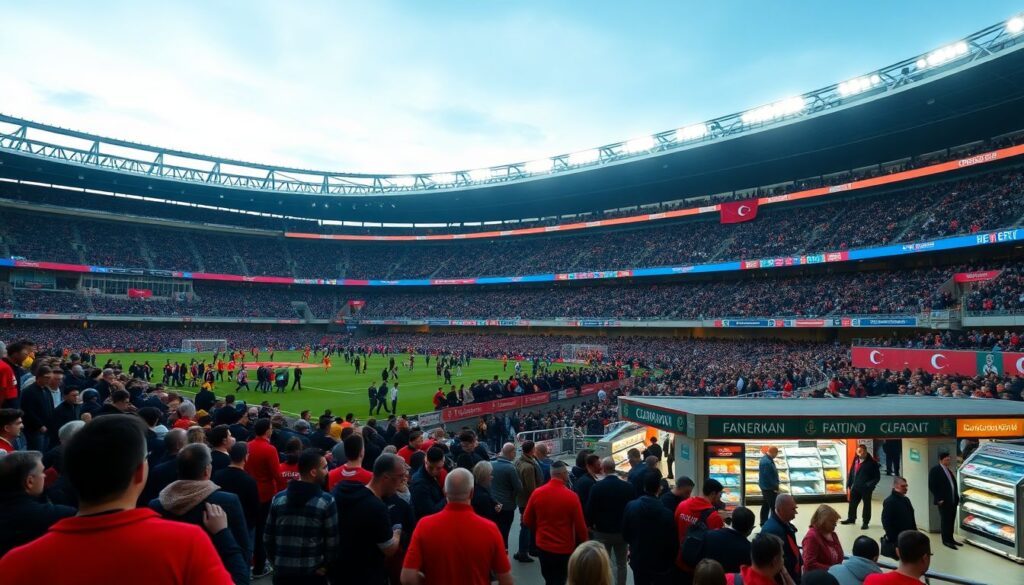
Many Süper Lig stadiums are modern, but the business model around them often underperforms. Use this ordered checklist to diagnose priorities for each club and the league.
- Audit matchday operations: map typical fan journeys (transport, access, in-stadium services) and capture pain points that reduce attendance or dwell time.
- Modernise ticketing and access: ensure fans can easily buy Turkish Super Lig tickets online, receive digital passes, and enter the stadium quickly with minimal friction.
- Rework pricing logic: segment fans by willingness to pay, experiment with dynamic pricing for high-demand games, and maintain accessible options to keep atmospheres vibrant.
- Enhance non-matchday use: convert stadiums and training centres into multi-purpose venues for tours, events, conferences, and community activities.
- Integrate digital engagement: link the stadium experience to club apps, loyalty programs, and a Super Lig live streaming subscription where appropriate, so physical and digital touchpoints reinforce each other.
- Upgrade training facilities and sports science: provide conditions that attract and retain serious professionals, reducing injuries and supporting competitive performance.
- Align sponsorship inventory: package naming rights, hospitality, digital assets, and in-stadium exposure in a cohesive way that increases the value of Super Lig sponsorship opportunities.
Incremental gains in these areas compound over seasons, increasing average attendances, commercial revenue, and overall league attractiveness to broadcasters and investors.
Governance, ownership models and regulatory barriers to growth
The biggest obstacles to the Süper Lig joining the top five are not tactical but structural. The following issues commonly appear when stakeholders choose governance and ownership paths.
- Fragmented ownership structures that prioritise short-term survival over long-term value creation, making it hard to attract patient capital ready to invest in Turkish football clubs.
- Political interference in club decisions, from appointments to spending, reducing accountability and discouraging professional management.
- Weak or inconsistently enforced financial regulations, which allow unsustainable wage bills and hidden liabilities to build up.
- Insufficient centralisation of commercial rights, leading to fragmented bargaining power in Turkish Super Lig TV rights deals and sponsorship packages.
- Lack of independent league governance, with conflicts of interest between club executives, federation leadership, and regulators.
- Unclear rules on foreign ownership, multi-club ownership, and partnership with private equity, creating uncertainty for international investors.
- Reactive, not proactive, policy changes on issues like foreign-player quotas, youth incentives, and financial fair play, making planning difficult.
- Limited transparency in financial reporting, match-day incident management, and disciplinary procedures, which affects international credibility.
- Underdeveloped club board expertise, with insufficient representation of professionals in finance, law, digital, and international marketing.
Addressing these governance barriers is essential before any ambitious push into advanced media models or large-scale external investment can be sustainably absorbed.
Scenarios and a decision-tree roadmap to reach top-five status
Before selecting a path, connect the previous sections into a simple decision-tree to clarify strategic choices for league and club stakeholders.
- If governance and financial controls remain unstable, then limit ambitions to incremental domestic improvements and avoid long, risky media or investment deals.
- If governance is improving but European results are inconsistent, then focus on talent development, infrastructure, and regional broadcast expansion as intermediate steps.
- If competitive and financial stability reach a solid baseline, then pursue a hybrid model that blends strong domestic broadcasters with selective digital and international partners.
- If the league builds a strong direct-to-fan digital stack and robust brand abroad, then consider a global digital-first push anchored by a centralised Super Lig live streaming subscription platform.
For cautious domestic stakeholders, a status-quo domestic focus with gradual governance reform is the best immediate option. For those aiming to grow beyond Turkey, a regional broadcast expansion and later a hybrid model with strategic partners offer the most balanced route. Long-term, digitally ambitious leaders will find the global digital-first push the best fit once foundations are secure.
Stakeholder concerns and concise answers
Can the Süper Lig realistically join Europe’s top five leagues?
With structural reforms, disciplined finances, and improved European results, the Süper Lig can move closer to the traditional top five. Reaching or surpassing them fully is difficult, but positioning as the leading league just below them is a realistic target.
Is now a good moment to invest in Turkish football clubs?
It is attractive for investors who tolerate volatility and believe governance will improve. Valuations are generally lower than in the top-five leagues, but regulatory uncertainty and political risks mean due diligence and strong local partners are critical.
How important are Turkish Super Lig TV rights deals for future growth?

They are central to the entire economic model. Better-structured and more diversified rights deals can stabilise club finances, fund infrastructure, and support talent retention, especially if combined with digital and regional expansion strategies.
What role do Super Lig sponsorship opportunities play in closing the revenue gap?
High-quality sponsorships provide recurring income beyond media rights. Packaging stadium, shirt, and digital assets professionally can attract regional and global brands, which is essential for narrowing the gap to top-five leagues.
How can clubs better monetize fans beyond match tickets?
Clubs should integrate online ticketing, memberships, merchandise, and content into a unified ecosystem. This includes making it simple to buy Turkish Super Lig tickets online and offering tailored digital products, such as a flexible Super Lig live streaming subscription.
Does heavy reliance on player sales limit long-term competitiveness?
It does if clubs are forced to sell core talent every season. Used strategically with strong academies and smart reinvestment, player trading can fund sustainable growth while still allowing a competitive core to remain intact.
What timelines are realistic for significant improvement?
Meaningful progress requires multi-year consistency. Over roughly a decade of better governance, infrastructure, and talent policies, the Süper Lig can significantly improve its standing and narrow the distance to Europe’s elite.