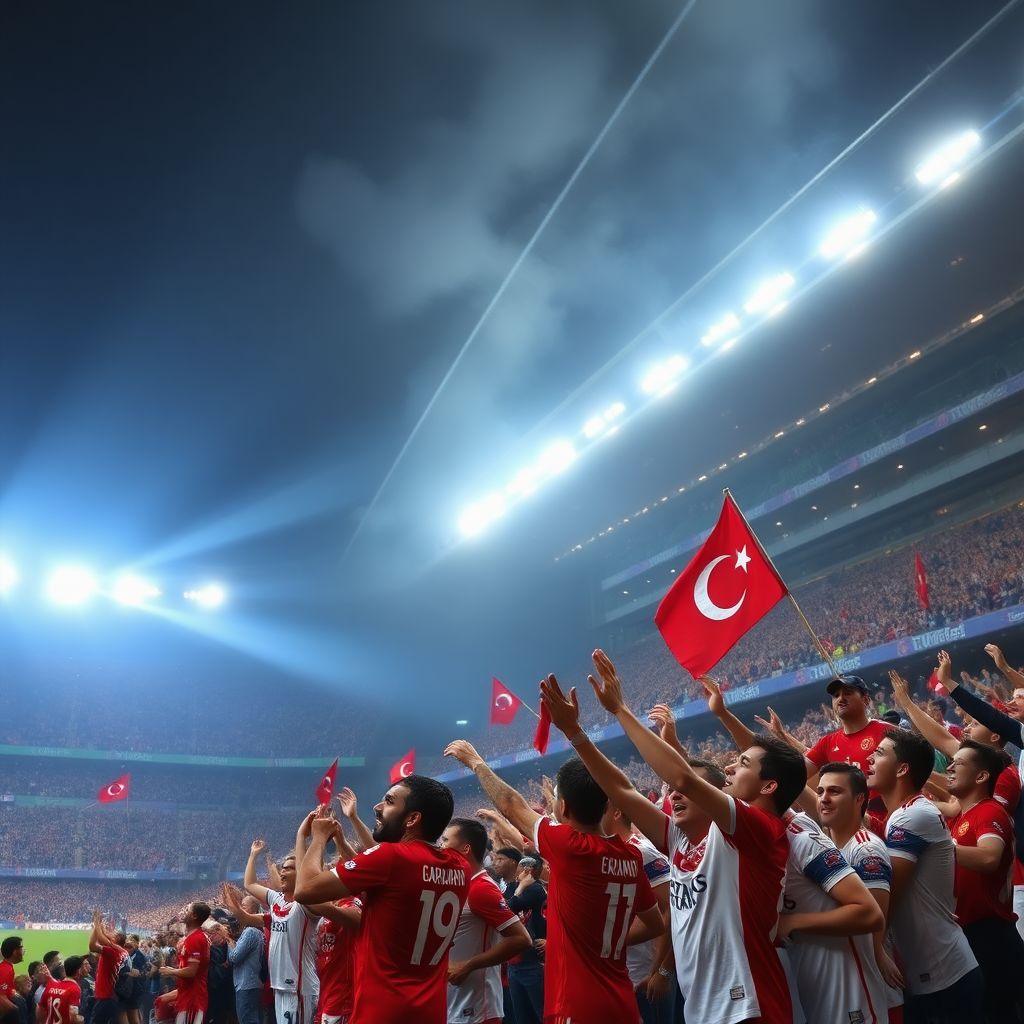
Legendary European nights for Turkish clubs are high-stakes matches where Galatasaray, Fenerbahçe, Beşiktaş and others beat elite continental opponents, often against the odds. These victories combine hostile atmospheres, disciplined tactics and standout individuals. Understanding how they happened helps coaches, club directors and fans see both the potential and the structural limits of Turkish football in Europe.
Snapshot of landmark European nights
- Turkish football clubs in European competitions have produced a small but significant set of genuinely elite wins, not just emotional comebacks.
- Context matters: timing in the season, opponent motivation and squad depth strongly shape the ceiling of Turkish sides in Europe.
- Galatasaray best European matches often mix controlled aggression, set-piece efficiency and strong game management in the final 20 minutes.
- Fenerbahce historic European victories typically feature compact defending, fast wide transitions and intelligent use of home advantage.
- Besiktas greatest European nights stand out for brave positional play and a confident high line, but only when defensive structure is synchronised.
- For club boards, realistic planning and financial discipline are as important as tactics when targeting European progress.
- Fans looking to buy tickets for turkish clubs european matches should understand that fixture congestion and rotation can affect the spectacle and result.
How Turkish clubs reached the pinnacle: context and milestones
When discussing legendary European victories by Turkish clubs, the focus is on matches where level of opposition, competitive pressure and performance quality align. These are not just big scorelines, but games that alter how Turkish football is perceived across Europe and influence future planning inside the clubs.
Historically, the clearest benchmark is Galatasaray’s era of success around the turn of the millennium, culminating in continental silverware and deep runs. That period provided a template: a stable core of players, strong domestic dominance, and a tactical identity built to survive the physical and mental demands of European knockout football.
Later, other Turkish football clubs in european competitions-Fenerbahçe, Beşiktaş, and Trabzonspor among them-produced their own peaks. These nights often arrived when three conditions overlapped: coherent recruitment over several seasons, an experienced coach trusted by the board, and a squad balanced between local leaders and high-level foreign talent.
Regulatory and financial contexts also set boundaries. UEFA licensing, domestic foreign-player rules, and fluctuating TV revenues influenced how aggressively clubs could build squads. Within these limits, the greatest European wins emerged from medium‑term stability rather than short-term gambles and deadline-day overhauls.
Actionable lessons for coaches and club directors
- Define a three-year tactical and recruitment identity aimed specifically at European requirements (pressing resistance, set pieces, squad rotation) rather than copying domestic rivals.
- Protect continuity in key spine positions (GK-CB-CM-CF), even if it means accepting short-term domestic criticism to preserve long-term European competitiveness.
Iconic victories that shifted continental perceptions
Certain matches function as turning points, where a Turkish club beats a favoured European opponent in a way that forces media, scouts and rivals to reassess the league’s level. These wins typically combine emotional intensity with repeatable tactical patterns, rather than relying only on atmosphere or refereeing decisions.
- Beating a reigning champion or recent finalist – Signals that the Turkish side can match modern tactical standards and physical intensity, not just surprise weaker teams.
- Winning away in a traditionally hostile European ground – Demonstrates mental resilience and game management, since home atmosphere is no longer a protective factor.
- Overturning a first-leg deficit – Shows strategic flexibility between legs and psychological strength under pressure.
- Dominating possession against a technical opponent – Indicates progress in coaching quality, build-up structure and pressing organisation.
- Clinching qualification with a controlled performance – A measured display (not chaos) that secures group-stage advancement or knockout progress without unnecessary risk.
- Neutralising a world-class forward or playmaker – Communicates that defensive scouting and micro-tactical planning are at an elite level.
| Match (club vs opponent) | Season | Competition stage | Scoreline | Primary significance |
|---|---|---|---|---|
| Galatasaray vs elite European opponent (home) | Late 1990s-early 2000s peak | Knockout round | Narrow aggregate win | Showed Turkish champions could manage two-leg ties with discipline and emotional control. |
| Fenerbahçe vs established Champions League side | Mid‑2000s-2010s | Quarter-final push | Home win, away control | Underlined Fenerbahce historic European victories were built on compact shape and counter-attacks. |
| Beşiktaş vs big‑five league title contender | 2010s | Group decider | High‑scoring home win | Confirmed Besiktas greatest European nights combined brave passing with smart tempo management. |
| Emerging Anatolian club vs top seed | Recent seasons | Group-stage upset | One‑goal victory | Proved that structured pressing and rest defence travel well even without star power. |
Actionable lessons for coaches and club directors
- Map out at least three different match scripts (early lead, chasing the game, defending a slim advantage) and rehearse them systematically before European campaigns.
- Invest in detailed opponent analysis staff for knockout rounds; iconic wins usually reflect superior micro-preparation, not only player quality.
Applying the concept in realistic scenarios
To turn theory into practice, clubs can model match preparation around historical templates of legendary nights:
- Scenario: Underdog at home in the first leg – Emphasise clean sheet over margin of victory, focus on set-piece routines, plan substitutions to preserve intensity for 70-90 minutes.
- Scenario: Protecting a narrow away-goal advantage – Train compact mid-blocks, slow restarts and structured counter-pressing instead of sitting too deep and inviting pressure.
- Scenario: Needing a two-goal comeback – Script a high-tempo first 20 minutes at home, with clear triggers for risk escalation if no early goal arrives.
Tactical blueprints behind the greatest wins
Behind every celebrated victory lies a recognizable tactical blueprint. Turkish sides typically succeed in Europe when they combine aggressive home atmospheres with disciplined spacing, clear pressing triggers and defined roles for creative players who can exploit transitional moments.
- Structured mid‑block with explosive counters
Most Galatasaray best European matches and Fenerbahce historic European victories rely on a compact 4‑2‑3‑1 or 4‑3‑3. The team concedes harmless possession in middle zones, then breaks quickly into wide spaces behind advanced full-backs. - High-intensity pressing in selected phases
Rather than pressing constantly, successful Turkish teams target specific windows (opening 15 minutes, after own goal, after opponent substitution) to swarm the ball and feed the crowd’s energy without burning out too early. - Set-piece specialisation
Attacking corners, second balls around the box and aggressive blocking routines are frequent sources of goals, especially against technically superior but less physically dominant opponents. - Flexible double pivot or single deep playmaker
Controlling the half-spaces in front of the defence is critical. A double pivot gives stability away from home; a single deep playmaker with two aggressive interiors suits must‑win home games. - Asymmetric full-back roles
One full-back joins attacks aggressively, while the other stays deeper to stabilise rest defence and protect against counters, which is vital when chasing goals at home.
Actionable lessons for coaches and club directors
- Build your squad with at least two players specifically profiled for high-intensity European pressing (covering large distances, tactical fouling, repeated accelerations).
- Dedicate weekly micro-cycles in domestic play to rehearse European game models, even when the opponent is weaker, so that tactical blueprints become automatic under pressure.
Standout individual performances and their decisive moments
Legendary nights are remembered as much for individuals as for systems: a goalkeeper’s reflexes, a striker’s composure, or a midfielder’s control under pressure. However, relying too heavily on individual brilliance can hide structural issues that limit long-term European consistency.
Strengths of relying on big individual nights
- Star players can turn balanced ties in favour of Turkish clubs with one moment of quality, especially at home when the atmosphere amplifies momentum swings.
- Experienced leaders help younger teammates manage emotions in critical phases (penalties, added time, second-leg tension).
- Match-winners attract global attention, lifting club brand value and making the league more attractive for future recruits.
- Creative individuals can improvise solutions when tactical plans fail due to injuries or unexpected opponent strategies.
Limitations and risks of overemphasising individual brilliance
- Dependence on a small core of stars increases vulnerability to injuries, suspensions and form dips across long European campaigns.
- Opponents in later rounds prepare focused man‑marking or double-teams, neutralising isolated talents if collective structures are weak.
- Overpaying marquee players can unbalance wage structures, causing dressing-room tension and limiting investment in supporting roles.
- Board and fans may misread one extraordinary night as proof that long-term squad and academy planning are unnecessary.
Actionable lessons for coaches and club directors
- Frame star players as finishers of a collective plan; performance reviews and bonuses should reward off‑ball work and pressing, not just goals and assists.
- Create depth charts ensuring that each crucial role (ball‑winning pivot, set‑piece taker, penalty specialist) has at least one prepared backup.
Club structures, management decisions and preparation models
The difference between sporadic memorable nights and consistent European relevance lies in organisational structure. Governance, recruitment departments, sports science and data analysis determine how often tactical ideas and player quality can align to produce historic wins.
Yet many Turkish clubs fall into recurring traps that limit their ceiling in Europe, even when individual squads are strong on paper.
Common mistakes and persistent myths
- Myth: Atmosphere alone will beat any opponent
Home support is a major asset, but elite European sides are used to hostile environments. Without tactical discipline, the same crowd energy can push players into reckless pressing and poor decision-making. - Mistake: Short-term transfer splurges before qualifiers
Signing several high-profile players just before crucial ties leaves no time for integration. Misunderstandings in pressing, build-up and set-piece assignments are punished harshly at European level. - Myth: Only foreign coaches understand Europe
Experience abroad is helpful, but domestic coaches with strong analytical and language skills can also succeed. What matters is a clear methodology and support staff, not nationality. - Mistake: Underfunding data and performance analysis
Saving money on analysts and scouting often costs more in wasted transfer fees and tactical mismatches across a season. - Myth: Rotating heavily before Europe always protects players
Excessive rotation can disrupt rhythm and relationships on the pitch. Intelligent use of minutes and position-specific rest is more effective. - Mistake: Ignoring travel, nutrition and recovery planning
Poor logistics reduce physical output in the second half of away legs. European opponents rarely neglect these details.
Actionable lessons for coaches and club directors
- Stabilise sporting leadership: sporting director plus head coach should be aligned on a three‑year European roadmap, resistant to weekly media pressure.
- Allocate a fixed percentage of the football budget to analysis, medical, and logistics departments and protect it from transfer-market temptations.
Long-term impact: domestic development and continental reputation
Legendary European victories have effects beyond a single night. They influence coefficient rankings, attract better players to the league, and shift domestic tactical standards as other clubs copy successful ideas-sometimes correctly, sometimes superficially.
Within Türkiye, these nights have gradually raised expectations of how Turkish football clubs in european competitions should behave: more structured pressing, better game management and less emotional overreaction. They also increase scrutiny on off‑pitch governance, as repeated failures after big wins expose structural weaknesses.
Mini case example: from one historic win to a sustainable model
Consider a hypothetical club that produces one of the Besiktas greatest European nights or Galatasaray best European matches by beating a major favourite at home. The board wants to convert that emotional high into a structured plan:
// Pseudo-roadmap after a landmark European win
Year 0: Audit
  - Analyse match data: what was repeatable (pressing, structure) vs. unique (opponent errors)?
  - Identify 3 core tactical principles to keep.

Year 1: Consolidation
  - Renew key contracts; resist unnecessary squad overhaul.
  - Hire additional analyst to prepare for European opponents.
  - Align academy teams with first-team game model.

Year 2: Expansion
  - Recruit 2-3 players specifically profiled for European intensity.
  - Schedule pre-season friendlies vs strong continental clubs.
  - Set KPI: not just qualification, but number of controlled away performances.

Year 3: Evaluation
  - Review European outcomes vs. KPIs.
  - Adjust recruitment and coaching staff based on clear criteria, not single results.
This approach recognises the emotional value of Fenerbahce historic European victories or other iconic nights while accepting structural limitations: financial volatility, league scheduling, and squad depth. The safest path is incremental improvement around a stable identity, not chasing every short-lived trend.
Actionable lessons for coaches and club directors
- Translate each big European win into 2-3 written, measurable club principles (e.g., “We press as a unit in these zones”) and communicate them across all age groups.
- Use European campaigns to benchmark club processes-scouting, recovery, analysis-against opponents, not just to celebrate isolated results.
Practical clarifications and quick answers
What makes a European victory truly “legendary” for a Turkish club?
It must combine opponent quality, competition importance and performance level. Beating a top‑tier side in a decisive Champions League or Europa League match, with clear tactical superiority or emotional resilience, usually qualifies. Routine group wins over rotated teams rarely reach that status.
Why do Turkish clubs seem stronger at home than away in Europe?
Intense atmospheres and familiar conditions boost home performances, while travel, climate and psychological factors hurt away form. Tactical setups that rely heavily on crowd momentum sometimes struggle without that support, exposing structural weaknesses in build-up and defensive transitions.
How can a club safely aim for European success without risking financial collapse?

Set multi-year budgets that assume only conservative European income, ring-fence resources for infrastructure and analysis, and avoid back-loading contracts on the expectation of constant group-stage participation. Prioritise squad continuity and resale value over short-lived reputation signings.
What should fans know before they buy tickets for Turkish clubs European matches?
Check fixture congestion, likely rotation and competition stage; early qualifiers may feature less stable line‑ups. Understand stadium access rules, UEFA security protocols and potential kick-off time changes. Booking through official club or UEFA channels reduces risk of invalid or overpriced tickets.
Do legendary European nights actually help Turkish football long term?
Yes, when clubs use them as learning tools: improving tactical standards, attracting better staff and players, and strengthening organisational practices. If treated only as nostalgic moments, their impact fades quickly and does little to change underlying structures.
Can smaller Anatolian clubs realistically aspire to iconic European wins?
They can, if they build clear identities, invest smartly in scouting and conditioning, and avoid overextension. Targeting one well-prepared European campaign every few years, rather than constant qualification, is often safer and more sustainable.
How important is the head coach compared to club structure in European success?
Both matter, but structure usually determines the ceiling. A strong coach can overperform for a season; without aligned recruitment, analysis and medical departments, that success is hard to repeat when circumstances change.