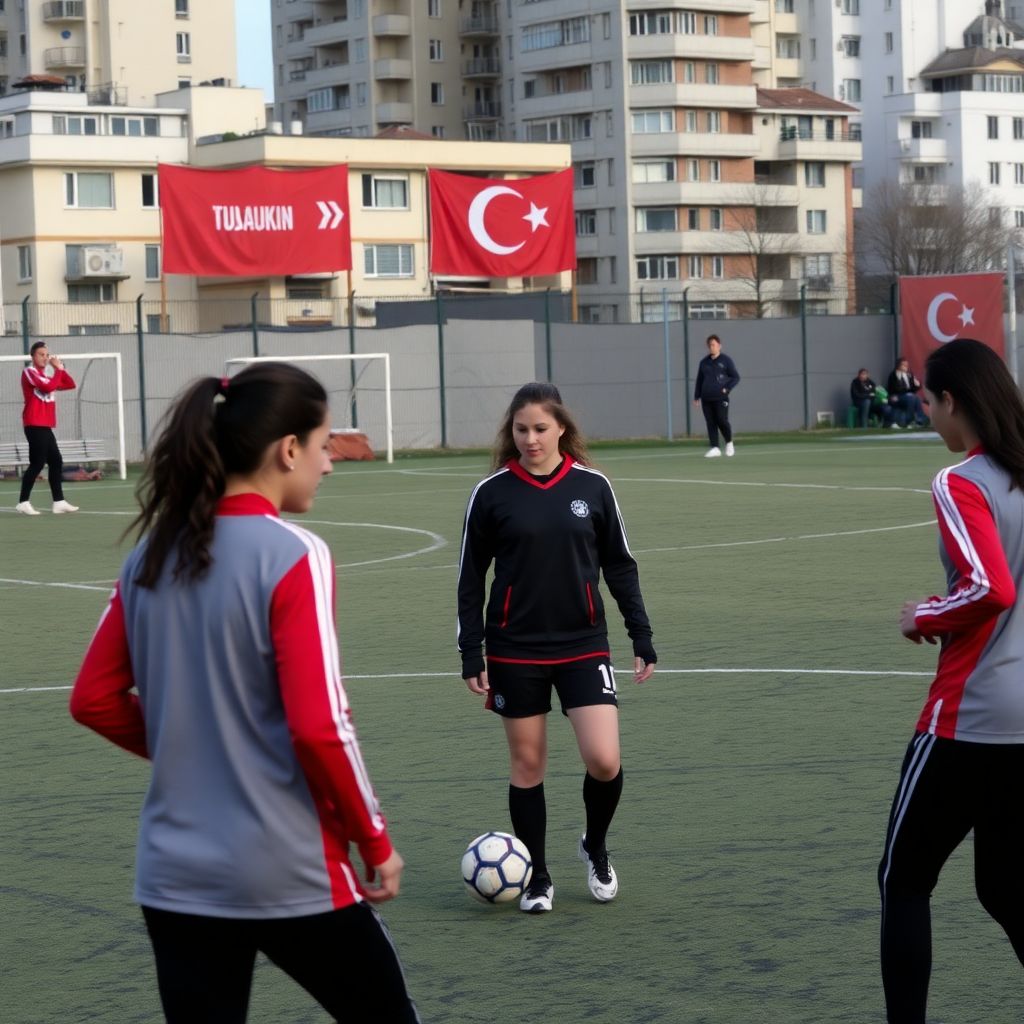
Women’s football in Turkey is a growing but still under-resourced ecosystem spanning school teams, amateur leagues and the Turkish Women’s Football League. Its potential is constrained by funding, facilities, visibility and cultural barriers, yet relatively small, well-targeted investments and community-driven models can unlock competitive performance, sustainable clubs and broader social impact nationwide.
Core observations on women’s football in Turkey
- The number of players, clubs and competitions has increased, but the competitive pyramid remains fragile and geographically uneven.
- Grassroots pathways depend heavily on a few motivated schools, municipalities and volunteers rather than a systematic national model.
- Most women’s teams rely on men’s clubs or local authorities; independent clubs struggle for basic financial stability.
- Coaching, refereeing and technical roles lack structured career paths, leading to high turnover and skill gaps.
- Media coverage, live broadcasts and sponsorship deals are limited, which directly depresses matchday demand and revenue.
- Existing regulations mention gender equity, but enforcement, monitoring and incentives for clubs remain weak or inconsistent.
Historical trajectory and present footprint of the women’s game
Defining the scope of the women’s game in Turkey
Women’s football in Turkey covers school and university teams, municipal and amateur clubs, semi-professional outfits and the top-flight Turkish Women’s Football League. Around this core sit futsal, recreational leagues, mixed-gender initiatives and regional tournaments organised by municipalities, NGOs and university sports bodies.
In practice, the ecosystem is a patchwork. A few major cities host multiple women’s teams and women’s football academies in Turkey, while many provinces offer only occasional school tournaments. Elite clubs sometimes maintain women’s sections mainly for reputation and compliance reasons, not as equal strategic assets within their organisations.
Evolution of participation and institutional support
The early phase was driven by individual pioneers: coaches, teachers and players who created teams despite limited approval or resources. Over time, formal leagues, licensing rules and dedicated budget lines appeared, but the institutional commitment still trails behind the men’s game. Media interest grew around national team milestones, yet coverage remains episodic.
Public awareness expanded via social media and sporadic TV coverage, including some Turkish Women’s Football League live streaming, but consistent storytelling and local engagement are still missing. This weakens the link between casual interest and stable audiences, season-card sales or long-term sponsorship deals.
Current structural challenges at a glance
- Geographic gaps: strong clusters in major cities, minimal provision in smaller towns and rural regions.
- Resource asymmetry: a small group of clubs attached to big brands versus many underfunded independent teams.
- Short-termism: changing rules, unstable staffing and fragile budgets block long-term planning.
- Cultural resistance: families and local communities may still question girls’ participation in contact sports.
These conditions make women’s football an “untapped potential” field: the base is large enough to justify investment, but the structures are not yet robust enough to convert that potential into sustainable performance and revenue.
Low-cost strategies for expanding the footprint
- Clustered regional hubs: create shared training centres and mini-leagues serving multiple nearby towns, reducing travel and facility costs.
- School-club bridges: sign simple cooperation protocols between local clubs and schools to share pitches and co-run training sessions.
- Weekend festival formats: organise one-day tournaments that combine matches, coaching clinics and parent engagement to normalise girls’ football.
- Social media storytelling: highlight local role models using low-cost content, linking directly to information about women’s football Turkey tickets and fixtures.
Grassroots pathways: youth participation, schools and scouting
Core mechanics of grassroots development
- School competitions and PE classes: Physical education teachers and school principals decide whether to offer girls’ football, arrange intra-school games and enter regional events.
- Municipal and NGO programmes: Municipal sports departments, women’s NGOs and community centres run free or low-cost football courses and mixed sports days.
- Local club academies and partnerships: Clubs recruit girls through open trials, school visits and social media, then structure them into age groups with regular training.
- University and campus football: University leagues keep older players in the game and serve as talent pools for clubs and national teams.
- Regional camps and federation events: Talent identification events, regional camps and mini-tournaments help spot players from under-represented areas.
- Informal community play: Street games, mixed neighbourhood matches and futsal halls give girls early, low-pressure football experience.
Barriers specific to the Turkish context
- Limited safe, accessible pitches for girls outside school hours, especially in dense urban districts.
- Cultural pressure discouraging girls from travelling alone or playing competitive contact sports.
- Few dedicated women’s football academies in Turkey outside major population centres.
- Inconsistent scouting and data collection, leading to late identification of talented players.
- Transportation and equipment costs that low-income families cannot easily absorb.
Applied mini-scenarios for grassroots expansion
Scenario 1: Rural district with no club structures. A district education director approves a girls’ school league across five villages. Matches are played on one central municipal pitch on Saturdays. A regional NGO covers travel while teachers volunteer as coaches. In one season, enough players emerge to justify forming an inter-school select team.
Scenario 2: Urban area with overcrowded facilities. A local club agrees with three schools to use their pitches on weekday evenings in exchange for providing free after-school training for girls. The municipality promotes these sessions on its channels. Over time, the best players transition into the club’s official youth squads.
Practical, low-budget steps for stakeholders
- For municipalities: designate at least one “girls’ football window” each week on public pitches, with female coaches or mentors present.
- For clubs with limited resources: run mixed-gender training at younger ages, then split into girls’ and boys’ teams when numbers allow.
- For NGOs: link football sessions with life-skills workshops (confidence, leadership, health) to attract parents’ support.
- For schools: integrate small-sided football into regular PE for girls, not only as an optional after-school activity.
League organisation, funding models and club viability
How the league system is structured
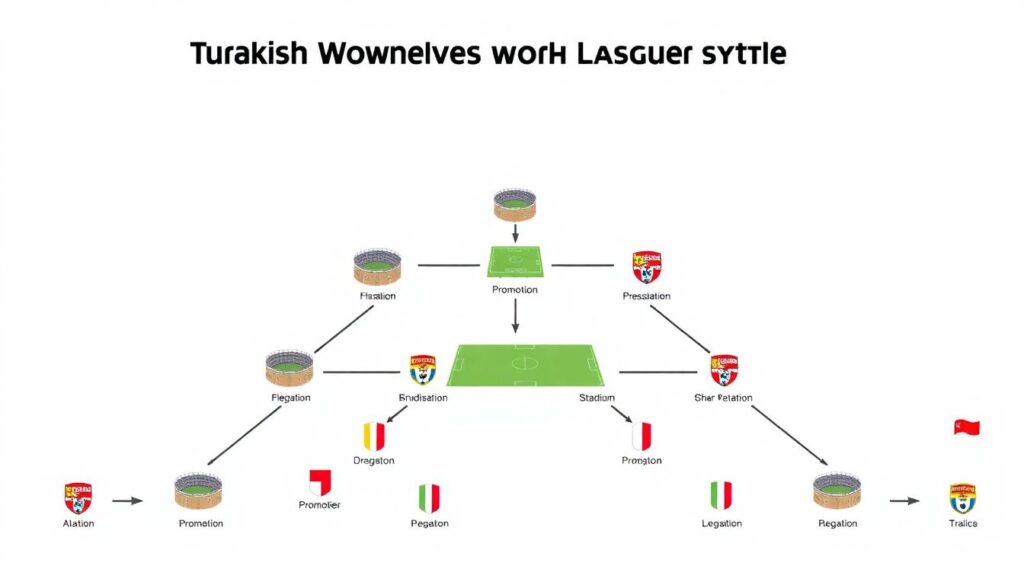
The Turkish Women’s Football League sits at the top of a pyramid that includes regional and provincial competitions. Clubs gain entry through licensing criteria that cover administration, basic facilities and youth provision. Promotion and relegation connect the tiers, but movement is often constrained by budgets and travel costs.
Fixture schedules, transfer rules and disciplinary regulations broadly mirror the men’s game but with fewer matchdays and shorter calendars, which reduces exposure and revenue opportunities. When seasons are disrupted, women’s teams usually suffer first from cancellations and postponements.
Typical funding and survival models
- Attached to a major men’s club: The women’s section benefits from shared branding, medical staff and facilities but often has limited decision-making power.
- Municipality-backed community club: Budgets come mainly from local government, making the club vulnerable to political shifts and budget cuts.
- Independent volunteer-driven club: Survival depends on small local sponsors, family contributions and volunteer work; staff often hold multiple roles.
- Education-linked club: University or school-backed teams combine academic support with competition but may struggle with long-term continuity as students graduate.
- Hybrid social enterprise: Clubs integrate football with education or employment programmes, using grants and partnerships rather than only matchday income.
Revenue channels and their limitations
Matchday revenue from women’s football Turkey tickets is modest because many matches are free or priced very low. Ancillary income from merchandise, food and local sponsorship is underdeveloped. Commercial rights packages rarely separate women’s properties from men’s, so value is hidden inside broader deals.
Media payments for broadcasting and Turkish Women’s Football League live streaming, when they exist, tend to cover only a small portion of operating costs. Some clubs experiment with online donation campaigns or community membership schemes, but without strong digital strategies results remain limited.
Mini-scenarios for financially constrained clubs
Scenario 1: Small-town club with no main sponsor. The club launches a “friends of the club” membership at a modest annual fee, offering name recognition on a community wall, digital content and priority for limited away travel seats. The scheme is promoted at schools and local markets, building a loyal supporter base rather than chasing one large sponsor.
Scenario 2: University-backed team facing budget cuts. Staff partner with academic departments to offer internships in sports management, media and physiotherapy. In return, students cover some operational tasks. This reduces salary costs while giving students experience and adds value for the university beyond match results.
Actionable ideas for sustainable viability
- Segment sponsorship proposals so that sponsorship opportunities women’s football Turkey are clearly priced and marketed independently from the men’s game.
- Use simple season passes with symbolic prices instead of only free entry, turning fans into formal stakeholders even if revenue is small.
- Develop joint budgeting between women’s and youth departments to share support staff and facilities efficiently.
- Establish basic financial reporting standards so clubs can demonstrate transparency to local sponsors and grant providers.
Human capital: coaching, refereeing and technical infrastructure
Strengths and opportunities in human capital
- Growing cohort of female coaches and ex-players who understand the specific demands of the women’s game.
- Existing referee education systems that can be adapted to encourage more women officials.
- National team and top-club environments that can serve as learning laboratories for emerging staff.
- University programmes in sports science and management providing potential staff for analysis, performance and administration.
Limitations and gaps that hold back progress
- Infrequent, irregular coaching courses tailored specifically to women’s football environments.
- Low or symbolic salaries for coaches and staff, especially in lower leagues, leading to rapid turnover.
- Limited numbers of women referees and match delegates, which can affect match management and representation.
- Insufficient access to quality pitches, gym spaces, medical rooms and video analysis tools for many clubs.
- Few structured mentoring programmes linking experienced staff with newcomers across regions.
Practical mini-scenarios: making the most of limited resources
Scenario 1: Coach education on a tight budget. A regional association hosts quarterly workshops where experienced coaches break down match video using free or low-cost software. Sessions are recorded and shared online, allowing coaches in remote areas to follow along without travel costs.
Scenario 2: Shared technical infrastructure. Three nearby clubs pool funds to rent one high-quality training pitch twice a week and hire a part-time strength coach between them. Each club keeps its identity but shares technical staff and facilities more efficiently.
Low-cost recommendations to strengthen human capital
- Create regional “coach circles” that meet online once a month to exchange training plans and match observations.
- Use former players as part-time mentors for youth teams, combining their experience with existing coaching staff.
- Encourage referees from futsal and men’s amateur leagues to officiate women’s matches as part of their development pathways.
- Develop simple injury-prevention protocols that any club can apply with minimal equipment, reducing medical costs.
Visibility and revenue: media rights, sponsorship and commercial gaps
Common misconceptions damaging commercial growth
- Myth: “There is no audience for women’s football.” Fans often lack accessible information on fixtures, women’s football Turkey tickets or live broadcasts rather than interest.
- Myth: “Media will come automatically once quality improves.” In practice, media coverage increases when someone actively packages stories, statistics and visuals for journalists.
- Myth: “Small local sponsors are not worth the effort.” Multiple small sponsors can collectively provide stability while building local roots.
- Myth: “Betting interest equals sustainable revenue.” While some platforms offer bets on Turkish women’s football league games, this rarely translates into direct, stable funding for clubs and carries integrity risks.
- Myth: “Separate marketing is too expensive.” Basic, low-cost digital campaigns can clearly brand women’s football products within broader club communications.
Typical mistakes in media and sponsorship strategy
- Announcing fixtures and results late or inconsistently, making it hard for fans and media to plan coverage.
- Offering sponsors logo placement only, with no activation ideas that connect brands to community impact or participation growth.
- Ignoring digital-first audiences by underusing short videos, behind-the-scenes content and player-driven storytelling.
- Failing to differentiate Turkish women’s football league live streaming from other content, making it difficult for fans to find and follow games.
Resource-light approaches to visibility and revenue
- Bundle simple rights packages: naming rights for a stand, digital content sponsorship and local matchday announcements, tailored to small businesses.
- Use a consistent hashtag and posting schedule across club and player accounts so fans can easily track information.
- Co-produce content with local universities or media schools, offering students real-world experience in return for coverage.
- Integrate social impact metrics (girls reached, scholarships provided) into sponsorship proposals to stand out from men’s properties.
Regulatory environment and strategic reforms for gender equity
Current regulatory landscape and gaps
Regulations typically cover licensing, competition rules and minimum standards for facilities and youth development. Gender equity is present in principle but often thin in operational detail. Incentives for investing in women’s football are not always explicit, and enforcement of existing requirements may vary between regions and levels.
Data collection is another weak point: without consistent statistics on participation, staffing and budgets, it is hard for authorities to design targeted reforms or monitor progress over time.
Mini-case: using regulation to shift club behaviour
Imagine a federation introducing a phased incentive scheme. In phase one, clubs that run at least one girls’ youth team qualify for small registration discounts and extra access to coaching courses. In phase two, clubs with women’s teams and transparent budgets receive priority for central funding and media slots.
Over several seasons, these rules gradually normalise the idea that a “complete” club includes women’s and girls’ sections. Even clubs with limited resources can participate by starting with youth teams and partnerships rather than fully professional squads.
Reform directions that work even with limited budgets
- Link licensing points to concrete gender equity actions: girls’ teams, women in leadership roles, female coaches in youth categories.
- Publish transparent annual dashboards with key indicators (teams, staff, participation) to keep stakeholders accountable.
- Encourage municipalities to include women’s football projects in general sports funding, not as separate, easily cut lines.
- Promote regional women’s football academies in Turkey as shared hubs where multiple clubs and schools can access higher-level training.
Concise answers to common stakeholder concerns
How can a small club start a women’s section with almost no budget?
Begin with one youth age group, using existing pitches and mixed-gender training. Partner with local schools for player recruitment and share staff across teams. Focus on volunteer coaches, simple equipment and gradually building a core group of committed families.
What is the most effective way to attract sponsors to women’s teams?
Offer clear, affordable sponsorship packages that combine visibility with community impact, such as supporting girls’ participation or scholarships. Present concrete stories, audience profiles and activation ideas rather than only logo placement on shirts or banners.
Can improved media visibility really change the financial situation?
Yes, but only if visibility is connected to products fans can act on, such as match attendance, merchandise or digital memberships. Consistent information on fixtures, women’s football Turkey tickets and streaming options is essential for turning attention into revenue.
How should clubs handle betting-related approaches around women’s matches?
Clubs should prioritise integrity and transparency, following national regulations on gambling and match-fixing. Any commercial contact linked to bets on Turkish women’s football league fixtures must be evaluated carefully, with clear internal rules and staff education on ethical risks.
What can municipalities do if they have limited sports budgets?
They can allocate regular pitch time, basic equipment storage and small travel subsidies instead of full team funding. Supporting shared regional hubs, school leagues and joint training sessions often delivers more impact than trying to fully finance one or two elite teams.
How can coaches improve quality without expensive technology?
Use simple tools: smartphone video for basic analysis, shared online libraries of drills and regular peer-review of training plans. Emphasis on game understanding, decision-making and physical literacy can significantly raise standards without major financial investment.
Why is regulatory reform important if cultural attitudes are the main barrier?
Regulation sets minimum standards and incentives that gradually reshape behaviour. When clubs, schools and municipalities see that women’s football is part of official criteria and funding decisions, they are more likely to allocate time, space and resources, which in turn shifts local attitudes.