
The economic landscape of Turkish football is driven by broadcasting income, commercial partnerships, and escalating debts. Understanding turkish super lig tv rights revenue, the structure of turkish football club sponsorship deals, and the balance‑sheet pressure behind loans and overdue payables is essential for realistic valuations, sustainable budgeting, and informed decisions about investing in turkish football clubs.
Executive summary: market forces shaping Turkish football finance
- The turkey football broadcasting rights market is still the single largest revenue driver for most Süper Lig clubs, but currency volatility and shorter contracts increase planning risk.
- Sponsorship and licensing income grows in importance as clubs seek protection against exchange‑rate shocks and volatile matchday receipts.
- Player trading and qualification for UEFA competitions create step‑changes in revenue that can temporarily mask structural weaknesses.
- Structural borrowing, tax liabilities, and unpaid transfer instalments lie at the core of turkish football clubs debt crisis analysis.
- Regulatory pressure from TFF and UEFA pushes clubs toward better reporting, but enforcement and political constraints remain uneven.
- Medium‑term stability depends on disciplined wage control, realistic transfer policies, and more transparent, performance‑linked commercial contracts.
Broadcasting rights: evolution, contracts, and revenue distribution
Broadcasting rights in Turkey define how much money flows into professional football from television platforms and digital services. Contracts cover live match broadcasts, highlights, international distribution, and sometimes betting or archive rights. For the Süper Lig, this bundle is central to club budgets and underpins wage and transfer decisions.
The turkey football broadcasting rights market has shifted from long, inflation‑eroding contracts to shorter, more flexible agreements. Negotiations increasingly consider digital streaming audiences, language feeds, and international packages targeting the Turkish diaspora and neutral fans. Clubs now track not just headline value, but payment schedules, currency, and indexation clauses.
Revenue distribution in the Süper Lig typically combines three pillars: a fixed participation fee for each club, a performance element linked to league position and historical success, and additional payments for televised matches. This mix is crucial for understanding turkish super lig tv rights revenue and why some clubs can sustain higher wage bills than others.
In practice, the timing of TV inflows is as important as their size. Delays or disputes around tenders can create liquidity gaps. Clubs then resort to factoring or bank loans against future broadcasting income, which increases financing costs and deepens balance‑sheet stress if sporting results deteriorate.
Sponsorship landscape: brands, valuation methods, and activation strategies
Sponsorships are the second major commercial pillar for Turkish clubs, alongside broadcasting. Shirt, sleeve, naming‑rights, training‑wear, and category sponsorships (banking, airlines, betting, telecom, FMCG) create a layered income portfolio, and top clubs compete directly with entertainment and media properties for brand budgets.
- Inventory mapping and packaging
Clubs list all sponsorship assets: shirts, stadium signage, digital content, hospitality, community programmes. These are bundled into tiers (main, premium, official supplier) with different exposure levels and rights. - Valuation methods
Most turkish football club sponsorship deals are priced using a mix of benchmarking (against rival clubs), media‑equivalent value (expected TV and social reach), and negotiation around exclusivity, category rights, and contract length. - Risk allocation in contracts
Contracts may include performance bonuses (titles, European qualification), audience thresholds, and clauses for currency fluctuations. Well‑structured deals share upside while protecting both club and sponsor from extreme volatility. - Activation and content strategy
Sponsors now demand storytelling and data. Clubs co‑create social media campaigns, matchday experiences, and CSR projects, linking brand objectives (youth, family, digital) with fan culture. - Measurement and reporting
Clubs increasingly provide periodic reports: exposure minutes on TV, social engagement, hospitality usage, and survey‑based brand impact. This data is key to renewal negotiations and to lift sponsorship values over time. - Governance and conflict management
Overlapping sponsors within the same category, or conflicts with league‑wide partners, must be handled via clear contract hierarchies and coordination with the federation.
Club income mix: matchday, commercial, player trading, and international streams
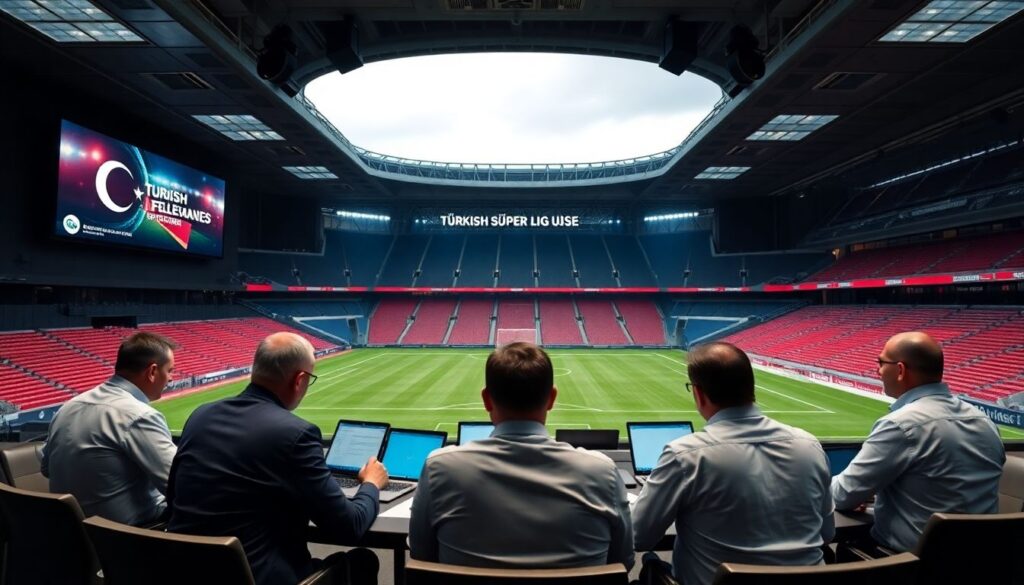
Beyond TV and sponsorships, clubs depend on a broader income mix that varies by size and fan base. Understanding this mix is essential to judge how vulnerable a club is to shocks such as empty stadiums, exchange‑rate swings, or missing out on European competitions.
- Scenario 1 – TV‑dependent Süper Lig club
A mid‑table club gets most of its money from domestic TV and small local sponsors. A single relegation can cut income dramatically, forcing emergency player sales and wage cuts. - Scenario 2 – Big‑brand Istanbul club
A traditional giant earns from international fan merchandise, stadium naming rights, and higher turkish super lig tv rights revenue due to frequent TV appearances. European competition brings additional broadcasting and ticketing income, but also pushes the club to maintain expensive squads. - Scenario 3 – Player‑trading focused club
A club outside the biggest markets focuses on developing and selling players. Transfer fees and sell‑on clauses supplement limited matchday and local commercial income, but failures in talent development immediately hit cash flow. - Scenario 4 – Stadium‑driven model
A club with a modern stadium leverages hospitality, boxes, events, and non‑football activities. Matchday income becomes more predictable, yet initial stadium financing can increase debt and interest costs. - Scenario 5 – International digital audience
Some clubs see growing interest from overseas fans via streaming, social media, and e‑sports collaborations. This opens new merchandising, content, and betting‑partner opportunities linked to the broader turkey football broadcasting rights market.
For each scenario, club management must balance fixed costs (wages, stadium operations) with the volatility of income sources. A diversified mix reduces risk, but requires professional commercial teams, transparent reporting, and consistent brand positioning.
Debt anatomy: common liabilities, drivers of indebtedness, and balance-sheet risks

Debt in Turkish football is not limited to bank loans. It includes overdue wages, unpaid taxes, outstanding transfer fees, and short‑term borrowing against future income. Effective turkish football clubs debt crisis analysis starts from a clear breakdown of these liabilities and their maturity profile.
| Club archetype | Relative TV income level | Typical primary sponsor type | Indicative net debt situation (qualitative) |
|---|---|---|---|
| Traditional Istanbul giant | High within Süper Lig | Bank, airline, or major consumer brand | High leverage; mix of bank loans, transfer payables, and restructured tax debts |
| Ambitious provincial club | Medium; sensitive to league position | Regional business conglomerate or municipality‑linked entity | Moderate to high; often reliant on short‑term loans and local guarantees |
| Player‑trading specialist | Medium to low | Smaller national brands, betting or telecom partners | Variable; can be low when sales go well, but risky if transfer fees are paid in instalments |
| Relegation‑risk club | Low and unstable | Local businesses and municipal support | High default risk; dependency on advances against future income and emergency wage deferrals |
Debt can provide breathing room to invest in players or facilities, but it also magnifies the impact of sporting downturns. Clubs that over‑estimate future TV, sponsorship, or transfer income lock themselves into interest and principal payments they cannot meet without constant refinancing.
Key advantages of controlled, well‑structured debt:
- Allows stadium construction or renovation that improves long‑term matchday and commercial income.
- Provides working capital to bridge seasonal cash‑flow gaps between expenses and TV or sponsorship inflows.
- Enables staged payment of transfer fees when balanced with realistic revenue forecasts.
- Can be matched to long‑term assets (infrastructure, academies) rather than short‑lived player contracts.
Major limitations and risks of excessive or mismanaged debt:
- Chronic refinancing, where old loans are repaid with new ones, increasing total interest burden.
- Exposure to currency risk if income is mostly in lira while debts are linked to foreign currencies.
- Regulatory sanctions, transfer bans, or competition exclusions when overdue payables pile up.
- Reduced flexibility in transfer and wage negotiations due to lender or creditor constraints.
- Lower club valuation, making investing in turkish football clubs less attractive for potential partners.
Regulation and enforcement: federation rules, UEFA criteria, and domestic oversight
Financial rules in Turkish football aim to prevent insolvency and protect competitions. The federation sets licensing criteria, the league negotiates TV deals, and state institutions oversee tax and banking obligations. UEFA adds another layer with club licensing and financial sustainability rules for teams in European competitions.
- Myth: TV money removes the need for discipline
Even the largest turkish super lig tv rights revenue cannot compensate for uncontrolled wage inflation, poor transfer policies, and chronic late payments. Governance, not just revenue, determines sustainability. - Myth: Domestic rules are optional for big clubs
High‑profile institutions may negotiate restructuring packages, but tax and social‑security debts, as well as overdue payables to players and clubs, remain enforceable and can lead to sanctions. - Mistake: Ignoring UEFA break‑even expectations
Clubs sometimes focus only on qualifying for Europe, underestimating reporting and break‑even requirements. This can result in fines, squad restrictions, or eventual bans. - Mistake: Weak documentation of sponsorship and related‑party deals
Poorly documented turkish football club sponsorship deals with related parties raise questions about fair value and can face regulatory scrutiny. - Myth: State or municipal support will always cover deficits
Political and budget conditions change. Assuming permanent external support discourages structural reform and can lead to sudden crises when priorities shift.
From diagnosis to action: club-level reforms, revenue optimisation, and public policy options
Improving the economic landscape of Turkish football requires coordinated action from clubs, regulators, and commercial partners. Clubs must professionalise financial planning, regulators must enforce consistent standards, and sponsors and broadcasters should demand transparency and long‑term strategies rather than short‑term fixes.
At club level, a practical roadmap links analysis, strategy, and implementation:
- Map current income and cost structure
Segment revenue into TV, sponsorship, matchday, player trading, and other commercial streams. Categorise costs into wages, transfer amortisation, operations, and finance charges. - Stress‑test dependence on key income sources
Simulate drops in broadcasting or sponsorship income, or failure to reach European competitions. Identify which obligations become unsustainable under each scenario. - Prioritise structural reforms
Focus on wage‑to‑income ratios, transfer policy discipline, academy investment, and professionalisation of commercial departments, not just one‑off asset sales. - Engage stakeholders with clear narratives
Explain to fans, investors, and public authorities how short‑term sacrifices (spending caps, youth promotion) support long‑term competitiveness and stability in the turkey football broadcasting rights market.
For policymakers and regulators, options include more transparent distribution of TV income, incentives for youth and infrastructure investment, and stricter but predictable enforcement of financial rules. Consistency is critical so that turkish football clubs debt crisis analysis translates into measurable corrective action rather than ad‑hoc interventions.
A short algorithm to check the financial outcome of these reforms can be expressed as a simple routine:
1. For each season, compute:
   a. Recurring football income (TV + matchday + sponsorship + commercial)
   b. Recurring football costs (wages + operations, excluding transfers)
2. Verify: recurring income >= recurring costs.
3. Ensure net transfer spending is financed by:
   a. Genuine surplus cash, or
   b. Long-term, asset-backed borrowing.
4. Confirm:
   a. Total debt is decreasing or stable,
   b. All regulatory ratios and deadlines are met.
Clarifying recurring questions about TV deals, sponsorships, and club debts
How important are domestic TV contracts for Turkish clubs?
Domestic TV contracts remain the cornerstone of club finances, especially in the Süper Lig. They influence wage levels, transfer activity, and the ability to service existing debts, so any change in rights value or payment timing has immediate consequences.
Why do sponsorship values differ so much between clubs?
Sponsorship values reflect brand reach, historical success, media exposure, and professionalism in commercial management. Larger clubs attract national and international brands, while smaller teams rely on regional sponsors and shorter contracts with lower guaranteed payments.
What are the main warning signs of a debt problem at a club?
Persistent late payment of wages or transfer instalments, frequent short‑term loans against future TV money, and repeated restructuring of bank or tax debts all signal deeper structural imbalances rather than temporary liquidity issues.
How does player trading affect financial stability?
Player sales can stabilise finances or even fund growth, but relying excessively on uncertain transfer income exposes clubs to sudden gaps when deals fail. Long contracts on high wages without resale value increase this vulnerability.
Is investing in Turkish football clubs only for local investors?

Investment interest can come from both domestic and international parties. However, complex regulations, currency risks, and legacy debt structures mean any investor must conduct careful financial, legal, and governance due diligence.
Do UEFA rules apply to all Turkish clubs?
UEFA financial regulations apply directly only to clubs participating in European competitions, but their standards increasingly influence domestic rules and lender expectations for other professional teams as well.
Can improved governance really increase revenue?
Better governance builds trust with broadcasters, sponsors, fans, and financial institutions. This often leads to longer contracts, more performance‑based upside, and lower financing costs, which together support higher and more stable revenue.