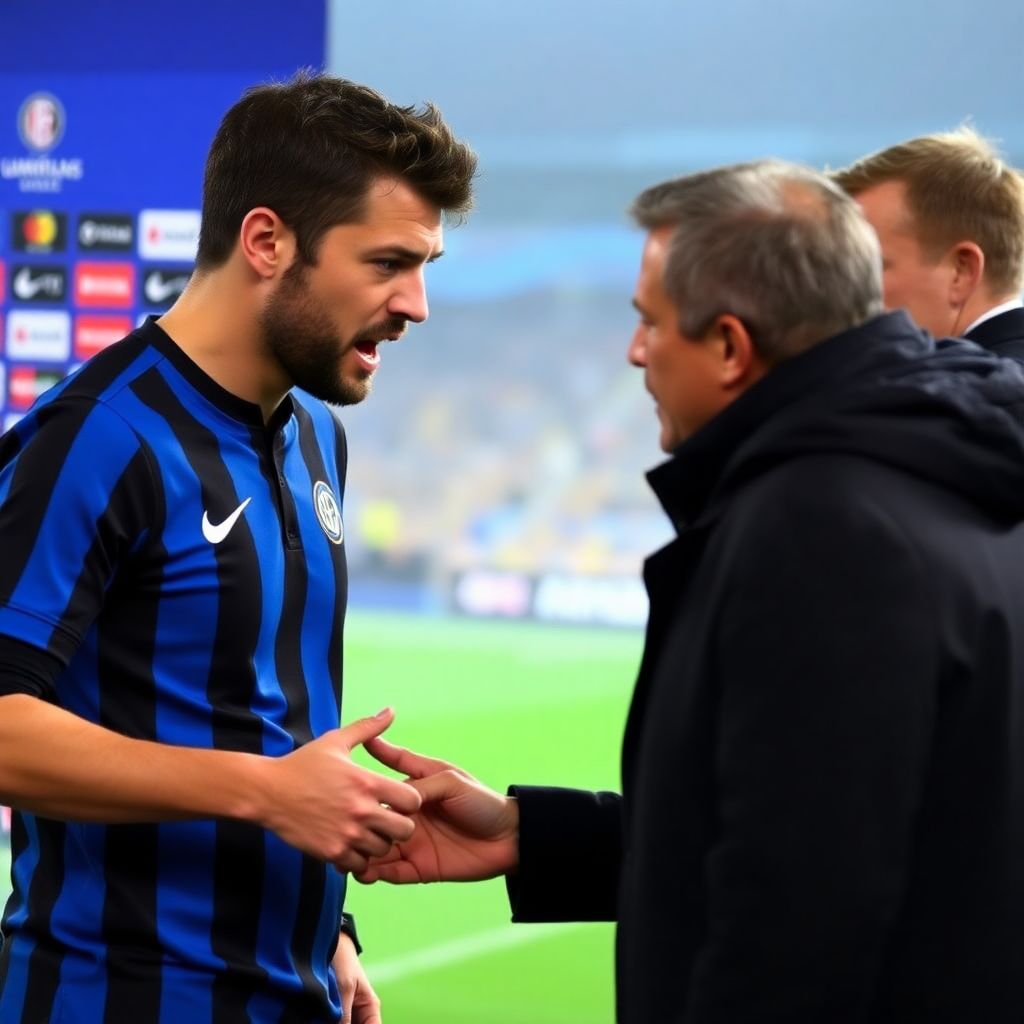
Chivu hits out at Norwegian media ahead of decisive Inter-Bodo/Glimt clash
Tension is rising in the Inter camp on the eve of the decisive Champions League play‑off return leg, and Cristian Chivu has placed himself firmly at the centre of attention. The Romanian coach not only delivered a bold message about his team’s ambitions, but also reacted sharply to a question from a Norwegian journalist that he considered disrespectful.
Inter go into the second leg against Bodo/Glimt needing to overturn a three‑goal deficit, with not only qualification at stake but also an estimated 20 million euros in potential revenue from advancing to the next round. The pressure is huge, the margin for error minimal, and the pre‑match press conference reflected exactly that.
The most striking moment came when a Norwegian reporter asked Chivu how “embarrassing” it would be for Inter to be knocked out by a club often described as being from a “small town.” The phrasing of the question, delivered with a smile, instantly changed the tone of the room.
Chivu’s response was immediate and uncompromising.
“You say that, and you even laugh while asking it – congratulations? There is no shame in football,” he shot back. “You have to respect your opponent. You are not showing us any respect, but we congratulate Bodo. They beat Atletico Madrid as well, something we were not able to do.”
By invoking Bodo/Glimt’s historic win over Atletico, Chivu underlined a key point: the Norwegian champions are not a fairy‑tale visitor in Europe anymore, but a team that has repeatedly proven they can compete with the continent’s elite. For the Inter coach, treating them as a “small” side is both factually wrong and strategically dangerous.
Chivu was keen to turn the conversation from mockery to merit. He stressed that Bodo/Glimt’s recent European results, including their victory over Atletico Madrid, were no accident but the product of structure, belief and continuity. According to him, disrespecting such an opponent says more about the attitude of the questioner than about the actual balance of power on the pitch.
On the sporting side, the Romanian coach admitted that the first leg offered Inter some tough but crucial lessons.
“We already knew Bodo/Glimt are a difficult team to face. Nothing about them is a coincidence,” he explained. “For the last three months we’ve been playing with the right mentality, and defeats have not changed who we are. We are not obliged to do the impossible, but we are obliged to try. If there is a team capable of turning a match like this around, it is ours.”
That line – “If there is a team capable of turning this around, it’s us” – effectively became the slogan of his press conference. Chivu wants his players and the fans to approach the game not with fear of humiliation, but with belief in a memorable comeback.
He also pointed out that domestic success can become a trap. In Serie A, Inter have created a comfortable gap at the top of the table, and that cushion could easily translate into a subconscious drop in intensity. Chivu warned that such complacency must be kept far away from the dressing room before this European showdown.
“The points difference in the league must not make us feel too comfortable,” he insisted. “The only thing that matters right now is the second leg. The standings in Serie A will not help us when the whistle blows tomorrow.”
Another key element in his plan is managing emotions in the opening stages. A desperate rush to score early, he believes, could backfire badly.
“We cannot let the idea of an early goal distort our game plan,” Chivu stressed. “If we attack in a chaotic way and concede on the counter, the tie becomes almost impossible. We need intensity, yes, but also clarity and patience.”
Behind the scenes, the coaching staff have been working on a balance between aggression and control. Inter are expected to push higher up the pitch, press Bodo/Glimt’s build‑up more aggressively and commit more players in attack, but Chivu has reportedly insisted on compactness when possession is lost. He knows that the Norwegian side thrive when given space in transition.
Player management is another delicate aspect. With a long season and multiple competitions, Chivu must decide how many risks he is willing to take. Some starters have accumulated heavy minutes in recent weeks, yet rotating too much in such a decisive match could damage cohesion. The coach has hinted that experience will be prioritised, especially in central areas of the pitch where composure is vital.
Psychologically, Inter’s staff have tried to reframe the narrative from “fear of failure” to “opportunity for history.” A comeback from three goals down in a Champions League play‑off would be remembered for years, and Chivu has used that prospect as motivation. Within the squad, the talk is less about the financial reward and more about pride, reputation and the chance to send a message to Europe.
At the same time, Chivu’s clash with the Norwegian journalist highlights a broader debate about how so‑called “big” and “small” clubs are perceived. For him, the idea that losing to a team from a smaller city is inherently shameful belongs to an outdated view of football. In modern European competitions, budgets and stadium size do not always dictate the result; organisation, tactical clarity and long‑term planning often close the gap.
This is precisely why he keeps returning to the theme of respect. Underestimating Bodo/Glimt, he believes, was one of the subconscious errors in the first leg. For the return match, he wants an Inter that recognises the opponent’s strengths, adapts accordingly and then imposes its own quality over ninety minutes – or longer, if needed.
Chivu’s firm defence of his players in front of the cameras also serves another purpose: it shields the squad from external criticism and gives them a sense that the coach is ready to stand in front of them when things get heated. In high‑pressure fixtures like this, that unity between bench and pitch can be decisive.
Ultimately, Inter step onto the field knowing exactly what is at stake: a place in the last‑16 play‑off, an important financial injection, and the avoidance of a European disappointment that would dominate headlines. For Chivu, however, the story he wants to tell is different – not one of shame or mockery, but of competition, respect and the belief that, as he put it, “if any team can turn such a match around, it’s ours.”