
Most influential managers in Turkish football history combined tactical innovation, long-term player development and cultural impact at club and national-team level. Their legacies can be seen in formations used in today’s Süper Lig, in how academies train players, and in how European opponents prepare tactically when facing Turkish sides in continental competitions.
Defining influence: criteria for selecting managers
- Shaping Turkish tactical thinking over multiple eras, not just winning one title.
- Consistent domestic success plus clear impact on the Süper Lig’s overall playing style.
- Recognisable tactical identity: formations, pressing schemes, and transitional patterns.
- Development of players who later defined clubs or the national team.
- Meaningful performances in Europe or international tournaments that changed perceptions of Turkish football.
- Durable legacy: ideas copied by other coaches, clubs, and even grassroots coaching.
Foundations: early architects of Turkish tactical thought
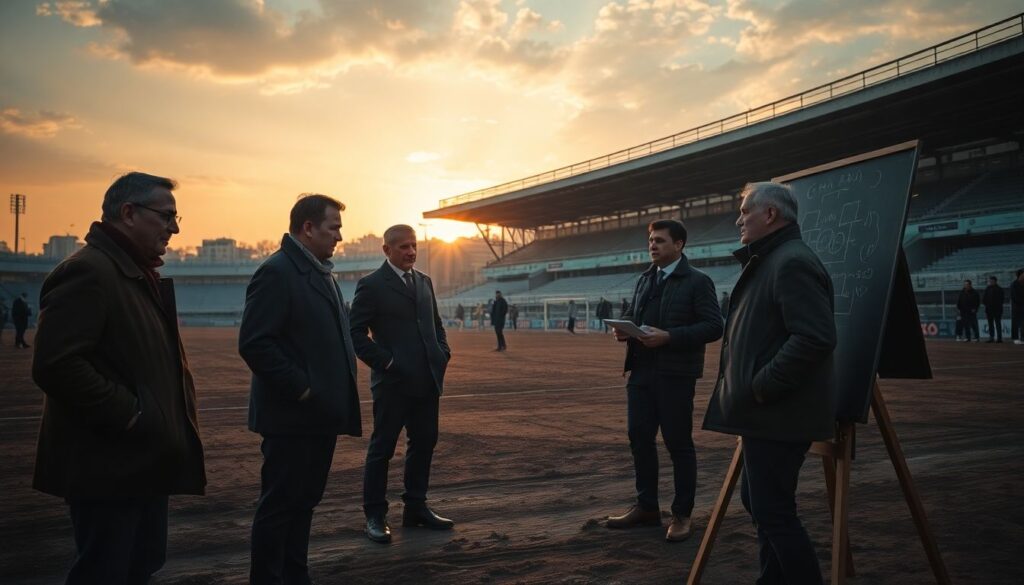
When people search for the best Turkish football managers of all time, they usually think of modern names first. Yet the foundations of Turkish tactical identity were laid by earlier generations who translated Central European and later Latin influences into a local context, especially in Istanbul’s big clubs.
These early managers introduced systematic training, positional discipline and structured 2-3-5 or WM shapes, then gradually shifted toward 4-2-4 and 4-3-3 as global trends evolved. Their work was less about radical innovation and more about adapting successful European approaches to Turkish player profiles and club cultures.
Over time, a recognisable pattern emerged: technically gifted attackers supported by hard‑working midfielders and aggressive full-backs. This blend created a platform from which later coaches could experiment with pressing, compactness and counter‑attacking. Without these early architects, the tactical leaps of the 1990s and 2000s would have been impossible.
For students following Turkish football coaching courses tactical analysis, understanding this historical arc is essential: it explains why certain shapes, like narrow 4‑4‑2 diamonds or asymmetrical 4‑2‑3‑1s, feel “natural” in the Turkish game.
- Takeaway: early managers were expert adapters rather than pure innovators, but they defined the base language of Turkish tactics.
- Takeaway: current trends in pressing and transitions still sit on top of this long tactical evolution.
Domestic dynamos: managers who reshaped Süper Lig strategy
Within the Süper Lig, a few domestic dynamos changed how teams prepared, pressed and managed games week after week. These figures not only collected trophies but also forced rivals to rethink their structures and recruitment.
- High-intensity pressing era: Certain famous Turkish football coaches and their tactics introduced aggressive pressing, particularly in home matches. Their sides defended high, kept compact vertical distances, and overloaded wide areas to trap opponents.
- Control through possession: Others prioritised deeper build-up with centre-backs and a dropping pivot, using 4-2-3-1 or 4-1-4-1 to dominate second balls and create numerical superiority between the lines.
- Set-piece specialisation: Several title-winning managers treated corners and free-kicks almost as a separate phase. Routine variety, blocking movements and rehearsed zones made set pieces a deciding factor in tight title races.
- Rotational flexibility: Top Süper Lig strategists normalised in-game role swaps: wingers moving inside, full-backs underlapping, and number tens drifting wide to create overloads and passing triangles.
- Data-aware squad building: While not always public, some modern coaches integrated video and basic analytics into selection, emphasising running capacity and pressing fit over pure technical flair.
- Localised micro-tactics: Domestically influential coaches fine-tuned plans to unique stadiums and conditions, adjusting line height and tempo for specific away grounds known for hostile atmospheres.
- Takeaway: in the Süper Lig, influence shows up in what rival coaches copy the following season.
- Takeaway: domestic dynamos link tactical ideas directly to recruitment and weekly game management.
European innovators: Turkish coaches on the continental stage
Some of the most influential Turkish managers proved themselves in Europe or international tournaments, where tactical plans are tested against unfamiliar opponents. Their success abroad redefined external perceptions of Turkish football and fed new ideas back into the domestic game.
- European cup campaigns with compact blocks: Turkish sides that progressed deep into UEFA competitions often did so with mid-to-low blocks, rapid transitions, and ruthless exploitation of home advantage. The mix of emotional intensity and structural discipline became a hallmark.
- National-team tournament runs: Coaches who led Turkey to memorable World Cup or European Championship performances showed how a flexible 4‑3‑3 or 4‑2‑3‑1 could quickly switch between deep defending and high pressing, depending on the opponent.
- Adaptation to varied European styles: Influential managers learned to face possession-heavy Spanish sides one week and direct, physical Northern European teams the next, refining pressing triggers, rest-defence structures and set-piece strategies.
- Exporting Turkish coaches abroad: When Turkish managers took jobs in other countries, they carried with them a blend of emotional leadership and structured counter-attacking, demonstrating that Turkish tactical thinking could travel and adapt.
- European benchmarking: Success or failure in Europe became a reference point; “continental-level” tactical standards began to shape expectations of what top Turkish coaching should look like.
- Takeaway: European campaigns act as laboratories where Turkish tactical ideas are stress-tested and upgraded.
- Takeaway: the most influential figures used these experiences to modernise domestic methods, not just chase results.
Tactical signatures: formations, pressing and transitional play
Across eras, influential Turkish managers experimented within a relatively narrow family of formations but with very distinct details. Their tactical signatures are easier to see in how they press, defend transitions, and structure attacks than in formation labels alone.
Advantages of common Turkish managerial approaches

- Flexible 4‑2‑3‑1 and 4‑3‑3 bases: Allow easy adaptation between attacking and defensive phases while keeping familiar roles for local players.
- Emotion-driven pressing intensity: Harnesses crowd energy in big games, especially at home, to sustain high pressing for key periods.
- Wide overloads into cut-backs: Overlapping full-backs and inside wingers combine to create high-probability chances from low crosses and cut-backs.
- Transition threat from second balls: Many influential coaches build around winning second balls and launching fast counters with quick, vertical passes.
- Hybrid playmakers: Use of central midfielders who can both tackle and play progressive passes supports balanced control and verticality.
Limitations and recurring tactical risks
- Over-reliance on emotional peaks: Teams can struggle to maintain intensity in less glamorous matches or away fixtures.
- Vulnerability in defensive transitions: High full-backs and aggressive pressing can leave large spaces behind the midfield line.
- Late adaptation to pressing-resistant opponents: Some managers persist with high pressing even when bypassed repeatedly by technically superior sides.
- Insufficient rotation and fatigue management: Short benches or conservative squad rotation can reduce intensity over long seasons.
- Predictable wide crossing patterns: When opponents block wide zones, teams can run out of ideas without strong central combination play.
- Takeaway: Turkish tactical signatures emphasise emotion, width and transitions, which can be both weapon and weakness.
- Takeaway: the best managers learn to protect against their own style’s structural risks.
Legacy in player development and club culture
Influence is not only about match tactics; it is also about how managers shape academies, daily training and club identity. The most impactful Turkish coaches leave behind clearer pathways for youth and stronger professional standards inside the club.
Many famous Turkish football coaches and their tactics are remembered for positional play on match day, but their lasting legacy lies in the habits they instil: preparation routines, video review practices, nutritional discipline and psychological resilience. These elements quietly raise the baseline of professionalism for future squads.
Common mistakes and myths in judging managerial legacy
- Myth: only trophies matter – A manager can transform youth structures or tactical culture without winning many titles, yet influence future decades of success.
- Myth: “player’s coach” means tactically weak – Some of the most effective Turkish managers are excellent man-managers who also run sophisticated tactical schemes.
- Error: ignoring academy impact – Evaluating only first-team results misses coaches who reformed youth scouting, training periodisation and individual development plans.
- Myth: foreign methods cannot fit Turkish players – History shows that well-adapted European concepts, carefully filtered through local realities, can thrive in Turkey.
- Error: focusing only on one club – Several influential coaches built legacies by shaping multiple teams and regional football cultures, not just a single giant.
- Takeaway: developmental influence often appears years later, in how clubs train and promote players.
- Takeaway: serious assessment looks at structures and standards, not only finals and medals.
Contested reputations: controversies, failures and reassessments
Influential managers rarely have clean reputations. Their careers include controversial decisions, public conflicts and tactical failures. Over time, however, analysts often reassess them, separating emotional narratives from structural impact.
Consider a simplified evaluation “pseudo-code” you might apply when re-watching a struggling season of a historically great coach:
// Step 1: strip away media noise
check(context: injuries, board politics, squad age);

// Step 2: examine tactical coherence
if (pressing_triggers_clear && spacing_compact)
    tactical_idea = "sound";
else
    tactical_idea = "flawed";

// Step 3: track adaptation over time
compare(autumn_plan, spring_plan);

// Step 4: decide legacy impact
if (tactical_idea == "sound" && later_coaches_copy_ideas)
    label = "influential despite poor results";
else
    label = "limited long-term impact";
This kind of structured review helps distinguish temporary failure from deeper tactical or leadership shortcomings.
- Takeaway: reputations are often shaped by short bursts of results, but legacies depend on whether ideas survive into the next generations.
Quick practical tips for studying Turkish managerial influence
To understand why certain coaches are considered among the best Turkish football managers of all time, it helps to watch and read with a tactical lens, not just as a fan.
- Pair video with reading: Watch classic matches alongside books about Turkish football history and managers to see how strategic ideas appear on the pitch.
- Focus on off-ball structure: When analysing famous Turkish football coaches and their tactics, track team shape when they do not have the ball: line height, distances and pressing triggers.
- Use educational resources: Many Turkish football coaching courses tactical analysis modules share frameworks for evaluating pressing, build-up and transitions that you can apply when watching games.
- Learn from visual storytelling: High-quality documentaries about Turkish football legends and managers often include tactical boards and dressing-room talks that reveal how ideas are communicated.
- Take simple notes: For each manager, summarise preferred formation, key pressing idea, main attacking pattern and player development philosophy in 3-4 lines.
Foundations: early architects of Turkish tactical thought – summary checklist
Use this short checklist to self-evaluate how well you can assess the tactical legacy of a Turkish manager:
- Can I clearly describe this coach’s preferred formation, pressing style and transition strategy in simple terms?
- Do I know which later managers or teams copied parts of their approach?
- Can I link at least one player’s long-term development to this manager’s methods?
- Have I seen how they adapted (or failed to adapt) against stronger European or international opponents?
- Can I separate emotional fan narratives from structural, tactical and developmental impact?
Practical questions on measuring managerial legacy
How do I objectively compare managers from different Turkish football eras?
Focus on what they changed, not only what they won. Analyse tactical innovations, influence on rival coaches, player development, and how well their ideas survived into later generations, adjusting for differences in league format, European access and sports science.
What match footage should I watch to understand a coach’s tactics?
Choose 3-5 matches from different contexts: a big derby, a European tie, and a difficult away league game. This variety shows how the manager adapts pressing height, attacking risk and substitutions under different pressures.
How important is formation compared with in-game adjustments?
Formation is only a starting reference. For serious evaluation, prioritise how the coach changes pressing triggers, player roles and positional rotations during the match in response to the opponent’s strengths and weaknesses.
Can a manager be influential even with a poor win record?
Yes. A coach may introduce new training standards, tactical concepts or youth pathways that later managers build on. Influence is about lasting change in how teams play and train, not just short-term results.
What is the role of man-management in tactical legacy?
Man-management shapes how well players execute tactical plans and accept role changes. A tactically brilliant idea fails if the squad is not mentally aligned, so interpersonal skills are a core part of long-term influence.
How can fans without coaching education analyse tactics effectively?
Start simple: pause games to sketch team shapes, watch movements off the ball, and track where turnovers happen. Over time, add concepts from accessible coaching books or courses to structure your observations.
Are short caretaker stints relevant when judging legacy?
Usually they matter less, unless the caretaker introduces a key idea later adopted permanently by the club. Long-term tenures and repeated appointments provide a clearer picture of sustainable tactical and cultural impact.