
Hidden U18 gems in Turkish academies are high-upside players, usually 15-17 years old, who show standout technical, tactical and mental qualities but are still outside regular first‑team rotations. Identifying them requires structured observation across league, cup and training, with clear benchmarks for role, decision‑making, physical projection and psychological readiness for professional football.
Snapshot: most convincing U18 prospects in Turkish academies
- Focus on turkey football academy talents aged roughly 15-17 who are still in youth squads but train periodically with senior teams.
- Look for repeatable actions: ball progression, chance creation, defensive interventions, not only highlight‑reel moments.
- Context matters: best turkish youth football players often emerge where coaching, facilities and competition level align.
- Among turkish u18 football prospects, versatility across two positions usually accelerates pathway to professional minutes.
- Top football academies in turkey give clear individual development plans and exposure to U19, B‑team and loan pathways.
- Modern turkey football scouting young players blends data‑influenced filters with detailed live and video match reports.
Individual profiles: five breakout U18 talents to monitor
This guide treats hidden U18 gems as prospect archetypes rather than naming specific players. The objective is to give a repeatable framework for spotting similar profiles across Turkish academies, without depending on temporary hype or informal rumours.
Each archetype combines age band, dominant position group, typical academy context and key performance behaviours. When you recognise those behaviours in real matches, you are likely looking at one of the most promising turkey football academy talents in that cohort.
Five practical archetypes to track inside top football academies in turkey:
- Ball‑playing central defender (16-18) in a big‑three Istanbul academy, comfortable building from the back, breaking lines and defending large spaces.
- Box‑to‑box midfielder (16-18) from a provincial club with strong U19s, who covers ground, wins duels and consistently connects defence to attack.
- Inverted winger or inside forward (15-17) with standout 1v1 skill, who cuts inside to shoot or play through balls instead of staying wide.
- Modern full‑back or wing‑back (16-18) in a proactive pressing side, regularly providing width, overlaps and accurate crosses while maintaining defensive discipline.
- Link‑up centre‑forward (16-18) able to receive with back to goal, combine in tight areas and press intelligently, not only finish chances.
In practice, many of the best turkish youth football players blend two or three of these archetypes. For example, a right‑back who regularly moves into midfield in possession, or a centre‑forward comfortable drifting wide and attacking half‑spaces.
Technical and tactical attributes defining each prospect
- Ball‑playing central defender
- Clean first touch under pressure, able to open body and play forward quickly.
- Range of passing: short circulation plus driven balls into midfield and channels.
- Defensive timing in 1v1 duels and recovery runs in big spaces behind the line.
- Early scanning to anticipate long balls, second balls and cut‑backs.
- Box‑to‑box midfielder
- Press resistance: ability to turn out of pressure and find free man.
- High work rate with intelligent pressing angles, not chaotic running.
- Passing variety: simple connections, switches of play and vertical punches.
- Late runs into box and willingness to shoot from advantageous positions.
- Inverted winger / inside forward
- Explosive first steps and deception in 1v1 situations, both inside and outside.
- Decision‑making in final third: when to shoot, slip a pass or recycle.
- Weak‑foot competence to avoid being predictable when cutting inside.
- Defensive work rate: tracking full‑back, pressing centre‑backs intelligently.
- Modern full‑back / wing‑back
- Engine to repeat high‑intensity sprints up and down the channel.
- Quality of crosses: cut‑backs, low driven and far‑post deliveries.
- 1v1 defending in wide areas, delaying and steering opponents away from goal.
- Inside movements to overload midfield when the team builds centrally.
- Link‑up centre‑forward
- First touch to secure long balls and wall‑pass under pressure.
- Scanning before receiving to play one‑touch lay‑offs into runners.
- Timing and direction of runs across the line to open passing lanes.
- Pressing cues: triggering pressure on back‑passes and sloppy touches.
Club contexts: which academies are accelerating development
Academy environment heavily shapes how quickly turkish u18 football prospects convert potential into first‑team output. Not every club in Turkey invests equally in facilities, coaching staff, sports science and clear pathways to professional football.
Typical contexts inside top football academies in turkey and competitive regional clubs:
- Big‑city Super Lig academies
- High‑quality coaching, strong internal competition and regular friendly matches against international youth sides.
- Clear pathways: U17 to U19 to reserve team, with selected prospects training occasionally with seniors.
- Provincial Super Lig and 1. Lig clubs
- Less depth, which often accelerates promotion if a player stands out consistently.
- Closer relationships between academy and first‑team staff, facilitating tailored development plans.
- Regional talent hubs
- Smaller clubs that specialise in turkey football scouting young players locally, then selling them to bigger teams.
- Prospects here may get earlier senior minutes in lower divisions, which can be invaluable for adaptation.
- Private football schools and partnerships
- Provide supplementary training and sometimes data‑based feedback, feeding into professional academies.
- Useful for late developers who were initially overlooked by major academies.
For scouts and coaches, understanding which club contexts reliably turn raw talent into the best turkish youth football players helps prioritise live scouting resources and build long‑term relationships with key academies.
Transition roadmap: from youth teams to professional debuts
Once a prospect is identified, a clear roadmap is needed from U16-U18 to stable professional contribution. This transition must balance competitive exposure, physical development and mental resilience, especially in pressure‑heavy environments like Super Lig clubs.
Upside of a structured U18 to senior pathway
- Gradual exposure: controlled minutes in U19, reserve and cup games build confidence without overload.
- Role clarity: player understands primary position and specific responsibilities within the senior game model.
- Individual physical plan: strength, mobility and conditioning tuned to position and projected adult role.
- Performance feedback loop: regular video sessions and objective metrics guide development priorities.
- Psychological support: mentoring, sports psychology and family education reduce off‑field noise.
Constraints and typical bottlenecks in the transition
- Club pressure for immediate results can limit opportunities for young players after a single bad performance.
- Misalignment between academy playing style and first‑team tactics slows adaptation and reduces trust.
- Physical mismatch when a prospect’s body is not yet ready for senior intensity and contact.
- Agent or family pushing premature transfers, breaking continuity of development programmes.
- Lack of competitive loan options suited to the player’s style and personality.
Measurable scouting criteria and match-day indicators
To separate genuine high‑potential turkish u18 football prospects from early maturers or short‑term standouts, scouts need concrete, observable criteria on match days. Focus on repeatable behaviours that project to professional level rather than isolated highlights.
- Overrating physical dominance at youth level
- Mistake: selecting players mainly because they are stronger or faster than peers.
- Correction: judge whether decision‑making and technique still hold when physical advantage disappears.
- Ignoring off‑ball intelligence
- Mistake: focusing only on touches, dribbles and shots.
- Correction: track scanning frequency, movement to create space and reaction after losing possession.
- Confusing showmanship with creativity
- Mistake: equating flashy skills with effectiveness.
- Correction: count how many actions advance the attack, break lines or create genuine chances.
- Underestimating psychological robustness
- Mistake: not observing reactions to mistakes, refereeing decisions or aggressive opponents.
- Correction: note composure, resilience and ability to re‑focus quickly after setbacks.
- Projecting too much from a single game
- Mistake: labelling a player a top prospect after one outstanding performance.
- Correction: build an evidence base across multiple matches, roles and game states.
Development risks: injury, stagnation and psychological readiness
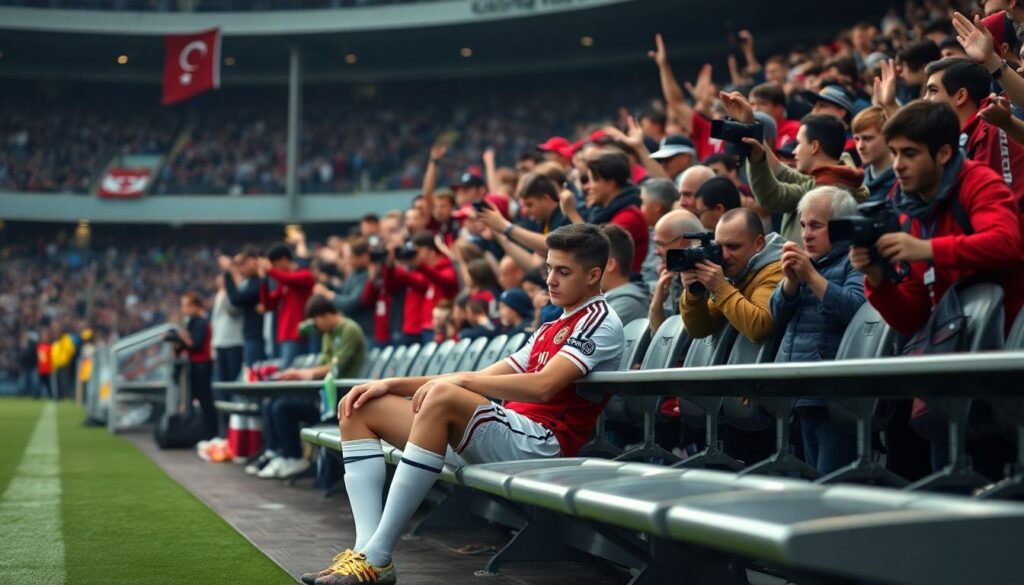
Even in the most professional environments, promising turkey football academy talents can stall. Key risks cluster around injuries, plateauing development and mental readiness for the demands of senior football, especially in clubs with passionate fan bases and intense media scrutiny.
Consider a simplified mini‑case to illustrate the interaction of these risks:
A 17‑year‑old inverted winger at a leading Istanbul academy dominates U17s with goals and assists. Promoted quickly to U19, he plays three high‑intensity games in eight days on artificial pitches. A minor muscle injury follows, leading to reduced training time and loss of rhythm. Confidence drops, social media criticism appears after a poor youth cup performance, and the player starts avoiding 1v1s.
How a club might respond in structured fashion:
- Medical and performance staff coordinate to manage load, adjust gym work and create a safe return‑to‑play plan.
- Coaches schedule targeted 1v1 drills and small‑sided games to rebuild the player’s core strengths.
- Analyst prepares a short positive highlight reel to reinforce identity and remind him of effective actions.
- Psychologist or mentor addresses confidence, social media pressure and realistic expectations around mistakes.
- Short‑term goals are set: specific actions to achieve in the next two matches rather than vague demands.
Applied consistently, this approach keeps more turkish u18 football prospects on track for senior roles instead of losing them to avoidable setbacks.
Practical queries on assessing and recruiting Turkish U18 prospects
How many games should I watch before rating a Turkish U18 prospect?
Avoid strong conclusions after a single match. Aim to see the player in different game states, at least across several league fixtures and, if possible, a cup or high‑pressure match to observe resilience and adaptability.
Which age is ideal to move a Turkish academy player abroad?
The best timing depends on maturity, language skills and playing style fit. Often it is safer to secure initial professional minutes in Turkey before considering a move, unless the foreign club offers a clearly superior development environment and guaranteed pathway.
What separates a regional standout from a truly elite Turkish U18 prospect?
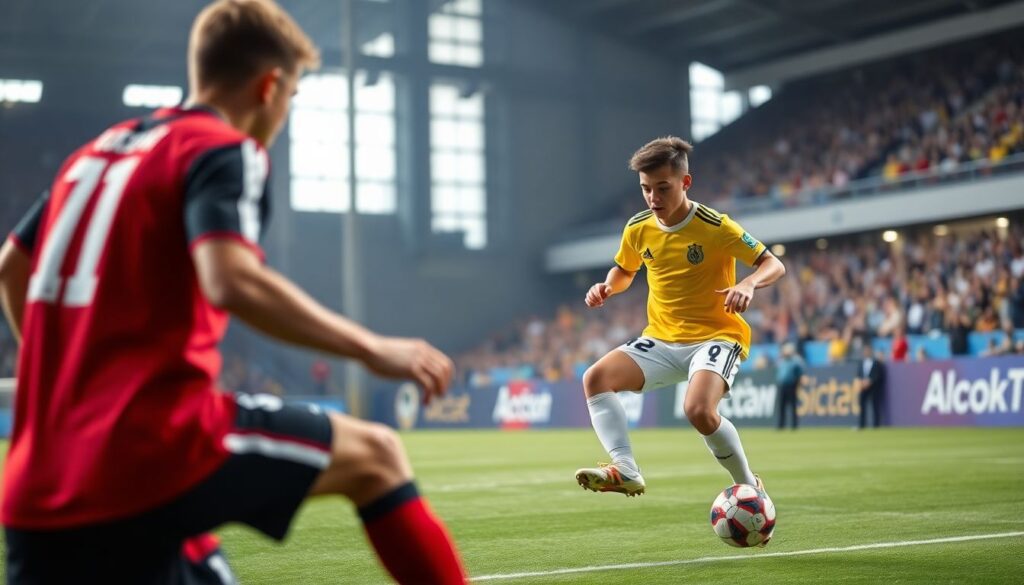
Elite prospects show consistent impact against strong opposition, not only in local leagues. They influence games without relying purely on physical superiority and adapt quickly when coaches change roles or game plans.
How should smaller clubs in Turkey compete with big academies for top talent?
Smaller clubs can offer earlier senior minutes, personalised development plans and clear communication with families. Transparent pathways and stable coaching often outweigh brand value when convincing families of long‑term benefits.
Which data points are most useful when scouting Turkish U18s?
Prioritise actions that correlate with role success: progressive passes, receptions under pressure, high‑value chance creation, defensive interceptions and pressing regains. Use data as a filter, then verify behaviours through detailed video and live observation.
How can I reduce injury risk for high‑potential U18 players?
Monitor growth spurts, manage training and match load, and individualise strength and mobility programmes. Good communication between medical, fitness and coaching staff is essential to avoid overload, especially during congested youth schedules and tournaments.
What is the role of parents and agents in a Turkish U18 player’s development?
Ideally, they protect long‑term development over short‑term exposure or transfers. Clubs should educate families and agents on realistic timelines, appropriate competition levels and the importance of stable environments during key growth years.