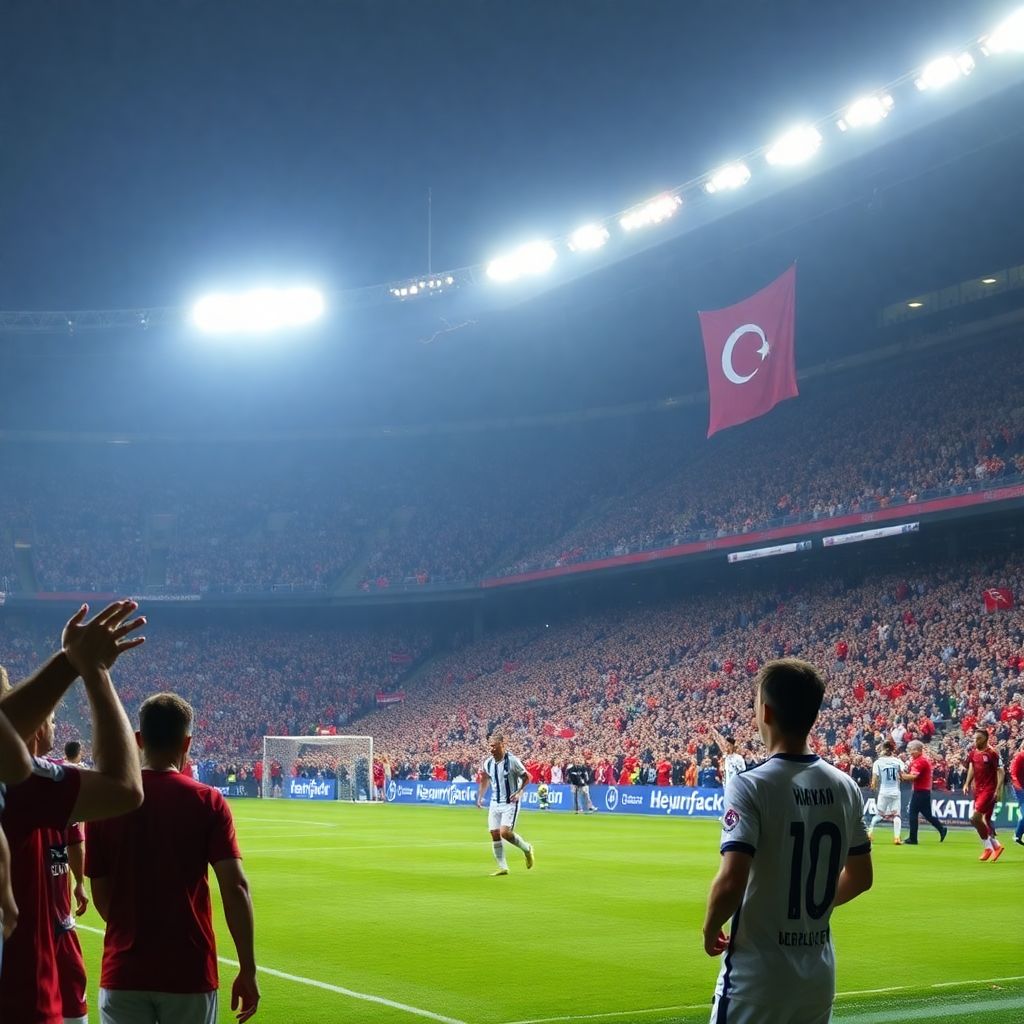
The psychological side of Turkish football combines intense fan passion, strong social identity, and heavy performance expectations. In Turkish stadiums this creates both fuel and risk: players can feel unstoppable or paralysed. Understanding typical mental errors, their triggers, and quick prevention tactics helps coaches, staff, and players stabilise performance under extreme pressure.
Core psychological themes shaping Turkish matchday atmospheres
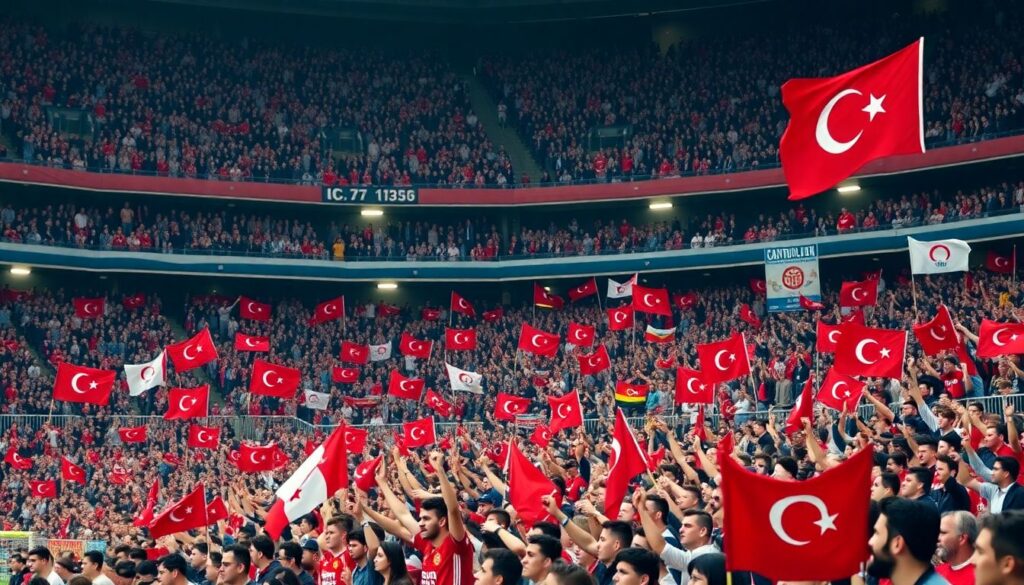
- Passion is culturally valued and publicly displayed, turning matches into weekly emotional rituals rather than simple sporting events.
- Fan pressure in Turkish football stadiums amplifies every mistake and success, quickly swinging collective mood.
- Club identity is deeply tied to city, neighbourhood, and politics, increasing perceived stakes for players and coaches.
- Short-term results are overvalued, which heightens anxiety and leads to impulsive decisions on and off the pitch.
- Mental toughness training for footballers in Turkish leagues is still emerging, often overshadowed by tactical and physical work.
- The psychology of football players in Turkey is strongly shaped by media narratives and social media reactions.
- Access to structured football performance anxiety treatment Turkey-wide is growing but uneven, especially outside major cities.
Historical and cultural roots of passion in Turkish stadiums
Turkish football culture grew at the crossroads of European football traditions and local patterns of community, politics, and everyday life. Stadiums in Istanbul, Ankara, Izmir, Trabzon, and Anatolian cities function as emotional arenas where identity, pride, and frustration are collectively expressed.
For many fans, a derby or crucial league match is not just sport; it is a symbolic battle for respect and recognition. Club slogans, choreography, and songs carry references to history, neighbourhood rivalries, and social status. This explains why win-loss records can affect mood in workplaces, cafes, and families for days.
Psychologically, this intensity means that every home game feels like an exam for players and coaches. Young professionals quickly learn that they represent more than themselves: they carry the hopes of friends, relatives, and entire districts. This magnifies both motivation and fear of failure, feeding performance anxiety when mental skills are underdeveloped.
Sources and mechanics of pressure on players, coaches, and officials
Pressure in Turkish football is not one thing; it is a system of interacting forces. Understanding its main sources makes it easier to prevent typical mental errors before they appear on matchday.
- Fan expectations and crowd noise
Continuous singing, whistles, and insults send powerful emotional signals. When the crowd "turns", players often overreact, rushing decisions or hiding from the ball. - Media and social media amplification
Sports channels, talk shows, and online platforms rate every performance. Viral clips of mistakes or missed chances quickly damage confidence, especially in young players. - Club politics and short time horizons
Club boards may expect immediate success. Coaches and referees know that one match can decide their job security, which narrows focus to survival instead of long-term development. - Financial insecurity and family expectations
For many professionals, a contract is also support for extended family. This makes each game feel like a direct test of economic safety. - Cultural norms about toughness and masculinity
Players are often told to "be a man" and not show weakness. This discourages early reporting of anxiety, sleep problems, or concentration issues. - Lack of structured mental preparation
Where there is no routine work with a sports psychologist for football teams in Istanbul or other cities, mental skills are left to chance, relying only on experience and personality.
Fan identity, rituals, and the dynamics of collective emotion
To move from concept to practice, it helps to visualise how these pressures appear in real matchday scenarios. Below are typical emotional patterns linked to fan behaviour and identity in Turkish stadiums.
- Early goal conceded at a hostile away ground
The home fans explode, the away team feels small, and some players go into "panic mode": long balls, fouls, arguments with the referee. Quick prevention: pre-agreed reset routine (deep breath, eye contact between leaders, one simple passing pattern). - Derby match in Istanbul with constant chanting
Noise is so loud that verbal instructions are almost useless. Emotionally reactive players start chasing revenge after every foul. Quick prevention: use clear nonverbal signals, pre-match agreement on which duels to ignore and which to contest. - Home crowd whistling own team after missed chances
Self-confidence drops, some players stop asking for the ball. Quick prevention: captain and 1-2 senior players deliberately demand the ball and show visible encouragement, while staff protect younger players from eye contact with stands. - Social media storm after a mistake
A defender receives thousands of insults overnight. Next match he plays "safe" and passive, avoiding risk. Quick prevention: limited social media use on matchday ±24 hours, plus brief debrief with staff focusing on controllable behaviours. - Promotion or relegation decider in a provincial city
Local identity and pride make the game feel like a historic event. Anxiety rises days before kickoff. Quick prevention: structured week plan with clear sleep, nutrition, and short mental sessions instead of letting players obsess over the result.
Individual mental toughness: traits, assessment, and training methods
Mental toughness describes how consistently a player performs near their potential under pressure. In Turkey, it is often confused with aggression or shouting, but in applied psychology it is about focus, emotional regulation, and recovery from setbacks. It has clear benefits and also limits that practitioners must respect.
Helpful traits and capacities in mentally tough players
- Stable confidence that does not collapse after one mistake or angry chant from the stands.
- Ability to stay task-focused despite fan pressure in Turkish football stadiums and media noise.
- Emotional regulation: can feel anger or fear without acting impulsively (fouls, protests, risky dribbles).
- Short recovery time after setbacks: quickly returns to tactical role after conceding a goal.
- Constructive self-talk: internal dialogue is instructive ("next action"), not abusive ("I am a disaster").
- Openness to feedback: can accept correction from coaches even in heated moments.
Limitations and common misinterpretations of mental toughness
- Mental toughness is not silence about emotions; hiding anxiety often leads to sudden drops in performance.
- It does not replace tactical intelligence; a "brave" but tactically undisciplined player still hurts the team.
- It is not permanent; fatigue, injuries, and life stress can temporarily reduce resilience.
- Over-glorifying "playing through pain" increases injury risk and long-term burnout.
- One-off motivational speeches cannot build real toughness; it needs regular practice like physical training.
Quick assessment ideas for coaches and staff
Even without formal tools, practitioners can screen mental strengths and vulnerabilities with simple questions and observations.
- Ask players to rate pre-match anxiety and confidence on a 0-10 scale across several matches; look for patterns.
- Observe reactions after mistakes: body language, eye contact, willingness to receive the ball.
- Monitor sleep, appetite, and irritability in stressful periods (derbies, finals, contract talks).
- Track who demands the ball in difficult phases; those who hide may need targeted support or gradual exposure.
Practical mental toughness training for footballers in Turkish leagues
- Brief daily breathing protocol: 2-3 minutes of slow exhale-focused breathing before and after training to normalise arousal.
- One-minute reset ritual: after any big mistake, players follow a fixed sequence (exhale, visual focus point, key word like "next").
- Pressure drills: small-sided games where goals count double in the last minute, simulating end-game tension.
- Role clarity meetings: 5-10 minutes with each player to clarify expectations; reduces cognitive overload during matches.
- Guided imagery: players mentally rehearse entering a noisy stadium, hearing insults, and still executing first actions calmly.
- Access to specialists: where possible, connect players with a sports psychologist for football teams in Istanbul or local equivalents in Anatolia for deeper work.
Crisis moments: performance, decision-making, and crowd influence
Crisis moments in Turkish football – late equaliser, red card, controversial penalty – expose recurring mental errors. Recognising and correcting them quickly can save points and protect careers.
- Myth: "We must respond immediately" after conceding
Typical error: team rushes forward chaotically, leaving space behind. Quick prevention: automatic rule of 1-2 calm possession phases before any high-risk attack. - Myth: shouting at referees shows leadership
Typical error: captain focuses on protests instead of organising teammates. Quick prevention: assign one calm spokesperson; others step away and reset positions. - Myth: only aggressive body language intimidates opponents
Typical error: unnecessary fouls, cards, and free kicks in dangerous areas. Quick prevention: train players to separate inner fire from outer behaviour; use firm but controlled posture. - Myth: young players cannot handle pressure games
Typical error: coaches avoid using talented youngsters in derbies, slowing their development. Quick prevention: introduce them in specific roles with clear micro-tasks and strong support from senior teammates. - Myth: anxiety disappears if you just "want it more"
Typical error: over-motivation turns into muscle tension and poor technique. Quick prevention: combine motivational talks with short relaxation and breathing exercises. - Myth: only weak players need psychological help
Typical error: late or no use of football performance anxiety treatment Turkey-based specialists until problems are severe. Quick prevention: normalise mental coaching as part of elite preparation, like nutrition or strength work.
From theory to pitch: practical interventions for teams and leagues
Turning psychological concepts into reliable routines requires simple structures that fit the rhythm of Turkish clubs. Below is a compact example of how a staff group might implement a season-long mental programme with limited resources.
Mini-case: Building a basic mental framework in a 1. Lig club
A mid-table club in the Turkish 1. Lig struggles with closing games: they drop points in the last 15 minutes, especially away. There is no full-time psychologist, and budget is tight, but staff want to reduce late-game errors under fan pressure.
- Month 1 – Diagnose and normalise
- Coaching staff collect simple data: goals conceded after 75th minute, cards, and unforced errors.
- Team meeting explains that mental factors are trainable, not signs of weakness.
- Players complete a short anonymous survey about matchday anxiety and concentration.
- Month 2 – Introduce micro-skills
- Warm-up includes 2-minute breathing routine before tactical work.
- Every training ends with a "pressure block": small-sided game with crowd noise audio and special rules for last minutes.
- Leaders practise clear, short commands to use when noise blocks communication.
- Month 3 – Protect vulnerable players
- Staff identify players whose performance drops most in hostile stadiums.
- For them, staff arrange 2-3 online sessions with a trusted specialist, for example someone offering football performance anxiety treatment Turkey-wide.
- On matchdays, these players receive very specific, limited tactical tasks to avoid overload.
- Month 4 – Review and adjust
- Compare new late-game data with Month 1; highlight even small improvements in team meetings.
- Remove drills that players find unrealistic or overly complex; keep what transfers clearly to matches.
- Share anonymous success stories to further normalise mental work across the squad.
Over time, such low-cost, high-structure interventions change how players interpret Turkish stadium intensity: from threat to challenge. Combined with gradual collaboration with the psychology of football players in Turkey specialists, clubs can stabilise performance without losing the passion that makes the local game unique.
Practical practitioner queries on mental dynamics in Turkish football
How can a coach quickly reduce pre-match anxiety in a high-stakes derby?
Keep the plan simple: 3 clear tactical priorities, a short walk-through on the pitch, and a fixed pre-match timeline. Add a 3-4 minute group breathing or focus exercise in the dressing room and ask each player for one controllable personal goal instead of result-focused talk.
What is the fastest way to stop a team from emotionally collapsing after a red card?
Immediately call players into a tight huddle, state one sentence about the new plan, and assign responsibilities by name. Use a pre-trained "emergency shape" so players know their roles without long explanations, and highlight the next five minutes only, not the whole match.
How should a club handle a young player targeted by social media abuse?
Limit the player’s online exposure for 24-48 hours, publicly support him in club communications, and privately review video focusing on correct actions, not just the mistake. Offer at least one brief session with a specialist in football performance anxiety treatment Turkey-based, and avoid punitive language in team meetings.
What can a staff do if there is no budget for a full-time sports psychologist?
Designate one coach to learn basic mental tools, integrate short routines into existing training, and occasionally consult a freelance sports psychologist for football teams in Istanbul or online. Focus on low-cost interventions: breathing drills, reset rituals, clear role communication, and simple self-report scales for mood and anxiety.
How can referees and officials manage crowd influence in heated stadiums?
Use pre-match mental rehearsal of common conflict scenarios, focus attention on positional cues rather than crowd noise, and agree on clear communication protocols within the referee team. Between halves, use a brief reset routine instead of watching controversial replays or checking social media.
How do you convince veteran players to try mental toughness exercises?
Link mental routines directly to performance outcomes they care about: fewer late goals conceded, better decision-making under pressure, longer careers. Start with very short, practical drills that fit into warm-ups, show respected role models using such methods, and avoid psychological jargon.
What signs show that a player needs professional psychological support, not just coaching?
Warning signs include persistent sleep problems, loss of appetite, strong mood swings, or complete loss of enjoyment in football. When these appear together with performance drops and withdrawal from teammates, refer the player to a qualified specialist for structured assessment and potential treatment.