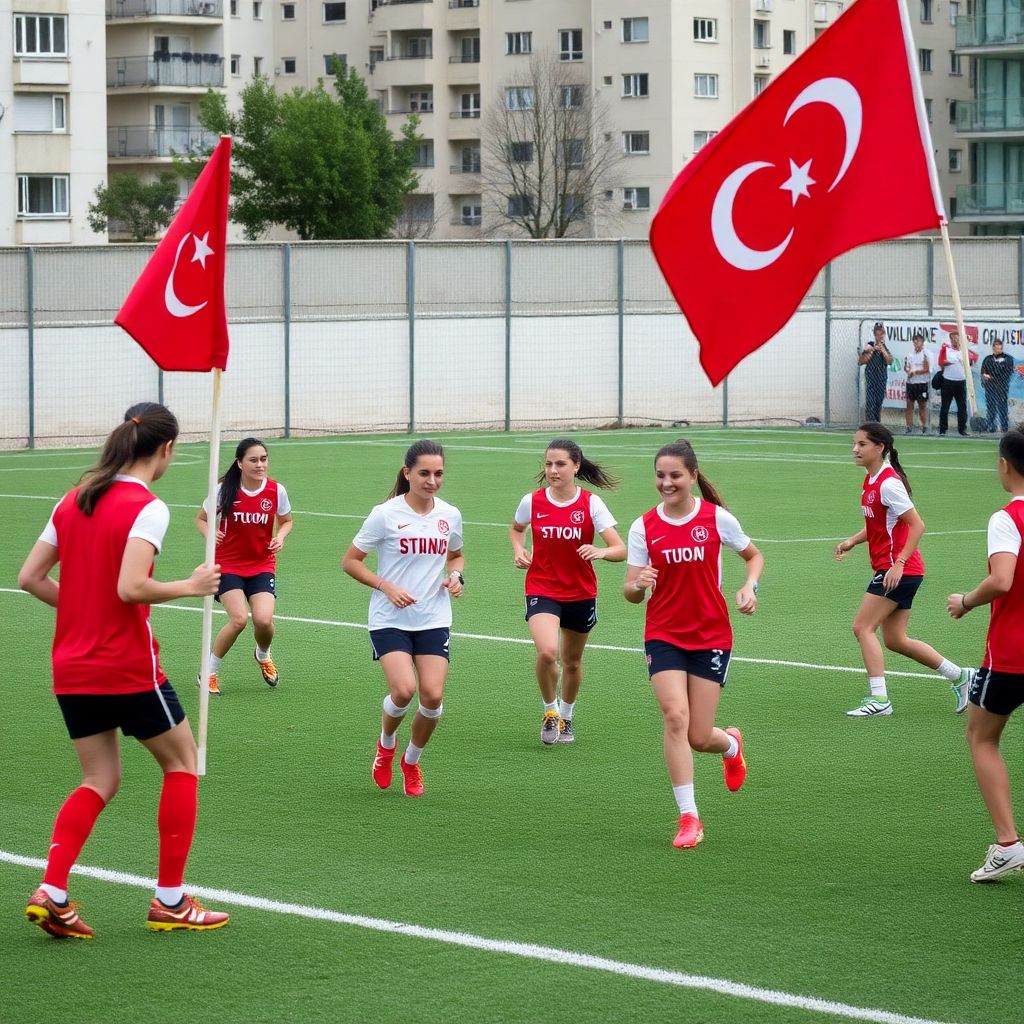
Women’s football in Turkey is the fastest‑moving part of the national game, built around the Turkish women’s football league, the Turkey women’s national football team and a growing base of grassroots players. It is still underfunded and under‑reported, but offers major upside for clubs, sponsors, media and young athletes.
Snapshot: Momentum and Remaining Barriers
- women’s football Turkey is expanding quickly in participation, club numbers and media interest, especially in major cities.
- The Turkish women’s football league now anchors a clearer pyramid from grassroots to professional level.
- Elite performance is improving, and the Turkey women’s national football team is more competitive in international fixtures.
- Structural issues remain: unstable club support, limited youth pathways and inconsistent coaching standards.
- Commercial potential is underused; sponsors and broadcasters still treat it as a niche property.
- Fans can now watch Turkish women’s football live more easily via digital platforms, but coverage is uneven.
- Policy reforms and better governance are essential to turn current momentum into long‑term sustainability.
Debunking Myths: What People Get Wrong About Women’s Football in Turkey
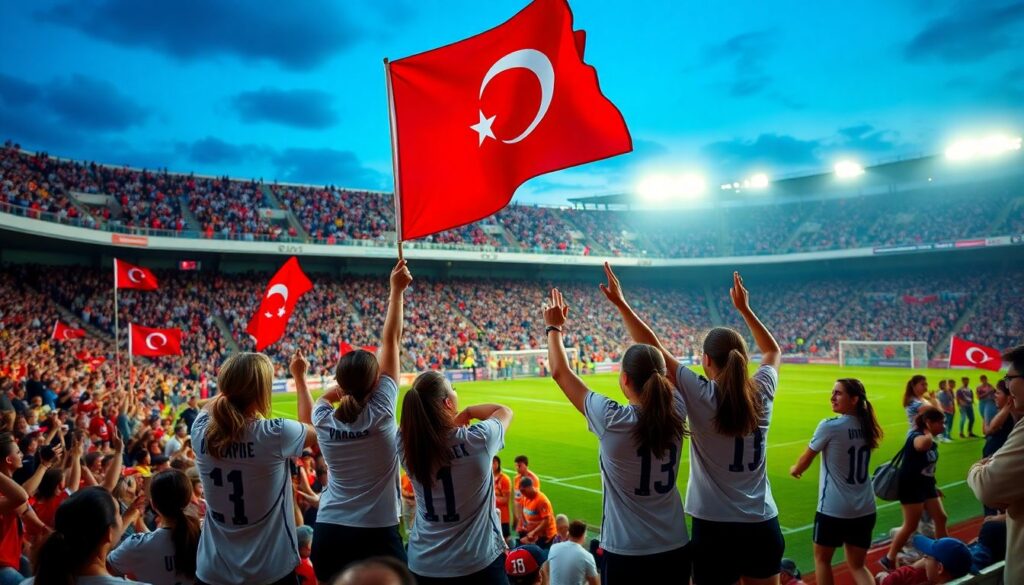
Women’s football in Turkey is not a side project of the men’s game; it is a structured ecosystem with its own competitions, heroes and fan culture. It covers everything from school tournaments and university leagues to professional tiers and the Turkey women’s national football team competing in UEFA and FIFA pathways.
A common myth is that women’s soccer clubs in Turkey are all amateur or “for fun only”. In reality, several clubs operate professionally, employ full‑time staff and follow sports science routines similar to men’s teams. Another myth is that the level of play is low; technical quality and tactical sophistication are steadily rising.
Many also believe there is no audience. Yet, whenever big derbies or national‑team qualifiers are promoted and scheduled well, stadiums and streams attract engaged fans, families and younger supporters discovering the game through women’s teams first. Visibility, not interest, is the main bottleneck.
For clarity, women’s football Turkey includes: the Turkish women’s football league structure, cup competitions, regional and school tournaments, futsal variants and all age groups of the women’s national teams. Futsal, mixed‑gender school games and casual play overlap, but the core definition is 11‑a‑side football under federation rules.
Historical Roots: The evolution of the women’s game in Turkey
- Early pioneers and informal teams. Small groups of women started forming teams and playing semi‑organized games long before stable leagues existed. These pioneers challenged social norms and created the first role models, often with minimal facilities and support.
- First formal leagues and recognition. Over time, the federation began to recognize women’s competitions, launching structured tournaments that eventually evolved into today’s Turkish women’s football league with multiple tiers and promotion/relegation mechanisms.
- University and school influence. Schools and universities provided safer spaces to start playing, especially for girls whose families were hesitant about club football. Many current professionals took their first football steps in these educational environments.
- Big‑club entry into the women’s game. When established men’s clubs launched women’s sections, they brought better training conditions, branding and fan bases, which raised standards and expectations across the pyramid.
- International participation. The Turkey women’s national football team’s entry into qualification cycles for European and world competitions created a clear performance goal for domestic players and increased media coverage of the women’s game.
- Digital era and new fans. Social media, streaming and highlight clips allowed fans to discover players and matches even when traditional TV ignored them, driving a younger, more diverse fan base.
- Current consolidation phase. Today the system is shifting from fragile, short‑term projects to more stable, institutionally backed programs, though gaps in funding and governance still limit full professionalization.
Club Ecosystem and Competitive Landscape
The club ecosystem ranges from community‑based teams run by volunteers to professional squads backed by major brands. This spectrum defines the competitive landscape, training quality and career prospects for players in women’s football Turkey.
-
Professional clubs linked to big brands.
Some women’s teams operate as sections of famous men’s clubs, sharing facilities, medical support and marketing platforms. They compete at the top of the Turkish women’s football league and often supply players to the national team.
-
Ambitious standalone women’s clubs.
Independent women’s soccer clubs in Turkey, sometimes backed by municipalities or universities, focus exclusively on female footballers. They can be highly competitive, especially when they build strong local talent pipelines.
-
Regional and municipal teams.
Municipal and regional clubs give access to girls outside big cities. They play a crucial role in identifying late‑bloomers and players from under‑served communities who might never reach a major academy otherwise.
-
University and school‑club hybrids.
Some institutions run teams that compete in both academic and federation competitions. This hybrid model lets players combine education with high‑level football and acts as a bridge to professional clubs.
-
Grassroots and community teams.
These teams might not compete in top divisions but provide the first structured experience for many girls. For clubs, they are low‑cost talent identification hubs and effective community‑engagement tools.
Mini‑scenarios:
- For a big club board: launching a women’s team strengthens brand reputation, opens new sponsorship categories and leverages existing infrastructure with relatively low extra cost.
- For a municipality: supporting a regional women’s club can combine social policy (girls’ participation, inclusion) with city branding through sport.
- For a university: creating a competitive women’s program helps attract talented student‑athletes and partnerships with local clubs.
Player Pathways: academies, schools and talent identification
Player pathways tie together academy systems, school tournaments, regional selections and national‑team scouting. When these parts align, women’s football Turkey produces better players faster; when they are disconnected, many talented girls quit early or never get seen.
Strengths and Opportunities in Current Pathways
- More girls’ academies are attached to established clubs, giving structured coaching and clear goals from an early age.
- School and university leagues act as safe entry points for players from families new to football culture.
- Regional selection events and youth camps allow scouts to see players outside traditional hotspots.
- Some women’s soccer clubs in Turkey now employ specialist staff (analysts, fitness coaches) for youth groups, not only senior squads.
- Digital highlight clips make it easier for players to share performance footage with scouts and coaches.
Constraints and Gaps that Still Hold Players Back
- Access to quality pitches and training times can be limited, especially when women’s teams share facilities with multiple men’s and youth teams.
- Coaching expertise in female‑specific long‑term development (growth, injuries, dual careers) is inconsistent across regions.
- Scouting focuses on a few big cities, so rural and small‑town talent often remains invisible.
- There is still no universally clear roadmap explaining how a 10‑year‑old girl can realistically progress to the Turkey women’s national football team.
- Academic pressure and lack of flexible scheduling make it hard for teenagers to balance studies and intensive training.
Mini‑scenarios:
- For a parent: start with a local school team or community club, then move to an academy linked to the Turkish women’s football league once your daughter shows commitment.
- For a grassroots coach: build simple video portfolios for promising players and share them with regional scouts to widen their exposure.
- For a federation planner: map a standard “player journey” and communicate it clearly to clubs, schools and families.
Commercial Viability: sponsorship, media rights and revenue streams

Commercially, women’s football Turkey sits at an inflection point: attention and goodwill are rising, but monetization still lags. Many decisions are driven by myths rather than evidence or clear strategy.
- Myth: “There is no audience, so sponsors won’t pay.” Fans exist but are under‑served. When matches are marketed, scheduled conveniently and easy to access, engagement grows. Sponsors can reach younger and more gender‑balanced audiences than in many men’s competitions.
- Myth: “Media rights have no value.” Traditional TV may hesitate, but digital platforms and club‑owned channels can build loyal followings. Rights value grows from consistent, high‑quality production and storytelling, not from waiting for a perfect TV deal.
- Myth: “Women’s teams are just a cost center.” Properly integrated, they attract new sponsors, improve ESG and equality scores, and open community and CSR projects that are hard to achieve via men’s teams alone.
- Myth: “Only big clubs can earn money from women’s football.” Smaller women’s soccer clubs in Turkey can monetize local partnerships, match‑day experiences and participation programs when they package them professionally.
- Myth: “Streaming for free is enough.” Letting people watch Turkish women’s football live at no cost is helpful early on, but long‑term value comes from tiered models: free highlights plus premium experiences, memberships and targeted sponsorship assets.
Mini‑scenarios:
- For a sponsor: back a women’s team as the lead property, not an add‑on; co‑create campaigns around empowerment, education or careers in sport.
- For a broadcaster or streamer: start with a regular “women’s football window” each week and build habit before negotiating deeper rights packages.
- For a club marketing team: bundle women’s team rights with community programs, school visits and digital content to create attractive sponsorship packages.
Policy and Governance: federation roles, regulations and a roadmap for growth
Policy and governance shape how fast women’s football Turkey can grow and how stable its foundations become. The federation, leagues, clubs, municipalities and education sector must align regulations, competitions and incentives.
Core governance levers:
- Licensing standards for clubs (youth teams, facilities, medical support, safeguarding policies).
- Financial regulations and minimum investment requirements in women’s sections for professional clubs.
- Competition formats that ensure enough high‑quality games per season at every age group.
- Coach education pathways with modules specific to the female game and dual‑career planning.
- Data tracking on participation, injuries, drop‑out rates and regional access to tailor policy decisions.
Mini‑case: a simple roadmap for a regional program
Imagine a mid‑size Anatolian city where the municipality, local university and two clubs want to boost girls’ football. They could follow this practical sequence:
- Map all existing girls’ teams in schools, universities and community centers.
- Agree on shared facility schedules so girls have priority training slots at least twice a week.
- Launch a city‑wide girls’ league with clear age categories and simple rules.
- Train a cohort of female coaches and referees through subsidized courses.
- Link the best players to club academies and establish scholarship agreements with the university.
- Promote key matches in partnership with local media, inviting families and schools.
- Review data after one season and adjust rules, schedules and support based on real feedback.
Scaled nationally, similar roadmaps-adapted to local realities-can turn today’s fragile growth into a durable, inclusive future for the women’s game.
Common Misconceptions and Clarifications
Is women’s football in Turkey fully professional already?
No. Parts of the top tier operate on a professional or semi‑professional basis, but many players still combine football with work or study. Professionalization is in progress, not complete.
Are women’s matches always free to attend?
Not always. Some games are free to build audiences, others charge modest tickets. Policies differ by club, competition and venue, so fans should check specific match information in advance.
Is the level of play comparable to men’s leagues?
Styles and physical profiles differ, but technical ability and tactical organization are improving quickly. The best women’s teams now offer high‑quality football that stands on its own, not as a copy of the men’s game.
Can small towns realistically produce national‑team players?
Yes, if pathways and scouting work properly. Talent can emerge anywhere; the challenge is giving rural players regular competition and visibility so they are not overlooked.
Do big men’s clubs automatically guarantee success for their women’s sections?
No. Brand power helps, but success depends on stable budgets, dedicated staff, a clear sporting strategy and genuine commitment to the women’s side, not just a logo and a jersey.
Is women’s football only a short‑term trend driven by media attention?
Current visibility helps, but underlying drivers-youth participation, policy pressure for equality, sponsor interest in inclusive properties-make it a long‑term structural shift, not a passing fashion.
Does investing in women’s football take resources away from men’s teams?
Well‑planned projects often bring in new sponsors and audiences that would not have engaged with the men’s team alone, expanding rather than cannibalizing the overall football economy.