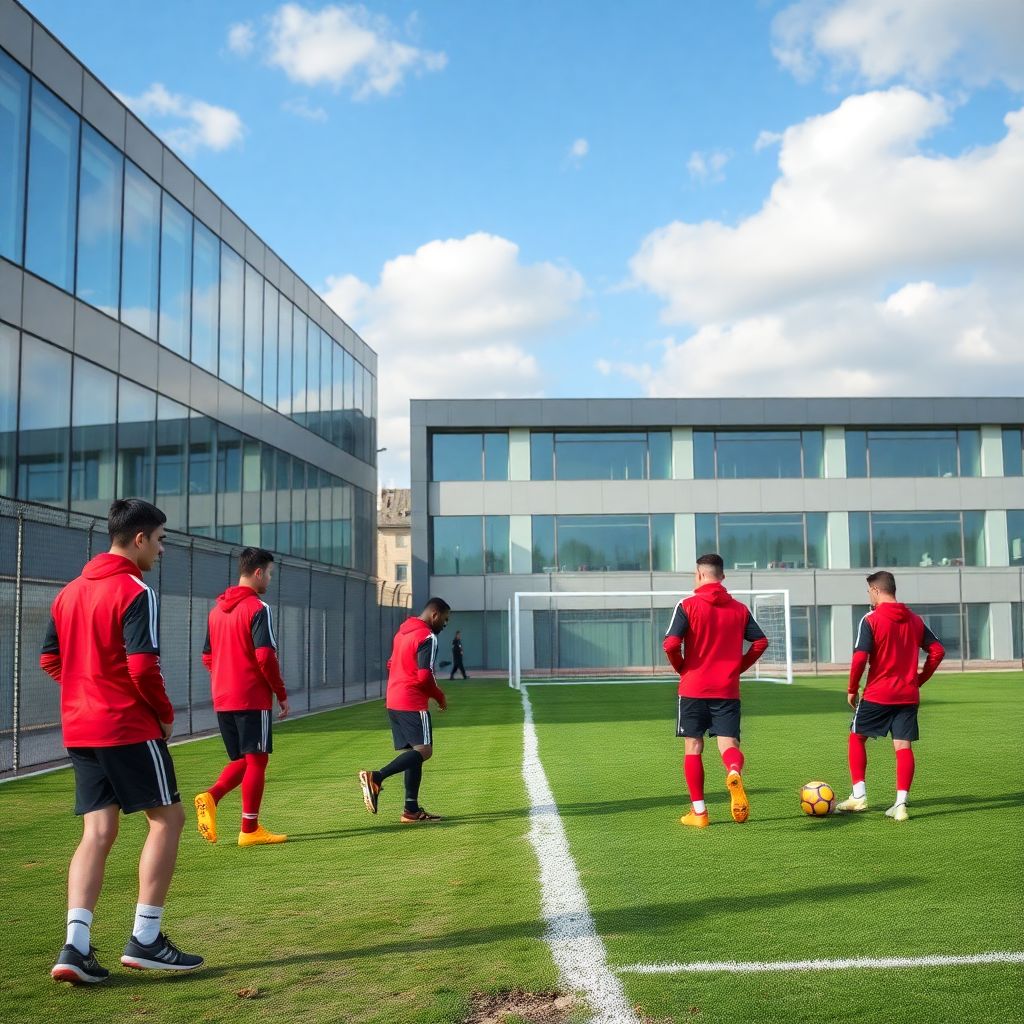
Turkish football academies are improving, but Europe’s best still lead in facilities, long-term funding, coach education, and player welfare. To choose the best path, use European standards as benchmarks, focus on infrastructure, training methodology, and transition to pro levels, then adjust to Turkish realities: budget limits, geography, and school obligations.
Immediate conclusions for coaches and directors
- Facilities and funding cycles in Turkey are shorter-term and less stable; copying European multi-year planning matters more than copying buildings.
- Where recruitment is weak, building a clear grassroots funnel creates faster gains than adding more academy teams.
- Session quality and structure are usually a bigger gap than overall training volume.
- Education and exit pathways decide family trust; clarify them before promising a pro contract dream.
- Coach development and basic data tracking provide cheaper advantages than big technology investments.
- For most clubs, the realistic benchmark is solid mid-tier youth football academies Europe comparison, not the top 5 brands everyone knows.
Infrastructure & funding: tangible differences and investment priorities
When comparing Turkish football academies vs Europe, infrastructure and money shape everything else. Before copying European models, decide where every lira creates the biggest performance and safety gain.
Core criteria to compare facilities and funding models
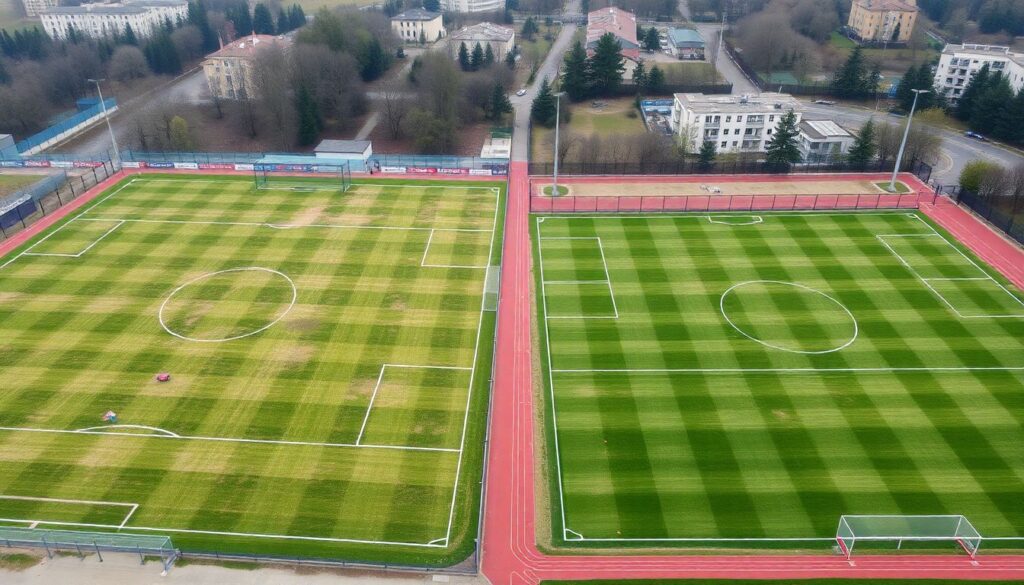
- Pitch quality and availability: number of usable hours per week, all-weather access, and maintenance standards.
- Indoor and bad-weather options: gyms, small indoor pitches, and covered areas for winter sessions.
- Medical and recovery support: access to physio, basic screening, and injury management routines.
- Accommodation and transport: boarding capacity, safe travel from distant regions, and daily commute time.
- Equipment and video: balls, goals, GPS or heart-rate tools, and simple video capture.
- Funding horizon: is the budget guaranteed for months, seasons, or several years.
- Revenue mix: club budget vs. player fees vs. sponsors vs. transfers.
- Compliance and safety: lighting, changing rooms, parent waiting areas, and safeguarding measures.
- Scalability: ability to add extra teams or age groups without collapsing quality.
Decision-style comparison: investment priorities
| Priority area | Current typical state in Turkey | Standard in leading European academies | Main trade-off | When to prioritise |
|---|---|---|---|---|
| Pitch quality & maintenance | 1-2 full-size pitches, often overused, mixed grass quality | Multiple pitches with rotation plans and strict usage rules | Better surfaces vs. fewer training slots per team | If injuries, fatigue, or poor passing quality are visible issues |
| Indoor / bad-weather spaces | Limited, often shared school gyms or none | Dedicated indoor halls and covered technical areas | Building cost vs. more consistent annual training | If your winter months cut more than 20-30% of planned sessions |
| Medical & recovery | External doctors, ad-hoc physio, basic first aid | On-site physio, screening protocols, return-to-play plans | Staff cost vs. fewer long-term injuries and absences | If you lose many players to recurring injuries or growth issues |
| Boarding & transport | Mostly day players from nearby areas | Boarding for regional/national talents, organized travel | Operating cost vs. wider talent pool | If local talent is limited and distances block recruitment |
| Basic analysis tech | Video used irregularly; limited GPS/HR monitoring | Routine filming, shared clips, simple metrics for loads | Equipment and staff time vs. better development tracking | If coaches cannot objectively track progress or minutes |
| Funding security | Season-to-season, sponsor-sensitive | Multi-year plans and protected academy budgets | Short-term savings vs. strategic continuity | If staff turnover and constant cuts break long-term projects |
Mini case example: realistic upgrade path
A mid-table Turkish club redirected part of its transfer budget to pitch maintenance, lights, and a small indoor area. Without changing total spend, it extended effective training weeks, reduced cancellations, and attracted better local coaches due to improved working conditions.
Immediate action checkpoints for infrastructure
- If your pitch is overbooked, then cap hours per surface and add smaller training spaces (e.g., 7v7) before dreaming of a new full-size pitch.
- If winter kills your calendar, then secure affordable covered space (shared school hall or municipal facility) before adding new age groups.
- If parents complain about safety or comfort, then prioritise lighting, changing areas, and clear pick-up zones over cosmetic branding.
Talent ID systems: grassroots links, academies and recruitment funnels
The best football academies in Turkey succeed when they build real pipelines from schools, amateur clubs, and regional centres instead of waiting for players to walk in. European clubs rarely rely on one route; they manage several coordinated funnels.
Comparative options for talent identification and recruitment
| Variant | Best suited for | Advantages | Drawbacks | When to choose |
|---|---|---|---|---|
| Club-led elite academy network | Super Lig clubs with fan base and resources | Strong brand, easier scouting, clear pathway to first team | High running costs, risk of favouring results over development | When you can support regional centres and full-time scouts |
| Independent private academies | Cities with many motivated families and limited pro clubs | Flexible structures, can specialise by age or position | Weaker link to professional contracts, reliance on fees | When you cannot rely on a professional club budget |
| School-club partnership models | Areas with strong schools but poor club infrastructure | Daily contact time, controlled training loads, easier family logistics | Complex coordination of timetables and academic priorities | When transport and school pressure limit training options |
| Regional federation or municipal centres | Regions with many small clubs and limited scouting | Wider reach, reduced duplication of trials, neutral evaluation | Bureaucratic processes, risk of inconsistent coaching levels | When local politics block cooperation between rival clubs |
| Overseas placement & partner-club programs | Top prospects ready for higher competition intensity | Exposure to different cultures, methods, and standards | High cost, cultural adaptation, limited spots | When 1-2 players per age group clearly outgrow local level |
Decision logic for building your funnel
- If your catchment area is small, then focus on depth: strong links with every school and amateur club, regular festivals, and open days.
- If you sit in a talent-rich city, then specialise: define profiles (positions, playing style) and run structured trials instead of open chaos.
- If your budget is thin, then trade quantity for quality: fewer age groups, but with clear scouting criteria and stable staff.
Case note: from trials chaos to structured scouting
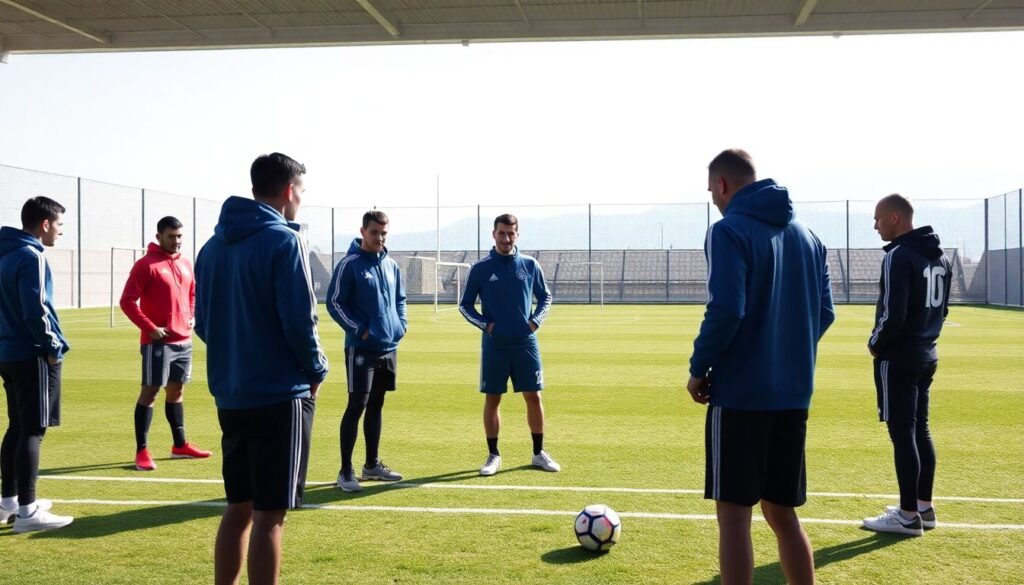
One Turkish academy scrapped once-a-year mass trials and replaced them with quarterly, invitation-based assessments after watching school and amateur games. Staff workload dropped, and player fit with the club’s style improved visibly within one season.
Training culture and curriculum: session design, physical and tactical models
Methodology is where gaps become obvious. Turkish football academy training methods often deliver intensity and passion but may lack long-term periodisation and individual planning seen in top European environments.
Scenario-based guidance for training design
- If sessions feel chaotic and results-driven, then introduce a simple microcycle: 1 day for high-intensity game, 1 day for position-specific work, 1 day for tactical concepts, 1 lighter day for recovery or video.
- If players tire or get injured late in the season, then adjust weekly loads, alternate high and low physical days, and monitor perceived exertion with a quick 1-10 scale after each session.
- If your teams play well domestically but struggle in Europe, then increase training in pressing triggers, build-up under pressure, and transitional moments instead of only rehearsing set pieces and standard shapes.
- If technical progress stalls after U14, then reduce isolated drills and add more position-relevant rondos, small-sided games, and 1v1/2v2 situations with decision-making.
- If coaches disagree on playing style, then define a clear identity: pressing height, preferred formations, and non-negotiables (e.g., playing out from the back at younger ages) and align session plans accordingly.
- If school commitments limit weekly training time, then prioritise quality over quantity: shorter, high-focus sessions with clear learning objectives and video feedback instead of adding another low-quality session.
Compact comparison: training culture elements
| Aspect | Common Turkish practice | Leading European practice | Key trade-off | Practical adjustment |
|---|---|---|---|---|
| Session planning | Coach decides content on the day, heavy focus on winning next match | Seasonal curriculum with weekly themes and individual targets | Flexibility vs. long-term progression | Create a 4-6 week block plan per age group with shared templates |
| Physical development | Running-heavy sessions, late introduction of strength work | Age-appropriate strength, movement, and speed from early teens | Short-term fatigue vs. long-term robustness | Integrate strength and coordination into warm-ups and small games |
| Tactical education | Coaching from the sideline, reactive rather than planned | Clear teaching moments with video and post-game reflection | Time investment vs. game understanding | Film 1 game per month per team and review 3-4 clips together |
| Individualisation | Team-first, limited individual plans | Personal targets and review meetings | Administrative load vs. tailored growth | Start with 2-3 priority players per team, then expand gradually |
| Psychological skills | Motivational talks, but limited structured work | Basic mental skills programs and parent education | Program complexity vs. resilience and focus | Add 10-15 minutes per week on routines, self-talk, and reflection |
Quick action checkpoints for training culture
- If you cannot describe your age-group curriculum in one page, then write it first before designing the next block of sessions.
- If players cannot explain what they worked on today, then simplify the session: one main topic, repeated in different game formats.
- If match day looks like constant sideline shouting, then agree staff rules for in-game communication and post-game learning instead.
Education, welfare and pro transition: dual careers and exit pathways
Education and welfare often decide whether families trust an academy, especially when they ask how to join Turkish football academy structures in major cities or smaller towns.
Step-by-step checklist to select or design the right model
- Map school realities – list typical timetables, exam periods, and commuting times for your age groups before setting training slots.
- Define a minimum education standard – decide what academic performance or attendance you require to support a full training schedule.
- Clarify boarding and welfare policies – document rules on supervision, nutrition, free time, social media, and communication with parents.
- Build transparent transition stages – pre-academy, academy contract, loan or B-team plans, and criteria for each step.
- Create exit pathways – links with universities, semi-pro clubs, and alternative careers inside football (coaching, analysis, operations).
- Prepare family communication – regular meetings, written agreements, and clear language about probabilities of professional careers.
- Monitor well-being – simple check-ins on sleep, mood, and injury pain at least weekly, with escalation routes to medical or psychological support.
Comparative view: education and transition structures
| Dimension | Typical Turkish approach | Leading European approach | Main trade-off | Suggested improvement |
|---|---|---|---|---|
| School coordination | Player manages conflicts; ad-hoc teacher contacts | Formal agreements between club and schools | Administrative work vs. stable routines | Start with 1-2 pilot schools and standard letters |
| Boarding & supervision | Limited spaces, mixed age groups, basic rules | Structured houses with age-specific programs | Cost vs. safety and life skills | Define clear house rules and weekly life-skills sessions |
| Pro transition planning | Focus on the few who sign first-team contracts | Tiered pathways including loans and U23/B-teams | Squad size vs. playing minutes | Set transparent criteria for loans and B-team involvement |
| Exit pathways | Players leave with limited guidance | Support toward studies, jobs, or semi-pro football | Extra work vs. reputation and trust | Offer basic counselling and information sessions twice a year |
| Family involvement | High emotional pressure, inconsistent contact | Structured meetings and education for parents | Time vs. reduced conflict and stress | Schedule fixed parent evenings and periodic reports |
Immediate action checkpoints for welfare and transition
- If parents constantly ask about contracts, then publish a simple pathway document that explains age-by-age expectations and probabilities.
- If older players disappear after release, then assign a staff member as transition officer to support exits for at least one season.
- If boarding feels chaotic, then separate age groups, clarify curfews, and create routines around study time and recovery.
Coaching development, analytics and tech adoption: what accelerates progress
Coaches turn infrastructure and ideas into daily reality. European strengths come less from magical tactics and more from continuous learning and basic data usage.
Common mistakes when selecting development and tech priorities
- Buying advanced tech before mastering basics – GPS vests or complex platforms matter less than consistent video use and simple playing-time statistics.
- Ignoring coach pathways – hiring good coaches without offering growth routes leads to turnover and inconsistent messages to players.
- One-off workshops instead of ongoing mentoring – inspirational clinics fade quickly; regular on-field feedback changes behaviour.
- Overloading staff with data – too many metrics hide what matters; start with a few key indicators per age group.
- Copying foreign drills without context – elite-club exercises from abroad fail when squad size, pitch, or player level differ.
- Underusing local knowledge – experienced Turkish coaches and teachers often understand player mentality better than imported methods.
- No time blocked for coach learning – sessions and matches fill the week, leaving zero space for reflection or peer review.
Compact comparison: coaching and tech ecosystems
| Area | Typical Turkish reality | Common European benchmark | Trade-off | Priority action |
|---|---|---|---|---|
| Coach education | Licence courses plus personal experience | Licence plus in-club mentoring and shared practice | Course cost vs. applied learning | Pair each young coach with a mentor and set joint reviews |
| Internal game model | Coach-dependent style and language | Club-wide model with terminology and principles | Freedom vs. alignment | Publish a short club playing model and update annually |
| Video and analysis use | Occasional highlights, limited sharing | Routine filming and simple clip libraries | Time vs. feedback quality | Film key age groups regularly and review 10-15 minutes per week |
| Data tracking | Subjective impressions, minimal records | Basic logs of minutes, positions, and injuries | Admin effort vs. informed decisions | Use a simple spreadsheet before considering pro software |
| Coach career paths | Unclear promotions and criteria | Structured ladders across age groups and roles | Hierarchy vs. motivation | Define visible steps with competencies for each level |
Immediate action checkpoints for coaching and tech
- If your budget is limited, then prioritise filming and reviewing games over buying new gadgets.
- If coaches rarely observe each other, then schedule monthly internal workshops with live session feedback.
- If data feels overwhelming, then track only three things first: minutes played, training attendance, and injuries.
Actionable roadmaps: decision branches to close gaps fast
Different clubs and regions in Turkey need different mixtures of European ideas. There is no single model, but clear decision branches help you choose.
Mini decision tree for directors
- If your main weakness is facilities, then:
- First improve pitch quality and lighting;
- Then secure at least one indoor or covered option;
- Finally, add basic medical and recovery capacity.
- If your main weakness is player flow, then:
- First build school and grassroots partnerships;
- Then structure trials and scouting events regionally;
- Finally, explore regional centres or overseas links for top talents.
- If your main weakness is training quality, then:
- First define a simple curriculum per age group;
- Then align coaches around a clear playing model;
- Finally, integrate video and individual plans.
- If your main weakness is family trust, then:
- First clarify education expectations and support;
- Then document welfare and boarding standards;
- Finally, present realistic pro and exit pathways.
- If your main weakness is staff development, then:
- First create internal mentoring and observation;
- Then select minimal, useful tech to support feedback;
- Finally, invest in targeted external courses.
For smaller regional clubs, the best choice is often a lean, school-linked model with strong coaching and transparent exits. For major-city academies, the best match is a multi-branch funnel, European-aligned curriculum, and robust welfare. For top-tier clubs, the goal is not copying but localising Europe’s best practices to Turkish culture and constraints.
Practical answers to implementation dilemmas
How should a family evaluate a Turkish academy compared with Europe?
Check pitch quality, coaching stability, education support, and how many older players move into pro or semi-pro football. A clear structure and honest communication beat famous branding alone.
What is the realistic benchmark for Turkish academies: top or mid-tier Europe?
Most should benchmark against solid mid-tier European academies, not global giants. Focus on steady player progression and welfare before trying to match the very top standards.
How many weekly sessions are enough for youth development?
There is no universal number; quality and planning matter more. Use available time efficiently with clear objectives, varied game formats, and coordinated loads around school and competition.
When does it make sense to send a player abroad as a teenager?
Only when the player dominates locally technically, tactically, and mentally, and when the family understands cultural, language, and education challenges. Short trials or camps can test readiness.
How can small-town academies attract and keep good coaches?

Offer clear development paths, mentoring, and a stable weekly structure. Even with lower pay, many coaches value learning, responsibility, and a supportive environment.
What is the first data point an academy without analysts should start tracking?
Start with minutes played in games and training attendance. These simple figures already reveal selection patterns, overuse, and underused talents.
How can private academies balance fees with opportunities for less wealthy players?
Use partial scholarships, partnerships with local sponsors, and talent-based fee reductions. Communicate criteria clearly to avoid tension between paying and scholarship families.