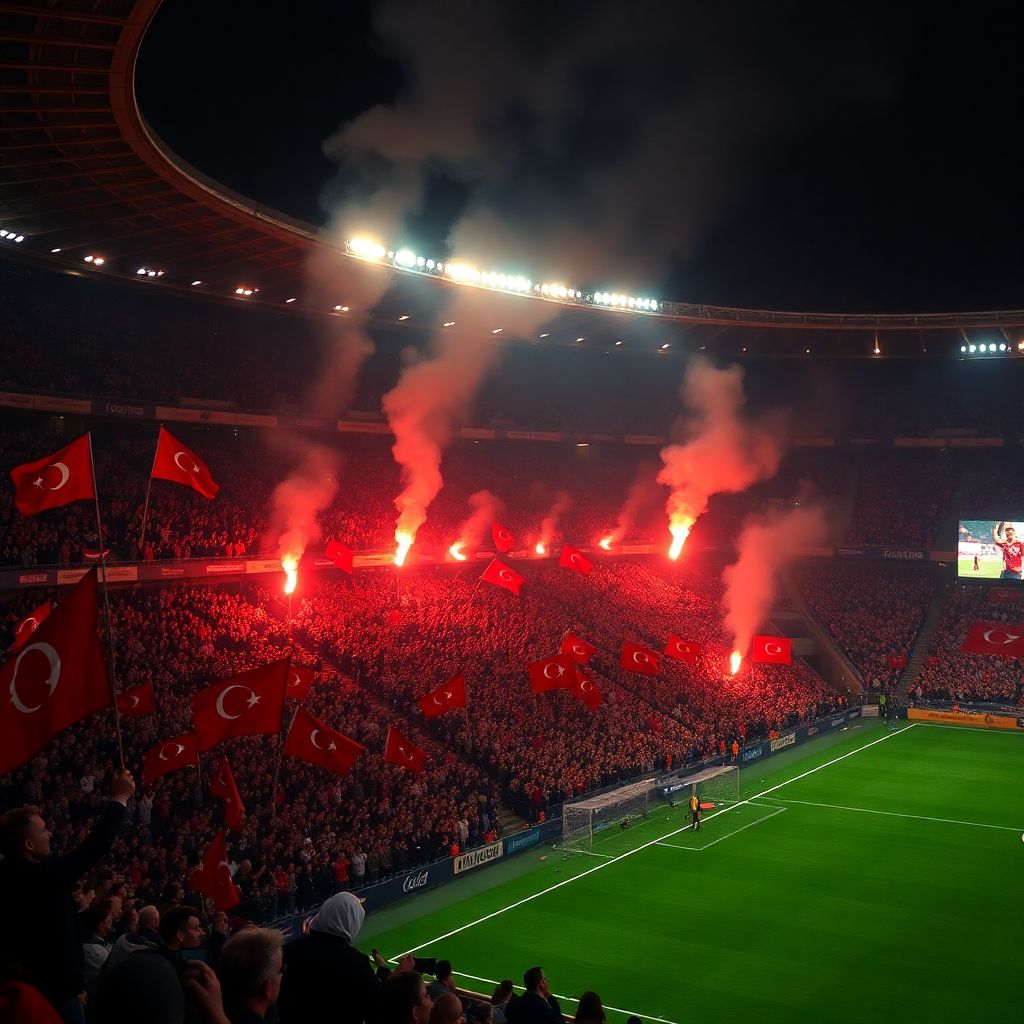
Turkish ultras fan culture shapes stadium atmosphere through organised chanting, visual choreography and social organisation that turn matches into collective performances rather than passive viewing. Understanding how these groups form, plan and coordinate actions helps clubs, media and visitors engage respectfully while maximising the intense, sometimes intimidating, but usually controlled Turkey football ultras atmosphere.
Core functions of fan groups in Turkish matchday culture
- Transforming matches into continuous visual and sonic performances through chants, drums, flags and pyrotechnic alternatives.
- Structuring participation so thousands of people can act in sync rather than as isolated individuals.
- Maintaining club traditions, slogans and local identity across generations.
- Mobilising support for the team in difficult sporting moments or political crises around the club.
- Negotiating with clubs and authorities about ticketing, stadium rules and away allocations.
- Filtering and, at times, restraining more impulsive or violent behaviours in the stands.
- Exporting a distinct Turkish style of support into global media and online fan communities.
Historical evolution of ultras in Turkey
Modern Turkish ultras emerged from older supporter traditions in the 1960s and 1970s, when large Istanbul clubs started to play more regularly in continental competitions and exposed local fans to foreign models of support. Over time, informal groups of friends in certain terraces evolved into structured fan groups with names, leadership and long-term reputations.
The word “ultras” itself is imported, but its practice in Turkey blends elements from South American barras, European ultras and local football culture. Early on, the main focus was vocal encouragement and group identity: occupying a particular block, bringing large flags, and inventing new chants. As stadium infrastructure improved and all-seater stands appeared, groups adapted by emphasising choreography, coordinated scarf movements and more complex song structures.
In Istanbul, the rivalry between Galatasaray and Fenerbahçe accelerated this evolution. When one side unveiled a large tifo or new chant pattern, the other tried to respond with something louder or more visually impressive at the next derby. This “creative arms race” pushed Turkish ultras fan culture towards ever more ambitious displays that would be noticed on television and social media.
A concrete example is the Galatasaray vs. Fenerbahçe derby in the mid‑2010s at Türk Telekom Arena, often cited in discussions about the best stadium atmosphere in Turkey. The home ultras prepared a multi-tier choreography referencing club history, while the away end answered with relentless chanting and waving of coordinated colours. Even neutral observers discussed the performance of the stands almost as much as the tactical battle on the pitch.
Organizational structures and leadership within supporter groups
Behind the noise and colour there is usually a clear organisational logic. Most major clubs in Turkey have one or more core groups that anchor the atmosphere, supported by looser circles of regular attendees and casual fans. These cores behave almost like small NGOs or informal associations, with roles, responsibilities and internal rules.
- Central leadership (capo or group committee) – decides overall strategy for chants, tifos, travel and relations with club officials. Often a small, stable group of experienced members.
- Block or section leaders – coordinate a specific part of the stand, making sure instructions from the central group are heard and followed.
- Logistics and finance teams – handle materials (banners, megaphones, drums), storage, transport and collective fundraising for big projects.
- Content and creativity cells – design chants, graphics, slogans and social media content that define the group’s identity.
- Away travel coordinators – liaise with ticket offices and transport providers to move large numbers of fans safely to other cities.
- Security and mediation figures – experienced members who de‑escalate internal disputes and interact with stewards or police when needed.
This machinery allows thousands of people to act as one. For example, before a high‑stakes Beşiktaş home game against a title rival, the main group might decide the “scenario” for the night: early entry into the stadium, a silent build‑up during warm‑ups, then a sudden explosion of sound as players emerge. Section leaders spread this plan through messaging apps and in‑person briefings, while logistics teams pre‑position banners and drums.
In practice, this structure has been visible in many major matches. During a tense Galatasaray-Fenerbahçe derby at Şükrü Saracoğlu, Fenerbahçe’s main group used megaphone instructions and hand signals from capos on railings to synchronise claps, whistles and anti‑opponent chants across different tiers of the stadium. The resulting wall of sound was not spontaneous chaos but the outcome of rehearsed coordination.
Mini-scenarios for practitioners:
- Club official – you can appoint a single liaison who talks regularly with recognised group leaders about choreography timings, pre‑match music volume and safe placement of drums and megaphones.
- Event manager – design entry times so ultra blocks can enter earlier, hang banners calmly and test sound levels before general gates open.
- Media crew – coordinate key shots of the main group during their peak chants, understanding where capos will stand and how they signal changes.
Choreography, banners and sonic identity: crafting the stadium atmosphere
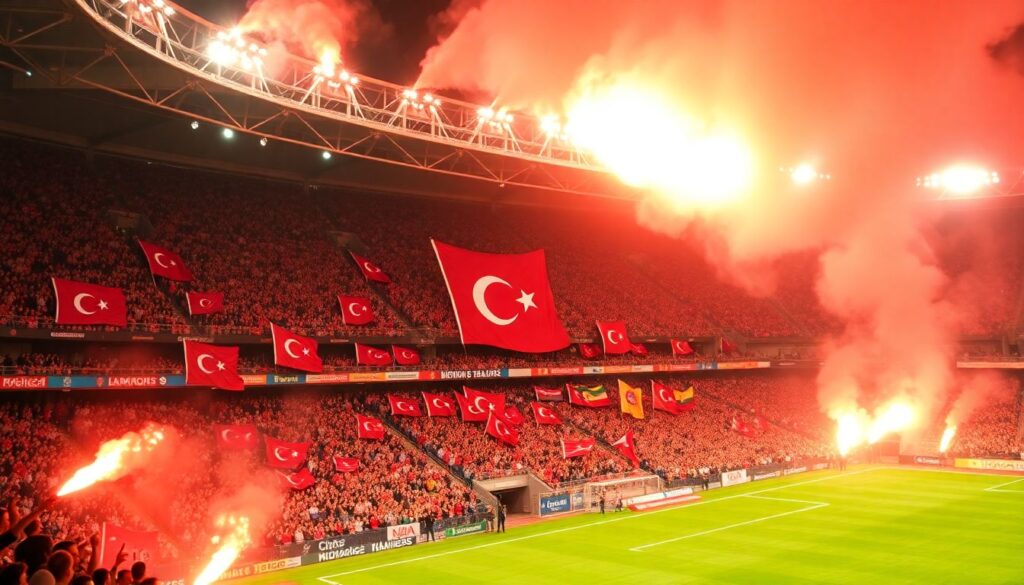
Turkish ultras turn stadiums into multi-sensory spaces. Visually, they use tifos (large coordinated displays), flags, scarves and coloured cards. Sonically, they deploy continuous chanting, call-and-response patterns, whistles, drums and sometimes brass instruments. The goal is to create a distinct identity for each end and to unsettle opponents.
Typical practical scenarios include:
- Derby‑day mega choreographies – for matches like Galatasaray vs. Fenerbahçe or Beşiktaş vs. Fenerbahçe, groups may plan for weeks, collecting money, painting huge banners and rehearsing lift timings. At kick‑off, the tifo covers an entire stand for a few seconds while a specific anthem is sung.
- “12th man” waves during difficult spells – if the home team concedes or is under pressure, leaders switch to short, high‑intensity chants designed to raise volume fast. Drummers accelerate tempo, capos demand raised scarves, and the whole end keeps singing until the team recovers rhythm.
- Player‑specific anthems – key players get personal songs, used when they warm up near the ultras or after goals. This both rewards performance and signals to the coach who is especially beloved by the crowd.
- European nights branding – on continental matchdays, groups often emphasise a more “European” or “global” identity with English-language banners or references to global media calling their ground the best stadium atmosphere in Turkey. The intention is to send a message to visiting fans and cameras about their status.
- Silent protests – occasionally, groups use silence or turning backs to protest club management or federation decisions. The sudden absence of noise from ultras makes the difference in atmosphere sharply visible.
One illustrative case came in a Galatasaray Champions League home match at Türk Telekom Arena. The home ultras produced a multi‑stage choreography: first, a huge banner honouring legends; then, as it dropped, thousands of yellow‑red flags filled the same area while a long anthem rolled around the stands. Commentators highlighted how this sequence clearly affected visiting players’ concentration in the opening minutes.
For anyone planning events around Turkish football, recognising these sonic and visual moments is crucial. Television production teams can time replays so they do not cut over peak chant transitions; stadium DJs can avoid playing music when fans are building their own rhythm; and club marketers can frame choreography images respectfully in post‑match content to support, rather than hijack, fan creativity.
Interaction between fans, clubs and authorities: cooperation and conflict
Relationships between ultras, clubs and state authorities in Turkey are multi-layered. They involve cooperation on matchday logistics, tension over ticket prices and regulations, and, at times, conflict over political expressions or crowd control tactics. Understanding both the benefits and constraints is essential for sustainable matchday management.
Where collaboration works in practice
- Coordinated entry and seating – when clubs reserve specific blocks for main groups and allow early access, ultras can set up banners and instruct newcomers calmly, reducing last-minute crowding.
- Pre‑agreed choreography rules – clear agreements about banner sizes, fire safety, and prohibited items minimise last‑second conflicts at turnstiles.
- Dialogue platforms – periodic meetings between supporter representatives, club officials and sometimes police allow advanced warning of contentious issues (e.g., kick‑off time changes, away fan restrictions).
- Joint campaigns – clubs occasionally cooperate with fan groups on social issues (blood donation drives, community aid), using fan credibility to reach local populations.
- Self‑policing – trusted groups sometimes help identify troublemakers or de‑escalate altercations before stewards or police intervene more forcefully.
Persistent tensions and structural limits
- Security vs. spontaneity – heavy security measures, ID cards and seat assignments can clash with the fluid, standing‑based style of ultras support.
- Ticketing and pricing – increases in season ticket costs or away allocations cuts often provoke organised protests or boycotts.
- Criminalisation risks – when authorities treat all vocal, organised groups as potential Turkish football hooligans and ultras, it becomes harder to separate peaceful support from violent behaviour.
- Political expression – banners or chants about national politics can trigger disciplinary sanctions or police interventions, generating mistrust between fans and institutions.
- Media framing – selective coverage of only the most extreme incidents can harden public attitudes and make constructive dialogue more difficult.
An example that illustrates both sides occurred around a high‑risk Istanbul derby. Authorities, fearing clashes between Galatasaray Fenerbahce ultras fans and smaller fringe groups, worked with clubs and main supporter leaders to manage separate travel routes and staggered entry times. Inside the ground, the atmosphere was intense but largely controlled, yet post‑match news still focused on isolated scuffles outside, overshadowing the successful coordination that had kept the majority safe.
Safety, regulation and the impact on crowd behaviour
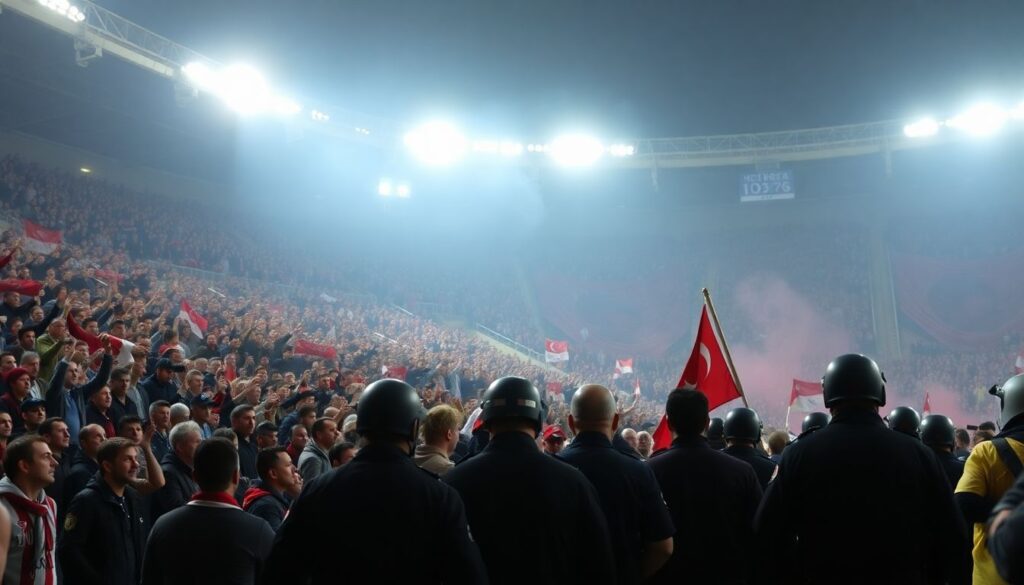
Every intense football culture generates myths about safety. In Turkey, some beliefs about ultras and stadium risk are inaccurate or oversimplified. Clarifying these misconceptions helps design smarter policies that value atmosphere while protecting people.
- Myth: “More noise means more danger.” In reality, loud, continuous singing often occupies fans’ attention and energy. Problems are more likely when sections become bored, frustrated or feel unheard by decision‑makers.
- Myth: “All ultras are hooligans.” Ultras focus on organised support and identity; hooliganism focuses on organised violence. There is overlap in some periods and places, but many Turkey football ultras atmosphere projects explicitly distance themselves from fighting and prioritise creative displays.
- Myth: “Strict bans alone will fix crowd trouble.” Heavy-handed bans without dialogue can push problematic behaviour outside stadiums, where conditions are harder to control. Mixed strategies that combine sanctions with fan liaison and clear communication tend to work better.
- Myth: “Safe atmosphere means sitting quietly.” Standing, jumping and chanting can be managed safely with proper railings, non‑slippery steps and trained stewards who understand group dynamics.
- Myth: “Social media hype causes violence.” Online clips amplify the most dramatic moments, but the underlying causes of flashpoints usually lie in earlier grievances about policing, ticketing or perceived disrespect between groups.
Practical application: stadium planners can design dedicated “singing sections” with appropriate infrastructure, place experienced stewards who know local fan leaders, and establish clear, consistently enforced rules about prohibited items. Before a major match in Ankara, for example, adding extra railings and rearranging drum positions in the ultra section significantly improved movement flow without reducing noise.
Clubs can also brief visiting groups about local procedures and potential red lines (for example, areas where away banners cannot be hung for safety reasons), reducing confusion at the turnstiles. When supporters see that rules are applied predictably and with basic respect, they are more likely to channel frustration into chants rather than confrontations.
Commercialisation, media and the global perception of Turkish ultras
As Turkish football became more visible globally, its stadium atmosphere turned into a branding asset. Broadcasters and clubs highlight choreographies, while international commentators praise intimidating noise levels. This visibility affects how groups behave and how they are portrayed, especially when clips travel quickly across platforms.
Media narratives often oscillate between admiration and alarm. On one hand, journalists describe some Istanbul grounds as having the best stadium atmosphere in Turkey and even in wider Europe. On the other, they sometimes collapse the distinction between Turkish football hooligans and ultras, presenting any crowded, chanting end as a potential source of disorder.
A concrete example is a widely shared European away tie in which visiting fans and commentators emphasised the “hellish” welcome they received in Istanbul: flares outside the ground, continuous songs during the warm‑up, and banners referencing previous famous victories. Television and social clips focused heavily on these images, which boosted the global reputation of Turkish ultras but also reinforced stereotypes of danger for some audiences.
For practitioners, the key is to manage this visibility. Clubs can work with groups to ensure that the most telegenic elements-tifos, scarves, coordinated songs-are safe and well planned. They can also avoid over‑commercialising supporter creativity; when a spontaneous chant is suddenly turned into an official advertising jingle without consultation, groups may react negatively.
From the ultras’ side, understanding how cameras frame them can lead to more strategic choices: positioning main banners where they will be clearly visible; timing choreographies for maximum impact; and using social media channels to tell their own side of the story, including charitable activities and anti‑violence messages that rarely make mainstream highlights.
Practical questions about engaging with Turkish fan culture
How can a first‑time visitor safely enjoy a match with ultras present?
Arrive early, observe where the loudest groups stand, and choose a nearby but not central seat if you want intensity without full participation. Follow simple local cues-when people around you stand, clap or raise scarves, join in respectfully and avoid filming others too intrusively.
What should clubs prioritise when working with organised fan groups?
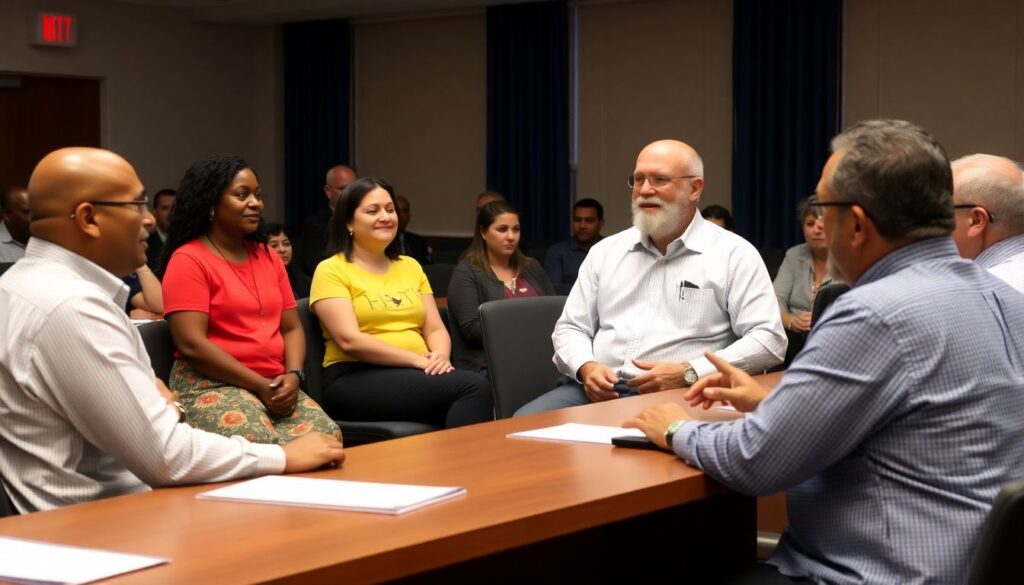
Establish a clear communication channel with recognised leaders, agree basic rules about materials and behaviour, and keep promises about ticketing and access. Consistency and respect are more effective than last‑minute bans or sudden policy changes.
Do ultras always control crowd behaviour in their sections?
No group has total control, but established ultras often have more influence over nearby fans than stewards do. When they are treated as partners rather than automatic security risks, they are usually more willing to help de‑escalate tense situations.
How is a derby atmosphere different from a regular league match?
Derbies bring heavier preparation: longer pre‑match gatherings, more complex tifos and emotionally charged chants. Noise levels and emotional stakes are higher, so clubs and authorities typically increase coordination on travel routes, entry times and stewarding in and around stadiums.
Can families sit near ultra sections, or is it better to avoid them?
It depends on each club and family preference. Ultra sections are loud, physically active and sometimes use strong language, which some families enjoy and others find overwhelming. Many Turkish stadiums now have designated family blocks as an alternative.
How do media crews capture fan culture without disrupting it?
By planning in advance with supporter leaders: understanding choreography timings, avoiding camera lights directly in fans’ faces during key chants, and not demanding repeated “performances” after an organic moment has passed.
Is joining a supporter group in Turkey formal or informal?
Both models exist. Some groups have membership lists, fees and structured meetings; others function through informal networks of friends and online chats. Asking regular attendees and respecting existing hierarchies is the safest way to get involved.